


Training under the intense Australian sun or in the relentless heat of a summer tournament pushes your skin to its limits. For competitive Brazilian Jiu-Jitsu athletes and coaches, protecting against ultraviolet damage is as crucial as preventing mat burns. A UPF 50+ rashguard blocks about 98% of harmful UV rays, giving you reliable shielding where ordinary gear falls short and helping you focus on grappling without sacrificing long-term skin health.
Table of Contents
- UPF 50+ Rashguards Defined And Misconceptions
- How UPF Ratings Work In Sports Apparel
- Benefits Of UPF 50+ For Outdoor Training
- Comparing UPF 50+ Rashguards To Alternatives
- Choosing The Right UPF 50+ Rashguard
Key Takeaways
| Point | Details |
|---|---|
| UPF 50+ Rashguards Offer Superior Protection | They block approximately 98% of UV rays, providing continuous protection during outdoor training without the need for reapplication. |
| Differences Between UPF and SPF | UPF measures fabric protection, while SPF measures sunscreen duration; they cannot be directly compared. |
| Common Misconceptions About UPF Rashguards | Regular athletic shirts offer minimal UV protection, and UPF ratings do not guarantee complete coverage. |
| Factors Affecting UPF Rating | Fabric weight, weave density, and material composition are critical for determining how well a rashguard blocks UV radiation. |
UPF 50+ Rashguards Defined and Misconceptions
A UPF 50+ rashguard is an athletic shirt engineered with spandex and nylon or polyester to shield your skin during training. Unlike regular workout clothes, these garments are specifically tested and rated for sun protection performance. UPF stands for Ultraviolet Protection Factor, describing how effectively a fabric blocks UV radiation from reaching your skin.
Here’s what separates rashguards from everyday athletic wear:
- Specialized fabric construction designed to absorb and reflect UV rays
- Lab testing to verify sun protection meets standards like AS 4399:2020
- Consistent protection that doesn’t wash away (unlike sunscreen)
- Breathability built into the design for comfortable training sessions
- Durability that maintains protection through regular use and washing
Understanding What UPF 50+ Actually Means
When a rashguard is rated UPF 50+, it blocks approximately 98% of UV rays from reaching your skin. That extra 2% that gets through is where the difference between UPF 50 and other ratings matters. Most competitors train outdoors in Australian heat, so understanding this protection level is practical knowledge.
A UPF 50+ rashguard blocks roughly 98% of UV radiation, offering protection far superior to unprotected skin or standard clothing.
The “+” in UPF 50+ means the protection is at least that level, often exceeding it. This consistent barrier works whether you’re rolling under the sun for 30 minutes or training through an entire afternoon session.
The UPF vs. SPF Confusion
Here’s where most athletes get confused: UPF and SPF measure different things. UPF rates fabric protection, while SPF measures how long sunscreen protects your skin. You can’t compare them directly.
SPF is about time. SPF 30 sunscreen gives you roughly 30 minutes of protection (depending on your skin type). UPF is about coverage. UPF 50+ fabric continuously blocks UV rays as long as you’re wearing it. One protects your skin chemically; the other protects mechanically through the garment itself.
This distinction matters for BJJ athletes. You could wear sunscreen and a regular shirt, or wear a UPF-rated rashguard and skip the sunscreen on covered areas. The rashguard won’t wash off during grappling exchanges.
Here’s a quick guide to UPF vs. SPF protection types:
| Protection Method | Area Protected | Duration | Key Advantage |
|---|---|---|---|
| UPF Rashguard | Covered skin | All session | Won’t wash off, durable |
| Sunscreen | Exposed skin | 2 hours, reapplication needed | Flexible coverage location |
| Regular Clothing | Minimal | All session | Comfortable, low protection |
| Hat | Face, neck | All session | Easy to wear, partial coverage |
This table consolidates practical differences between sun protection methods.
Common Misconceptions About UPF Rashguards
Athletes often hold these incorrect beliefs:
- “Regular athletic shirts provide sun protection” — They don’t. Standard moisture-wicking shirts offer minimal UV blocking without specialized fabric treatment.
- “All black rashguards protect better” — Color helps, but it’s the fabric composition and weave that determines actual UPF rating.
- “UPF protection fades after washing” — Quality rashguards maintain their rating through multiple washes when properly cared for.
- “UPF 50+ means complete protection” — It’s excellent protection, but that remaining 2% of UV rays still reaches your skin over time.
- “You don’t need sunscreen if wearing a UPF rashguard” — A rashguard protects covered areas; exposed skin still needs sunscreen.
The reality is straightforward: a premium UPF 50+ rashguard provides consistent, measured sun protection through fabric engineering, not chemical application.
Pro tip: Check the care label on your rashguard to understand washing recommendations that preserve UPF rating—cold water and air drying help maintain protection longevity compared to hot water and tumble drying.
How UPF Ratings Work in Sports Apparel
UPF ratings measure how effectively a fabric blocks ultraviolet radiation from reaching your skin during training. Think of it as a numerical scale that tells you what fraction of UV rays actually penetrate the garment. The higher the number, the more protection you get when you’re rolling outdoors or training in the sun.
Here’s how the scale breaks down:
- UPF 30: Blocks approximately 96% of UV rays (allows 1 in 30 rays through)
- UPF 40: Blocks approximately 97% of UV rays (allows 1 in 40 rays through)
- UPF 50+: Blocks approximately 98% of UV rays (allows less than 1 in 50 rays through)
For serious BJJ athletes training outdoors in Australian conditions, UPF 50+ rashguards provide the highest practical protection available in sports apparel.
What Determines a Rashguard’s UPF Rating
Sun-protective clothing effectiveness depends on several fabric characteristics working together. The material composition, weave density, color, weight, and stretch all influence how well a rashguard blocks UV radiation.
Specific factors that matter:
Use this table to identify factors that affect a rashguard’s UPF rating:
| Factor | Impact on UPF | Reason for Effect |
|---|---|---|
| Fabric weight | Higher weight increases UPF | Thicker fabric blocks more UV rays |
| Weave density | Tighter weave increases UPF | Fewer gaps reduce UV penetration |
| Color selection | Darker colors absorb more UV | Increased absorption lowers transmission |
| Material | Synthetics provide best UPF | Nylon & polyester offer strong UV resistance |
| Stretch | Maintains UPF when stretched | Quality stretch avoids loss of protection |
These factors combine for maximum sun protection in athletic gear.
- Fabric weight: Heavier materials block more UV rays naturally
- Weave density: Tighter weaves create fewer gaps for UV to penetrate
- Color selection: Darker colors absorb more UV radiation than light colors
- Fabric composition: Synthetic materials like nylon and polyester perform better than some natural fibers
- Stretch technology: Modern athletic fabrics maintain their protective properties even when stretched during grappling
The combination of tight weave, darker color, and synthetic material composition creates the foundation for reliable UPF 50+ ratings.
Testing and Standards
Not every company tests their rashguards for actual UPF performance. Legitimate UPF 50+ rashguards undergo testing against established standards like AS 4399:2020 in Australia. This testing ensures the claimed rating matches real-world protection.
When manufacturers label a rashguard UPF 50+, they’re making a measurable claim about UV blocking ability. Quality brands back this up with lab results. Cheaper alternatives often skip testing and use “UPF” claims without verification.
How UPF Ratings Apply During Training
Your rashguard’s UPF rating provides continuous protection as long as you’re wearing it. Unlike sunscreen that requires reapplication, the fabric maintains its rating throughout your entire training session. This matters when you’re grappling hard and sweating heavily—the protection doesn’t wash away.
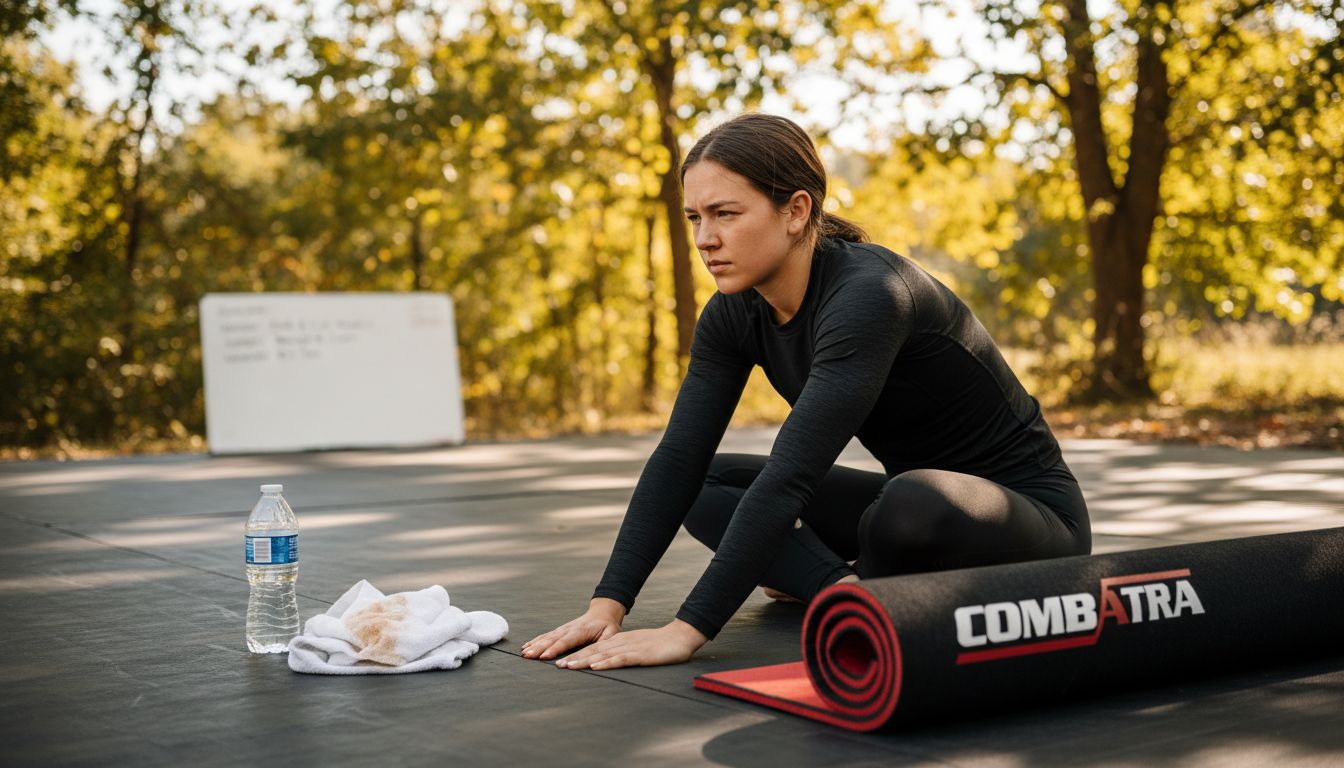
The protection is consistent whether you’re drilling for 30 minutes or competing in a tournament that runs all day. However, remember that UPF only protects covered skin. Exposed areas like your face, neck, and hands still need sunscreen or additional coverage.
Pro tip: Check if your rashguard came with a test report or certification document—legitimate UPF 50+ products often include this verification, and brands that display their testing standards tend to prioritize quality over marketing claims.
Benefits of UPF 50+ for Outdoor Training
Training outdoors in Australia means dealing with some of the strongest UV radiation on the planet. A UPF 50+ rashguard becomes your first line of defense against skin damage that accumulates over years of outdoor grappling sessions. Unlike sunscreen that washes away with sweat, the fabric protection stays constant throughout your entire training day.
The core benefits break down like this:
- Blocks 98% of harmful UV rays continuously
- No reapplication needed during sweaty training sessions
- Maintains protection even when wet or after intense grappling
- Reduces long-term skin damage and premature aging
- Lowers skin cancer risk from cumulative UV exposure
- Allows you to train longer without sun damage concerns
Skin Health During Extended Sun Exposure
UPF 50+ clothing protection prevents the accumulated skin damage that comes from regular outdoor training. Every session without proper UV protection adds up—you’re looking at potential sunburn, age spots, and increased melanoma risk years down the line. A quality rashguard stops this damage before it starts.
Your skin recovers from individual sun sessions, but repeated exposure creates permanent changes. The collagen breaks down, elasticity decreases, and age spots appear. Training in a UPF 50+ rashguard means your skin stays protected even during four-hour outdoor summer competitions.
Superior Protection Compared to Sunscreen Alone
Sunscreen requires constant reapplication, especially when you’re grappling and sweating heavily. A drop of sweat, a wipe across your chest, or even just normal friction during rolling removes chemical protection. Meanwhile, your rashguard’s protection never diminishes.
UPF 50+ fabric protection remains effective despite sweating, water exposure, or intense physical activity—something sunscreen alone cannot guarantee.
Many athletes apply sunscreen once before training and assume they’re protected all day. That’s not how it works in real life. By mid-session, most of that protection has washed away. Your rashguard doesn’t have this problem.
Performance Benefits Beyond Sun Protection
You get compression support and moisture-wicking alongside the UV defense. The garment keeps you cooler during training by allowing airflow while protecting skin. Rash guards designed for combat sports let you move freely through submissions without restriction.
This means you’re not trading sun protection for mobility or comfort. The best UPF 50+ rashguards perform exactly like standard training gear while adding the skin protection layer.
Long-Term Health Investment
Consider the cost of dermatology treatments years from now versus investing in proper UPF protection today. Removing age spots, treating sun damage, or addressing skin cancer concerns costs far more than quality rashguards. Every training session in proper sun protection is an investment in your future skin health.
Outdoor training in Australian conditions demands this level of protection. Your future self will thank you for the smart choice today.
Pro tip: Layer your sun protection by wearing a UPF 50+ rashguard plus sunscreen on exposed areas like your neck, face, and the back of your hands—this combination provides maximum defense during extended outdoor training sessions.
Comparing UPF 50+ Rashguards to Alternatives
When it comes to protecting your skin during outdoor BJJ training, not all options are created equal. A UPF 50+ rashguard stands apart from standard clothing, sunscreen, hats, and other alternatives by offering consistent, measured protection that works continuously without reapplication. Understanding how rashguards compare helps you make an informed decision about your sun safety strategy.
Here’s the straightforward comparison:
- UPF 50+ rashguards: Block 98% of UV rays constantly; no reapplication needed
- Regular clothing: Minimal UV protection; standard cotton or polyester offers UPF 5-10 at best
- Sunscreen: Requires reapplication every 2 hours (or immediately after sweating)
- Hats: Protect only the head and neck area; limbs remain exposed
- Shade: Effective when available but impractical during training
UPF 50+ Rashguards vs. Regular Clothing
Your everyday training shirt won’t cut it when training outdoors. Standard cotton or basic synthetic fabrics offer minimal sun protection—often equivalent to UPF 5-10, if anything. UPF 50+ garments feature specially engineered dense weaves and UV-absorbing treatments that standard clothing simply doesn’t have.
The difference is dramatic. Regular clothing blocks roughly 20-25% of UV rays, leaving 75-80% to damage your skin. A UPF 50+ rashguard blocks 98%. Over a summer of training, this difference translates to significant skin damage prevention.
UPF 50+ Rashguards vs. Sunscreen
Sunscreen sounds convenient until you’re grappling hard. A single roll leaves sunscreen smeared across your partner’s shoulders. Sweat washes it away within minutes. You’d need to reapply every time you take a water break, which most athletes never do.
UPF 50+ rashguards provide stable, lasting protection without reapplication, remaining effective through sweat, water exposure, and intense physical activity.
A rashguard never needs reapplication. You wear it and you’re protected for the entire session. No thinking about timing, no sticky residue, no compromising hygiene on the mats.
UPF 50+ Rashguards vs. Hats and Shade
Hats protect your face and scalp—that’s it. Your arms, shoulders, chest, and legs remain completely exposed. Shade helps when available, but you can’t train under a tent all summer. These alternatives address only portions of sun exposure.
A rashguard covers your entire torso and arms, protecting the areas that take the most sun damage during training.
The Best Strategy: Layering Protection
No single solution provides complete protection. The smartest athletes combine a UPF 50+ rashguard with sunscreen on exposed areas like the neck, face, and hands. This layered approach gives you maximum defense without compromise.
Pro tip: Choose a UPF 50+ rashguard that fits snugly but allows full mobility, then apply zinc-based sunscreen to your face, neck, and ears—this combination covers every vulnerable area without requiring mid-session reapplication.
Choosing the Right UPF 50+ Rashguard
Not all UPF 50+ rashguards are built the same way. You need to know what separates a quality garment from one that just claims the rating without backing it up. The right choice depends on your specific training needs, climate, and how seriously you take long-term skin protection.
Start by evaluating these core factors:
- Fabric composition: Synthetic materials like nylon and polyester perform better than cotton
- Weave density: Tighter weaves block more UV rays naturally
- Weight: Heavier fabrics provide better protection
- Certification: Look for AS 4399:2020 or equivalent testing standards
- Fit and comfort: Snug without restricting movement during grappling
- Moisture management: Quick-drying fabrics keep you comfortable
Fabric and Weave Considerations
Quality UPF 50+ rashguards feature tightly woven fabrics with specific construction techniques that maximize UV blocking. The density of the weave directly impacts protection—tighter weaves leave fewer gaps for UV radiation to penetrate your skin. This is where cheap rashguards fall short; they skimp on weave quality to cut costs.
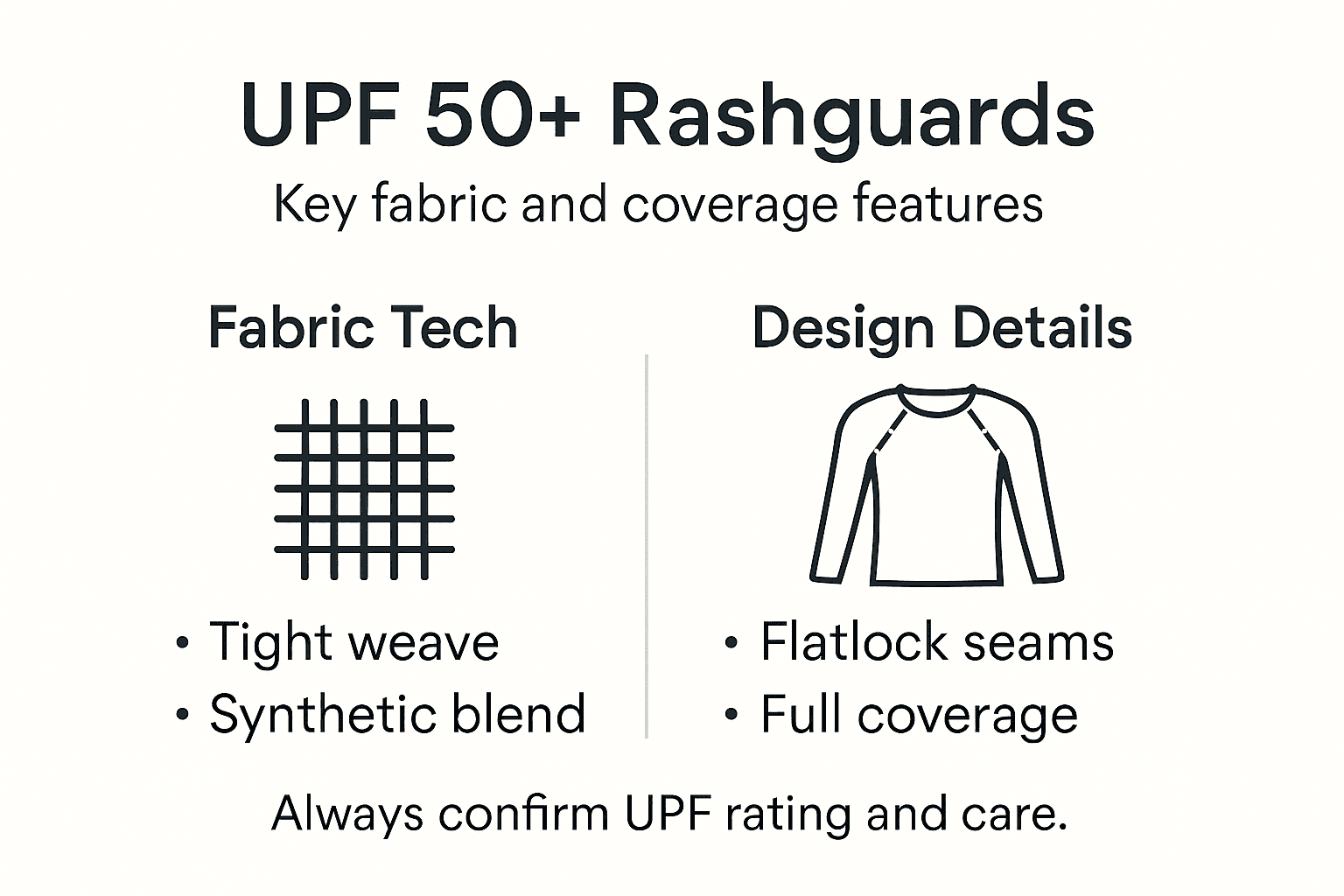
Look for flatlock seams instead of traditional stitching. Flatlock seams lie flat against your skin, reducing chafing during intense rolling and preventing the seams from creating pressure points. This detail matters when you’re training hard.
Checking for Legitimate Certification
Don’t trust UPF claims without verification. Legitimate manufacturers test their rashguards against established standards and provide documentation. Australian standards like AS 4399:2020 require lab testing to confirm the UPF rating actually matches real-world performance.
Ask whether your rashguard comes with a test report or certification that confirms the UPF 50+ rating from an accredited laboratory.
Brands that display their certifications proudly understand quality matters. Those that hide behind vague marketing language are cutting corners on protection.
Fit for Combat Sports
Your rashguard needs to fit snugly without restricting movement. Too loose and you lose compression benefits and sun protection gaps appear. Too tight and you can’t move freely through submissions. The sweet spot allows full range of motion while keeping the garment against your skin.
When choosing a size, consider how the garment performs when wet and stretched. You’re buying for grappling, not swimming, so factor in the demands of your sport.
Coverage and Color Selection
Coverage matters—your rashguard should protect your entire torso and arms where sun damage accumulates. Darker colors naturally absorb more UV radiation, so black or dark blue rashguards outperform lighter shades in sun protection.
However, color alone doesn’t determine UPF rating. The fabric engineering matters more than the color choice.
Pro tip: Request a test report from the manufacturer before purchasing, and choose a rashguard with flatlock seams, tightly woven synthetic fabric, and a snug fit that allows full grappling movement.
Protect Your Skin with Premium UPF 50+ Rashguards from Combatra
Training outdoors under the intense Australian sun demands reliable protection to prevent long-term skin damage. As the article explained, UPF 50+ rashguards offer superior, continuous UV defense throughout your entire session without the need for reapplication. Whether you want the perfect balance of lightweight comfort and maximum sun blocking or the ability to customize your gear with your name and preferred colors, Combatra has you covered. Our range of Limited Edition Premium Rashguards for Men, Women & Kids features expertly engineered fabrics designed to keep you safe and comfortable during every grappling or striking workout.

Don’t settle for standard athletic wear that leaves you exposed to harmful UV rays. Choose rashguards that are tested for real UPF 50+ protection and crafted with the ideal combination of fabric weight, weave density, and stretch for combat sports performance. Visit Combatra now to explore our 2026 Limited Edition Rash Guards for Men, Women & Kids or personalize your own with our Personalized rash guards - Combatra. Take action today to protect your skin and elevate your training experience with gear designed both for battle and lasting sun defense.
Frequently Asked Questions
What is a UPF 50+ rashguard?
A UPF 50+ rashguard is an athletic shirt designed with spandex and nylon or polyester to provide protection from UV radiation, blocking approximately 98% of harmful rays.
How does UPF protection differ from SPF protection?
UPF measures how well fabric blocks UV radiation, while SPF measures how long sunscreen protects the skin. UPF provides continuous protection without the need for reapplication, unlike SPF.
Can I rely solely on a UPF rashguard for sun protection?
While a UPF rashguard offers significant protection for covered areas, it’s still essential to apply sunscreen to exposed skin such as the face, neck, and hands for comprehensive coverage.
Do UPF rashguards lose their effectiveness after washing?
Quality UPF rashguards maintain their sun protection properties through multiple washes if cared for properly, following guidelines such as using cold water and air drying.