


TL;DR:
- Proper outdoor training gear should have certified UPF 50+ protection to block 98% of UV rays.
- Synthetic fabrics like polyester and nylon maintain UV protection when wet, unlike cotton.
- Layering with compression rashguards, UPF pants, and arm sleeves enhances skin protection during outdoor workouts.
Build a summer training outfit that protects you from UV
You finish a Saturday morning BJJ session in the park or return from a weekend hike and notice that familiar sting on your forearms and the back of your neck. That redness is not a badge of effort. It is a sign your outfit is failing you where it matters most. Australia records some of the highest UV levels in the world, and outdoor training amplifies that exposure through reflective surfaces, long session durations, and the simple fact that sweat-soaked fabric provides far less protection than you expect. This guide will show you exactly how to build a summer training outfit that genuinely defends your skin, layer by layer.
Table of Contents
- Understanding how UV protection works in training apparel
- Selecting the best materials and layers for UV protection
- Building your protective summer training outfit: Step-by-step instructions
- Advanced strategies and edge cases: Extreme UV conditions and verification
- Why so many athletes still get burnt: A practical view
- Find your ideal UV-protective training gear
- Frequently asked questions
Key Takeaways
| Point | Details |
|---|---|
| UPF matters | UPF-rated fabrics block harmful UV far more effectively than standard cotton. |
| Choose synthetics for performance | Polyester and blends outperform natural fibres for sun protection and athletic movement. |
| Layer smartly | Combining compression wear and loose UPF layers delivers superior coverage and ventilation. |
| Adapt for extreme conditions | Higher altitude or reflective environments call for extra-high UPF and full skin coverage. |
Understanding how UV protection works in training apparel
Before you can choose the right gear, you need to understand what you are actually measuring. UPF stands for Ultraviolet Protection Factor. It tells you how much UV radiation a fabric blocks before it reaches your skin. A garment rated UPF 50 permits only 2% UV transmission, meaning it blocks 98% of harmful rays. That same research confirms a standard cotton T-shirt sits at roughly UPF 5, allowing around 20% of UV through, and that figure drops further once the fabric is wet with sweat.
This matters enormously for athletes. When you are training outdoors for 60 to 90 minutes, your shirt is soaked well before the halfway point. A wet cotton tee can effectively lose half its already-poor UV resistance, leaving you largely unprotected during the back half of your session.
Understanding rashguard UPF meaning is essential here because not all rashguards are created equal. Some are marketed as performance wear without carrying a certified UPF rating. Always look for the specific number on the garment tag or product description before you buy.
Key UPF ratings at a glance:
| UPF rating | UV blocked | Protection category |
|---|---|---|
| UPF 15 to 24 | 93.3 to 95.9% | Good |
| UPF 25 to 39 | 96 to 97.4% | Very good |
| UPF 40 to 50+ | 97.5 to 99%+ | Excellent |
| Standard cotton T-shirt (wet) | ~70 to 80% | Minimal |
Synthetic fabrics like polyester and nylon hold their UPF rating even when wet, which is why they dominate top UV clothing for 2026. The tight weave structure of performance synthetics physically blocks UV rays regardless of moisture content.
Why ordinary fabrics fall short:
- Loose weaves in cotton allow UV to pass through gaps between threads
- Wet fabric stretches and opens the weave further, reducing density
- Light colours in natural fibres reflect less UV than darker or treated synthetics
- Untreated fabrics degrade in UV protection after repeated washing
Knowing these benchmarks gives you a concrete standard to hold your gear against. If a garment cannot tell you its UPF number, that absence of information is itself useful data.
Selecting the best materials and layers for UV protection
With foundation knowledge on UPF, it is time to choose the right materials for building your summer kit. The fabric you choose affects not just protection but also comfort, mobility, and how well you manage heat during intense activity.
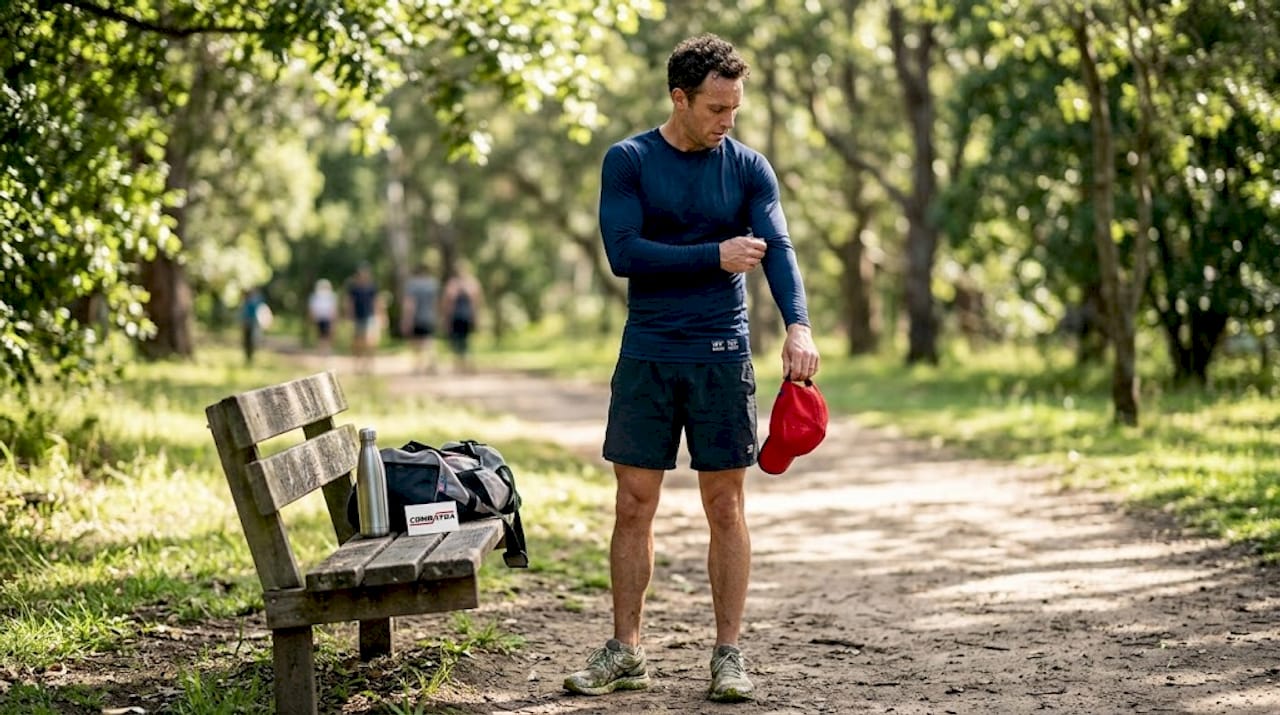
Synthetic blends outperform naturals for performance activities. Polyester and nylon are the workhorses of UV protective training apparel. They wick moisture efficiently, dry quickly, and retain their UPF rating session after session. Merino wool is a legitimate alternative for hiking in milder temperatures, offering natural odour resistance and decent UV protection, but it generally cannot match the UPF rating of a treated polyester garment.
Colour also plays a bigger role than most athletes realise. Lighter fabrics feel cooler but typically offer lower UPF unless the material has been chemically treated. Darker colours absorb more UV before it reaches your skin, providing better protection, though they can increase heat absorption on sunny days. The solution is ventilation: choose darker UPF garments with mesh panels or open-back designs to manage temperature without sacrificing protection.
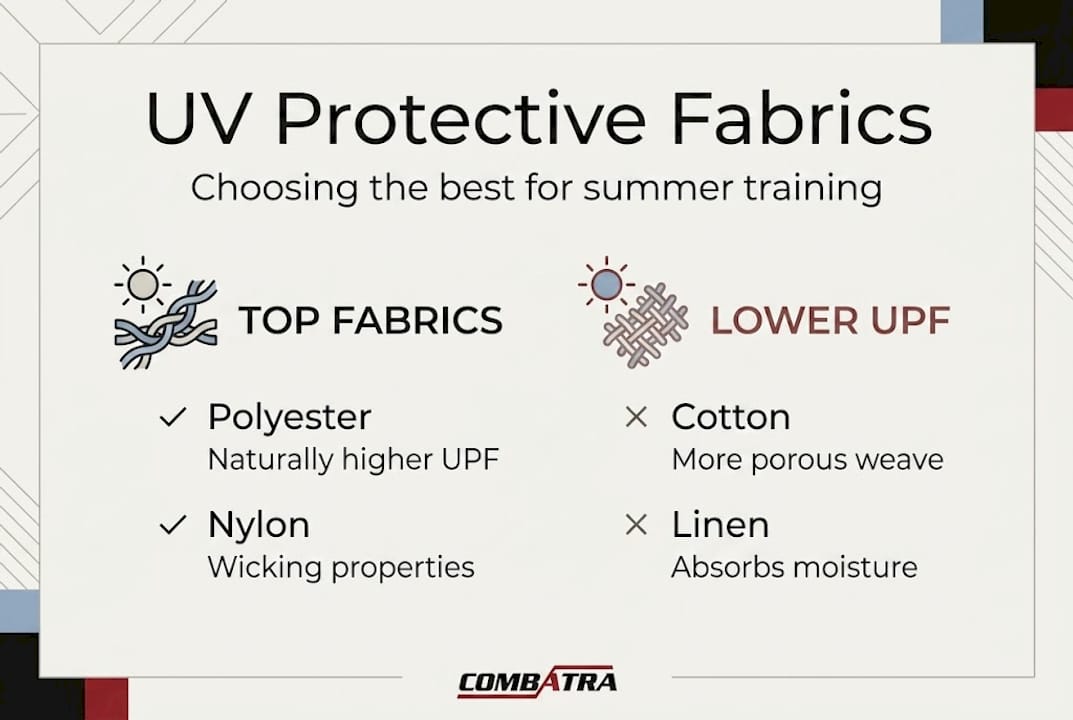
Material comparison for outdoor athletes:
| Material | UPF performance | Moisture wicking | Best for |
|---|---|---|---|
| Polyester (treated) | UPF 40 to 50+ | Excellent | Martial arts, MMA, intense training |
| Nylon blend | UPF 30 to 50 | Very good | Hiking, trail running |
| Merino wool | UPF 20 to 30 | Good | Moderate temperature hiking |
| Cotton | UPF 5 (drops when wet) | Poor | Not recommended outdoors |
For layering, the most effective strategy for outdoor athletes combines a fitted compression base layer with a looser UPF over-layer. The compression layer locks close to the body to protect skin during movement and grappling, while the outer layer provides additional UV coverage over exposed areas like shoulders and upper arms. You can read more about how best fabric for UV selection changes across activity types.
Smart layering tips for summer training:
- Start with a UPF 50+ compression rashguard as your base layer
- Add a lightweight, loose UPF shirt over the top for extra shoulder and arm coverage
- Choose UPF compression tights or pants rather than shorts for lower body protection
- Use UPF arm sleeves to extend coverage without adding full layers
- Pair with a wide-brim hat or cap rated for UV to protect your neck and face
Understanding compression vs loose for UV protection is worth the extra few minutes of research. Compression sits against the skin and creates a reliable barrier. Loose layers, when layered correctly over compression, add a second line of defence without trapping heat against your body.
Pro Tip: If you are training in a discipline like BJJ or Karate where grappling or contact is involved, prioritise the compression base layer above all else. A loose shirt alone will shift, bunch, and expose skin during movement.
Building your protective summer training outfit: Step-by-step instructions
Materials selected, let us put it together with actionable instructions. Building a UV-protective outfit is not about wearing the most clothing. It is about choosing the right pieces in the right order.
Step-by-step assembly:
- Start with a UPF 50+ compression rashguard. Choose a polyester-spandex blend designed for your sport. Compression rash guards in poly-spandex blends offer UPF 40 to 50+ while allowing full mobility, making them the ideal base for martial arts, MMA, and active outdoor training.
- Choose UPF-rated pants or tights. Do not neglect your lower body. UV exposure on thighs and calves adds up quickly during long sessions. Compression tights with a confirmed UPF rating protect skin while supporting muscle groups during activity.
- Add a loose UPF over-layer for shoulders and arms. A lightweight, breathable UPF shirt worn over your rashguard provides extra coverage without restricting your range of motion. Look for raglan sleeves or mesh panel designs for ventilation.
- Cover your extremities. Add UPF arm sleeves for forearms and gloves if your activity involves extended outdoor exposure. Gardeners and hikers especially benefit here, as the hands and wrists are often the most neglected areas.
- Protect your head and neck. A wide-brim hat offers reliable coverage. For martial arts or combat sports where headwear is impractical mid-session, apply SPF 50+ sunscreen to exposed areas and consider a neck gaiter made from UPF fabric.
- Confirm every garment’s UPF rating before you buy. Rash guards for martial arts may carry skin protection benefits, but only certified, labelled garments guarantee the UPF figure you are relying on.
Your outfit is only as protective as its weakest piece. One unrated garment in an otherwise solid kit creates a gap that cumulative UV exposure will find.
Activity-specific adjustments:
For martial arts and BJJ, sun protection for martial artists in Australia requires a compression-first approach. A long-sleeve UPF rashguard paired with compression shorts or tights covers the maximum skin area without interfering with technique.
For hiking, the priority shifts to covering the neck, shoulders, and forearms over long durations. A loose UPF shirt layered over a compression top works well, and convertible pants that zip off at the knee give you flexibility when conditions change.
For gardening or outdoor work, where you are stationary for longer periods, a loose UPF shirt, wide-brim hat, and UPF gloves are your best combination. Explore custom rashguards for athletes if you want personalised options that suit your specific sport or team.
Common mistakes to avoid:
- Skipping the compression base layer and relying on a loose shirt alone
- Choosing fabrics based on feel rather than confirmed UPF ratings
- Assuming any polyester garment automatically has a high UPF rating without checking
- Neglecting lower body protection during long outdoor sessions
Advanced strategies and edge cases: Extreme UV conditions and verification
Once you have assembled your kit, it is crucial to consider extreme conditions and check your protection. Australia’s UV environment is rarely forgiving, and certain training locations make the risk significantly higher.
High altitude and reflective surfaces increase UV exposure by 10 to 12% per 1000 metres of elevation, and water or wet sand can reflect up to 25% of UV back onto your skin. For hikers training on exposed ridgelines or athletes training near pools and beaches, this means your standard UPF 50+ kit may not be enough. Experts recommend UPF 80+ or double-layered garments for these extreme conditions.
High visibility gear for cyclists and other outdoor athletes demonstrates how multi-functional apparel design is evolving to address both safety and UV protection simultaneously. The same principle applies to hikers and martial artists training in open environments.
High-risk scenarios and adjustments:
- Training near water or sand: add UPF arm sleeves and neck gaiter; apply sunscreen to face
- Altitude hiking above 2000 metres: upgrade to UPF 80+ top and full-length pants
- Extended morning or midday sessions: schedule breaks in shade every 30 to 40 minutes
- Reflective snow or ice environments: cover all exposed skin; UV can reach you from below and above
Verification checklist for your UV protective outfit:
| Check | What to look for |
|---|---|
| Garment tag | UPF number printed clearly |
| Product description | Independent testing or certification reference |
| Fabric type | Polyester, nylon, or treated synthetic |
| Colour | Darker tones or UV-treated light fabrics |
| Condition | No pilling, holes, or fading that reduces protection |
Pro Tip: Hold your garment up to a bright light. If you can see your fingers clearly through the fabric, it is too loosely woven to offer meaningful UV protection, regardless of what the tag says.
For a direct comparison of fabric-based protection versus topical options, the guide on UPF vs sunscreen outdoors explains exactly when each method is most effective. And for a broader breakdown of what certified gear actually delivers, UPF 50 apparel explained is a solid companion read.
Why so many athletes still get burnt: A practical view
Here is the honest observation we keep coming back to. Most athletes who train outdoors in Australia are not ignorant of UV risk. They know sunscreen exists. Many own at least one rashguard. But they still get burnt, repeatedly, because knowledge and kit alone do not protect you when training intensity takes over.
The practical gaps are almost always the same. Athletes remove their outer layer mid-session because it feels too warm, leaving only a basic cotton tee. They skip checking UPF ratings when buying cheaper training gear, assuming any technical-looking fabric is protective. They apply sunscreen at home but forget to reapply after 90 minutes of sweating.
Australia’s UV index regularly hits 11 or above during summer training hours between 10am and 3pm. At that level, unprotected skin can start to burn in under 10 minutes. The gap between knowing you need protection and actually being protected is filled by habit and gear quality.
The most effective athletes we see are the ones who treat UV protection as part of their kit ritual, not an afterthought. They choose compression vs loose clothing intentionally, confirm UPF ratings before purchase, and keep an arm sleeve in their training bag for when conditions change. Small habits, consistently applied, make a measurable difference to skin health over a training lifetime.
Find your ideal UV-protective training gear
Building a protective summer training outfit is genuinely achievable, and you do not need to start from scratch. At Combatra, we design every garment with outdoor athletes in mind, from the UPF rating of the base fabric to the placement of seams that will not irritate during extended wear.
If you train in BJJ, MMA, or Karate, our custom rashguard top lets you choose your UPF 50+ base layer with custom colours, logos, and sizing to suit individual athletes or full academy teams. Pair it with our compression pants for full lower-body UV coverage. If you are just getting started with structured martial arts training, our black karate uniform is a durable, well-fitted option designed for both indoor and outdoor sessions.
Frequently asked questions
What does UPF mean and how does it differ from SPF?
UPF measures how much UV radiation a fabric blocks before it reaches your skin, while SPF applies only to sunscreen applied topically. A garment rated UPF 50 allows only 2% UV transmission, making it a reliable, consistent form of protection that does not wash or sweat off.
Is cotton good for UV protection during outdoor sports?
Cotton is not suitable for outdoor sports UV protection. A regular cotton T-shirt offers only around UPF 5 protection, and that rating drops dramatically once the fabric becomes wet with sweat, leaving your skin significantly exposed.
What should I wear if training at altitude or near reflective water?
Choose UPF 80+ apparel and increase skin coverage, as UV increases by 10 to 12% per 1000 metres of altitude, and reflective surfaces like water or sand can bounce significant additional UV back onto exposed skin.
How do I check if my training outfit really protects from UV?
Look for a certified UPF number on the garment tag or product description. Rash guards for martial arts can offer genuine UPF protection, but you should always confirm the rating rather than assuming any athletic garment is UV protective.