


BJJ belt colours help identify a practitioner’s rank, but an academy’s promotion process and a tournament’s entry rules serve different purposes. This guide explains the main youth and adult belt groups, how to discuss stripes and promotion with your coach, and what to check before buying a belt or personalising competition gear.
Table of Contents
Key Takeaways
| Point | Details |
| BJJ Belt Ranking System | The BJJ belt progression is a structured, merit-based system emphasizing technical knowledge, practical application, and ethical development. |
| Adult vs. Youth Belt Levels | There are significant differences in progression structures between youth and adult BJJ practitioners, focusing on different skill recognition methods appropriate for their development stages. |
| Promotion Criteria | Belt promotions require clear demonstrations of technical proficiency, consistent performance, and instructor assessment rather than just time spent training. |
| Equipment Customization | Confirm your awarded rank, academy guidance and the event’s uniform rules before ordering a belt or custom gear. |
Core Principles of BJJ Belt Ranking
Brazilian Jiu-Jitsu (BJJ) belt ranking represents a structured progression system that symbolizes a practitioner’s growing technical proficiency and martial arts mastery. Ranking system fundamentals demonstrate a hierarchical approach to skill development that goes far beyond mere colored fabric.
The BJJ belt progression follows a deliberate, merit-based sequence that challenges practitioners to continuously improve their skills. Key principles of this ranking system include:
-
Technical Knowledge: Mastery of specific techniques and movements
-
Practical Application: Demonstrating skills through sparring and competition
-
Time Investment: Consistent training and dedication
-
Ethical Development: Personal growth and martial arts philosophy
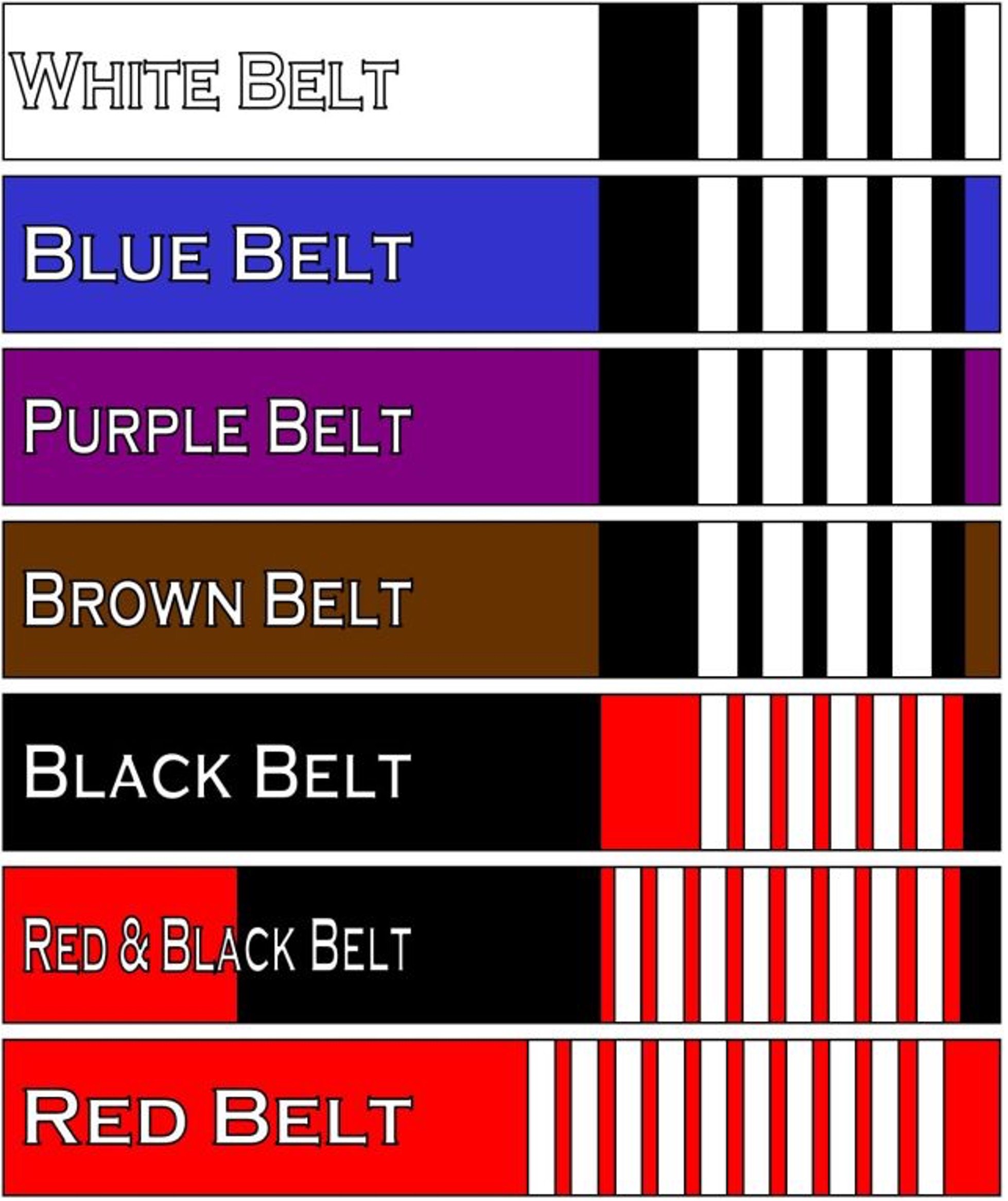
The familiar adult training sequence runs from white through blue, purple, brown and black. The formal graduation system also includes senior degrees and red-and-black, red-and-white and red belts. Check the IBJJF graduation system for the full hierarchy and age requirements.
Ask your instructor how your academy assesses readiness for promotion. Technical understanding, training experience and safe practice can be discussed without treating any single result or number of training sessions as a guarantee.
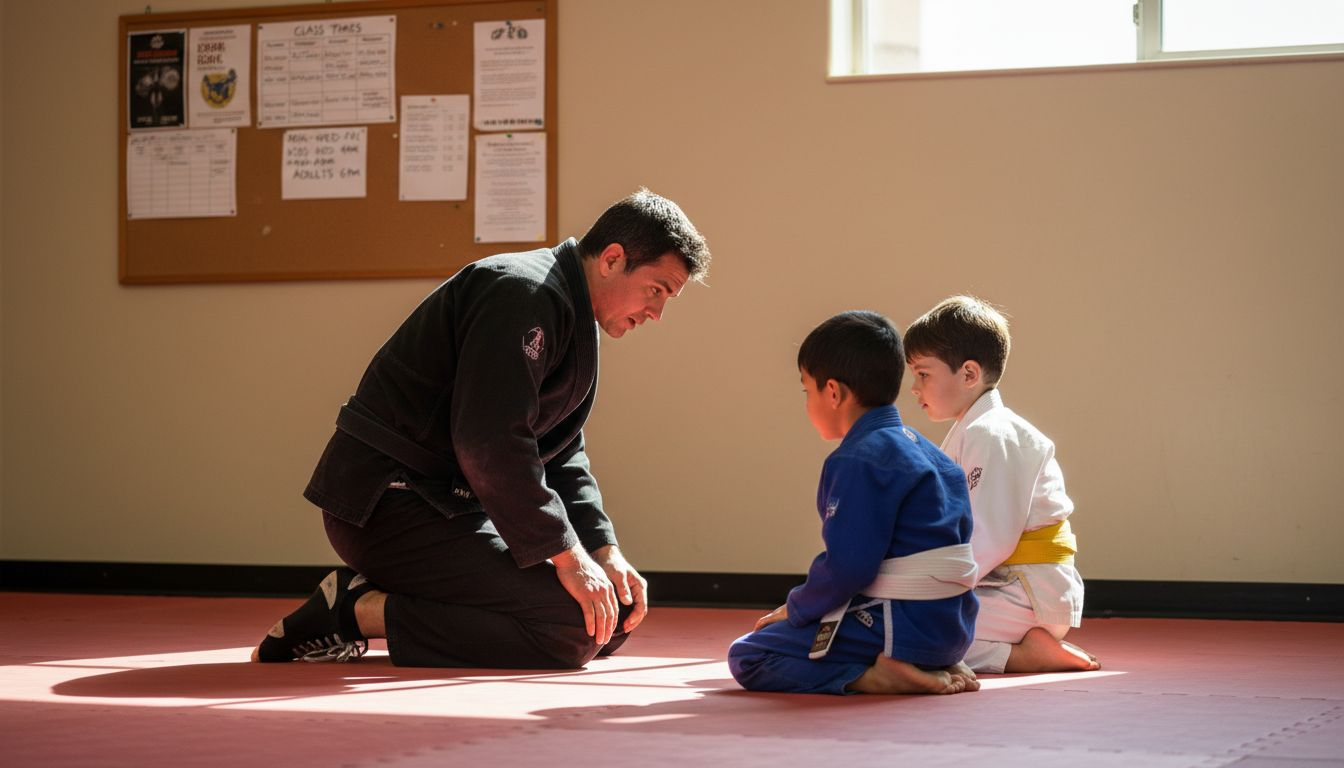
Pro tip: Focus on consistent training and technical improvement rather than rushing toward your next belt rank.
Adult and Youth Belt Levels Compared
Brazilian Jiu-Jitsu (BJJ) belt systems demonstrate significant variations between youth and adult practitioners, with unique progression structures designed to accommodate different developmental stages. Youth belt progression reflects a more nuanced approach to skill recognition and motivation.
Youth Belt Progression Characteristics:
-
White Belt: Initial entry point for children
-
Grey Belt: First technical development stage
-
Yellow Belt: Intermediate skill development
-
Orange Belt: Advanced youth technical skills
-
Green Belt: Highest youth belt before adult transition
Youth and adult belt groups use different colour sequences and age requirements. The AFBJJ graduation guide provides an Australian reference that follows the IBJJF system. Confirm the applicable age division with your instructor and event organiser.
When a young athlete changes age division, check the current graduation rules before ordering their next belt or registering for a competition. Do not assume that repeating a youth rank, returning to white, or choosing any adult rank is permitted.
A child’s class and an adult class may use different teaching approaches. Tournament eligibility should be checked separately against the organiser’s age, rank and registration requirements.
Here is a comparison of adult and youth BJJ belt progressions and their core differences:
| Check | Youth athletes | Adult athletes |
|---|---|---|
| Belt group | White and grey, yellow, orange and green families, including striped colour variants | White, blue, purple, brown and black, followed by senior ranks |
| Age requirements | Check the current age division and transition rules | Check the minimum age and time requirements for the relevant rank |
| Promotion | Discuss readiness and the academy’s grading process with the instructor | Discuss readiness and the academy’s grading process with the instructor |
Pro tip: Focus on consistent skill development during youth training to create a strong foundation for adult Brazilian Jiu-Jitsu progression.
Promotion Criteria and Timeline Expectations
Promotion is an instructor-led decision within the applicable grading system. Ask your coach which skills and training habits they assess and whether federation age or minimum-time requirements apply to your next rank.
Typical Promotion Criteria Include:
-
Technical Proficiency: Mastery of specific techniques and movements
-
Sparring Performance: Consistent effectiveness during live training
-
Competition experience: Discuss how your instructor uses it in assessment; competing is not presented here as a universal promotion requirement.
-
Training Consistency: Regular attendance and dedicated practice
-
Instructor Assessment: Holistic evaluation of overall martial arts development
There is no single evidence-backed average promotion timetable that applies to every practitioner. Separate an academy’s assessment of readiness from a federation’s minimum registration period, and check the current rules rather than relying on a promised date.
- Ask your instructor what readiness means at your current rank.
- Check any age and minimum-time requirements in the current graduation system.
- Review progress without assuming that meeting a minimum period guarantees promotion.
A minimum period is not a promised promotion date. Your instructor’s assessment and the applicable graduation rules both matter; individual progress can vary.
Use this checklist when discussing your next promotion:
| Question | Who or what to check |
|---|---|
| Which skills should I work on? | Your instructor’s feedback |
| Does a minimum age or time period apply? | The current federation graduation system |
| Which division may I enter? | The event’s current registration rules |
Promotions reflect personal growth, not just technical competence, but a deeper understanding of Brazilian Jiu-Jitsu’s underlying philosophy and principles.
Pro tip: Document your training progress through videos and technique journals to help your instructor accurately assess your development.
Role of Stripes and Competition Eligibility
Stripes can mark progress within a belt. Their use and assessment can vary by academy, so ask your instructor what a stripe means in your class. Do not use a stripe count alone to decide competition eligibility.
Questions to ask about stripes:
- Does the academy award stripes at this belt?
- What does the instructor assess before awarding one?
- Which graduation system applies to the athlete’s age and rank?
The AFBJJ graduation guide describes blue, purple and brown belts with up to four degrees. This is not a statement that every athlete must collect four stripes before promotion. Confirm promotion with your instructor and check event eligibility using the organiser’s current rules.
For some students, stripes provide a useful way to discuss progress and set training goals. They do not replace an instructor’s assessment or the event’s entry requirements.
Stripes are not just decorative elements, but meaningful indicators of a practitioner’s dedication, skill refinement, and potential for future advancement.
Pro tip: Track your stripe progression systematically and discuss your development regularly with your primary instructor to understand your martial arts trajectory.
Implications for Equipment Customization
Choose a belt that matches the rank awarded by your instructor. For other gear, separate personal design preferences from your academy’s dress guidance and the uniform rules of any event you plan to enter.
Before ordering a belt or custom uniform:
- Confirm the awarded belt colour and the required length.
- Check whether your academy permits the planned embroidery, logos and colours.
- Check event uniform rules before approving artwork.
- Review the product’s size chart and available personalisation options.
A higher belt rank does not by itself establish permission for a particular patch, colour or embroidery design. The relevant checks are the academy’s guidance and the rules of the event.
For competition, review the IBJJF uniform requirements or the rules published by your event organiser. Check colour, patch placement, measurements and condition before ordering; a custom design is not automatically competition-approved.
Equipment customization in Brazilian Jiu-Jitsu is more than decoration—it’s a visual narrative of a practitioner’s dedicated martial arts journey.
Pro tip: Consult your instructor about appropriate customization guidelines before investing in personalized BJJ equipment.
Elevate Your BJJ Journey with Personalized Gear from Combatra
For a Combatra belt, start with your awarded rank and the product’s size guidance. Review the BJJ belt range and check the options on the specific listing before adding a name or choosing a length.
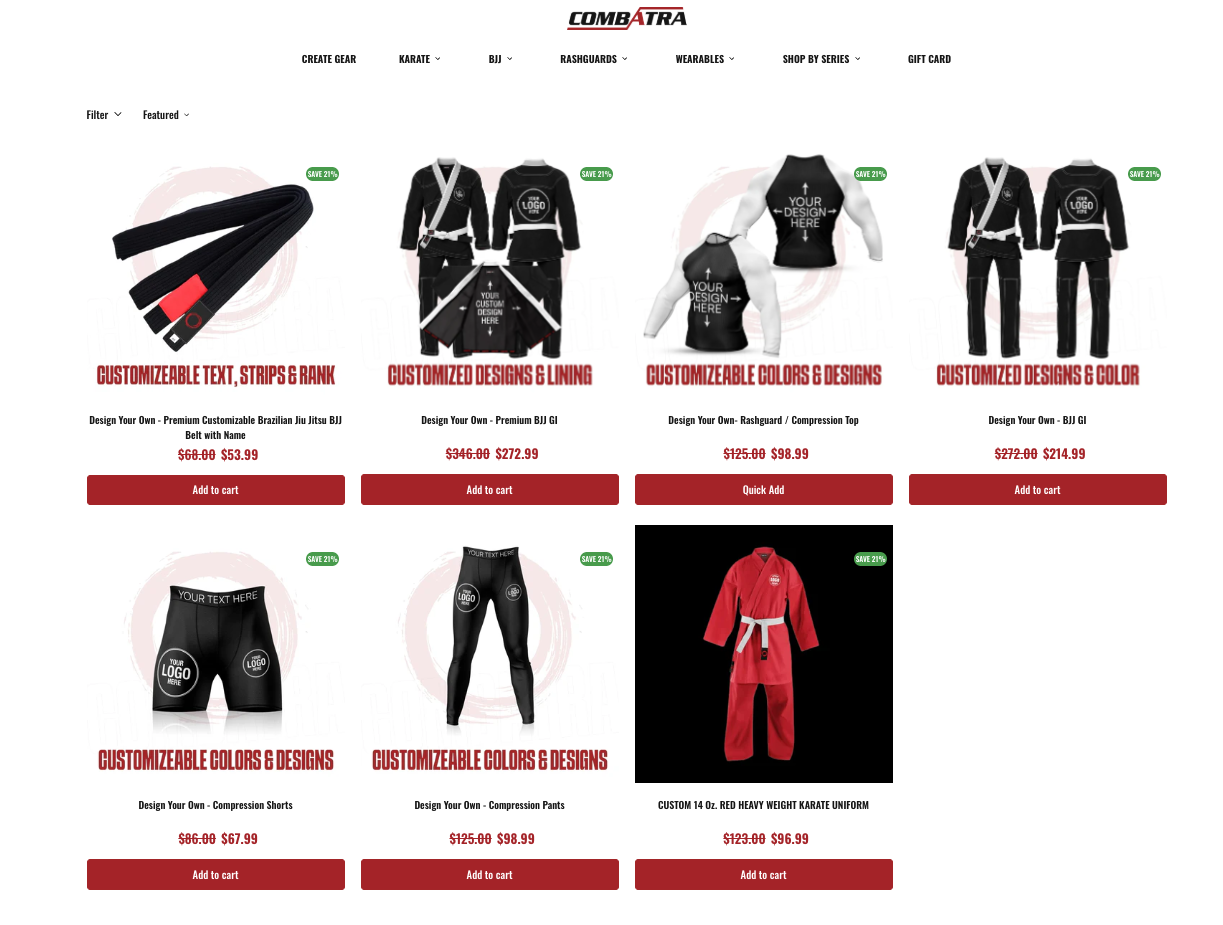
If you are unsure about belt length or the artwork options shown on a listing, contact Combatra before ordering. Your instructor and event organiser remain the appropriate sources for rank and competition-rule decisions.
Frequently Asked Questions
What are the core principles of BJJ belt ranking?
The core principles include technical knowledge, practical application, time investment, and ethical development, representing a systematic progression in a practitioner’s martial arts mastery.
How long does it typically take to progress between BJJ belt levels?
Promotion timing varies. Ask your instructor about readiness and check the applicable federation’s current age and minimum-time requirements. A minimum period does not guarantee a promotion.
What is the significance of stripes in the BJJ ranking system?
Stripes can recognise progress within a belt, but their use varies by academy. Do not treat four stripes as a universal prerequisite for promotion or competition entry; check with your instructor and organiser.
How does equipment customization vary with different BJJ belt ranks?
Belt colour should match your awarded rank. Personalisation of a gi or other gear should follow academy guidance and the event’s uniform rules; do not assume higher rank grants broader design permission.
Rule references: IBJJF graduation system, AFBJJ graduation guide and IBJJF uniform requirements. Check the latest rules for your event before registering or approving custom artwork.