


TL;DR:
- Starting with a well-fitting gi or rashguard and hygiene-focused accessories is essential for beginners. Proper gear selection prioritizes fit, protection, and sun safety, particularly in challenging outdoor Australian conditions. Maintaining hygiene and choosing quality, lab-tested fabrics enhance safety, performance, and team professionalism.
Start here: secure a clean-fitting gi or rashguard plus compression shorts/spats first, then add a belt, mouthguard, and groin guard. Fit and hygiene matter more than brand. Custom orders may require a waiting period, so borrow clean gear for your first class if needed.
Your priority buying order:
- Gi (for gi classes) or rashguard + compression shorts/spats (for no-gi)
- BJJ belt (white for beginners)
- Mouthguard
- Groin guard
- Spare rashguard
- Towel and slides for off-mat use
Pro Tip: If you’re unsure whether your first class is gi or no-gi, message the academy before you arrive. Most Australian gyms will lend you a gi for your first session.
Table of Contents
- Why rashguards matter for BJJ training in Australia
- Step-by-step BJJ gear selection workflow for beginners
- How to get the right fit for rashguards, gis, and compression wear
- Choosing materials and understanding UPF ratings
- Hygiene and the gym social contract
- Staying warm in winter without losing mobility
- How to order custom or team gear from Combatra
- Your beginner BJJ gear checklist
- Key takeaways
- What premium, customisable rashguards actually deliver
- Combatra’s custom BJJ gear for Australian athletes
- Useful sources and standards
Why rashguards matter for BJJ training in Australia
A rashguard is a close-fitting, performance fabric top worn in BJJ, MMA, and grappling. It sits directly against the skin and does several jobs at once: it compresses muscles to reduce fatigue, wicks sweat away from the body, and creates a protective barrier against mat burns and friction injuries. For first BJJ classes, fitted athletic wear including a rashguard is the safest and most practical choice.
Core performance benefits:
- Compression support — reduces muscle vibration and supports recovery between rounds
- Moisture wicking — moves sweat away from skin to keep you cooler and drier
- Abrasion protection — shields skin from mat burns and partner friction
- Breathability — open-weave fabrics allow airflow during intense drilling
- Quick drying — most quality rashguards dry within an hour of washing
- Durability — reinforced stitching and performance fabrics resist repeated washing and rolling
Australia’s UV index regularly reaches extreme levels, particularly in summer and in states like Queensland and Western Australia. For athletes training outdoors or in open-air gyms, sun exposure is a genuine health concern. Premium rashguards designed for outdoor training may be lab tested to AS 4399:2020, the Australian standard for sun-protective clothing, and rated UPF 50+. That rating means the fabric blocks at least 98% of UV radiation. Combatra’s rashguards and compression wear are built with this standard in mind, making them practical for both indoor academies and outdoor sessions.
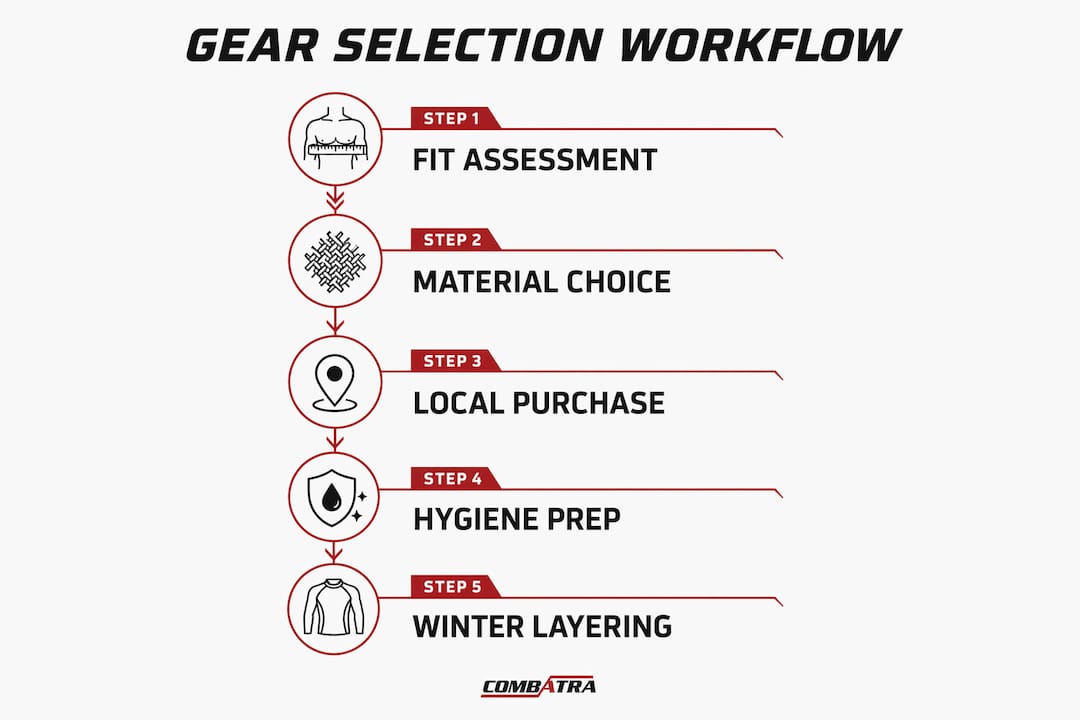
Step-by-step BJJ gear selection workflow for beginners
Follow this sequence to avoid buying the wrong thing first.
-
Confirm your class format. Ask your academy whether sessions are gi or no-gi. This single step determines your first purchase. Most Australian academies run both formats, so you may need both eventually.
-
Buy your gi or rashguard first. For gi classes, a single-weave or pearl-weave gi with weight appropriate for Australian conditions suits most needs. Lighter weights handle summer heat; heavier options offer more durability for frequent training. For no-gi, a quality rashguard paired with compression shorts or spats is your foundation. Australian beginner guidance consistently prioritises fit and suitability to local climate over brand name.
-
Add compression shorts or spats. These protect your legs from mat burns and keep muscles supported during ground work. Spats (full-length compression tights) are better for winter; shorts suit warmer months.
-
Buy a white belt. Your academy may supply one, so check first. If not, a standard BJJ belt costs $15–$30 and lasts years.
-
Get a mouthguard and groin guard. A boil-and-bite mouthguard from a chemist or sports store is an affordable protective option. A groin guard carries a moderate cost and is non-negotiable once you start sparring.
-
Add a spare rashguard and a towel. Having a second rashguard means you can train multiple days per week without waiting for laundry. Apex BJJ’s beginner checklist and most Australian academies include slides for off-mat use as a hygiene requirement.
Budget anchors (approximate AUD):
- Gi: $80–$200 (entry to mid-range)
- Rashguard: $40–$100
- Compression shorts/spats: $35–$80
- Belt: $15–$30
- Mouthguard: $15–$25
- Groin guard: $20–$50
Pro Tip: Buy within Australia where possible. Local suppliers simplify returns and exchanges, which matters when you’re uncertain about sizing for your first gi or rashguard.
How to get the right fit for rashguards, gis, and compression wear
Poor fit is the most common beginner mistake. A rashguard that’s too loose bunches under a gi and causes friction burns. A gi that’s too long in the sleeves creates grip hazards.
Measurements to take before ordering:
- Height and weight (for gi size charts)
- Chest circumference (for rashguard sizing)
- Waist circumference (for compression shorts and spats)
- Arm length shoulder to wrist (for rashguard sleeve length)
- Inseam (for spats and gi trousers)
| Item | Correct fit | Common error |
|---|---|---|
| Rashguard | Snug through torso, sleeves reach wrist, no excess at shoulders | Too loose at waist, sleeves too short |
| Gi jacket | Sleeve ends 5 cm above wrist, shoulder seam sits on shoulder | Shoulder seam drooping, jacket too long |
| Gi trousers | Cuff sits 5 cm above ankle, full squat without pulling | Too short, restricts movement |
| Compression shorts | Flat seams, no pinching at thigh, waistband sits firm | Waistband rolls, seams chafe |
| Spats | Full leg coverage, no sagging at knee | Too tight at hip, restricts kicking |
Local Australian guidance recommends prioritising movement and fit over brand when selecting your first gi. Try a squat, a hip escape, and raise both arms overhead. If the fabric pulls or the seams dig in, the size is wrong.
Pro Tip: Allow for some shrinkage in cotton-blend gis after the first wash. If you’re between sizes, size up for a gi and size true for rashguards and compression wear.
Choosing materials and understanding UPF ratings
Rashguard fabrics fall into two main categories: polyester/elastane blends and nylon/spandex blends.
- Polyester/elastane — dries quickly, holds colour well, suits high-sweat training
- Nylon/spandex — softer against skin, slightly more stretch, suits long sessions and outdoor wear
- Ripstop weaves — added tear resistance for heavy grappling or outdoor use
Construction quality separates a $40 rashguard from a $90 one. Look for flatlock seams that lie flat against the skin rather than raised seams that abrade both you and your training partner. Bonded hems and reinforced gussets extend the garment’s life under repeated rolling. These details are worth checking before you buy.
UPF 50+ is the premium benchmark for sun-protective apparel in Australia. Garments tested to AS 4399:2020 have been assessed in a laboratory for their ability to block UV radiation. For athletes training outdoors or in open facilities, this rating provides meaningful protection during extended sun exposure. It is not a marketing claim when it is backed by lab testing.
Pro Tip: To preserve UPF ratings and fabric stretch, wash rashguards in cold water with a gentle detergent, avoid fabric softener (it degrades UV-blocking fibres), and hang to dry in shade rather than using a dryer.
Hygiene and the gym social contract
Clean gear is not optional in BJJ. Skin-to-skin contact during grappling creates real risk of bacterial and fungal infections. Gym guidance from Ironfist and other Australian academies is consistent: wash your gi or rashguard after every single session, trim your nails before class, and stay off the mat if you have an open cut or active skin infection.
Arriving with clean gear and trimmed nails is the baseline expectation at every reputable BJJ academy in Australia. It protects your training partners as much as it protects you. Instructors notice, and so does everyone else on the mat.
Daily and weekly hygiene checklist:
- Wash gi, rashguard, and spats after every class in cold water
- Avoid fabric softener — it reduces antibacterial properties and degrades UPF fibres
- Hang gear to dry fully before storing; never leave damp kit in a bag
- Check skin for rashes, cuts, or unusual spots before each session
- Trim fingernails and toenails weekly
- Use slides when walking off the mat
Having a spare rashguard is a practical hygiene measure, not a luxury. Training three or more times per week means your primary kit may still be drying when your next session starts.
Pro Tip: Add a small mesh laundry bag to your kit. It keeps rashguards and spats from tangling with other gear in the wash and reduces seam stress.
Staying warm in winter without losing mobility
Australian winters vary significantly by region, but training in a cold gym or an outdoor facility in June or July calls for a different layering approach than summer.
- Base layer: a mid-weight compression rashguard worn directly against the skin provides warmth and muscle support
- Mid layer (optional): a heavier rashguard with a brushed inner surface adds warmth without bulk; look for thicker fabrics suited for winter rashguards.
- Spats over compression shorts: full-length spats retain more heat than shorts and protect the knees during ground work
- Quick-dry properties matter in winter: a rashguard that stays damp between rounds will chill you quickly; prioritise fast-drying fabrics even in cold conditions
Warm up thoroughly before removing any extra layers. Many athletes start a winter session in a heavier rashguard and switch to a lighter one after the first 15 minutes of drilling once core temperature rises.
How to order custom or team gear from Combatra
Custom gear takes planning. Follow this sequence to avoid delays.
- Choose your base template (rashguard, gi, compression set) from Combatra’s product range.
- Upload your academy logo, select colours, and add names or numbers.
- Review and approve the digital mockup — check spelling and colour accuracy carefully.
- Confirm individual sizes across the team and submit the full size run.
- Pay the deposit to begin production.
- Allow for the production and shipping window before your target date.
Ordering custom kit early in the season prevents training interruptions. Team orders require size confirmations from every member, which is often the step that causes delays. Build that buffer into your timeline.
Budget guidance for custom gear (approximate AUD):
- Entry custom rashguard: $60–$90
- Mid-range custom rashguard: $90–$130
- Premium custom rashguard: $130+
- Custom BJJ gi: $150–$250+
- Custom compression set (rashguard + spats): $120–$200
You can design your own BJJ gi directly through Combatra’s custom builder, which walks you through template selection, logo upload, and size confirmation in one place. For sizing questions before approving a mockup, Combatra’s personalisation guide covers what to check before you confirm.
Pro Tip: For team orders, collect all sizes before you submit. One missing size can delay the entire run. Use a shared spreadsheet to gather measurements from teammates in advance.
Your beginner BJJ gear checklist
Print or screenshot this before you shop.
Buy first:
- [ ] Gi (350–400 GSM, correct size) OR rashguard + compression shorts/spats
- [ ] White belt (check if academy supplies one)
- [ ] Mouthguard (boil-and-bite is fine to start)
- [ ] Groin guard
Buy soon after:
- [ ] Spare rashguard
- [ ] Spats (especially for winter training)
- [ ] Slides/thongs for off-mat use
- [ ] Small towel
Before ordering, check:
- Height, chest, and waist measurements
- Sleeve length (shoulder to wrist) for rashguards
- Inseam for spats and gi trousers
For a custom gi, visit Combatra’s BJJ gi builder to start your order.
Key takeaways
A sound BJJ equipment selection workflow starts with fit and hygiene, not brand, and builds outward from a clean-fitting gi or rashguard to protective accessories and custom team gear.
| Point | Details |
|---|---|
| Fit before brand | Prioritise correct sizing and freedom of movement over labels when buying your first gi or rashguard. |
| UPF 50+ for outdoor training | Look for rashguards lab tested to AS 4399:2020 if you train outdoors or in open facilities. |
| Hygiene is non-optional | Wash gear after every session, carry a spare rashguard, and stay off the mat with open skin issues. |
| Budget realistically | A complete beginner kit typically costs a moderate amount covering gi, rashguard, belt, and protective gear. |
| Combatra for custom gear | Combatra’s custom builder lets you design a personalised BJJ gi or rashguard with logo, colours, and sizing in one order. |
What premium, customisable rashguards actually deliver
The case for investing in quality rashguards is straightforward: cheap gear fails at the seams, loses its stretch within months, and offers no meaningful UV protection. Athletes who train outdoors or compete in summer conditions need more than a fashion choice. They need a garment that performs under sustained physical stress and real sun exposure.
Combatra’s focus on UPF 50+ lab-tested fabrics and flatlock construction reflects a practical commitment to athlete welfare, not just aesthetics. Custom gear also matters for team identity and accountability. When your academy wears matching, well-fitted kit, it signals professionalism and makes it easier to spot gear that needs replacing before it becomes a hygiene issue.
The athletes who get the most from their gear are the ones who treat it as training equipment, not clothing. That means buying correctly from the start, caring for it properly, and replacing it before it degrades.
Combatra’s custom BJJ gear for Australian athletes
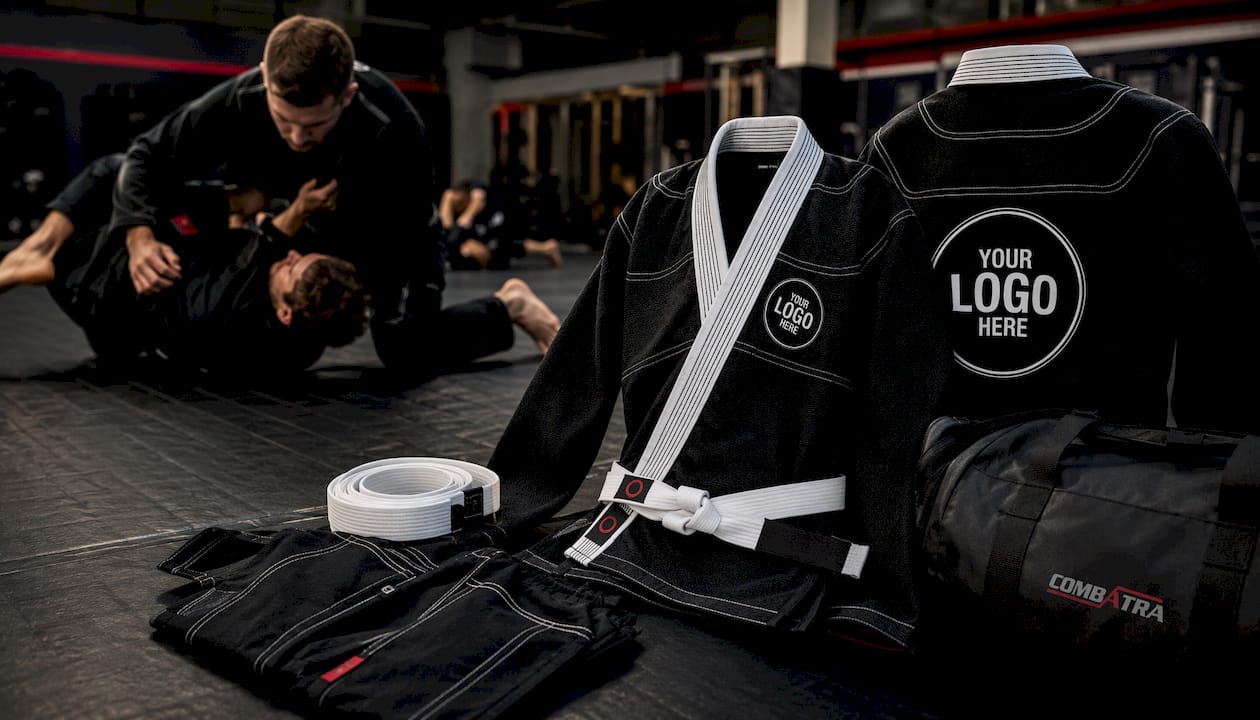
Combatra builds premium, customisable BJJ gear for Australian athletes who want performance and identity in the same kit. The custom BJJ gi builder lets you design your own personalised gi with academy logos, chosen colours, and individual sizing, with production and delivery timelines suited to team orders and individual athletes alike.
For rashguards and compression wear ready to order now, Combatra’s rashguard collection covers UPF 50+ options for both indoor and outdoor training. Sizing guidance is available on every product page. If you’re building a team kit run, get your size list together and start your custom order early to avoid delays before the season begins.
Useful sources and standards
- AS 4399:2020 — Australian standard for sun-protective clothing; the basis for UPF ratings on rashguards and performance apparel.
- Cancer Council Australia — authoritative guidance on UV exposure, sun safety, and protective clothing for Australians.
- Bureau of Meteorology UV Index — daily UV index forecasts by location; useful for planning outdoor training sessions.
- Ironfist Gym first class guide — practical hygiene and kit checklist from an Australian BJJ academy.
- Apex BJJ beginner checklist — standardised kit list for beginner classes at an Australian academy.
- Combatra BJJ gear checklist — step-by-step gear guide for new and competitive BJJ practitioners.
- DojoTrack gym software guide — useful background on how Australian martial arts academies manage class formats and membership, relevant when confirming gi/no-gi requirements with your gym.