


For most Australian practitioners, a pearl-weave cotton gi in a midweight GSM range covering typical training needs. It balances durability, movement, and competition compliance without being punishing in summer heat. If you train daily or in a hot, humid climate, ripstop pants paired with a lighter pearl or single-weave top are a practical combination suited to those conditions. Hemp blends are worth the premium if longevity and odour control matter more than upfront cost.
Before you buy, check these five things on every product page:
- Weave type: pearl, single, gold, double, or ripstop — each changes weight, grip, and durability
- GSM (grams per square metre): the single most useful number for comparing gis across brands
- Fibre content: pure cotton, cotton–poly blend, or hemp blend — affects shrinkage, feel, and care
- Preshrunk or sanforised label: tells you whether the gi has been treated to limit post-wash shrinkage
- Reinforced construction: bartacks, triple stitching, and reinforced knee panels extend lifespan significantly
Rashguards belong in this conversation too. In BJJ, MMA, and grappling, a quality rashguard worn under or instead of a gi top provides compression support, manages sweat, and protects skin from abrasion during extended drilling. For Australian athletes training outdoors or in open-air gyms during summer, UV exposure is a genuine concern. Premium rashguards tested to AS 4399:2020 and rated UPF 50+ offer meaningful protection during those sessions. Combatra designs and tests its rashguards to that standard, positioning performance and protection as equally important. The sections below unpack every material and construction factor so you can make a confident, informed choice.
Table of Contents
- How each weave changes your gi’s strength, weight, and feel
- Cotton, blends, hemp, and synthetics: which fabric suits you?
- What GSM actually means and how to use it when buying
- Where gis wear out and what good construction prevents
- Shrinkage, preshrunk treatments, and how to size correctly
- Choosing a gi for Australian summer, winter, and year-round training
- How to choose the right gi for your training goals
- Washing, drying, and keeping your gi in good condition
- What competition rules say about gi materials — and why it matters
- How different materials feel during a long training session
- Key takeaways
- Why material choice matters more than most practitioners realise
- Your own gi, built for how you actually train
- Useful sources and further reading
How each weave changes your gi’s strength, weight, and feel
Weave construction is the single biggest variable in how a gi performs on the mat. Two gis made from identical cotton can feel completely different depending on how the threads are interlocked.
Single weave is the lightest and most breathable option, typically falling in a lightweight range. The open construction dries fast and moves freely, but it wears out faster at stress points. Good for hot weather and high-volume drilling; less suited to heavy grip training.
Pearl weave is the most widely used competition weave. The small, rounded surface pattern produces an excellent strength-to-weight ratio — it resists heavy gripping without the bulk of a double weave, and it holds its shape through repeated washing. Most practitioners find it the most versatile choice across seasons.
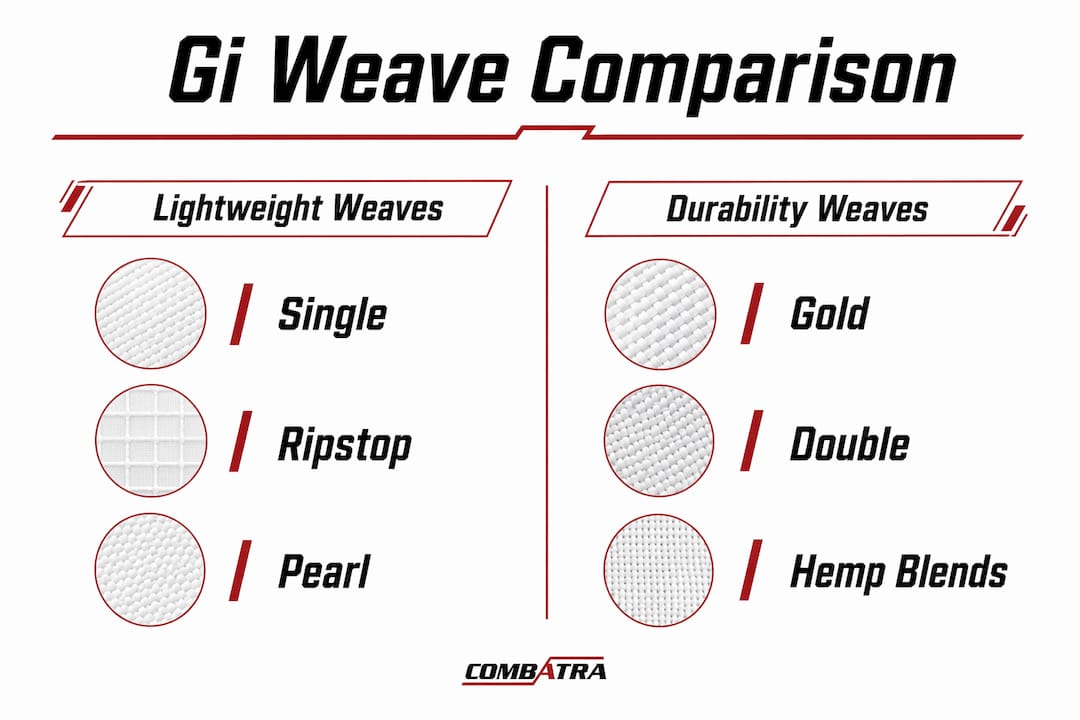
Gold weave (honeycomb weave) offers a balance between single and double weave characteristics with moderate weight. It is heavier than pearl but lighter than double, with a tighter surface that resists grips well. A solid choice for practitioners who want durability without committing to a full double weave.
Double weave is heavier and built for maximum durability. The layered construction makes it almost impossible to tear, which is why it was the standard for decades. The trade-off is significant: it is stiff, heavy, and slow to dry. Most modern competitors have moved to pearl weave, but double weave still suits practitioners who prioritise longevity over mobility.
Ripstop uses a reinforcing grid of thicker threads woven through a lighter base fabric. The result is a lightweight, tear-resistant construction that breathes well. Ripstop is most commonly used for gi pants rather than jackets, where tearing risk is highest and weight savings matter most.
| Weave | Approx. weight | Durability | Breathability | Best for |
|---|---|---|---|---|
| Single | Lightweight | Moderate | High | Summer training, drilling |
| Pearl | Midweight | High | Good | Competition, everyday training |
| Gold/Honeycomb | Moderate | High | Moderate | Grip training, durability focus |
| Double | Heavy | Very high | Low | Longevity, grip conditioning |
| Ripstop | Lightweight | High (tear) | High | Pants, hot climates |
Pro Tip: When reading a product page, look for both the weave name and the GSM figure. A “pearl weave” label with no GSM number tells you less than you need — two pearl weaves at 380 GSM and 520 GSM perform very differently.
Cotton, blends, hemp, and synthetics: which fabric suits you?
The fibre content of a gi shapes how it feels against your skin, how much it shrinks, how long it lasts, and how much care it demands. Most BJJ gis are cotton-based, but the category covers a wide range of constructions.
Pure cotton remains the standard for good reason. It grips well, feels comfortable against skin during long sessions, and is accepted under virtually all competition rules. The downside is shrinkage: untreated cotton can shrink 5–7% after the first few washes, which means sizing up is often necessary. Cotton also holds moisture longer than blends, which matters in humid Australian summers.
- Pros: natural feel, competition-legal, good grip surface, widely available
- Cons: shrinks without preshrunk treatment, slower to dry, can retain odour if not washed promptly
Cotton–polyester blends reduce shrinkage to roughly 2–4% and improve moisture-wicking compared with pure cotton. The polyester content helps the gi hold its shape through more washes. The trade-off is a slightly different hand-feel — some practitioners find blends less comfortable against bare skin during no-gi drilling. Blends are generally competition-legal when the cotton content is dominant and the weave is woven rather than knitted.
Polyester and microfibre elements appear in ultralight gis and in collar reinforcements or trim. Fully synthetic gis — those with a slippery, knitted, or coated surface — are typically disallowed in IBJJF-sanctioned competition. Check fibre content carefully if you compete.
Canvas and heavy cotton constructions are less common in modern BJJ gis but appear in some traditional or Judo-influenced designs. They are extremely durable and develop a distinctive worn-in feel over time, but the break-in period is long and the weight is significant.
Hemp blends are the most interesting development in gi fabrics. Hemp fibres are stronger than cotton and naturally resist bacteria and odour, which is a practical advantage for practitioners who train frequently. Hemp gis typically feel rougher initially but soften with regular washing. The price premium reflects more complex manufacturing, and the environmental footprint is lower than conventional cotton because hemp requires less water and no pesticides.
Pro Tip: If you are considering a hemp gi, plan to wash it five to ten times before it reaches peak softness. The antimicrobial properties mean you may need to wash it less frequently once it has broken in.
What GSM actually means and how to use it when buying
GSM stands for grams per square metre. It measures how much fabric is packed into each square metre of the weave — a direct indicator of density, weight, and, broadly, durability. It is the most useful single number for comparing gis across different brands and weave types.
Higher GSM means heavier, denser fabric that typically lasts longer under grappling stress but retains more heat and takes longer to dry. Lower GSM means lighter, more breathable fabric that suits hot conditions and high-volume training but may wear faster at stress points.
| GSM range | Category | Typical use | Trade-offs |
|---|---|---|---|
| 350–450 GSM | Ultralight to light | Summer, daily training, competition travel | Less durable, faster wear at seams |
| 450–550 GSM | Midweight | Year-round training, competition | Best balance of durability and comfort |
| 550+ GSM | Heavyweight | Grip conditioning, cold-weather training | Heavy, slow to dry, restrictive movement |
A 450 GSM gi suits daily training well and is a practical choice for most Australian practitioners who train in warm conditions. A 550 GSM gi offers a better durability balance for those who train less frequently but want the gi to last years. Anything above 750 GSM moves into Judo-style territory — very durable, but the weight and stiffness limit fast rolling significantly.
For Australian training conditions, a midweight gi in the 450–550 GSM range is the most practical year-round choice. In peak summer, dropping to a lighter single or pearl weave in the 350–450 GSM band makes a real difference to comfort.
Where gis wear out and what good construction prevents
Fabric and weave matter, but construction quality determines whether a gi lasts one year or five. The failure points are predictable: collar edges, sleeve cuffs, crotch seams, and knee panels absorb the most stress in grappling.
- Collar: the most gripped area on the gi. A collar with a rubber or foam core, wrapped in dense cotton, resists deformation and tearing far longer than a flat-stitched collar. Check that the collar stitching runs all the way around without gaps.
- Sleeve and lapel edges: fraying starts at raw edges. Taped or double-stitched edges at the cuffs and lapel hem add months to a gi’s lifespan.
- Crotch and inner thigh seams: these fail under the lateral stress of guard work. Triple stitching or reinforced gussets at the crotch are worth looking for, especially in pants.
- Knee panels: ripstop or reinforced knee panels on pants reduce tearing from mat friction. Some gis use a separate reinforcement layer sewn over the knee — a reliable indicator of quality construction.
- Bartacks: small, dense stitching clusters at stress points (pocket corners, belt loops, seam junctions). A gi without bartacks at these points will pull apart faster under heavy training.
Hemp fibres add durability at the fibre level, but even a hemp gi benefits from reinforced construction at these failure points. Fibre strength and construction quality work together — one does not substitute for the other.
Pro Tip: Turn a gi inside out before buying (or zoom into product photos). The quality of internal seam finishing — whether seams are taped, overlocked, or left raw — tells you more about longevity than the marketing copy on the front.
Shrinkage, preshrunk treatments, and how to size correctly
Shrinkage is the most common source of buyer regret with BJJ gis. Understanding what to expect by material and treatment makes sizing decisions much simpler.
Untreated 100% cotton can shrink 5–7% after the first few washes. Preshrunk or sanforised cotton reduces that to roughly 1–2%. Cotton–polyester blends typically shrink 2–4%. These are approximations, but they give you a reliable framework for sizing decisions.
- Untreated cotton gi: size up by one full size if the product page does not mention preshrunk or sanforised treatment. Wash in cold water and hang dry before your first session to pre-shrink it in a controlled way.
- Preshrunk/sanforised gi: your usual size is usually safe. Expect minimal change after the first wash, but still wash before wearing to confirm fit.
- Cotton–poly blend: size as normal. Blends hold shape better, but a hot wash can still cause noticeable shrinkage in the cotton component.
- Tight weaves vs loose weaves: tighter weave constructions (double, gold) tend to shrink less than looser ones (single) because the threads have less room to contract.
- Washing habits that limit shrinkage: cold water (30°C or below), gentle cycle, and hang drying are the three most effective controls. Tumble drying on high heat is the fastest way to shrink a gi beyond recovery.
Sizing rule of thumb: if a product page is silent on preshrunk status and the gi is 100% cotton, treat it as untreated and size up. You can always shrink a gi down with a warm wash; you cannot stretch one back out.
Choosing a gi for Australian summer, winter, and year-round training
Australia’s climate creates specific demands that most generic gi guides do not address. Coastal cities like Sydney, Brisbane, and Perth combine high humidity with significant UV exposure in summer. Inland gyms can swing between extreme summer heat and genuinely cold winter mornings.
- Summer training: lightweight gis dry faster and breathe better, making them the practical choice for hot, humid conditions. A single or pearl weave in the 350–450 GSM range, paired with ripstop pants, keeps weight and heat retention low without sacrificing durability in the pants where you need it most.
- Winter training: a midweight pearl or gold weave in the 450–550 GSM range provides enough thermal mass to feel comfortable in a cooler gym without being restrictive. Layering a rashguard underneath adds warmth and moisture management without adding bulk.
- Year-round training: a midweight pearl weave gi is the single most versatile choice. Pair it with a rashguard rated UPF 50+ for outdoor or open-air sessions, where Australia’s UV index can reach extreme levels even in moderate temperatures.
- Humidity and drying: in humid climates, a gi that does not dry fully between sessions develops odour and degrades faster. Hang drying in a well-ventilated space — not a damp bathroom — makes a real difference.
Pro Tip: Rotating at least two gis is standard practice for anyone training more than three times per week. It extends the life of both gis, reduces odour build-up, and gives each gi time to fully dry and recover its shape between sessions.
How to choose the right gi for your training goals
The right gi depends on how you train, where you train, and whether you compete. Work through these priorities in order.
- Intended use first: competition, daily drilling, grip conditioning, or casual training each favour different weave and GSM combinations. A competition gi needs to be legal and light; a daily trainer needs to be durable and easy to care for.
- Check competition rules before buying: if you compete under IBJJF rules or common Australian competition formats, confirm the material requirements before committing to a gi. Fully synthetic or slippery-coated fabrics are typically disallowed. Pearl weave cotton is the safe default.
- Match GSM to your training frequency: train daily → 350–450 GSM for breathability and fast drying. Train two to three times per week → 450–550 GSM for durability. Train once a week or prioritise grip conditioning → 550+ GSM.
- Climate: hot and humid → single or pearl weave with ripstop pants. Cool or cold → midweight gold or pearl weave with a rashguard underlayer.
- Budget: cotton and cotton–poly blends cover most needs at a lower price point. Hemp blends cost more upfront but last longer and require less frequent washing, which can offset the premium over time.
- Construction quality signals: bartacks at stress points, triple-stitched seams, reinforced knee panels, and a dense collar core are the indicators that separate a well-built gi from a cheap one at the same price point.
Pro Tip: For competitors, the BJJ tournament gear checklist is worth reviewing before purchasing a competition gi. Material and colour rules vary between organisations, and a non-compliant gi at weigh-in is a costly mistake.
Washing, drying, and keeping your gi in good condition
A gi that is washed and dried correctly will outlast one that is not, regardless of how good the fabric is. These habits make a measurable difference.
- Wash in cold water (30°C or below): hot water accelerates shrinkage in cotton and degrades elastic fibres in blends. Cold water cleans effectively without the dimensional risk.
- Use a mild, pH-neutral detergent: harsh detergents break down cotton fibres faster and can fade colours. Avoid bleach on coloured gis entirely.
- Wash whites and colours separately: colour transfer is permanent and ruins a white competition gi.
- Wash after every session: sweat left in a gi degrades the fabric and creates odour that becomes very difficult to remove. Do not leave a damp gi in a bag overnight.
- Hang dry whenever possible: tumble drying on high heat is the single biggest cause of preventable shrinkage. If you must use a dryer, use the lowest heat setting and remove the gi while slightly damp.
- Collar care: lay the collar flat while drying to prevent it from curling or deforming. A deformed collar is uncomfortable and can affect competition legality.
- Small repairs: re-stitch loose seams as soon as you notice them. A 5 cm loose seam becomes a 20 cm tear within a few sessions. A basic needle and thread repair at the collar or knee takes minutes and adds months to the gi’s life.
- Odour control: white vinegar added to the rinse cycle (about 125 mL) neutralises odour-causing bacteria without damaging fabric. For persistent odour, a cold soak with a small amount of bicarbonate of soda before washing is effective.
Pro Tip: For detailed, Australia-specific washing guidance, how to wash a BJJ gi covers water temperature, detergent choices, and drying methods suited to Australian conditions and water quality.
What competition rules say about gi materials — and why it matters
Competition rules directly constrain material choice for anyone who competes. Understanding the rules before you buy prevents an expensive mistake.
The IBJJF (International Brazilian Jiu-Jitsu Federation) requires gis to be made from cotton or cotton-like woven fabrics. Fully synthetic gis — particularly those with a slippery, coated, or knitted surface — are not permitted. The practical effect is that pure cotton and cotton-dominant woven blends are safe choices; fully polyester or microfibre gis are not. Always confirm the current rules directly with the IBJJF rulebook before competing, as requirements are updated periodically.
For Australian competitions, the same general principle applies across most organisations, but specific rules vary. Checks to make before competing:
- Confirm the fibre content of your gi is listed as cotton or cotton-dominant on the product label
- Verify the weave is woven (not knitted or coated) — ripstop and pearl weave both qualify
- Check colour rules: white, blue, and black are standard IBJJF colours; some Australian events accept additional colours
- Confirm sleeve and pant length requirements, which are measured from specific anatomical points
- Check whether your gi has been pre-washed to its final dimensions before competition day
For recreational trainers who never compete, these rules are less relevant — but they are still useful as a quality signal. A gi that meets IBJJF material standards is, by definition, made from a woven cotton or cotton-like fabric of sufficient quality to pass inspection. That is a reasonable baseline for any training gi.
The competition gear checklist on the Combatra blog covers material compliance alongside other pre-competition checks worth reviewing.
How different materials feel during a long training session
Fabric choice affects more than durability and shrinkage. After an hour of drilling and rolling, the feel of a gi against your skin becomes very noticeable.
Pure cotton gis have a natural, slightly textured surface that most practitioners find comfortable for extended wear. The texture provides grip for partners without feeling abrasive on your own skin. In a long session, cotton absorbs sweat rather than wicking it away, which means the gi gets heavier as training progresses. For most indoor sessions, this is manageable. In a hot gym or during a long competition day, it becomes more noticeable.
Cotton–poly blends feel smoother and lighter against skin. The polyester component wicks moisture away from the body more effectively, keeping the gi feeling lighter through a long session. Some practitioners find the smoother surface slightly less comfortable for skin contact during ground work, but this is a minor and subjective difference.
Hemp blends start rougher than cotton but soften significantly with washing. Once broken in, hemp has a distinctive texture that many practitioners describe as more durable-feeling without being harsh. The antimicrobial properties mean hemp gis tend to smell fresher after a long session than equivalent cotton gis, which is a genuine comfort advantage for anyone training twice a day or in hot conditions.
Ripstop fabric, used primarily in pants, feels noticeably lighter and less restrictive than woven cotton pants. The grid reinforcement is invisible to the touch but provides meaningful tear resistance. For practitioners who spend a lot of time in guard positions, ripstop pants reduce the fatigue that comes from working against heavier fabric.
The practical takeaway: for prolonged wear, a midweight pearl weave gi in a preshrunk cotton or cotton–poly blend offers the best combination of comfort, moisture management, and durability across a full training session.
Key takeaways
Pearl weave cotton in the 450–550 GSM range is the most practical choice for most Australian practitioners, covering competition compliance, year-round comfort, and durability in a single gi.
| Point | Details |
|---|---|
| Weave determines weight and grip | Pearl weave suits most training and competition; ripstop is best for pants in hot climates. |
| GSM is your comparison tool | 350–450 GSM for summer and daily training; 450–550 GSM for year-round durability. |
| Preshrunk status changes sizing | Untreated cotton shrinks 5–7%; preshrunk cotton shrinks 1–2% — check the label before sizing. |
| Competition rules gate material choice | IBJJF requires woven cotton or cotton-like fabric; confirm fibre content before buying a competition gi. |
| Combatra custom gis | Combatra’s design your own gi lets you select weave, GSM, and fit for your specific training needs. |
Why material choice matters more than most practitioners realise
Most buyers focus on brand and price. The practitioners who get the most from their gear focus on weave and GSM first, then construction quality, then fibre content. That order reflects what actually determines how a gi performs and how long it lasts.
The conventional wisdom that heavier gis are always more durable is worth questioning. A double weave gi at 700 GSM will outlast a single weave at 380 GSM in terms of raw fabric life, but if the heavier gi discourages daily training because it is uncomfortable in summer, or takes two days to dry in a humid climate, the practical lifespan is shorter. A midweight pearl weave gi that gets washed and worn consistently will serve most practitioners better than a heavyweight gi that sits in the bag.
Hemp is underused in Australian BJJ. The antimicrobial properties are genuinely useful for practitioners who train frequently in warm conditions, and the durability advantage is real. The price premium is a barrier, but the total cost over three to four years of training often favours hemp over replacing a cheaper cotton gi twice in the same period.
The other overlooked factor is construction. Two gis at identical GSM and weave can have very different lifespans depending on whether the collar is reinforced, the seams are triple-stitched, and the knee panels are backed. Fabric science matters, but so does the quality of the hands that put it together.
Your own gi, built for how you actually train
Choosing a gi off the shelf means accepting someone else’s decisions about weave, GSM, and fit. For Australian practitioners who train year-round across different seasons and conditions, those decisions matter.
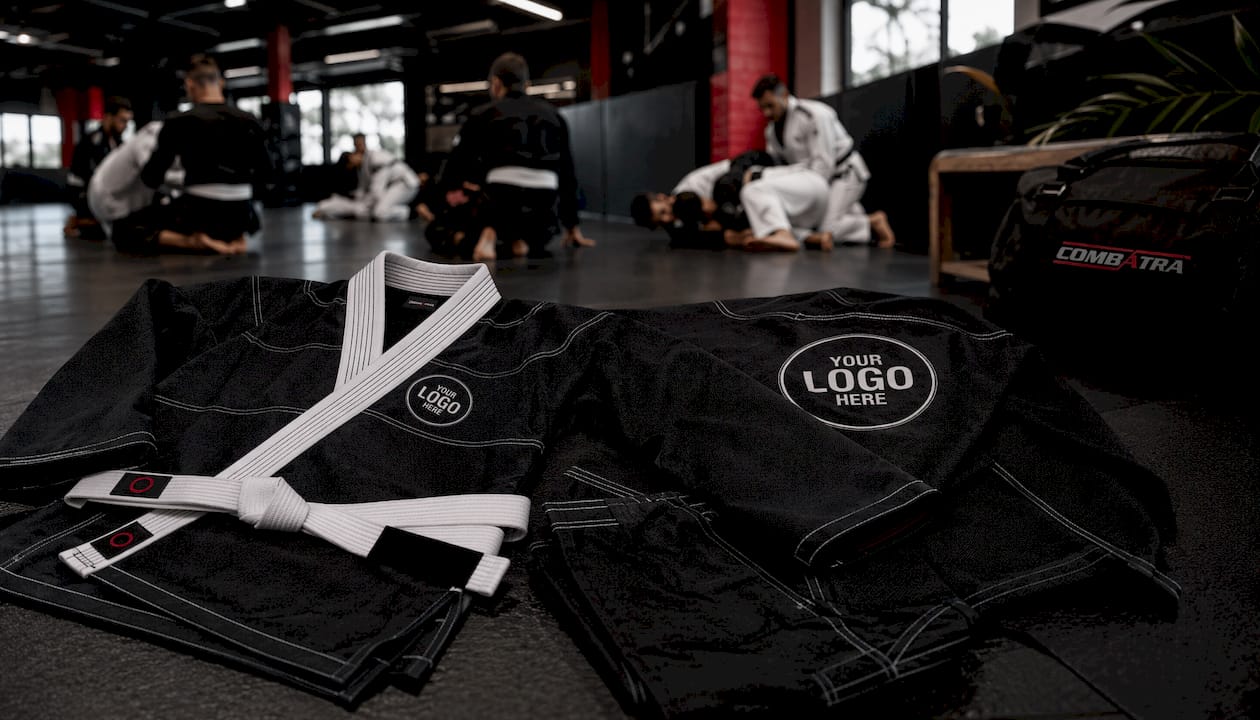
Combatra’s custom gi builder lets you make those decisions yourself. Choose your weave type, select a GSM range suited to your training frequency and climate, and configure reinforcements at the points that matter most for your game. Custom sizing means the gi fits your actual dimensions rather than a generic size chart, which reduces the guesswork around preshrunk allowances. You can also pair a custom gi with a UPF 50+ rashguard for outdoor or summer training sessions, keeping both performance and sun protection consistent across your kit.
The design your own BJJ gi page walks you through each option with clear descriptions of what each choice means for performance and care. If you train in a team or run an academy, custom team gis with consistent branding and sizing are available through the same process.
Useful sources and further reading
These sources informed this guide and are worth consulting directly for product specifications, competition rule updates, and deeper fabric science.
- Brazilian jiu-jitsu gi — Wikipedia: a solid structural overview of gi components, history, and construction terminology
- BJJ Gi Materials Guide: Cotton, Hemp & Blends — Grapplemaps: detailed breakdown of fibre types, shrinkage data, and IBJJF material compliance
- BJJ Gi weight explained — The Practitioner’s Journal: practical GSM guide with performance trade-offs across weight categories
- Lightweight vs Heavyweight Gi — Pacific Sports Australia: Australia-focused buying advice on weave weights and seasonal training considerations
- What Does GSM Mean in BJJ Gis — Heavy BJJ: practical GSM examples with training-use context
- IBJJF Official Rules: the primary source for competition material and uniform requirements — always check here for current rules before competing
- How to select the perfect BJJ gi — Combatra: Combatra’s guide to matching gi specifications to Australian training conditions and competition needs
For competition rule confirmation, always go directly to the organising body’s current rulebook. Rules on fibre content, colour, and dimensions are updated periodically, and third-party summaries (including this one) may not reflect the most recent changes.