


TL;DR:
- Compression pants are the ideal choice for Australian winter combat training because they maintain muscle warmth, support recovery, and reduce skin irritation. Leggings are better suited for low-intensity activities or casual wear when graduated pressure and abrasion resistance are unnecessary. Proper fit and fabric quality are essential for maximizing the benefits of compression gear.
For most Australian combat athletes training outdoors or through the cooler months, compression pants are the better default choice for winter training. Regular leggings work fine for casual warm-ups or low-intensity sessions, but they lack the graduated pressure, abrasion resistance, and thermal support that grappling and striking demand.
Here is why compression pants win for winter combat sports:
- Thermal maintenance: Compression garments raise local skin temperature where worn, helping muscles stay warmer between rounds and during outdoor conditioning.
- Recovery and muscle support: A scoping review of 183 studies found compression garments produce small but favourable effects on perceived soreness and recovery, with positive effects on proprioception and muscle oscillation reduction.
- Skin protection: Compression wear acts as a hygienic barrier against mat abrasion and skin infections during grappling, something standard leggings cannot reliably provide. Premium options may be lab tested to AS 4399:2020 and may be rated for high UPF protection for outdoor sessions.
Pro Tip: For early-morning outdoor sessions in winter, pull on your compression pants before you leave home to help muscles warm up by the time you hit the mat.
The feature-by-feature breakdown below will help you match the right garment to each session type.
Table of Contents
- How do compression pants and leggings compare for winter training?
- How do compression garments actually work?
- Why compression pants help more in Australian winter training
- When are regular leggings the better option?
- How to choose the right compression pants for winter combat sports
- Key takeaways
- The case for getting this choice right
- Combatra compression pants and rashguards for winter training
- Useful sources and further reading
How do compression pants and leggings compare for winter training?
| Dimension | Compression Pants | Regular Leggings |
|---|---|---|
| Thermal warmth / insulation | Raise and maintain local skin temperature; good base-layer warmth | Vary widely; some provide warmth, but no consistent thermal mechanism |
| Compression / muscle support | Graduated pressure zones support venous return and reduce muscle oscillation | Minimal to no targeted pressure; comfort-focused |
| Mobility / flexibility | High-spandex blends and multi-panel construction allow full range of motion | Generally flexible, though cheaper fabrics can restrict movement |
| Moisture-wicking / sweat management | Engineered synthetic blends wick sweat efficiently; critical for multi-session days | Quality varies; cotton-blend leggings retain moisture and increase chafing risk |
| Durability / abrasion resistance | Reinforced seams and dense knit construction handle grappling contact | Not designed for mat work; fabric pills and tears under repeated abrasion |
| Fit / sizing / retention | Sized by limb circumference; waistband and panel design hold position during scrambles | Sized by general body measurements; waistband can slip during dynamic movement |
| Sun protection / UPF | Premium options may be lab tested to AS 4399:2020 and may be rated for high UPF protection | Rarely rated; UPF varies by fabric weight and colour |
| Price / value | Higher upfront cost; longer lifespan under training conditions | Lower entry price; shorter lifespan in grappling use |
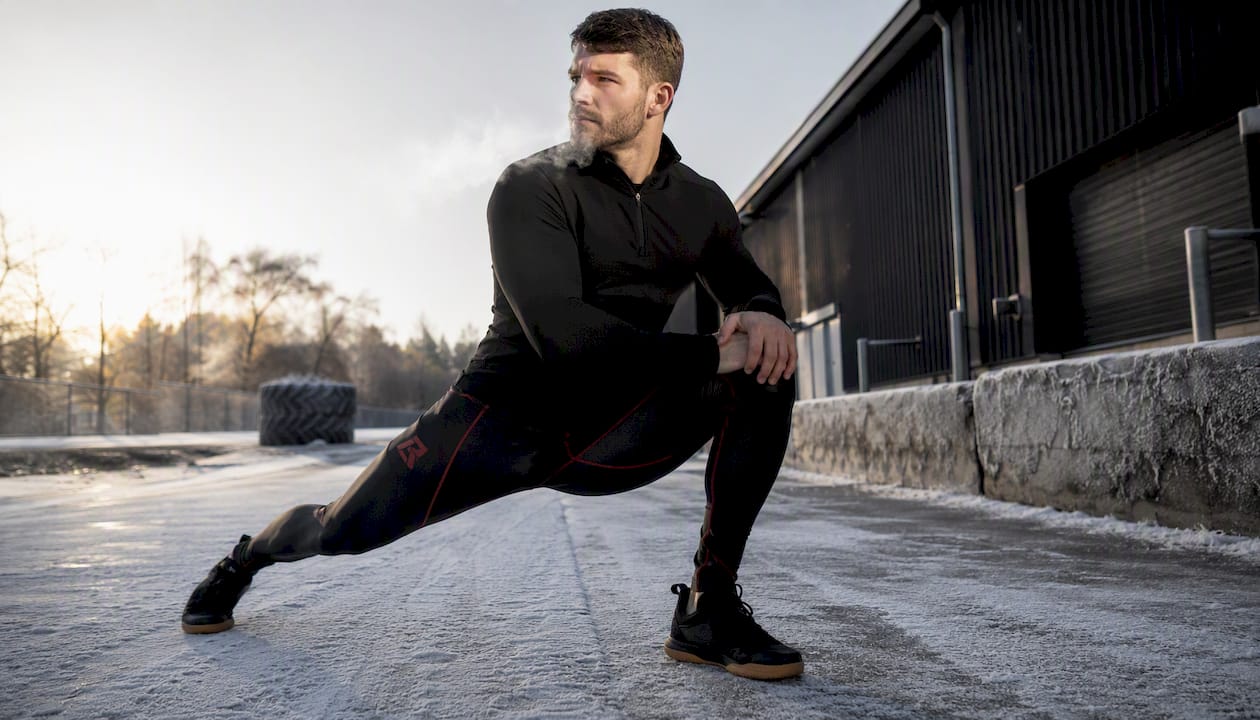
For cold outdoor conditioning, no-gi drilling, and multi-session camp days, compression pants are the clear choice. Leggings are acceptable for yoga-style warm-ups, light stretching, or lifestyle wear where graduated pressure is not needed.
How do compression garments actually work?
Compression pants deliver benefits through graduated pressure and sensory feedback, not simply by being tight. High-quality compression tights use gradient knitting and higher spandex ratios to create targeted support zones, which is structurally different from how standard leggings are constructed.
The physiology matters for fighters. Graduated pressure supports venous return, meaning blood moves back to the heart more efficiently during and after hard sessions. Research suggests compression reduces muscle oscillation and positively affects sensorimotor systems, improving joint proprioception. For BJJ and MMA athletes, that translates to better balance awareness during scrambles and high-impact exchanges.
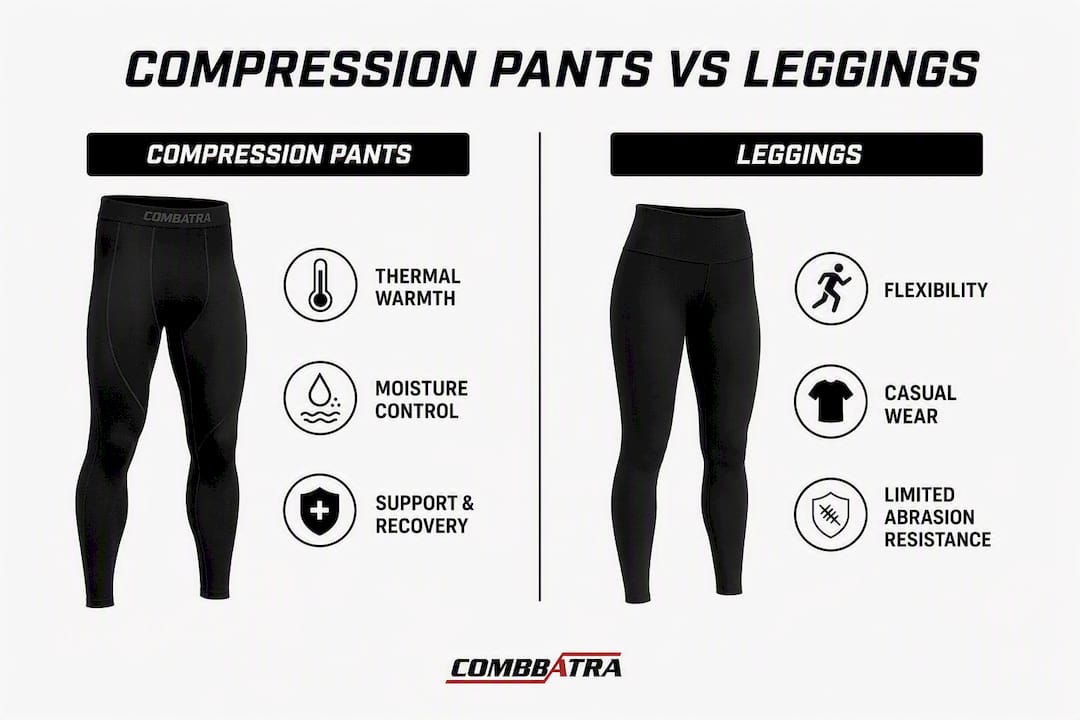
Materials also differ significantly. Compression pants typically use high-spandex nylon or polyester blends with panel counts designed for specific pressure zones. Moderate-pressure compression pants optimise agility and enhance post-exercise recovery markers compared with non-compression alternatives. Standard leggings use a broader fabric range with no pressure engineering.
Practical implications for fighters:
- Wear compression pants during training to benefit from proprioceptive feedback and reduced muscle oscillation.
- Use them post-session for 1–4 hours to capture the strongest evidence-backed effects on soreness and recovery.
- Layer them under a gi for skin protection and warmth during winter BJJ sessions.
- Avoid tight compression during aggressive dehydration periods before weigh-ins.
Compression wear is best understood as a tactical recovery and hygiene tool rather than a guaranteed performance enhancer during exercise. The evidence supports modest, consistent benefits across soreness reduction, proprioception, and thermal maintenance — particularly valuable across a multi-day training camp.
Why compression pants help more in Australian winter training
Australia’s winters are mild compared to many countries, but early-morning outdoor sessions and unheated training spaces still create real challenges for muscle readiness. Compression garments raise and maintain skin temperature where worn, which shortens the time muscles need to reach working temperature. That matters when you are drilling takedowns at 6 AM on a cold mat.
Moisture control is equally important across back-to-back sessions. Compression fabrics wick sweat away from the skin, reducing the chill that comes from damp fabric sitting against your body between rounds. For cold-weather layering, compression pants work best as a base layer under training shorts or a gi, with a lightweight outer shell added for warm-up and removed once you are moving.
Pro Tip: During session breaks in winter, add a light outer layer over your compression pants to prevent rapid heat loss. Remove it before you roll or spar to maintain full mobility.
One hygiene note: grappling environments carry real skin infection risk. Compression wear reduces direct skin-to-mat contact, lowering the chance of abrasion-related infections. That benefit applies year-round but is especially relevant when skin is dry and more prone to micro-tears in cold conditions.
When are regular leggings the better option?
Leggings are the right choice in specific, lower-demand situations. Experts distinguish between comfort-focused leggings and purpose-focused compression wear, and that distinction is worth respecting rather than defaulting to compression for everything.
Leggings work well for:
- Low-intensity conditioning, yoga, or mobility work where graduated pressure adds no benefit.
- Casual warm-ups before a session where you will change into full training gear.
- Lifestyle wear and travel between training venues.
- Sessions where comfort and ease of movement matter more than therapeutic pressure.
Leggings are not suitable for no-gi grappling, where abrasion resistance is critical, or for double-session training days where recovery support between sessions is a priority. The price difference also matters: if you train lightly two or three times a week and rarely grapple, a quality pair of leggings for cold weather may serve you adequately without the added cost of compression wear.
How to choose the right compression pants for winter combat sports
Fit by limb measurement, not by labelled size. Pressure ranges in consumer garments are inconsistently reported, so measuring your thigh and calf circumference gives you a more reliable fit than trusting a size label.
| Selection factor | What to look for |
|---|---|
| Pressure level | Moderate pressure for agility and sustained output; high pressure for explosive short-duration work |
| Post-session wear | Wear for 1–4 hours post-training for best recovery effects |
| Fabric blend | High-spandex nylon or polyester for warmth and moisture management |
| Seam type | Flatlock seams for grappling; reduces chafing under a gi |
| Waistband | Wide, non-roll waistband for retention during scrambles |
| UPF rating | Look for high UPF protection if training outdoors; may be lab tested to AS 4399:2020 |
Fabric blend trade-offs are real. Heavier spandex ratios add warmth but reduce breathability in high-intensity work. For Australian winters, a mid-weight nylon-spandex blend handles most conditions without overheating during hard drilling. Flatlock seams are worth prioritising if you train no-gi or wear compression under a gi regularly.
For academy teams, custom compression wear with team logos, colours, and name printing solves two problems at once: consistent fit across different body types and a unified team identity. Custom panel design also allows pressure zones to be positioned for the specific demands of BJJ or MMA movement patterns.
Pro Tip: After putting on compression pants, check for numbness or skin discolouration within the first 10 minutes. Either sign means the garment is too tight. Size up or try a different brand’s sizing chart.
Note on UPF: a high UPF protection rating applies when fabric is dry and unstretched. Wet or highly stretched fabric provides less protection, so for outdoor winter training, layering strategy that keeps fabric dry and maintains fabric tension helps maintain the UPF benefit.
Key takeaways
Compression pants are the better default for winter combat-sports training in Australia, with leggings remaining a practical option only for low-intensity or casual use.
| Point | Details |
|---|---|
| Default choice for winter | Compression pants maintain skin temperature and support recovery across multi-session training days. |
| Leggings have a place | Use leggings for low-intensity conditioning, casual warm-ups, or lifestyle wear where graduated pressure is not needed. |
| Fit by measurement | Measure limb circumference rather than relying on labelled sizes for a reliable compression fit. |
| Post-session recovery window | Wear compression for 1–4 hours after training to capture the strongest evidence-backed soreness and recovery effects. |
| Combatra custom option | Combatra offers customisable compression pants and high UPF protection rashguards suited to Australian winter training conditions. |
The case for getting this choice right
Most fighters I speak with treat compression wear as an afterthought, something grabbed off a shelf without much thought about pressure level, seam construction, or fabric weight. That approach costs you in two ways: poor fit reduces the recovery benefit, and the wrong fabric choice leaves you cold or overheated at the wrong moment in a session.
The evidence is clear that compression is a modest but consistent tool, particularly for recovery and proprioception. What is less discussed is how much the quality of the garment determines whether you actually get those benefits. A poorly constructed pair of compression pants with inconsistent pressure zones is closer to an expensive legging than a genuine compression garment. Custom fit, proper panel design, and verified UPF ratings are what separate performance gear from marketing copy.
For team buyers, the customisation argument is even stronger. A uniform compression base layer across a squad means consistent fit, consistent recovery support, and no one showing up to a winter camp in cotton leggings wondering why their legs feel stiff by round three.
Combatra compression pants and rashguards for winter training
Combatra builds compression pants and rashguards specifically for combat sports athletes who train through Australian winters and need gear that holds up under real grappling conditions.
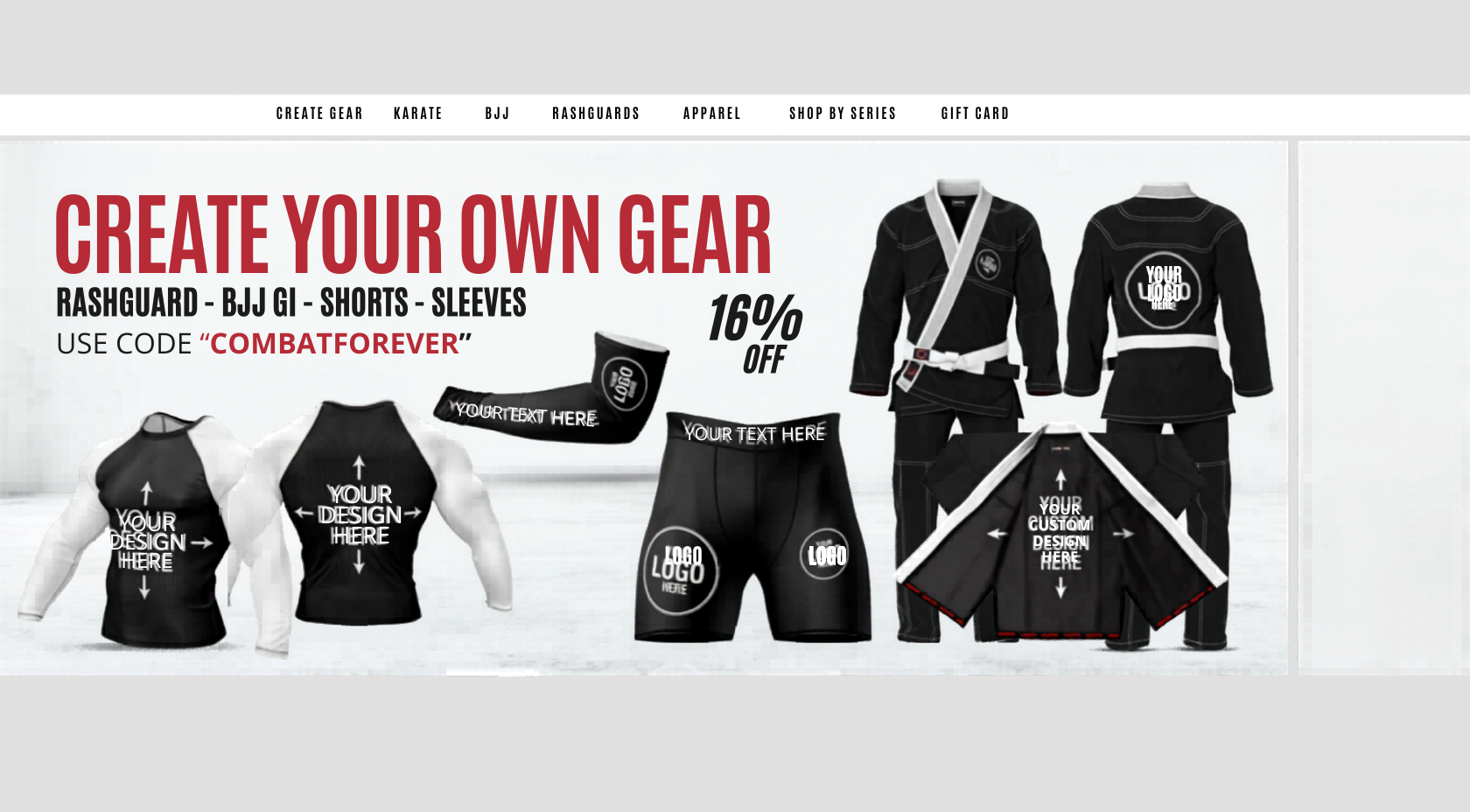
The Custom Black BJJ Rashguard – high UPF protection and the Custom White & Orange BJJ Rashguard – high UPF protection are designed as top-layer options for outdoor and indoor training, with high UPF protection that may be lab tested to AS 4399:2020. The Custom Black & Purple BJJ Rashguard rounds out the rashguard range for teams wanting colour options.
For academy teams, Combatra’s full kit range extends to the White Shirt with Black Pant BJJ Gi, BJJ belts, Kids BJJ belts, and karate uniforms including the Black 10 oz Karate Uniform and Blue 14 oz Karate Uniform. All products can be personalised with names, logos, and colours for individual athletes or academy orders.
Ready to gear up for winter? Explore compression pants and winter training gear at Combatra, or contact the team directly for custom academy orders.
Useful sources and further reading
The sources below informed this article’s evidence base, covering sports-physiology research, Australian sun-safety standards, and Combatra product guidance.
- Putting the squeeze on compression garments: current evidence and recommendations — PMC scoping review of 183 studies; primary evidence source for physiological effects and recovery.
- Effects of compression pants with different pressure levels on anaerobic performance and recovery — Randomised crossover trial on pressure levels and performance outcomes.
- Effect of pneumatic and cold compression on muscle performance and recovery in combat sports athletes — PMC study on compression recovery strategies for combat athletes.
- Compression wear for martial artists: the science — Practitioner-focused overview of compression benefits in grappling contexts.
- Sun-protective clothing (Australia) — Cancer Council Australia guidance on UPF ratings and real-world fabric performance.
- Clothing and fabric testing — ARPANSA — Australian Radiation Protection and Nuclear Safety Agency information on AS 4399 UPF testing.
- Compression pants vs leggings: what are the differences? — Construction and materials comparison between garment types.
- Combatra blog: compression wear and winter training — Combatra-owned content on product selection for Australian winter conditions.
For sizing details, lab-test information, and custom order enquiries, check Combatra’s product pages and blog directly.