


TL;DR:
- Choose a custom gi using the exact product options, measurements, artwork requirements and current event rules. Confirm price, care and timing before approving the order.
A custom BJJ gi can be configured for individual or academy preferences such as colour, logos, names and sizing. This guide covers the checks to make before approving a design: product options, measurements, artwork, care and any event requirements.
What are the key IBJJF design and dimension regulations Australian custom gi designers must follow?
If you intend to compete, check the current organiser rulebook and inspection requirements before finalising a custom gi.
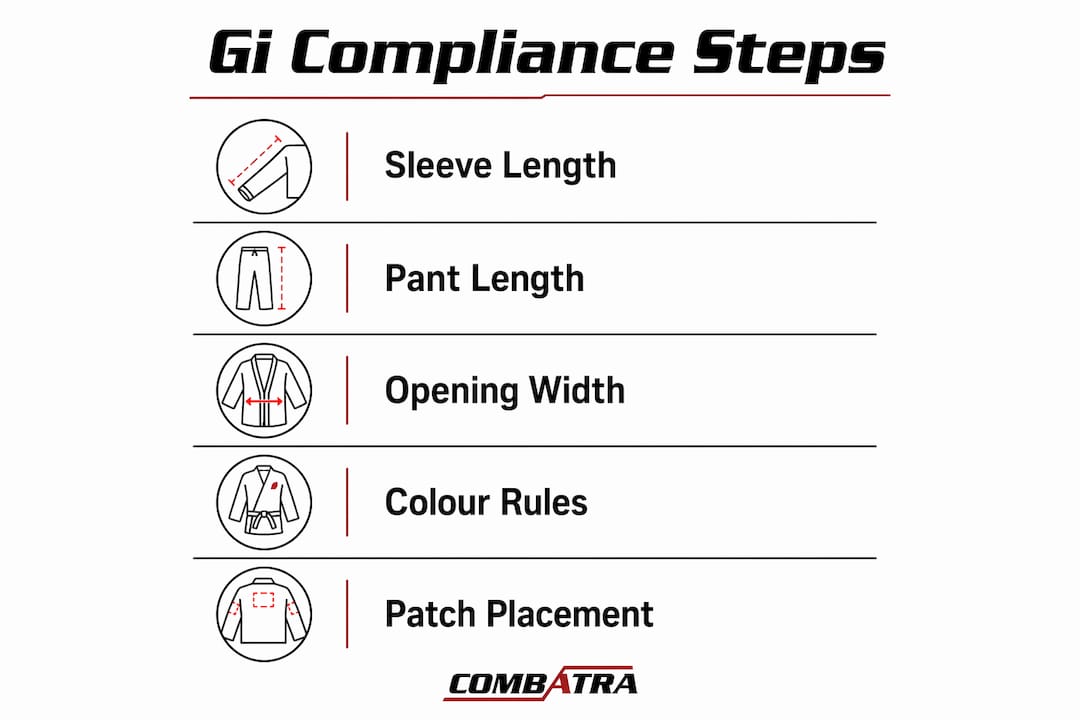
Sleeve and pant length tolerances
Confirm current sleeve and pant requirements with the organiser’s official rules. A third-party IBJJF overview can provide background, but use the current official rules and final garment measurements when approving a design.
Sleeve and pant opening width
Confirm the organiser’s current requirements for sleeve and pant openings. Ask the supplier how its garment measurements are taken before approving the size.
Inspection outcomes depend on the event and current rules. Check the applicable requirements and the finished garment before competing.
Colour and uniformity rules
Check current event colour and uniform requirements before choosing fabric. The linked competition-rules overview is background reading; confirm the current official requirements separately.
Gi condition and patch placement
Inspect the garment for visible wear and confirm current organiser rules for condition, logos and patches. The linked uniform guide provides related background.
| IBJJF rule | Requirement |
|---|---|
| Sleeve length | Check current event rules and final sleeve measurements |
| Pant length | Check current event rules and final pant measurements |
| Opening width | Confirm current organiser requirements for garment openings |
| Approved colours | Check current event colour rules before choosing fabric |
| Jacket and pants | Confirm current uniform requirements for your event |
| Gi condition | Inspect for wear and check current event requirements |
Pro Tip: Before approving a competition order, check current organiser rules and confirm final garment measurements with the supplier.
How to choose materials and fabrics for durability and comfort in Australian climates
When comparing fabrics, consider local training conditions, personal comfort and the care required. Check the exact product specifications before ordering.
Weave types and their Australian suitability
Weave, fabric weight and composition vary by product. Compare the exact supplier specification and care guidance rather than assuming a particular weave is best for every Australian training setting.
Choose fabric using the product’s actual specification and your preferences. The best gi fabric weight guide gives background on fabric weight; confirm details on the item you plan to buy.
Cotton vs blends
Fabric composition and wash behaviour vary by garment. Check the supplier’s current specification and care instructions rather than assuming a fixed shrinkage rate for cotton or blends.
Pro Tip: For a team order, ask about current fabric specifications and whether a sample is available before approving production.
What are the best practices for sizing a custom BJJ gi for competitive compliance?
Use the measurements and instructions for the exact product. Confirm sizing before approving a custom order, including any separate jacket and pants selections.
-
Follow the supplier’s measuring instructions for sleeve length and record the requested measurements.
-
Record chest measurements as directed by the supplier. Do not add a fixed allowance unless its size instructions require one.
-
Use the waist or hip measuring position specified by the supplier for the pants you are choosing.
-
Check the exact fabric and care guidance rather than assuming a fixed shrinkage percentage.
-
For competition, compare final garment measurements with current organiser requirements before approving the order.
-
Compare your measurements with the exact product’s size chart. The BJJ gi size chart guide provides background on reading sizing information.
-
For a team order, ask whether a sample is available. Check its fit and follow the supplied care guidance before deciding on the final order.
Check the live product page or request a current quote for price, available options and order terms.
How can Australian BJJ academies brand their gis with custom designs?
For team branding, confirm the supplier’s artwork requirements and available options. If competing, check current organiser branding rules before approving production.
Branding methods compared
Branding availability, garment compatibility and care vary. Ask which methods are supported on the exact item and review an artwork proof before approving production.
- Embroidery: ask about artwork size, placement, thread options and care.
- Sublimated panels: ask whether the selected garment supports the design and placement you want.
- Screen printing: request current availability, quote and care guidance.
- Heat transfers: confirm garment compatibility, placement and care.
- Woven patches: confirm size, attachment and current organiser placement rules if competing.
IBJJF patch placement rules
Before adding logos or patches for competition, check current organiser rules for location and size. Confirm the final artwork with the supplier. For design background, see the personalise BJJ gi guide.
Cost and turnaround considerations
Request a current quote covering artwork setup, unit cost, sample options and timing. Confirm the expected delivery date before committing to an event.
Pro Tip: Ask which artwork format the supplier accepts and check logo size and placement on the design proof before approval.
Key takeaways
Base a custom gi order on verified product options, accurate measurements, artwork requirements, care guidance and any current event rules.
| Point | Details |
|---|---|
| IBJJF dimension compliance | Compare final garment measurements with current organiser rules |
| Fabric weight for Australia | Review the exact specification and your local training conditions |
| Pre-shrunk fabric matters | Check product-specific care; do not assume fixed shrinkage |
| Branding method longevity | Compare supplier options and care guidance |
| Plan ahead for custom orders | Confirm quote, sample process and timing before approval |
Custom gi checks for Australian academies
Before approving an academy order, confirm current event rules, garment measurements, artwork requirements and care guidance.
Inspection practices can change. Check the current organiser rulebook and inspect the finished garments before an event.
Compare the exact product specification, sample process, care guidance and current quote. The select the right gi guide can help structure your product comparison.
Team branding is a design choice. Confirm the academy’s artwork and the garment options before committing to production.
Combatra’s custom BJJ gi service for Australian practitioners
Combatra’s design your own BJJ gi page offers colour, logo and name options, a custom-tailored size request and separate jacket and pants size controls. Review the current options and any event requirements before ordering.

Use the current product page to review available custom options. For an academy order, contact Combatra for current order guidance. The custom BJJ gi alternatives guide provides related design context.
FAQ
What colours are allowed for a custom BJJ gi in IBJJF competition?
Confirm the current organiser rulebook for permitted colours and uniform requirements before entering an event.
How do I stop my custom gi from shrinking out of IBJJF compliance?
Follow the supplier’s care guidance and check final measurements against the organiser’s current requirements before competing.
What is the best fabric weight for a custom BJJ gi in Australia?
There is no universally best fabric weight. Compare the exact garment specification, care guidance and your local training conditions.
How long does a custom gi order take in Australia?
Delivery timing depends on the order details. Confirm current timing with Combatra before committing to an event date.
Which branding method lasts longest on a custom BJJ gi?
Branding durability varies by garment, method and care. Review the supplier’s current options and care guidance before choosing.