


TL;DR:
- Long sleeve rashguards help keep athletes warm during winter training by preventing rapid cooling from sweat evaporation. They wick moisture, stabilize microclimate, and provide compression, not insulation. Proper fabric choice and layering enhance their effectiveness in cold conditions.
A rashguard is defined as a close-fitting athletic garment designed to manage sweat, reduce skin abrasion, and support muscles during high-contact training. For BJJ, MMA, and grappling athletes, it is performance gear first and clothing second. Long sleeve rashguards extend these benefits through winter training by controlling moisture and maintaining a stable skin microclimate, not by acting as a thick insulating layer. Understanding this distinction changes how you select and use your winter training apparel. Premium rashguards, including those tested to AS 4399:2020 and rated UPF 50+, also protect against Australia’s intense UV exposure during outdoor sessions. Combatra builds rashguards to meet both demands: cold-weather moisture control and sun protection for year-round training.
Do long sleeve rashguards keep you warm during winter training?
Long sleeve rashguards keep you warm during winter training by preventing the rapid cooling that follows sweat accumulation on your skin. They do not generate heat. What they do is stop evaporative cooling from wet skin, which is the primary cause of that sharp chill you feel between rounds in a cold gym.
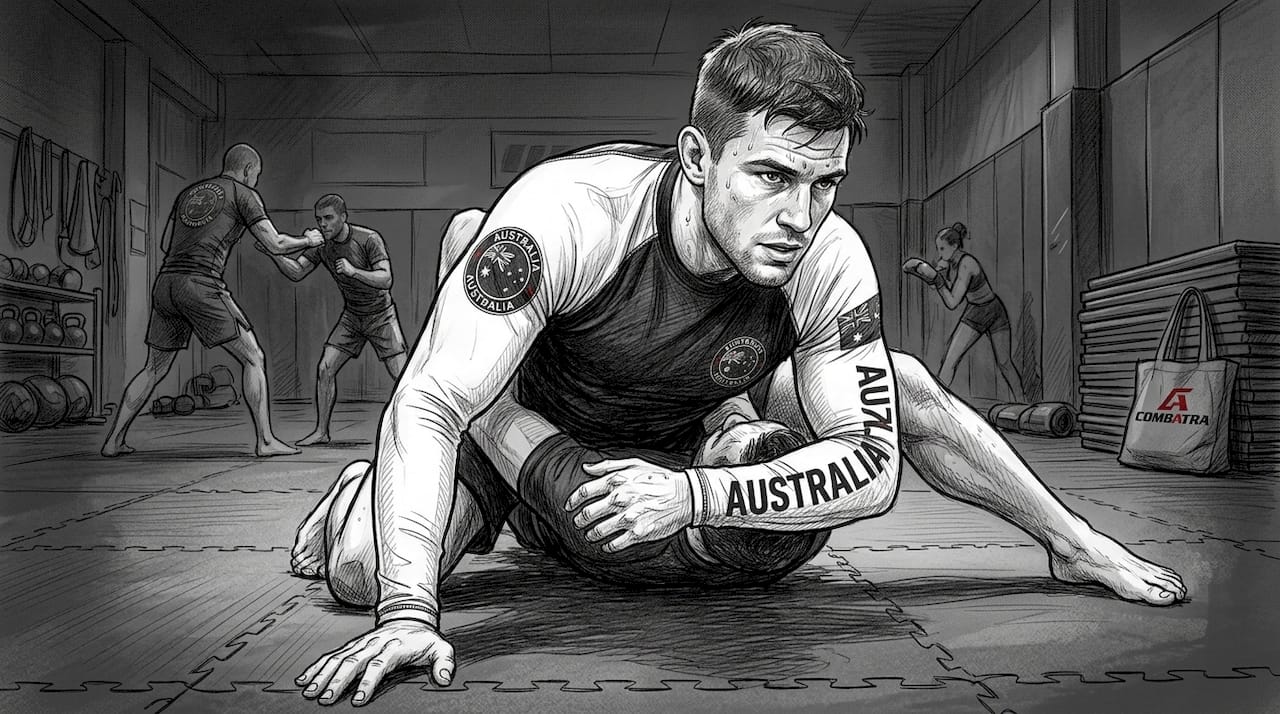
Rashguards manage heat through moisture control, not insulation. A dry layer against your skin is the critical factor in avoiding rapid cooling after intense drilling or sparring. When sweat sits on your skin and evaporates in a cold environment, your core temperature drops quickly. A well-designed rashguard wicks that moisture away before evaporation can chill you.
Compression also plays a direct role. Compression garments reduce perceived cold by stabilising muscles and providing psychological readiness, which improves thermal comfort during early cold exposure. Practitioners consistently report less muscle stiffness and a greater sense of readiness when wearing compression layers before training begins.
The key benefits of long sleeve rashguards in winter training include:
- Moisture removal: Polyester/spandex blends wick sweat away from skin, reducing evaporative cooling between rounds.
- Microclimate stability: The garment maintains a consistent temperature layer against your skin throughout training.
- Muscle stabilisation: Compression reduces stiffness during warm-up in cold conditions.
- Abrasion protection: Full sleeve coverage reduces mat burn and skin irritation during ground work.
- UV protection: UPF 50+ rated fabrics protect during outdoor sessions regardless of season.
Pro Tip: Arrive at training already wearing your rashguard. Putting it on in a cold change room before your body warms up lets the compression begin stabilising muscles from the start.
What fabric features make a rashguard suited for winter training?
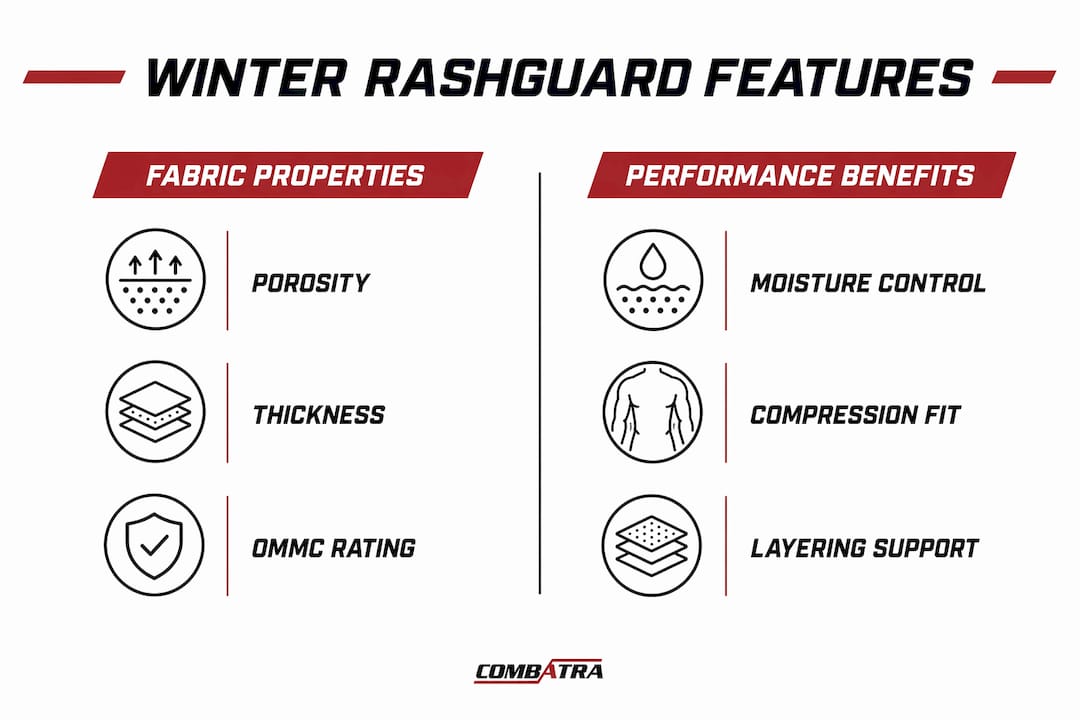
Fabric construction determines how well a rashguard performs in cold conditions. The most effective winter rashguards use polyester/spandex blends with specific porosity and thickness values that balance moisture transport with enough coverage to prevent chilling.
Optimal fabric porosity in polyester/spandex blends sits between 0.70 and 0.80, with a thickness of 0.8–1.2 mm. This range achieves the best balance of heat dissipation and moisture control. Fabrics within these parameters achieve an Overall Moisture Management Capacity (OMMC) of up to 0.761, which represents high-performance sweat transport during training.
Lyocell blends add another layer of performance. Lyocell-containing fabrics reduce under-garment relative humidity by 15–30% during intense movement compared to standard synthetics. Lower humidity under the garment means less thermal strain and a more stable microclimate, which is exactly what you need during a winter BJJ session that alternates between hard rolling and rest periods.
The table below summarises the key fabric parameters to look for when choosing a winter rashguard:
| Fabric feature | What to look for | Why it matters in winter |
|---|---|---|
| Fabric porosity | 0.70–0.80 | Balances breathability with moisture control |
| Fabric thickness | 0.8–1.2 mm | Provides coverage without slowing wicking |
| OMMC rating | 0.70 or above | Indicates high sweat transport capacity |
| Fibre type | Polyester/spandex or Lyocell blend | Fast drying, low humidity retention |
| Sleeve length | Full long sleeve | Covers forearms and reduces heat loss from limbs |
Ergonomic patterning also matters. Rashguards with mesh ventilation zones in high-heat areas like the underarms and upper back prevent overheating during intense rounds while maintaining warmth across the torso and arms. This targeted design keeps you comfortable across the full range of training intensities.
Pro Tip: Check the OMMC rating when comparing rashguards. A rating above 0.70 indicates the fabric actively transports moisture rather than simply absorbing it.
Should I wear long sleeve rashguards alone or as part of a layering system in winter?
Layering with rashguards as base layers supports moisture control and effective thermal regulation across different activity intensities and ambient temperatures. Whether you need additional layers depends on your gym temperature and how hard you train.
The layering principle for BJJ winter training works in three stages:
- Base layer (rashguard): Your long sleeve rashguard sits directly against your skin. Its job is moisture management. It wicks sweat away and maintains a stable microclimate. This layer must fit close to the body to function correctly.
- Mid layer (optional): A lightweight compression top or training jacket worn over the rashguard adds insulation during warm-up or rest periods. Remove it once training intensity rises. Keeping a mid layer on during hard rolling traps too much heat and defeats the moisture-wicking function of the base layer.
- Outer layer (warm-up only): A training hoodie or tracksuit worn before and after training prevents rapid cooling when you are stationary. Remove it before drilling begins.
The rashguard’s role in this system is non-negotiable. Without a moisture-wicking base layer, any mid or outer layer absorbs sweat directly and becomes cold and heavy. Layering prevents chilling during rest and maintains comfort across full training cycles, from warm-up through sparring and cool-down.
Gym temperature is the deciding factor for how many layers you need. In a heated indoor gym, a long sleeve rashguard alone is often sufficient. In an unheated shed or outdoor training space during an Australian winter, a mid layer during warm-up and drilling is worth adding. Pair your rashguard with compression pants to extend the layering benefit to your lower body and reduce heat loss through the legs.
Avoid the common mistake of choosing a thicker rashguard as a substitute for proper layering. Thicker rashguards slow moisture-wicking, which leads to higher sweat accumulation and greater evaporative cooling. Effective thermal comfort depends more on wicking speed than on insulation.
How does fit and compression affect warmth and performance in cold conditions?
Compression fit is the single most important construction factor for warmth in a rashguard. A close-fitting garment maintains contact with the skin, which is what enables moisture transfer. A loose rashguard leaves air gaps that allow sweat to pool and cool against your skin.
Compression level significantly influences the perception of warmth. Loose rashguards offer less perceived warmth. Overly tight compression limits flexibility and comfort, which reduces performance during technical drilling and ground work. The right fit is firm contact across the torso and sleeves without restricting shoulder rotation or hip movement.
The key fit considerations for winter training include:
- Sleeve length: Full long sleeves should reach the wrist without riding up during guard passing or arm locks.
- Torso length: The rashguard should stay tucked during movement to prevent cold air reaching your lower back.
- Shoulder fit: Raglan or ergonomic shoulder seams allow full overhead movement without the garment pulling away from the body.
- Compression grade: Medium compression is the practical standard for BJJ. It supports muscles without restricting technique.
Moisture-wicking fabrics lower thermal strain scores and improve comfort during activity in climate-controlled environments. This finding matters because it confirms that the fabric’s wicking performance, not its thickness, drives thermal comfort. A thin, well-fitted rashguard in a quality polyester/spandex blend outperforms a thick, loose garment in cold conditions every time.
A common misconception is that a heavier or thicker rashguard provides more warmth. Thinner, porous fabrics facilitate better heat dissipation and moisture transport than thicker equivalents. The physics are straightforward: moisture moves faster through a porous, thin fabric, which keeps your skin drier and warmer throughout training.
Key takeaways
Long sleeve rashguards keep you warm in winter training by managing moisture and providing compression, not by acting as insulation.
| Point | Details |
|---|---|
| Warmth mechanism | Rashguards prevent evaporative cooling by wicking sweat away from skin during training. |
| Fabric matters most | Polyester/spandex blends with OMMC above 0.70 deliver the best moisture transport in cold conditions. |
| Layering is the system | Use the rashguard as a base layer and add a mid layer during warm-up or rest periods only. |
| Fit drives performance | Medium compression with full sleeve coverage maintains skin contact and reduces heat loss. |
| Thickness is not warmth | Thinner, porous fabrics wick faster and keep you warmer than thick, slow-drying alternatives. |
What I’ve learned from years of winter training in rashguards
The biggest mistake I see athletes make in winter is reaching for the thickest rashguard they own. It feels logical. Thicker should mean warmer. But after years of watching athletes shiver between rounds in heavy, sweat-soaked gear, the evidence is clear: wicking speed beats thickness every time.
The athletes who stay comfortable through a full winter session are the ones wearing a well-fitted, medium-weight rashguard as a true base layer. They add a light jacket for warm-up, strip it off before drilling, and let the rashguard do its job. Their skin stays dry. Their muscles stay warm. They are not fighting their gear.
Fabric choice is personal, and it depends on your sweat rate and your gym’s temperature. A practitioner who sweats heavily in a heated gym needs a high-OMMC fabric above everything else. Someone training in an unheated space in the middle of a southern Australian winter needs that same wicking performance plus a reliable mid layer. One rashguard does not fit every situation, which is why understanding the mechanism matters more than following a single product recommendation.
My honest advice: try a quality long sleeve rashguard for a full month of winter training before drawing conclusions. Pay attention to how your skin feels between rounds, not just during them. That is where the difference shows up.
— McGinnis
Combatra’s custom rashguards for Australian winter training
Combatra builds rashguards for athletes who train through every season, not just the warm months.

Every Combatra rashguard uses performance polyester/spandex blends selected for moisture management and durability under real training conditions. Fabrics are lab tested to AS 4399:2020 and rated UPF 50+, covering you for outdoor sessions where Australian UV levels remain high even in winter. You can design your own rashguard with your choice of fabric weight, sleeve length, and custom colours or academy branding. Whether you train in a heated city gym or an unheated shed, Combatra’s custom options let you match your gear to your actual training environment.
FAQ
Do rashguards actually keep you warm in winter?
Yes. Long sleeve rashguards keep you warm by preventing evaporative cooling from sweat, which is the primary cause of chilling between rounds in cold gyms. They do not generate heat but maintain a dry, stable microclimate against your skin.
Is a long sleeve rashguard enough for winter BJJ training?
In a heated gym, a long sleeve rashguard is often sufficient on its own. In an unheated training space, pair it with a light mid layer during warm-up and remove that layer before intense drilling begins.
What fabric is best for a winter rashguard?
Polyester/spandex blends with an OMMC rating above 0.70 and a fabric thickness of 0.8–1.2 mm perform best. Lyocell blends also reduce under-garment humidity significantly during intense movement.
Does a thicker rashguard mean more warmth?
No. Thicker rashguards slow moisture-wicking, which increases sweat accumulation and evaporative cooling. Thermal comfort depends on wicking speed, not fabric thickness.
Can I wear a rashguard under my gi in winter?
Yes. A long sleeve rashguard worn under a gi adds a moisture-wicking base layer that keeps your skin dry and reduces chilling during rest periods. It also protects against mat abrasion and reduces gi friction on your skin.