


TL;DR:
- Choosing the right fabric weight for a custom karate gi depends on training conditions, with 8 oz fabrics ideal for summer and 10-12 oz for year-round use. Proper sizing ensures unrestricted movement and avoids discomfort, especially for children and practitioners with unique proportions. Embroidery must follow competition rules, and selecting fabrics with sun protection benefits outdoor training in Australia.
A custom karate gi is defined as a personalised martial arts uniform tailored to your exact measurements, fabric preferences, and dojo identity. This guide to custom karate uniforms covers everything Australian practitioners and parents need to know, from fabric weights and sizing to embroidery rules and seasonal comfort. Whether you train indoors through winter or outdoors in the Australian summer, the right gi makes a real difference to your performance and confidence. Combatra designs custom martial arts gear built for these exact conditions, with options for kids and adults, 8 oz lightweight fabric, and personalised embroidery. Getting these decisions right from the start saves you time, money, and frustration down the track.
What fabric weights and materials are best for custom karate uniforms?
Fabric weight is the single most important decision when choosing a custom karate gi. It affects breathability, durability, and how the uniform performs across different training environments.
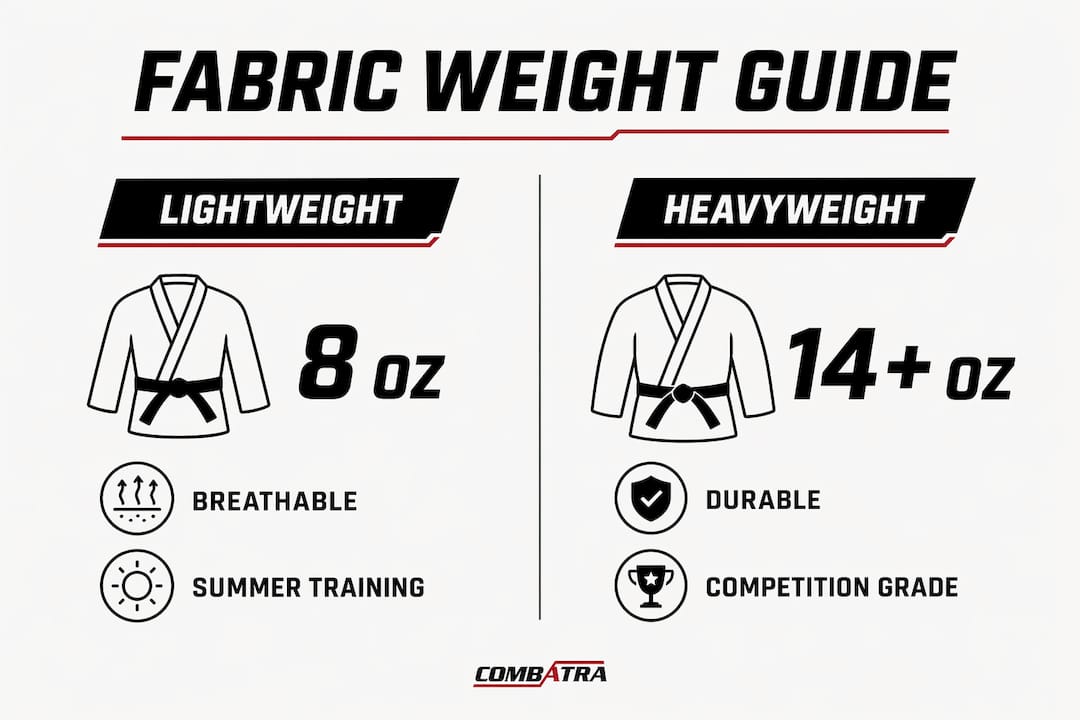
Karate uniforms typically range from 8 oz at the lightweight end to 14 oz or heavier for competition-grade options. Each weight suits a different purpose.
Lightweight (8 oz)
Lightweight 8 oz uniforms provide enhanced breathability and comfort during hot weather training, making them well suited to Australian conditions. They dry quickly, reduce heat build-up, and allow full range of motion during fast kata or kumite sequences. The trade-off is that lighter fabric shows wear sooner under heavy daily training.
Medium weight (10–12 oz)
Medium weight uniforms balance comfort and durability. They suit year-round training in most Australian dojos and hold embroidery well without puckering. Most practitioners who train three or more times per week find this range the most practical.
Heavyweight (14 oz and above)
Heavyweight gis offer the crisp snap and structure that senior competitors prefer for kata presentation. They wear exceptionally well over years of training. The downside is heat retention, which makes them uncomfortable in summer or during high-intensity sessions.
Fabric composition matters as much as weight. Pure cotton breathes well and feels comfortable against the skin, but it shrinks more than blended fabrics. Cotton-polyester blends resist shrinkage, dry faster, and hold colour better over time. For Australian practitioners training outdoors or in warm gyms, a cotton-polyester blend in the 8–10 oz range is the most practical starting point.
Pro Tip: Order a swatch or sample if you can before committing to a full custom order. Feeling the fabric in your hands tells you more than any product description.
| Weight | Best for | Key benefit | Consideration |
|---|---|---|---|
| 8 oz | Summer, intense training | Maximum breathability | Less durable long-term |
| 10–12 oz | Year-round training | Balanced comfort and durability | Most versatile choice |
| 14 oz+ | Competition kata | Crisp presentation, longevity | Warm in hot conditions |
How to choose the right fit and size for kids and adults
Correct uniform fit is critical for unrestricted movement, and accurate measurements prevent both disqualification at competitions and discomfort during training. Getting sizing right the first time is especially important for custom orders, where returns and alterations add cost and delay.
Follow these steps to measure correctly:
- Measure height and weight first. Most sizing charts use these two figures as the starting point. Height determines jacket and pant length, while weight guides the overall cut.
- Measure chest circumference. Wrap the tape around the fullest part of the chest, keeping it level. Add 5–8 cm for a relaxed training fit, or stay closer to the measurement for a tailored competition cut.
- Measure sleeve length. Run the tape from the centre back of the neck, across the shoulder, and down to the wrist. Sleeves should end at or just above the wrist bone.
- Measure inseam for pants. Measure from the crotch to the ankle. Karate pants should sit at the ankle, not drag on the floor.
- Confirm jacket length. The jacket hem should fall to the mid-hip. Too short and it pulls out during throws; too long and it restricts hip movement.
Sizing children versus adults
Children grow quickly, and custom uniforms can accommodate growth through flexible sizing and fabric selections that allow for a little extra room. For kids, ordering one size up in jacket length while keeping the chest measurement accurate gives six to twelve months of additional wear. Avoid going more than one size up, as excess fabric bunches at the armpits and restricts technique.
Adults with non-standard proportions, such as long arms and a shorter torso, benefit most from custom ordering. Off-the-shelf uniforms rarely accommodate these combinations well.
Pro Tip: For children, measure them in the morning before training. Limbs swell slightly after exercise, which can lead to overestimating the size needed.
What customisation options are available for embroidery, logos, and personal details?
Embroidery adds professional appearance and personal identification to any custom karate gi. It also builds dojo unity when a whole team wears matching designs. The key is understanding what is allowed in competition versus what works for training.
Competition rules on emblems and logos
National emblems or flags must be placed on the left breast of the karate jacket and cannot exceed 12 cm by 8 cm for competition compliance under WKF kata rules. Exceeding these dimensions risks disqualification. Dojo logos and sponsor patches face similar restrictions, so always check the specific ruleset for your event before finalising your design.
What you can personalise
- Name embroidery: Your name or student number on the jacket lapel or chest is the most common personalisation. It aids identification at tournaments and adds a sense of ownership.
- Dojo logo: A dojo crest on the back or left breast is standard for team uniforms. Vector artwork produces the cleanest embroidery result.
- National emblems: The Australian flag or national emblem can be added to the left breast within the size limits above.
- Belt rank indicators: Some dojos embroider coloured stripes or rank symbols on the jacket hem or collar.
- Font and colour choices: Most custom suppliers offer a range of thread colours and font styles. Choose high-contrast thread colours for visibility and readability.
Caring for embroidered uniforms
Wash embroidered gis inside out in cold water on a gentle cycle. Hot water and aggressive agitation cause thread to fray and backing material to separate. Air dry rather than tumble dry. Proper care and embroidery maintenance extends uniform lifespan and keeps the embroidery looking sharp for years.
What factors should you consider for seasonal comfort and training environments?
Australia’s climate creates specific demands that practitioners in cooler countries rarely face. Choosing the right uniform for your season and training environment protects both your performance and your long-term health.
Key considerations by season and environment:
- Summer and hot climates: Choose 8 oz cotton-polyester blends. These fabrics wick moisture away from the skin and dry quickly between rounds. Avoid heavy cotton-only fabrics, which hold sweat and become heavy during long sessions.
- Winter training: Layer a compression rashguard or long-sleeve base layer under your gi. A medium-weight uniform (10–12 oz) provides enough warmth without requiring a separate jacket. Combatra’s compression wear is designed to sit flat under a gi without adding bulk.
- Outdoor training: Australian sun exposure is high. UPF-rated fabrics tested to AS 4399:2020 provide essential protection during outdoor or summer training. Selecting sun-protective uniforms reduces long-term UV damage risk, which is a genuine concern for Australian practitioners who train outside regularly.
- Indoor dojo training: Breathability still matters indoors. Poorly ventilated dojos in summer can reach temperatures that rival outdoor conditions. A lightweight gi keeps you cooler and more focused.
- Durability for outdoor surfaces: Training on grass or concrete puts more stress on fabric than a sprung dojo floor. Heavier weave fabrics resist abrasion better in these environments.
Pro Tip: If you train outdoors in summer, consider a UPF 50+ rated rashguard under your gi for added sun protection on your arms and torso.
How to order and care for your custom karate uniform
A clear ordering process reduces errors and ensures timely delivery for competition readiness. Follow these steps from start to finish:
- Choose your fabric weight and colour. Decide based on your primary training environment and season. White remains the standard for competition; black and navy are common for club training.
- Provide accurate measurements. Use the measurement steps outlined above. Double-check sleeve and pant length before submitting. Errors here are the most common cause of fit problems.
- Confirm your embroidery design. Submit vector artwork for logos. Specify thread colours, font style, placement, and size. Request a digital proof before production begins.
- Verify sizing for children. If ordering for a child, note their current measurements and flag whether you want room for growth. A reputable supplier will advise on the best approach.
- Allow adequate lead time. Custom orders typically require two to four weeks for production, plus shipping time. For competition deadlines, order at least six weeks in advance.
- Inspect on arrival. Check embroidery placement, seam quality, and measurements against your order confirmation. Raise any issues promptly.
Caring for your gi long-term
Wash your gi after every session. Bacteria and sweat degrade fabric fibres faster than training does. Use cold water, a gentle detergent, and air dry in the shade to prevent UV fading. Avoid bleach on coloured uniforms or embroidered sections. For minor repairs, a dojo-grade needle and matching thread handles most seam splits quickly. Reinforce stress points like the collar and knee panels periodically if you train daily.
Key takeaways
Choosing the right custom karate gi requires matching fabric weight, accurate sizing, and compliant embroidery to your specific training environment and competition requirements.
| Point | Details |
|---|---|
| Fabric weight drives performance | Choose 8 oz for Australian summer training; 10–12 oz for year-round use; 14 oz+ for competition kata. |
| Accurate measurements prevent errors | Measure height, chest, sleeve, and inseam before ordering; children benefit from one size up in length. |
| Embroidery must meet competition rules | National emblems on the left breast cannot exceed 12 cm by 8 cm under WKF kata regulations. |
| Sun protection matters outdoors | Select UPF-rated fabrics tested to AS 4399:2020 for outdoor or summer training in Australia. |
| Order early and care consistently | Allow six weeks for custom orders; wash cold, air dry, and inspect embroidery regularly. |
What I’ve learned from years of watching practitioners get this wrong
The most common mistake I see is practitioners buying the heaviest gi they can find because it “looks serious.” A 14 oz uniform on a junior student training through an Australian summer is a recipe for heat exhaustion and a gi that gets left at home. The uniform has to suit the person and the conditions, not the other way around.
The second mistake is underestimating how much embroidery placement matters. I’ve seen competitors turned away at registration because their dojo logo sat two centimetres outside the permitted zone. Reading the WKF kata competition rules before you finalise your design takes ten minutes and saves a lot of grief on competition day.
For parents buying for children, I’d strongly recommend sizing for a twelve-month growth window rather than a perfect fit today. Kids grow fast, and a gi that fits perfectly in march can be too short by september. Build in the room and use a belt to manage the jacket fit in the meantime.
The detail most people overlook is fabric care. A well-made custom gi can last three to five years with proper washing. Most practitioners halve that lifespan by tumble drying on high heat. Air drying in the shade takes longer but preserves both the fabric and the embroidery. That’s the difference between a gi that still looks sharp at a grading and one that looks tired after six months.
— McGinnis
Combatra’s custom karate uniforms for Australian practitioners
Combatra builds custom karate uniforms for Australian dojos, individual competitors, and families who want gear that performs in real conditions.

The karate uniforms collection includes fabric weights from 8 oz lightweight through to heavier competition options, with full custom embroidery for names, dojo logos, and national emblems. Sizing covers children and adults, with guidance on measurements built into the ordering process. The custom sportswear design platform lets you choose colours, fonts, and placement before your order goes into production. For practitioners who want to complete their kit, the premium gi collection and BJJ belts round out the range. Every uniform is built to handle Australian training conditions from the first session.
FAQ
What is the best fabric weight for a custom karate gi in Australia?
An 8–10 oz cotton-polyester blend suits most Australian practitioners, offering breathability for summer training and enough durability for regular sessions. Heavier weights above 12 oz are better reserved for competition kata where presentation matters more than heat management.
How do I size a custom karate uniform for a child?
Measure height, chest, sleeve length, and inseam, then order one size up in jacket length to allow for growth. Avoid going more than one size up, as excess fabric restricts technique and looks untidy at gradings.
What embroidery is allowed on a karate uniform in competition?
Under WKF kata competition rules, national emblems on the left breast cannot exceed 12 cm by 8 cm. Dojo logos and sponsor patches face similar restrictions, so confirm the specific ruleset for your event before finalising your embroidery design.
How long does a custom karate uniform order take?
Custom orders typically take two to four weeks in production, plus shipping time. For competition deadlines, place your order at least six weeks in advance to allow time for any adjustments.
How do I care for an embroidered karate gi?
Wash inside out in cold water on a gentle cycle and air dry in the shade. Avoid tumble drying and bleach, which degrade both the fabric and the embroidery thread over time.