


TL;DR:
- Proper care, including cold washing and shade drying, is essential to extend a BJJ gi’s lifespan in Australian conditions. Frequent washing and proper drying techniques prevent damage from heat and UV exposure, ensuring the gi remains durable and effective for years. Avoiding harsh chemicals and drying a gi in shade while rotating multiple gis further preserves fabric integrity and hygiene.
Proper washing and care for a BJJ gi is the single most important factor in preserving its performance, hygiene, and lifespan. A well-maintained gi lasts 2–3 years; poor habits like hot water washing, bleach use, or damp storage cut that lifespan dramatically. In Australia, the combination of intense UV exposure, high humidity in coastal cities, and frequent training sessions creates specific challenges that standard laundry advice does not address. This guide covers everything you need to know, from fabric construction and stain treatment to drying methods suited to Australian conditions, so your gi stays clean, grippy, and competition-ready.
How to wash and care for a BJJ gi in Australia: what you need to know first
Understanding your gi’s construction is the foundation of good care. Most BJJ gis are made from tightly woven cotton in one of three weave styles: single weave, double weave, or pearl weave. Pearl weave is the most common choice for Australian practitioners because it balances durability with breathability in warm training environments. The collar is typically reinforced with a dense rubber or foam core wrapped in cotton, and the pants use a ripstop or canvas weave for abrasion resistance.
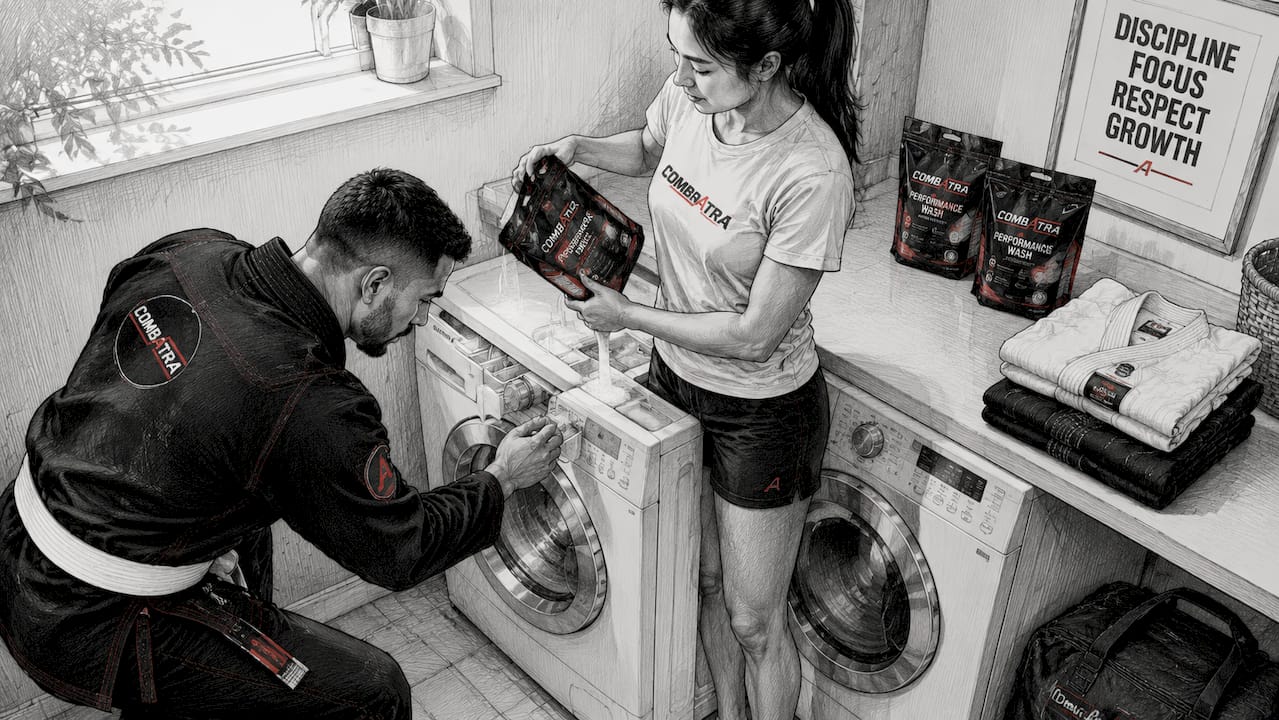
These fabric types react very differently to heat, harsh chemicals, and mechanical stress. Cotton shrinks when exposed to hot water, and the reinforced collar can warp or delaminate if washed incorrectly. Cold-water washing is especially critical for gis with pasted or glued patches, since heat dissolves the adhesive and causes patches to peel mid-roll.
Patches also require specific attention before washing. Velcro patches should be covered or removed before every wash cycle. Exposed velcro acts like a scouring pad, wearing down embroidery, collar fabric, and neighbouring patches. Iron-on patches need cold water to stay bonded.
Key fabric and construction points to check before washing:
- Weave type: Pearl weave and single weave tolerate gentle machine washing; double weave is heavier and takes longer to dry, which matters in humid Australian climates.
- Collar construction: Foam or rubber cores warp under heat; always wash cold and never tumble dry on heat.
- Patch type: Cover velcro, check iron-on edges for lifting, and inspect embroidery for loose threads before each wash.
- Colour: White gis are more forgiving with stain treatment options; coloured gis fade faster under direct sunlight and with harsh detergents.
- Drawstrings and cords: Tie or tuck drawstrings before washing to prevent tangling and fraying.
Checking your gi’s care label is always the right starting point. Combatra’s premium BJJ gis are built with durability in mind, and following the label instructions protects that construction over hundreds of training sessions.
What is the correct step-by-step process for washing a BJJ gi?
Washing your gi correctly takes less than five minutes of preparation. The steps below apply to both machine and hand washing.
-
Wash after every session. Washing after every training session prevents bacteria buildup and protects your training partners. Wearing a gi to multiple classes unwashed is a hygiene risk, not just a personal one.
-
Treat stains immediately. Blood stains must be treated with cold water before washing. Hot water cooks the protein in blood, permanently setting the stain into the fabric. Rinse with cold water first, then apply 3% hydrogen peroxide directly to the stain and allow it to bubble for two to three minutes before rinsing again.
-
Pre-soak for odour control. For persistent mat odour, soak your gi in cold water with one to two cups of white vinegar for two to four hours, or overnight. Vinegar soaking neutralises bacteria and deep odours without damaging fibres. Adding half a cup of baking soda to the wash cycle boosts deodorising further.
-
Turn the gi inside out. This protects embroidery, patches, and the outer weave from abrasion during the machine cycle.
-
Separate colours. Wash white gis separately from coloured gis and belts. Belt dye transfers easily, especially in the first few washes.
-
Set the machine to cold. Use 30°C or below. Cold water preserves fibre integrity, prevents shrinkage, and keeps patches bonded.
-
Choose the right detergent. Use a mild, liquid detergent without added brighteners or enzymes. Avoid powder detergents, which can leave residue in thick weaves. Fabric softeners damage grip by coating fibres with a slippery residue and reducing breathability. Skip them entirely.
-
Never use bleach. Chlorine bleach weakens cotton fibres and discolours gis. Residual bleach reactivated by sweat transfers to training mats, chemically degrading vinyl surfaces and creating conditions for bacteria growth. This is a gym hygiene issue, not just a personal one.
Pro Tip: Add half a cup of baking soda directly to the drum alongside your detergent for a deeper clean on heavily used gis. It neutralises acids from sweat without affecting fabric integrity.
How should you dry and store your gi in Australian conditions?
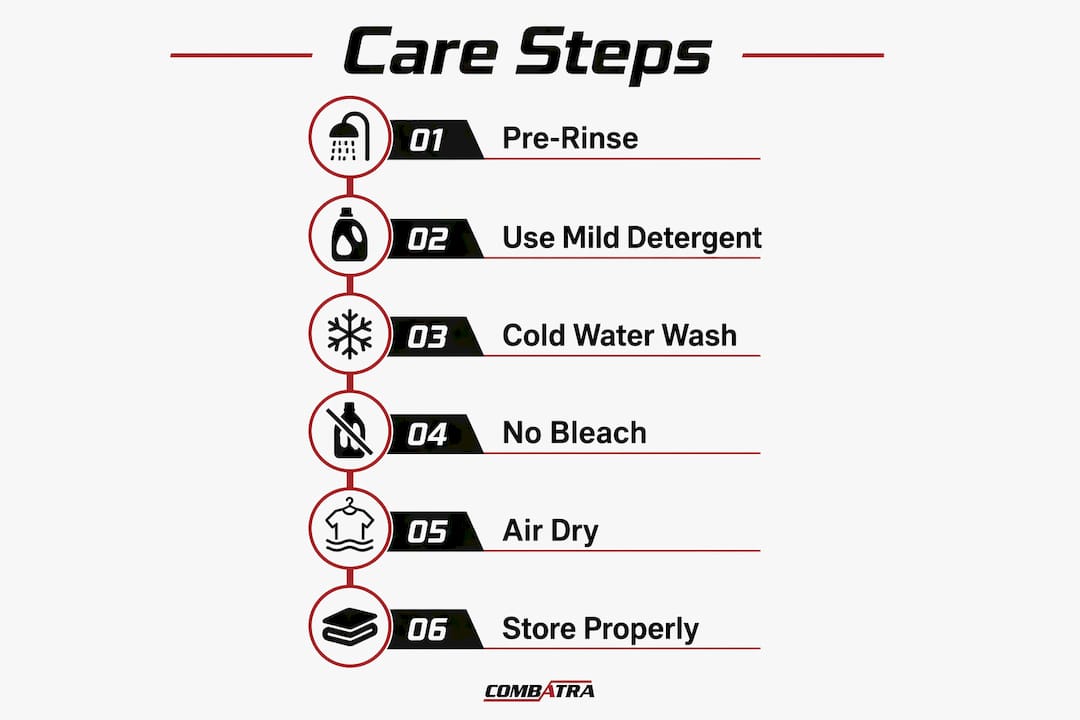
Drying is where most gi damage happens. Improper heat exposure causes more long-term damage than any washing mistake, and Australia’s climate makes this especially relevant.
The correct approach for Australian conditions:
- Air dry in shade. Hang your gi in a shaded, well-ventilated area. Direct UV exposure fades dyes and weakens cotton fibres over time. In Queensland, Western Australia, and the Northern Territory, even an hour of direct midday sun causes measurable colour loss on coloured gis.
- Use a wide hanger or spread flat. A narrow hanger distorts the shoulder seams of a heavy gi. Spread the jacket flat on a drying rack or use a wide-shouldered hanger to maintain shape.
- Avoid tumble drying on heat. Heat shrinks cotton and warps collar cores. If you need to soften a stiff gi, use the air-only cycle with two tennis balls. Mechanical tumbling on a no-heat cycle softens the fabric safely without causing shrinkage.
- Never store a damp gi. Damp storage causes mildew within hours in humid coastal cities like Sydney, Brisbane, and Darwin. Mildew odour is extremely difficult to remove once set into thick cotton weaves.
- Store in a breathable bag or on a hanger. Avoid sealed plastic bags or gym bags. Airflow prevents moisture buildup between training sessions.
- Rotate gis if you train frequently. Training four or more times per week with a single gi does not allow adequate drying time between sessions. Two gis in rotation extends the life of both.
Pro Tip: The stiff, crunchy texture of a fully air-dried gi is actually a tactical advantage. Air-dried gi fabric makes sleeves harder to grip, which benefits the wearer during competition. Save the tennis ball softening for recovery days.
What common mistakes do Australian BJJ practitioners make with gi care?
Most gi damage is preventable. These are the six mistakes that shorten gi life the fastest.
-
Washing in hot water. Hot water causes immediate and irreversible shrinkage in cotton gis. A gi that fits perfectly before a hot wash can drop a full size after one cycle. Always use 30°C or below.
-
Using fabric softener. Fabric softener coats fibres with a slippery residue that reduces grip and blocks breathability. The damage compounds with every wash. There is no safe amount of fabric softener for a BJJ gi.
-
Using bleach. Bleach weakens cotton and leaves residue that transfers to training mats. It is not a substitute for proper odour treatment. Use vinegar and baking soda instead.
-
Leaving the gi wet in a gym bag. A wet gi left in a sealed bag for even a few hours begins developing mildew. In humid Australian summers, this happens faster than most practitioners expect. Remove your gi from your bag immediately after training.
-
Drying in direct sunlight. Australian UV levels are among the highest in the world. Direct sun drying fades colours and makes cotton brittle over time, particularly for coloured gis and embroidered patches.
-
Skipping stain treatment. Ignoring a blood stain and putting the gi straight into a hot wash sets the stain permanently. Treat blood with cold water and hydrogen peroxide before the wash cycle, every time.
Key takeaways
A properly washed and air-dried BJJ gi, treated with cold water, mild detergent, and no bleach or fabric softener, will last 2–3 years even under frequent Australian training conditions.
| Point | Details |
|---|---|
| Wash after every session | Bacteria buildup from skipped washes damages fabric and risks your training partners’ health. |
| Use cold water only | 30°C or below prevents shrinkage, protects patches, and preserves collar construction. |
| Treat blood stains immediately | Cold water and 3% hydrogen peroxide break down blood before it sets permanently. |
| Air dry in shade | Direct Australian sun fades dyes and weakens cotton fibres; always dry in a shaded, ventilated spot. |
| Avoid bleach and fabric softener | Both degrade grip and fibre integrity; use vinegar and baking soda for odour control instead. |
What I have learned from years of gi care in Australian conditions
The single most underestimated factor in gi longevity is not washing. It is drying. I have seen practitioners follow every washing rule correctly and still destroy a gi in six months by tumble drying it on high heat after every session. The collar warps, the weave loosens, and the patches peel. Once that happens, no amount of careful washing recovers it.
Australia adds a layer of complexity that practitioners in cooler climates do not face. The temptation to throw a gi over a fence in the backyard sun to dry quickly is real, especially in summer. But UV degradation on cotton is cumulative. You will not notice it after one session. After six months of direct sun drying, you will notice the colour has faded and the fabric feels thinner and less structured.
The other thing I have found genuinely useful is the vinegar soak for mat funk. Practitioners often reach for stronger and stronger detergents when a gi develops persistent odour, which accelerates fabric wear. A two-hour cold vinegar soak before the wash cycle eliminates deep odours more effectively than any commercial detergent. It is also far gentler on the fabric.
Rotating two gis is the single best investment a frequent trainer can make. It is not about having a spare. It is about giving each gi enough time to fully dry and recover between sessions. A gi that goes back on while still slightly damp from the previous wash is a gi that will smell within a week and wear out within a year.
— McGinnis
Combatra BJJ gis: built for Australian training conditions
Combatra designs its premium BJJ gis specifically for the demands of Australian training, with pre-shrunk cotton construction that holds its size through repeated cold-water washes. The reinforced collar and ripstop gi pants are built to handle frequent washing without warping or losing shape. If you want a gi that responds well to the care practices in this guide and holds up through a full training block, Combatra’s range is worth a look before your next session. You can also build your own BJJ gi with custom colours and patches designed to stay bonded through proper cold-water care. Shop Combatra BJJ gis and start your next training block with gear that lasts.
FAQ
How often should I wash my BJJ gi?
Wash your gi after every single training session. Regular washing prevents bacteria buildup and protects both the fabric and your training partners.
What is the best detergent for a BJJ gi?
Use a mild liquid detergent without brighteners, enzymes, or fabric softener. Avoid powder detergents, which leave residue in thick cotton weaves.
Can I tumble dry my BJJ gi?
Tumble drying on heat causes shrinkage and collar warping. If you want to soften a stiff gi, use the air-only cycle with two tennis balls at zero heat.
How do I remove blood stains from a BJJ gi?
Rinse the stain immediately with cold water, then apply 3% hydrogen peroxide and allow it to bubble for two to three minutes before rinsing. Never use hot water, which sets blood stains permanently.
How do I get rid of mat odour in my gi?
Soak the gi in cold water with one to two cups of white vinegar for two to four hours before washing. Add half a cup of baking soda to the wash cycle for extra deodorising without damaging the fabric.