


Karate Uniform Alterations: What to Check Before Shortening Sleeves or Pants

A karate uniform that feels too long can tempt you into a quick hem adjustment. Before cutting anything, establish whether the issue is sleeve or pant length, the overall size, or a fit problem elsewhere in the garment. Shortening an edge will not necessarily solve tight shoulders, a restrictive seat or a jacket that sits incorrectly.
Use this guide to prepare for a conversation with your dojo, seller or a suitable alterations professional. It focuses on the decision before permanent work begins. It does not prescribe competition measurements, guarantee an alteration can be reversed or replace the instructions for the exact uniform you own.
Identify the fit problem before proposing a fix
Try the uniform on as you normally wear it, with the waistband correctly positioned and the jacket arranged for training. If the trousers sit too low because the waist is not secured properly, changing the hem may address the wrong problem. Ask your instructor to help distinguish fit from how the uniform is being worn.
Describe what happens during comfortable movements. Are you stepping on the trouser edge, finding the sleeves longer than the dojo expects, or feeling restricted somewhere else? Specific observations help the seller or alterations professional decide what needs assessment. “Too big” can cover several different issues.
Check the whole garment before focusing on the longest-looking part. A uniform that is unsuitable across several dimensions may need a different size or cut. An alteration that improves one edge while leaving the main fit problem untouched is not necessarily good value.
For a current product example, open the White 14 oz Karate Uniform sizing and care details and its Size chart control. Use the exact chart for the uniform you are assessing rather than transferring a size label or alteration allowance from another product.
Speak to the seller before washing or altering
If the uniform is new and appears to be the wrong size, ask the seller about the appropriate next step before washing, cutting or removing labels. Explain the fit issue and provide the requested measurements. Do not assume that altering an item and then asking about an exchange will lead to the same options as contacting the seller first.
This is a practical sequence, not a summary of your legal rights or the seller's current policy. Read the applicable policy and ask for clarification where needed. Keep the order details available and describe the garment accurately so the seller can identify the product and size.
Ask about any expected change in fit under the prescribed care routine. Do not assume a “pre-shrunk” description means the garment cannot change at all, or use a hot wash to force it towards a desired size. Where the seller recommends a wash before an alteration assessment, obtain the relevant care instructions and follow them.
If you are keeping the uniform, record its current measurements in a consistent way. That gives you a reference for the next fitting rather than relying on memory.

Confirm the dojo's expectations and intended use
Ask your instructor how the uniform should sit for your style of training. Explain whether it is for ordinary classes, grading, demonstration or competition. These contexts can create different requirements, and the person doing the alteration should know which one you are preparing for.
For competition, consult the current event rules and organiser before setting a finished length. This article deliberately gives no universal wrist or ankle measurement. A dojo preference should not be presented as a rule that applies to every karate event, and a product being sold as a karate uniform does not establish event approval.
If an official approval mark or other required feature matters for the event, ask whether the proposed work affects it. Do not assume that moving a label, cutting a panel or altering the construction is acceptable simply because the finished length looks tidy.
Keep a clear record of the intended finished result. A written note from the discussion is more useful to an alterations professional than an instruction to make the uniform “look right” without a reference.
Fit the actual uniform on the actual wearer
Arrange the fitting with the same waistband position and permitted underlayers you will use in class. Bring the complete uniform so the relationship between the jacket and trousers can be assessed. A trouser measurement taken on its own may not show how the outfit behaves during training.
Ask the alterations professional to mark the proposed adjustment without cutting first. Any temporary pins or fitting aids must be removed before movement that could make them unsafe, and they should never remain in clothing used for training. The aim is to agree the intended result before permanent work begins.
Discuss both sides separately. Do not assume a folded garment or a measurement copied from another pair will produce the right result on the wearer. Ask how the finished hem will be checked and whether the proposed method preserves suitable movement and construction.
For a growing child, discuss the expected period of use with the parent and instructor. Room to grow is a planning consideration, but it should not make the current garment awkward to move in or inconsistent with the dojo's requirements.

Ask what the alteration will change
Request a clear explanation of the work: which edge will be adjusted, how the finish will be made and whether any original construction or branding is affected. Ask whether excess fabric will be retained where feasible, but do not treat that as a guarantee the change can later be reversed.
Confirm the price and expected completion time before proceeding. Compare that cost with other suitable options, including a different size if that remains available through the seller's process. The cheapest immediate action is not always the best outcome if it leaves a broader fit problem unresolved.
The infographic below follows five decisions: identify the issue, check the seller's route, confirm the dojo requirements, approve a fitting and inspect the finished result. It is a preparation guide, not a set of tailoring measurements.
Avoid performing irreversible work while key details are still unclear. A photograph and a written description can help begin the conversation, but an alterations professional may need to inspect the actual garment before assessing what is possible.

Check the result before returning to class
Try on the completed uniform and compare it with the agreed result. Inspect the finish and look for loose threads, puckering or an edge that catches. Ask about anything that appears different from the approved plan before using the garment for a full session.
Repeat comfortable movements with the complete uniform. Check that the waistband remains in its normal position and that the adjusted area does not create a new restriction. An alteration can look neat on a hanger while still needing a fitting adjustment on the wearer.
Confirm how to care for the finished garment. The ACCC Product Safety care-labelling guide explains care information, while the item's label and any relevant professional advice apply to the uniform itself. Do not assume an alteration makes an otherwise restricted drying or ironing method acceptable.
Keep the finished measurements and the alteration details with your order record. If you later buy another uniform, those details can explain what worked, but recheck the new product rather than ordering from an old size label alone.
Use the experience to choose the next uniform
If you repeatedly need the same major correction, compare the available cuts and size guidance before buying again. Ask the seller which measurements are useful for identifying a closer starting fit. Do not assume every uniform in the same labelled size has the same proportions.
The Combatra options below represent different current product routes. Confirm your dojo's colour expectations before considering white, blue or black, and ask about any care or sizing detail the listing leaves unclear. These products are not described here as approved for a specific karate federation or event.
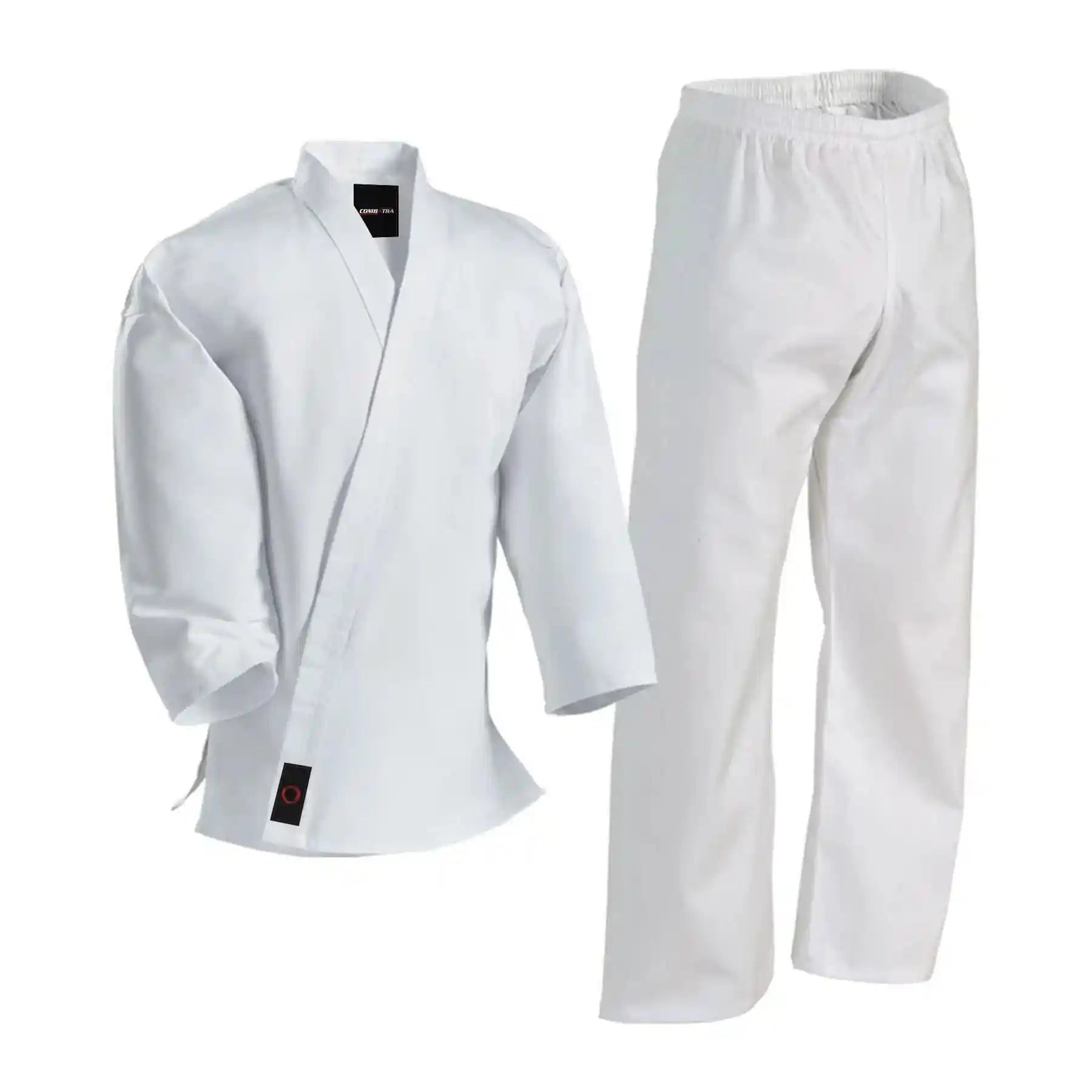
White 14 oz Karate Uniform | Combatra
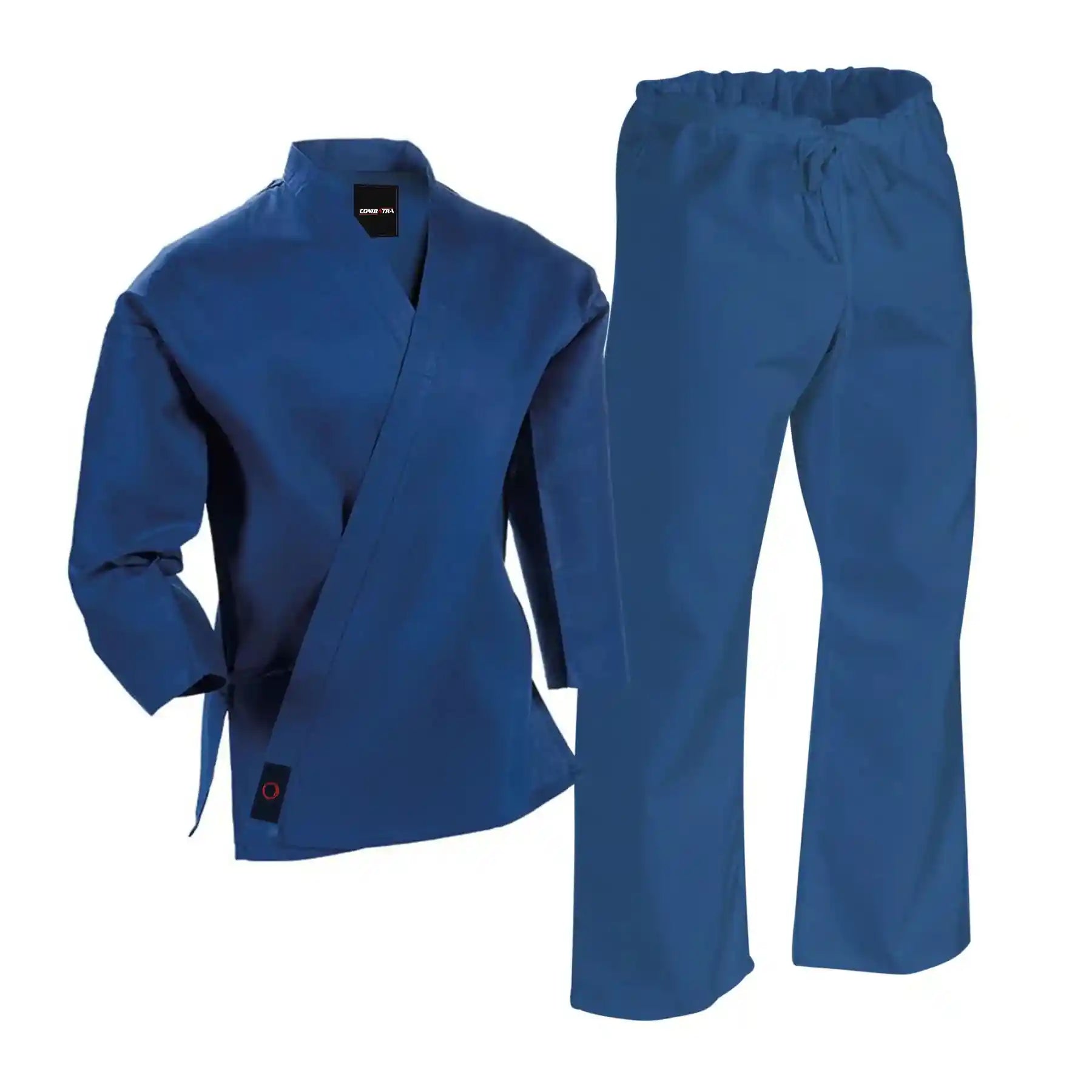
Blue 14 oz Karate Uniform | Combatra
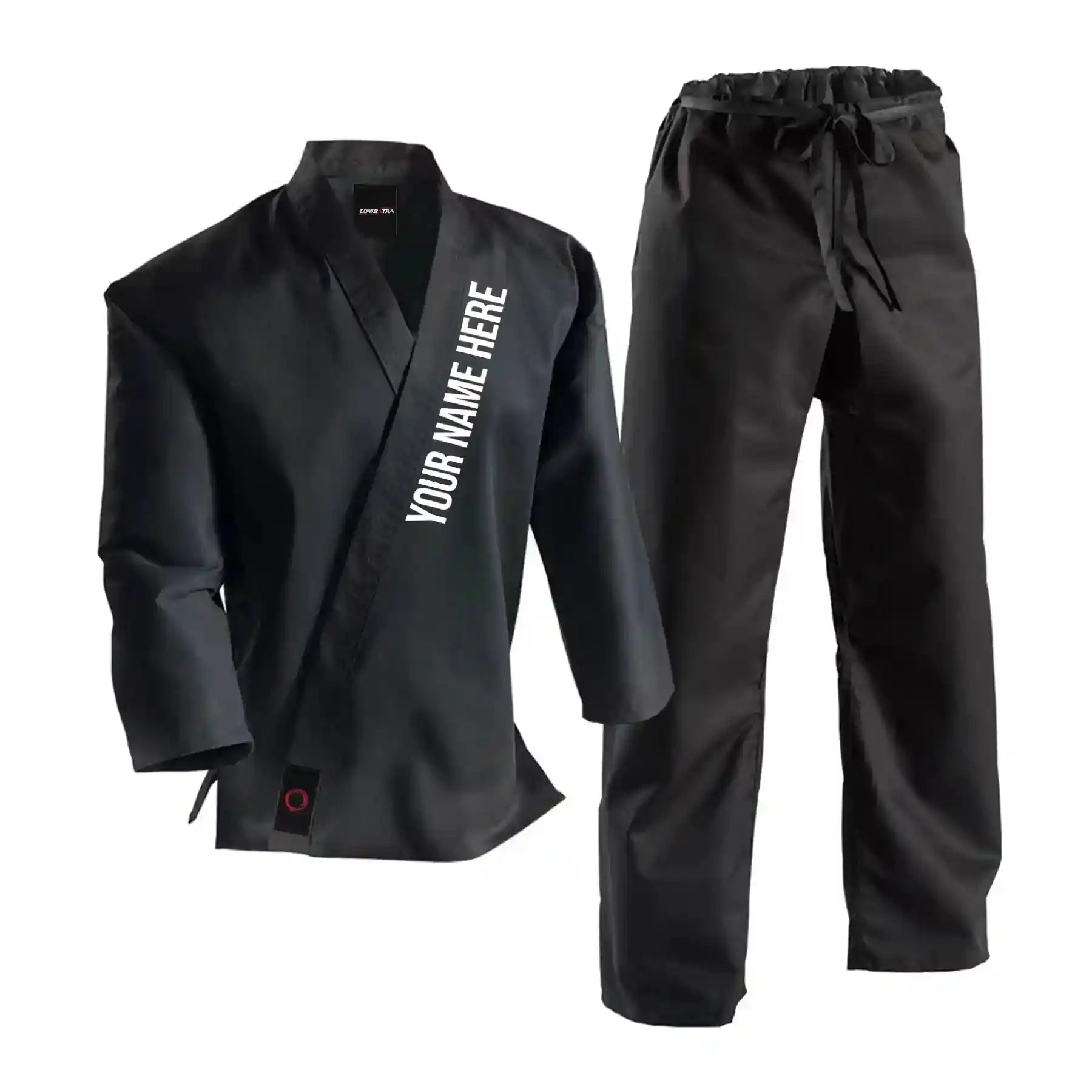
Custom Black Lightweight Karate Uniform – 8 oz | Combatra
For colour selection, the karate uniform colour guide covers the separate academy decision. Choose a suitable base uniform first. Then, if an alteration is still warranted, approach it with a confirmed purpose and a fitting that the wearer can assess before cutting begins.

Frequently asked questions
Should I wash a new uniform before deciding on an alteration?
Speak to the seller first if the size may be wrong. Ask how the prescribed care routine affects the assessment and what next steps apply to your order. Do not wash solely to force a size change.
Can I roll the sleeves or trousers instead?
Ask your dojo or event organiser whether that is acceptable for the intended use. A temporary appearance change is not automatically a suitable training solution, particularly if the fold moves or interferes with movement.
Is there one correct sleeve length for all karate?
Use the requirements for your dojo and event. This guide does not set universal dimensions. Give the alterations professional the current requirement and the intended use before agreeing a finished length.
Will shortening the trousers fix a uniform that feels too big?
Only if length is the actual problem. Check the waist, seat, jacket and movement first. A different size or cut may be more appropriate when several parts of the uniform fit poorly.
Can an alteration always be undone?
No such guarantee should be assumed. Ask what fabric or construction will be changed and whether any future adjustment is feasible. Understand that before approving cutting or other permanent work.
What should I take to the fitting?
Bring the complete uniform, the intended-use requirements and any relevant seller guidance. Wear the permitted layers and arrange the waistband normally so the fitting reflects how the uniform will be used.