


TL;DR:
- Choosing the right karate uniform is crucial for optimal movement, safety, and confidence during training.
- Accurate measurements of height, weight, chest, waist, and inseam ensure proper fit, especially across diverse body types.
- Fabric weight affects mobility and climate suitability, with lightweight options ideal for hot weather and sparring.
Selecting the right karate uniform, known in the industry as a gi, is the single most important equipment decision you will make as a practitioner. The wrong weight or size restricts your movement, affects your technique, and can even create safety issues during sparring. This karate uniform buying guide covers weight, fit, and sizing from the ground up, so you can match your gi to your body measurements, your training style, and the Australian climate. Whether you practise kata, kumite, or general dojo training, the right uniform supports both your performance and your confidence on the mat.
How to take accurate measurements for karate gi sizing
Karate uniform size guides can vary by brand and product. Start with the size guide for the exact Combatra uniform you are considering, then use height, weight and any listed garment measurements to choose a size. Getting your measurements right before you consult a sizing chart is the most reliable way to find your starting size.
Follow these steps to measure accurately:
- Height. Stand straight against a wall without shoes. Measure from the floor to the top of your head in centimetres.
- Weight. Use reliable scales on a flat surface. Record your weight in kilograms.
- Chest. Wrap a tape measure around the fullest part of your chest, keeping it level under your arms.
- Waist. Measure at your natural mid-point, roughly two centimetres above your navel.
- Inseam. Measure from your crotch to your ankle bone while standing.
Once you have these five figures, cross-reference them against the manufacturer’s sizing chart. Height and weight are the key measurements in sizing charts, but chest and inseam figures prevent you from buying a jacket that fits in length but binds across the back.
Sizing labels and ranges vary between manufacturers, so do not assume the same label has the same dimensions across brands. Always check multiple dimensions rather than relying on a single measurement.
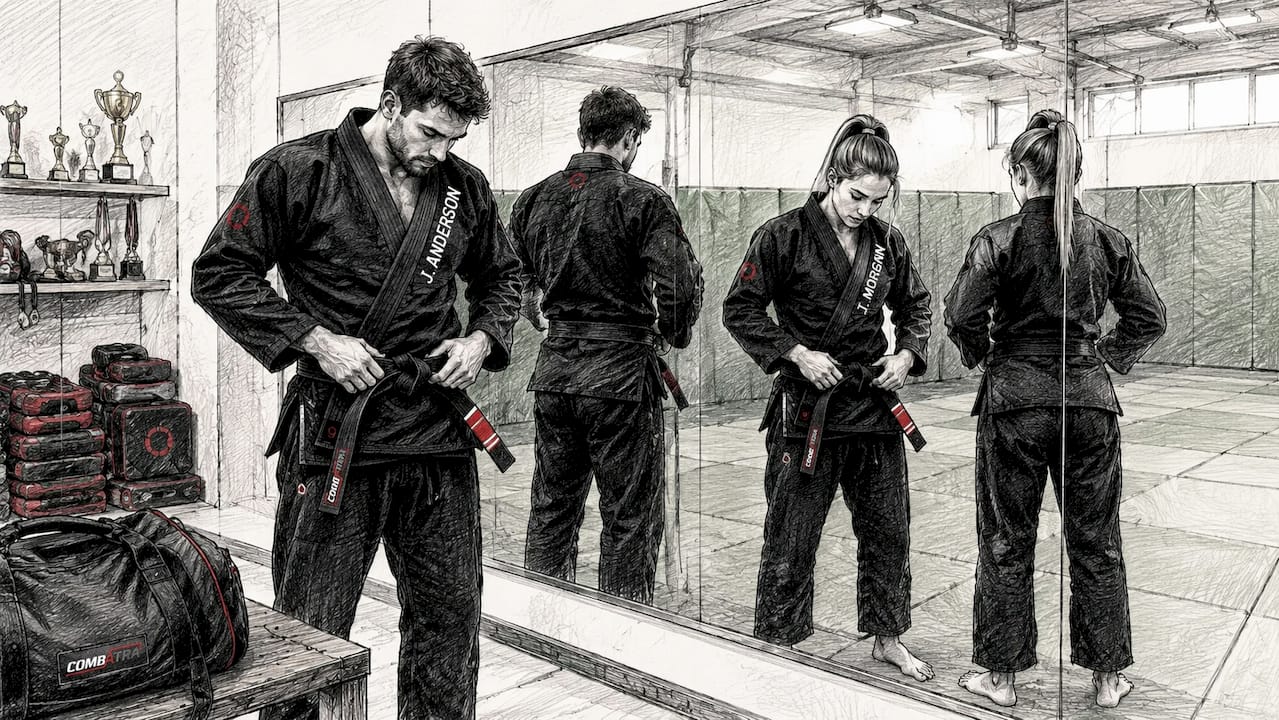
Pro Tip: If you have broader shoulders, wider thighs or a muscular build, use the exact product size guide and test movement where possible. Choose the size that gives you comfortable range of motion; a tailor may be able to shorten an overly long hem.
Cotton uniforms can also shrink after the first few washes. Pre-shrunk fabrics reduce this effect, but you should still anticipate minor fit changes and factor that into your initial size selection.
What are the different karate uniform weights?
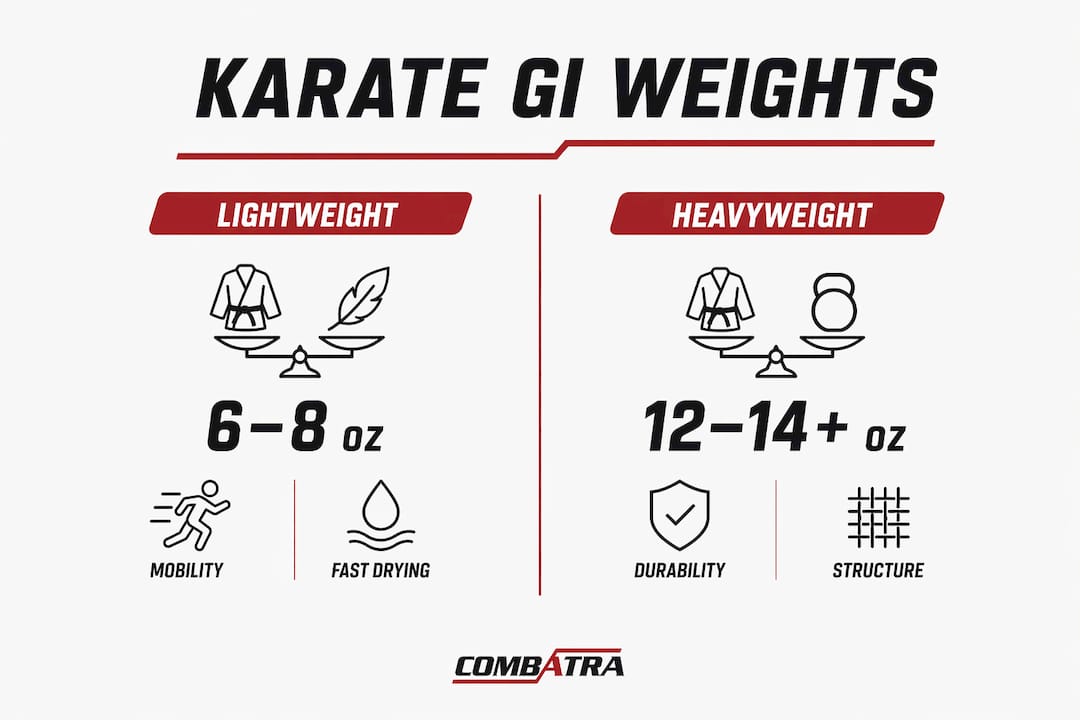
Fabric weight in a karate gi is measured in ounces per square yard (oz). The three main categories are lightweight (6–8 oz), mediumweight (8.5–10 oz), and heavyweight (12–14+ oz). Each suits a different training purpose.
Lightweight gis (6–8 oz)
Lightweight uniforms offer superior mobility and fast drying, making them ideal for beginners and warm climates. In Australia, where summer training sessions can be intense and humid, a 7–8 oz gi dries faster and prevents the waterlogging that heavier fabrics cause. This weight suits kumite and general sparring where speed and freedom of movement matter most.
Mediumweight gis (8.5–10 oz)
Mediumweight uniforms balance durability with comfort. They hold their shape through regular training without the bulk of a heavyweight gi. This category suits practitioners who train across both kata and kumite, or those who want one uniform that performs across multiple disciplines.
Heavyweight gis (12–14+ oz)
Heavyweight gis provide better structure, durability, and the crisp “snap” sound that kata judges notice. The stiff fabric holds form during techniques and presents well under competition lighting. The trade-off is warmth. Heavyweight uniforms take longer to dry and can cause overheating during high-intensity sparring.
| Property | Lightweight (6–8 oz) | Mediumweight (8.5–10 oz) | Heavyweight (12–14+ oz) |
|---|---|---|---|
| Mobility | Excellent | Good | Moderate |
| Drying time | Fast | Moderate | Slow |
| Durability | Moderate | Good | Excellent |
| Best for | Kumite, hot climates | All-round training | Kata, competition |
| Australian climate suitability | High | Moderate | Low to moderate |
Pro Tip: If you train outdoors in Australia during summer, a 7–8 oz gi is the practical choice. Lighter fabric evaporates moisture faster, which keeps you cooler and reduces skin irritation during long sessions.
How do you test gi fit before buying?
Static measurements tell you the starting point. Dynamic movement tells you the truth. Testing fit with movement reveals whether the jacket binds or the pants restrict kicks in ways that standing still never will.
When you try on a gi, check these points:
- Jacket length. The hem should cover your hips but not extend past mid-thigh. Too long and it interferes with your belt and stance transitions.
- Sleeve length. Sleeves should reach close to your wrist bone. Sleeves that end at mid-forearm look untidy and may not meet dojo or competition standards.
- Trouser waistband. The drawstring waistband should sit comfortably without digging in. You need room to breathe and to move through deep stances.
- Thigh room. Step into a front stance and check that the fabric across your thighs does not pull tight. Restriction here limits your kicking height and speed.
- Shoulder seams. The shoulder seams should sit at the edge of your shoulder, not drooping down your arm.
Perform a front stance and a high chamber kick while wearing the gi. Uniforms that bind restrict performance regardless of how well they fit standing still. If the jacket pulls across your back during a high block, the size is too small.
Signs of poor fit include fabric bunching at the armpits, trouser legs that drag on the floor, or a jacket that gaps open at the lapels. These issues affect both your movement and your presentation.
Pro Tip: If a gi fits well across the shoulders and chest but the trouser hem is too long, have the hem taken up by a tailor. Adjusting length is straightforward. Adjusting width is not.
How to choose a gi based on training goals and body type
Training goals directly impact uniform choice. Kumite benefits from light, agile fabric, while kata demands a stiff, durable gi for presentation. Matching your gi to your primary discipline saves you money and improves your performance.
Use these guidelines to match your uniform to your needs:
- Sparring and kumite practitioners should prioritise a lightweight gi with a roomy cut. Freedom of movement and cooling matter more than structure.
- Kata practitioners benefit from a heavyweight or mediumweight gi that holds its shape and produces a clean snap during techniques. Presentation counts in competition.
- Broader or more muscular body types should compare shoulder, chest and thigh measurements with the exact product size guide. Check the available custom options on the product page rather than assuming a made-to-measure fit.
- Beginners are best served by a lightweight or mediumweight gi. These are easier to move in and more forgiving as your technique develops.
- Australian climate considerations favour lighter fabrics for most of the year. If you train outdoors or in a non-air-conditioned dojo during summer, a 6–8 oz gi is the practical choice.
Combatra offers standard and custom karate uniform options for different training needs. On custom products, names, logos and club details can be added where the product page makes that available. Check the exact product page for its current sizing and customisation options before ordering.
Key takeaways
The right karate gi matches your body measurements to the exact product size guide, your training discipline to an appropriate fabric weight, and your movement needs to a fit confirmed through dynamic testing.
| Point | Details |
|---|---|
| Use five measurements | Height, weight, chest, waist, and inseam together give the most accurate size match. |
| Match weight to discipline | Lightweight (6–8 oz) suits kumite and hot climates; heavyweight (12–14+ oz) suits kata and competition. |
| Test with movement | Perform a front stance and high kick before committing to a size. |
| Check fit for athletic builds | Compare shoulder and thigh measurements with the exact product size guide and allow room for movement. |
| Account for shrinkage | Cotton gis shrink after washing; factor this into your initial size selection. |
What I have learned from years of watching practitioners get this wrong
The most common mistake I see is practitioners buying a gi based on how it looks on a hanger, not how it moves on a body. A stiff, heavy gi looks impressive folded on a shelf. On a practitioner doing a roundhouse kick at full extension, it becomes a liability.
Shrinkage can vary by fabric and care method. Check the exact product's washing instructions and size guide before choosing a size or washing it; do not rely on sizing up as a universal solution.
The third mistake is treating sizing as a one-time decision. Your body changes as your training intensifies. Muscle mass in the shoulders and thighs increases with consistent practice. A gi that fits well in your first year may feel restrictive in your third. Revisit your measurements annually and adjust accordingly.
Custom options can be useful when the exact product’s listed size range or customisation fields suit your needs. Standard sizing does not fit every body in the same way, so check the product page, use its size guide and confirm the available customisation before ordering.
— McGinnis
Combatra karate uniforms: built for performance
Combatra designs karate uniforms for practitioners who take their training seriously. The range covers standard and custom options across multiple weight categories, so you can match your gi to your discipline and your body.

The Custom Black Lightweight Karate Uniform is an 8 oz option for karate training, dojo practice, grading and regular sessions. Its product page describes it as a practical choice for warm conditions and easy movement. Where custom fields are available, you can add names, logos or club details; check the product page before ordering for the current options.
FAQ
How do I read karate uniform size labels?
Karate uniform size labels and ranges vary by brand and product. Use the exact product size guide, with height and weight as starting points where the guide lists them, and check other garment measurements when available.
What is the best fabric weight for Australian conditions?
A lightweight gi in the 6–8 oz range suits most Australian training conditions. It dries faster, reduces overheating, and performs well in both indoor and outdoor sessions during warm months.
How should a karate jacket fit across the shoulders?
The shoulder seams should sit at the edge of your shoulder, not drooping down your arm. A jacket that fits correctly across the shoulders allows full arm extension without pulling across the back.
Should I size up if I have a muscular build?
Not automatically. Compare your measurements with the exact product size guide and allow room through the shoulders and thighs. If you are between sizes or unsure, confirm the fit before ordering.
How do I know if my gi will shrink after washing?
Shrinkage can vary by fabric and care method. Follow the care information supplied for the exact uniform and recheck fit after washing.