


TL;DR:
- Kids martial arts gear includes essential uniforms, protective equipment, and accessories designed to ensure safety and comfort during training. Properly fitting, mid-range gear offers the best value and durability for children, especially when selected based on the child’s size and training stage. Buying locally and phasing purchases help families manage costs while ensuring quality and compliance with instructor requirements.
Kids martial arts gear is specialised equipment designed to keep children safe, comfortable, and supported during training. This guide covers the essential items every Australian parent needs to know about, from karate gis and BJJ rashguards to gloves, pads, and accessories. Australia’s high UV levels make sun protection a real consideration, particularly for outdoor or summer training. Premium gear may be lab tested to AS 4399:2020 and rated UPF 50+ for effective protection. Whether your child is just starting out or progressing through belts, the right gear makes training safer and more enjoyable.
What are the essential uniforms and apparel for kids in martial arts?
The uniform your child needs depends entirely on the martial art they practise. Karate students wear a karate gi, a lightweight cotton or poly-cotton jacket and pants set. BJJ students wear either a BJJ gi or a rashguard and shorts for no-gi training. Each uniform serves a specific purpose, and buying the wrong one wastes money.
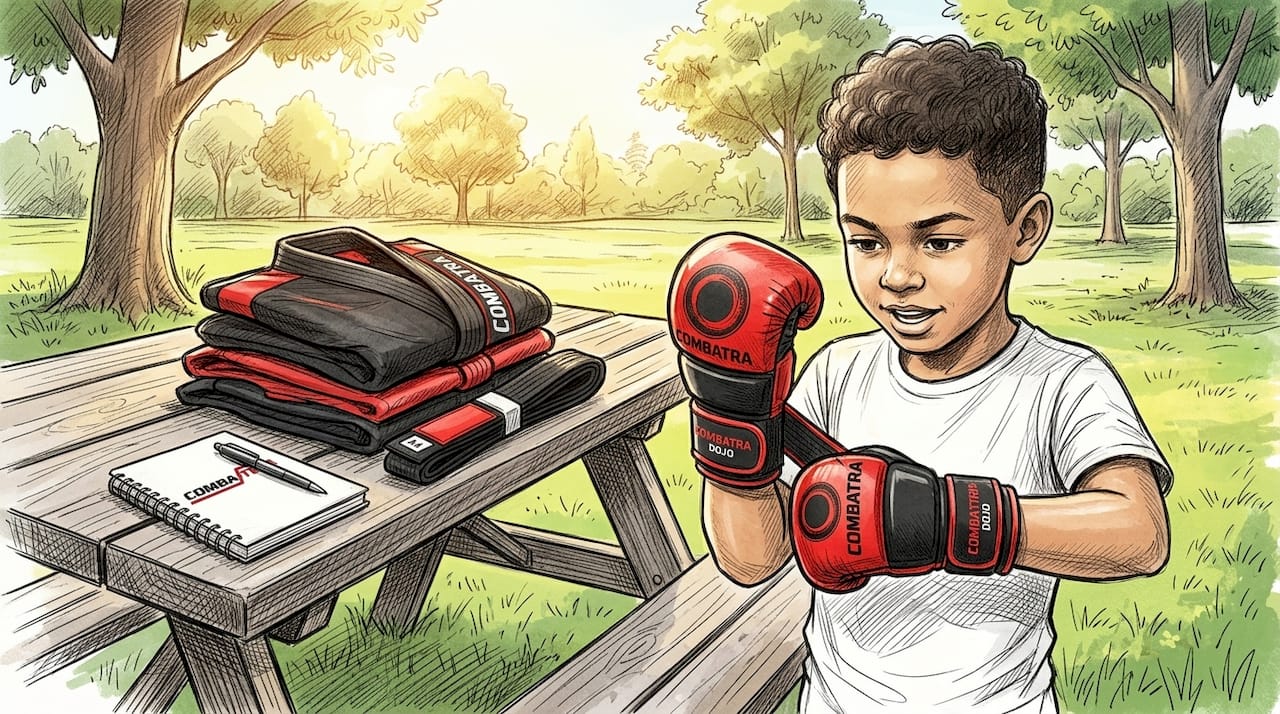
Fabric choice matters more than most parents realise. A pearl weave jacket with ripstop pants gi offers durable yet comfortable training material suitable for most kids, especially beginners. Pearl weave resists tearing during grappling, while ripstop pants handle repeated washing without breaking down. For karate, a medium-weight cotton gi balances breathability with durability in Australian conditions.
Sizing a gi for a growing child requires more thought than checking an age chart. Proper sizing involves height, build, shoulder width, and expected shrinkage rather than age alone. Most gis shrink slightly after the first wash, so buying one size up is a practical approach for children who are still growing. Check your child’s academy for any specific colour or weave requirements before purchasing.
Rashguards fill a different role. They provide compression support, manage sweat, and protect skin from abrasion during ground work. For outdoor training in Australian summer, a rashguard with UPF 50+ sun protection adds a meaningful layer of defence against UV exposure. Combatra’s rashguard range is built for this exact purpose.
- Karate gi: lightweight cotton or poly-cotton, suitable for striking arts
- BJJ gi: pearl weave jacket, ripstop pants, sized by height and build
- Rashguard: compression fit, abrasion protection, UPF 50+ for outdoor training
- BJJ belt: marks rank progression; a personalised BJJ belt is a meaningful option for motivated kids
Pro Tip: Wash your child’s gi before the first wear to account for shrinkage, then check the fit again before the second class.
How do you select protective gear like gloves, pads, and headgear for kids?
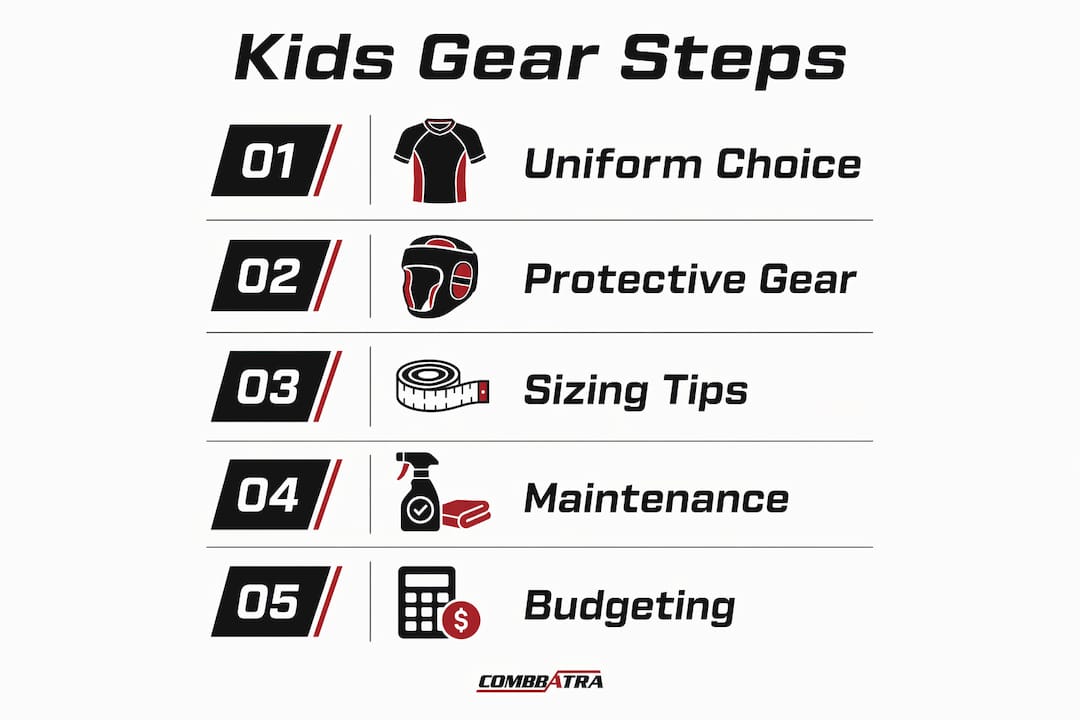
Protective gear is the category where parents most often underspend or overbuy. The right choice depends on the martial art, the training stage, and how frequently your child trains. Martial arts generally carry a low injury rate under proper supervision, with minor injuries mostly limited to scrapes or cuts from training surfaces. Full-contact sparring, where concussion risk rises, is introduced only at advanced stages.
Gloves are the first protective item most children need. Child-friendly martial arts gloves have soft foam, secure Velcro straps, and are easy for kids to put on and remove without parental help. That usability detail matters. Gear a child can manage independently gets used consistently. Gear that requires adult assistance gets left in the bag.
Shin guards and headgear follow once sparring begins. Headgear should fit snugly without restricting vision or hearing. Shin guards need to cover the full shin and instep without sliding during movement. For children, Velcro closures are far more practical than lace-up or clip systems.
Australian pricing for protective gear follows a clear pattern. Mid-range gear offers the best balance of durability, protection, and value for growing children.
| Gear type | Entry-level | Mid-range | Premium |
|---|---|---|---|
| Gloves | $20–$60 | $70–$120 | $120+ |
| Pads/shin guards | $30–$50 | $60–$90 | $100+ |
| Headgear | $30–$55 | $60–$100 | $100+ |
Mid-range gear holds up through a full training year for most children. Entry-level gear often degrades within a few months of regular use, meaning you replace it sooner and spend more overall.
Pro Tip: Buy mid-range gloves and entry-level shin guards for beginners. Upgrade shin guards to mid-range once sparring becomes a regular part of training.
What accessories support kids’ martial arts training and safety?
Accessories are easy to overlook, but several are non-negotiable for safety and convenience. The right accessories also reduce the daily friction of getting a child ready for class.
- Mouthguard: Required for any sparring discipline. A boil-and-bite mouthguard fits most children and costs under $20. Custom-fitted options from a dentist offer better protection but are not necessary at beginner level.
- Groin protector: Required for boys in striking arts. Lightweight cup designs sit inside compression shorts and do not restrict movement.
- Gear bag: A dedicated martial arts bag keeps equipment organised and aired out between sessions. Mesh panels help reduce odour from damp gear.
- BJJ belt: Marks rank and motivates progression. A custom BJJ belt with your child’s name is a practical and personal option that many kids genuinely value.
Gear maintenance extends the life of every item. Wash gis and rashguards after every session. Air-dry gloves and shin guards rather than sealing them in a bag. Wipe the inside of headgear with a damp cloth weekly. These habits prevent odour, mould, and premature material breakdown.
Importing accessories from overseas looks affordable at first glance. However, import costs can add up to 25% on base prices once Australian import duties, GST, and currency conversion are factored in. A $30 mouthguard from an overseas site often costs $38–$40 landed. Buying locally or through your child’s academy removes that uncertainty.
How do you budget for kids martial arts gear in Australia?
Realistic budgeting prevents both overspending and the false economy of buying gear that fails quickly. A complete starter kit for a child beginning karate or BJJ typically includes a uniform, gloves, shin guards, mouthguard, and a bag. Buying mid-range across the board is the most cost-effective approach for children who train two or more times per week.
Academy-sourced gear carries a clear advantage beyond price. Instructors know which products meet their training requirements, fit Australian conditions, and hold up to the demands of their specific programme. Gear purchased through the academy also tends to comply with any colour or branding rules without guesswork.
Phased purchasing is a practical strategy for families managing costs. Start with the uniform and a mouthguard. Add gloves in the second month. Add shin guards and headgear when sparring begins. This approach spreads cost over several months and avoids buying protective gear before your child actually needs it.
| Item | Typical Australian price range |
|---|---|
| Kids’ gi (karate or BJJ) | $50–$120 |
| Gloves (mid-range) | $70–$120 |
| Shin guards (mid-range) | $60–$90 |
| Mouthguard | $10–$25 |
| Gear bag | $30–$60 |
For parents considering Gi or No-Gi BJJ for their child, the gear investment differs. No-gi training requires only a rashguard and shorts, which costs significantly less than a full gi set. Starting no-gi is a lower-cost entry point that still develops core grappling skills.
When buying karate uniforms locally, check whether the academy has a preferred supplier or specific requirements. Some dojos require a particular colour or badge placement, and buying the wrong gi means buying again.
Key takeaways
Selecting the right kids martial arts gear prioritises safety, proper fit, and mid-range quality to deliver the best value for Australian families over the long term.
| Point | Details |
|---|---|
| Uniform choice depends on the art | Match the gi or rashguard to the specific martial art your child practises. |
| Mid-range gear is the best value | Mid-range gloves ($70–$120) and pads ($60–$90) outlast entry-level options for regular training. |
| Size by height and build, not age | Account for shrinkage and growth when sizing gis for children. |
| Buy local to avoid hidden import costs | Import duties and GST can add up to 25% to the cost of overseas gear. |
| Phase your purchases | Start with a uniform and mouthguard, then add protective gear as training progresses. |
What I’ve learned about buying kids martial arts gear as an Australian parent
The most common mistake I see parents make is buying gear based on price alone. Either they spend too little and replace cheap gloves every few months, or they spend too much on premium gear a seven-year-old will outgrow in a season. Mid-range is almost always the right call for children under twelve.
The second mistake is ignoring the instructor’s advice. Instructors experienced in teaching children create safer, more enjoyable training environments, and they know exactly which gear works in their dojo. A ‘firm, friendly, and fair’ teaching approach shapes how children engage with their equipment too. Kids who feel supported use their gear properly and consistently.
Gear independence matters more than parents expect. A child who can put on and remove their own gloves and shin guards arrives at class ready to train. A child who needs help every session loses five minutes of mat time and starts to associate gear with frustration. Choose Velcro over lace-up every time for children under ten.
One thing I’d encourage every parent to remember: praise effort and consistency over belt rank or competition results. The gear supports the training. The training builds the child. Keep that order clear and the gear decisions become much simpler.
— McGinnis
Combatra gear built for young martial artists
Combatra designs performance gear for Australian conditions, from UPF 50+ rashguards to quality karate uniforms and personalised BJJ belts. If your child is progressing through ranks, a custom BJJ belt with their name is a meaningful way to mark that achievement and keep them motivated.
Combatra’s range covers everything from starter uniforms to custom team gear for dojos and school clubs. Parents building gear kits for a whole squad can design matching rashguards, uniforms, and belts with academy colours and logos. Build your custom team gear at Combatra and give your child’s training the foundation it deserves.
FAQ
What gear does a child need to start martial arts?
A beginner needs a uniform (gi or rashguard depending on the art), a mouthguard, and a gear bag. Gloves and shin guards become necessary once sparring begins.
How do I size a gi for my child?
Size by height, build, and shoulder width rather than age. Buy one size up to account for shrinkage after the first wash, and check your academy’s specific requirements.
Is it cheaper to buy kids martial arts gear online from overseas?
Not always. Import duties and GST can add up to 25% to the base price, making local or academy-sourced gear more cost-effective in most cases.
What is the safest protective gear for kids in sparring?
Mid-range gloves with soft foam and Velcro straps, full-coverage shin guards, and a well-fitted mouthguard provide solid protection for children beginning sparring under qualified supervision.
How often should I replace my child’s martial arts gear?
Mid-range gloves and pads typically last a full training year with regular use. Uniforms last longer with proper washing and air-drying after every session.