


TL;DR:
- A custom rashguard can be configured for a team or individual. Confirm the current product options, size range, sleeve choice and care guidance before ordering.
A custom rashguard is a close-fitting training top that can be configured for a team or individual. Check the current product listing for stated features, sizes and custom options before ordering.
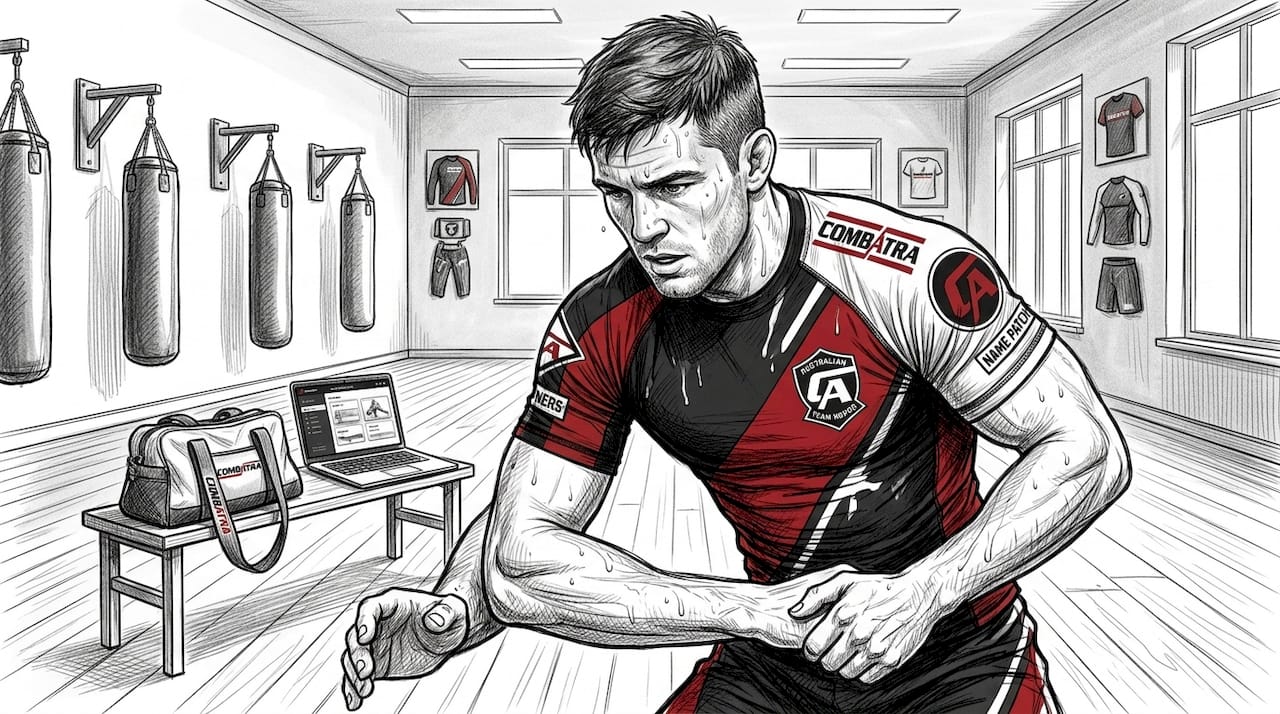
What should you define before starting your custom rashguard design?
Start with a clear brief so the supplier can understand your intended use, sizing and artwork requirements before quoting.
Start by defining the intended use, preferred fit, sleeve option, size range and artwork requirements. Confirm the final specification on the supplier’s current product page or quote.
Next, lock in your branding requirements:
- Artwork: academy logo, names and any individual text; ask which file formats are accepted.
- Personalisation: record which names or numbers belong on each garment, if offered.
- Colours: provide references and agree the colour-proof process.
- Fit: record your preferred fit and compare the exact product’s size guide.
- Size range: list the sizes your team needs and confirm current availability.
For Combatra’s custom rashguard, the current listing states UPF 50+ fabric protection, compression fit, 4-way stretch, breathable comfort and flatlock seams. Check the live listing for current product details and options.
Ask the supplier for its current minimum order quantity, price, sample process and delivery timing. These commercial terms can change.
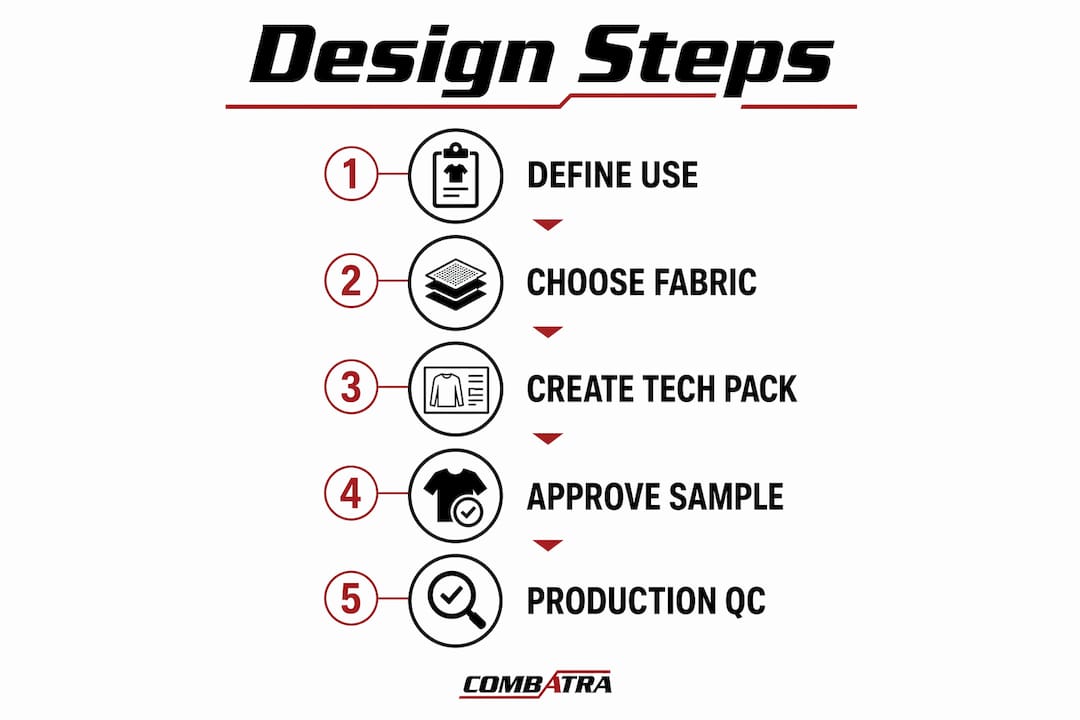
Pro Tip: Gather artwork, reference images and colour preferences before contacting a supplier. Ask which file formats and colour references it accepts.
How do you develop technical design specifications?
Translating your vision into a document a manufacturer can follow without guessing is the most technical part of the process. That document is called a tech pack, and it is the foundation of your entire production run.
A tech pack can record artwork, measurements, labels and other requested details. Confirm the supplier’s current specification process before ordering.
Build your tech pack in this order:
- Front and back layout: mark requested artwork positions and dimensions using the supplier’s template.
- Sizes: provide the team size breakdown and follow the supplier’s measuring instructions.
- Fabric: request the exact composition, weight and care guidance for the selected item.
- Construction: confirm the listed seam details and ask about a sample if needed.
- Artwork files: agree file formats, colour references and the proof process.
- Labels and trims: confirm which details are available and included in the quote.
Before a bulk order, review any sample, proof or size information offered by the supplier and confirm that it matches your approved artwork and requirements.
Pro Tip: Ask which sample or proof options the supplier offers, what they cost and what you can assess before approving production.
What are best practices for printing, production, and quality control?
Printing and construction choices vary by supplier and product. Confirm the exact artwork method, garment specification and care guidance before ordering.
Confirm the supplier’s current print method, artwork requirements and care guidance rather than relying on a universal durability claim.
Suppliers may offer different production models. Confirm the exact scope, design responsibility, quote and delivery timing with the supplier.
The sportswear manufacturing process includes these stages, each depending on the previous:
| Stage | What happens |
|---|---|
| Pre-production | Agree artwork, specification, quote and approval steps |
| Pattern making | Confirm the supplier’s sizing or pattern process |
| Sampling | Review available sample or proof options and costs |
| Mass production | Approve the final details before the agreed production stage |
| Quality assurance | Use the inspection and acceptance process agreed with the supplier |
| Logistics | Packaging, labelling, freight coordination |
Quality control checkpoints to insist on:
- Colour approval: agree how colours will be shown and approved.
- Production checks: ask which checks are included and when issues can be raised.
- Inspection: agree any inspection process, acceptance criteria and responsibility before production.
- Care and print: review supplied care guidance and any relevant test evidence or sample options.
If ethical or workplace credentials matter to your academy, request current documentary evidence that applies to the specific supplier and facility. Do not infer accreditation from marketing copy.
How do you manage ordering, costing, and delivery for custom rashguards?
Confirm the written quote, what is included, payment terms and expected timing before approving a custom order.
A typical costing breakdown includes:
- Garment: confirm the unit price for your selected specification and size mix.
- Artwork: ask whether design, setup or printing charges are included.
- Production: confirm which manufacturing charges are included in the quote.
- Trims and packaging: ask about labels, tags, packaging and any extra charges.
- Delivery: confirm freight charges, destination and any other applicable quoted costs.
Delivery timing depends on the current order details. Request a written current quote and timeline before committing to a launch or event date.
Practical ordering tips:
- Provide the size and colour breakdown with your artwork brief.
- Confirm the current minimum quantity and reorder terms for the selected product.
- Request relevant current supplier credentials or references where needed.
- Agree any sample, proof or inspection process and who approves it.
- Confirm packaging details and whether any academy branding is available.
Pro Tip: Confirm your size breakdown, replacement policy and current reorder terms before approving a bulk order.
Decide fabric sourcing with the supplier based on the exact garment, artwork and order requirements. Ask for current fabric details and colour approval steps where relevant.
Key takeaways
A custom rashguard order should be based on a clear artwork brief, current product options, size requirements, supplier quote and delivery plan.
| Point | Details |
|---|---|
| Define use case first | Clarify whether the rashguard is for competition, training, or outdoor use before contacting a manufacturer. |
| Record the specification | Use the supplier’s template for artwork, sizing and requested details |
| Confirm the print method | Ask what method is available on the selected garment and review care guidance |
| Review samples or proofs | Confirm what is available, cost and approval process |
| Confirm current timing | Request current production and delivery timing before an event commitment |
Custom rashguard checks before ordering
Before a bulk order, review the supplier’s current proof, size information and sample options. Confirm what is included in the quoted process.
Do not treat an unverified fabric or UPF claim as independently certified. Request current product documentation where that evidence is necessary.
If accreditation matters, request current facility-specific documentary evidence before relying on it in a buying decision.
For a BJJ team order, agree the artwork, size breakdown, quote and approval steps with your supplier before production.
Combatra’s custom rashguard range for Australian athletes
Combatra’s custom rashguard page lists UPF 50+ fabric protection, compression fit, 4-way stretch, breathable comfort and flatlock seams. Review the live page for current sizes, sleeve choices and design-upload options.

You can use the current custom rashguard builder to review available size, sleeve, front and back design-upload options. Confirm the current live form and product page before ordering.
FAQ
What is the minimum order for custom rashguards in Australia?
Ask the supplier for its current minimum order quantity and quote; these terms vary by product and can change.
Why is sublimation printing recommended for BJJ rashguards?
Confirm the supplier’s current artwork method and care guidance. Do not rely on universal no-fade or no-peel claims.
How long does a custom rashguard order take?
Request a current written timeline before committing to an event or launch date.
What stitch type should a rashguard use?
Check the live product specification for the exact seam construction. For Combatra’s custom rashguard, the current listing states flatlock seams.
Do I need to source my own fabric?
Discuss fabric sourcing with the supplier and request the current product and colour-approval details that apply to your order.