


When to Replace Compression Shorts: A BJJ and MMA Gear Check

Compression shorts do not come with a universal replacement date. The useful question is whether your pair still performs its clothing job: staying in place, providing the coverage you expect and allowing comfortable movement within your training outfit. An old pair may still be usable, while a newer pair with a damaged seam may need attention immediately.
Check the shorts when they are clean and fully dry, then assess them in the combination you actually wear. This guide separates fit, condition and care problems so you can decide whether to keep using them, ask about repair or compare a replacement. It does not measure medical compression or claim that a tighter pair improves performance.
Compare with how the shorts fitted when new
Recall whether the shorts ever fitted comfortably. If the waistband rolled or the leg opening moved from the first session, the issue may be the size or cut rather than wear. Buying the same size again may repeat that problem. A change that appeared only after regular use deserves a different inspection.
Look at the waistband and leg openings when the garment is relaxed. Check for visible distortion or an edge that sits unevenly. Then put the shorts on without pulling them tighter than you normally would. The aim is an ordinary fit check, not a stress test designed to see how far the fabric can stretch.
Body measurements, preferred coverage and training use can also change. Compare the current product's size guidance if you are considering a replacement, even when the design name is familiar. Do not move automatically to a smaller size to recreate a sensation of pressure.
Write down the actual problem in plain language. “The waistband slips during a comfortable squat” gives you a more useful buying requirement than “the compression has gone”.
Inspect seams and fabric in good light
Turn the shorts inside out and look along the seams, especially where different panels meet. Check for openings, loose stitching, holes or an edge that catches. Inspect the waistband attachment as well as the main fabric. A garment can look tidy from the outside while a seam needs attention.
Separate appearance from function. A faded graphic does not, by itself, show that the shorts have failed. Equally, a strong-looking print does not prove the seams and fabric are sound. Make the decision from the whole garment rather than the part that is easiest to photograph.
If you find damage, stop using that pair for the intended session until the issue has been assessed. Ask the seller or a suitable repairer whether a repair is appropriate for the stretch construction. Do not assume a quick stitch or adhesive will restore the way a seam behaves during movement.
Keep photographs of the problem and the product details if you contact the seller. Describe when you noticed it and what you have already tried, without inventing a cause you cannot establish.

Test coverage in the outfit you actually train in
Wear the shorts with the same rashguard and any outer shorts you normally use. Try comfortable movements relevant to your session, such as standing, squatting and changing your stance. Look for an edge that rolls, fabric that bunches or a waistband that needs repeated adjustment. Stop if movement is uncomfortable.
Assess coverage under ordinary lighting and in those positions. If the fabric does not provide the coverage you want, consider the size, condition and the intended layering arrangement. Do not assume that choosing a darker print will fix a problem caused by fit or worn fabric.
Outer shorts can change how the combination feels. A tight outer waistband may create pressure even when the compression shorts alone feel comfortable. Test the complete outfit before blaming one item. The training shorts versus compression shorts guide explains their different roles.
Keep your own assessment separate from academy or event acceptance. A comfortable outfit still needs to meet the requirements for the session in which you intend to wear it.
Review the care routine before changing products
Read the label for the pair you own and compare it with the washing and drying routine you have been using. Check whether the permitted temperature, drying method and other restrictions were followed. A recurring laundry problem can affect each new pair unless the process is corrected.
The ACCC Product Safety care guide explains that garment care instructions may appear as words or symbols. Use the directions for the actual item rather than assuming all compression clothing belongs in the same load or dryer setting.
If the shorts have an unresolved odour, review the cleaning process and contact the supplier for suitable care guidance. Do not treat fragrance as proof that the issue is solved. If you have a health concern, obtain appropriate health advice; a garment inspection cannot diagnose it.
A clean, dry garment is also easier to assess consistently. Testing one pair damp after training and another freshly washed can confuse the comparison. Use similar conditions when deciding what has changed.

Choose between keep, assess and replace
Keep using shorts that remain suitable for the intended activity, fit comfortably and have no unresolved condition issue. Monitor an unfamiliar change rather than assigning the garment a guaranteed remaining lifespan. There is no reliable universal rule that a pair must be replaced after a particular number of sessions.
Seek assessment when the problem is specific but its effect is unclear, such as a seam starting to open. Explain that the garment is used for grappling or martial arts so the person advising on repair understands the movement involved. Keep another suitable pair available while the issue is unresolved.
Compare replacements when the pair no longer provides the required fit or coverage, or when a suitable repair is not available. The infographic shows a five-part check: fit history, seams, coverage, care and the resulting decision. It is a practical inspection routine, not a durability test or product certification.

Turn the problem into a better buying brief
Use the inspection to identify what you need from the next pair. Record the preferred waistband feel, leg length, layering role and current size measurements. If the previous pair was uncomfortable from the start, treat that as a reason to compare the cut rather than an automatic reason to reorder.
Read the exact product listing and size guidance. A label such as “compression” does not establish a particular pressure level or a medical benefit. Ask the seller to clarify any feature that affects your decision, especially when you cannot tell from the listing whether the shorts suit the layer you intend to wear.
For sport-specific rules, consult the organiser's current information. The IBJJF uniform page distinguishes no-Gi clothing requirements by category, including how compression shorts may be worn. This guide does not certify any graphic design or product as acceptable for your event.
You can also compare the men's compression-short fit guide or the relevant product guidance for your own fit needs. Keep the decision focused on the garment and the wearer.
Replace deliberately and keep a usable rotation
The Combatra options below offer two existing graphic designs and a custom route. Compare the current size information and confirm any unanswered construction or care questions before ordering. The printed design is a preference; it should follow the fit and training-use decision.
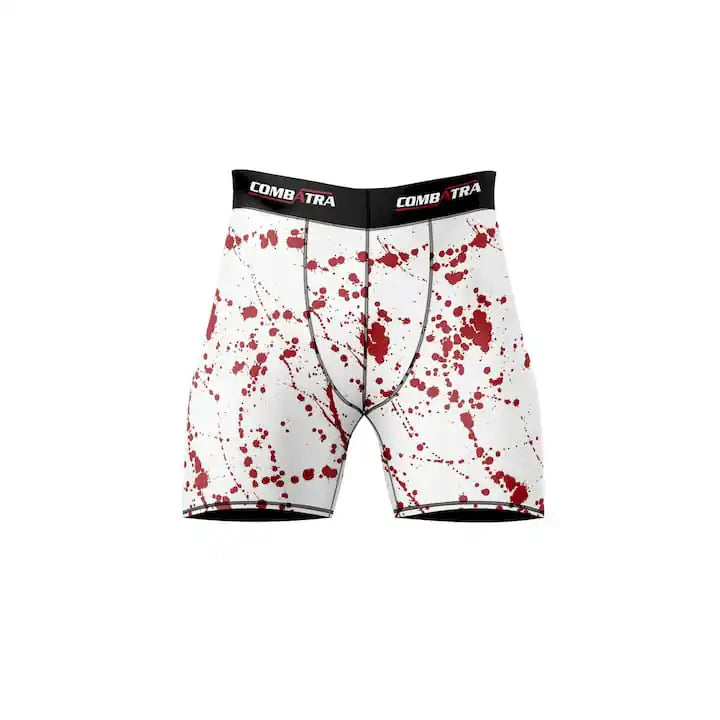
Blood Splash Compression Shorts | Combatra
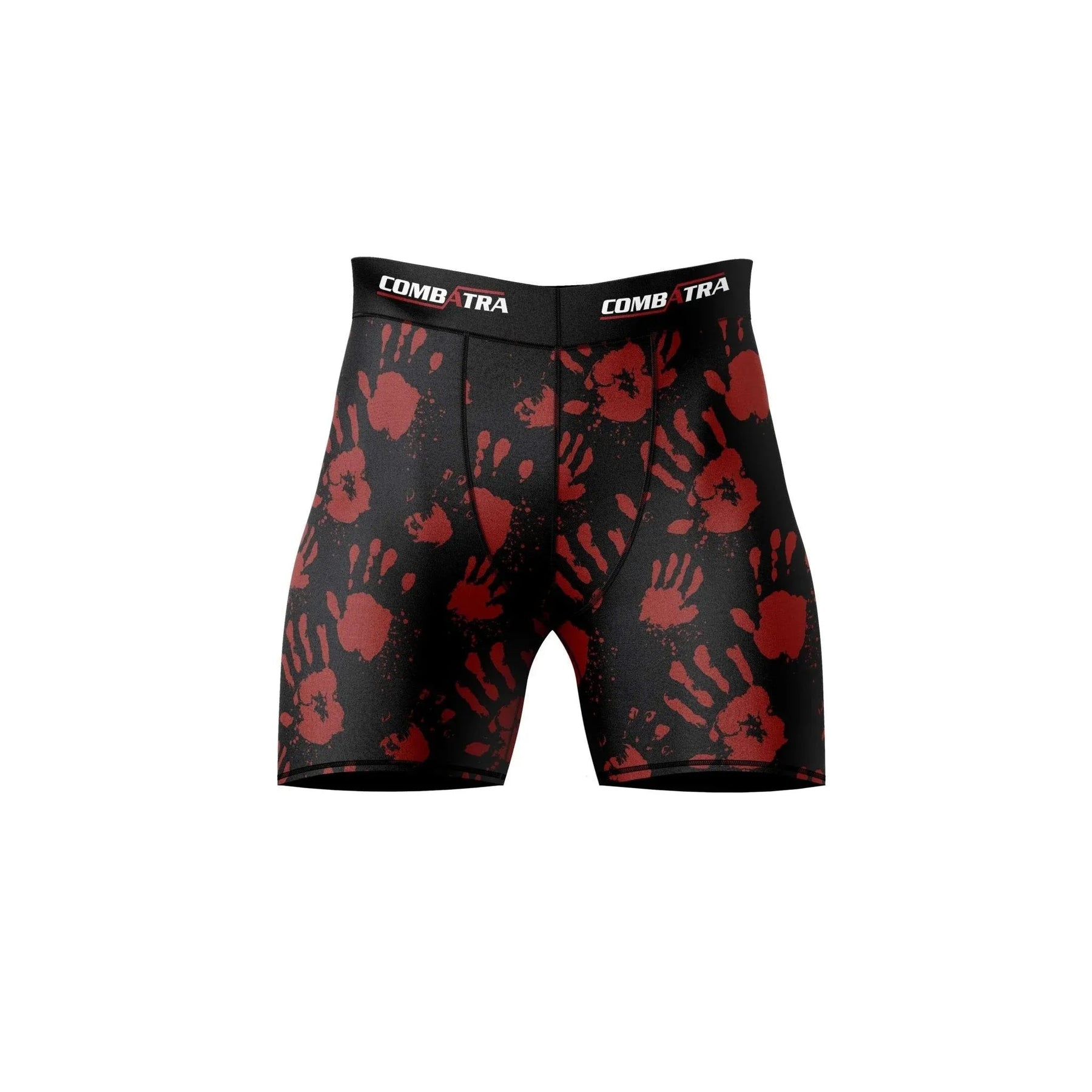
Red Handprint Compression Shorts | Combatra

Custom Compression Shorts | Combatra
If your training schedule regularly leaves you without a clean pair, a spare may be useful even when the current pair is still in good condition. That is a laundry-capacity decision, separate from replacing a worn garment. Keep track of which pair has a problem so it does not return to the regular kit by accident.
When the replacement arrives, check it before relying on it for a full session. Confirm the fit and layering combination again. A deliberate replacement should resolve the problem you identified, rather than simply restart the same cycle in a different colour.

Frequently asked questions
How long should compression shorts last?
There is no single lifespan that applies to every pair or training routine. Check their actual condition, fit, coverage and care history. A fixed session count is less useful than identifying a concrete problem.
Does a faded print mean I need new shorts?
Not necessarily. Inspect the fabric, seams and fit as well. Cosmetic wear alone does not establish functional failure, while an intact graphic does not guarantee the rest of the garment is sound.
Should I buy a smaller size when the old pair feels loose?
Recheck your measurements and the current size guidance first. A smaller size may create a different fit problem. Establish whether the issue comes from the old garment's condition, the cut or a change in your fit needs.
Can a damaged stretch seam be repaired?
Ask a suitable repairer or the seller to assess the actual damage and construction. Do not assume any stitch will restore it for training. Use another suitable pair while the question remains unresolved.
Do outer shorts fix a coverage problem?
They can be part of a permitted layering arrangement, but they do not repair damaged fabric or establish that the underlying pair fits properly. Check the full outfit and the session's clothing rules.
Is a second pair the same decision as replacement?
No. A spare can solve wash-and-dry turnaround while the original pair remains usable. Replacement addresses a pair that no longer suits the job. Identify which problem you are trying to solve before buying.