


TL;DR:
- Choosing custom BJJ uniforms improves fit, UV protection, and durability compared to off-the-shelf options. Custom kit allows for team branding, enhanced performance, and longer-lasting garments suited for outdoor training. Proper planning and quality materials ensure these benefits support athlete safety and long-term performance.
Choose custom BJJ uniforms when fit, team identity, UV protection, and long-term durability matter. Off-the-shelf kit is convenient, but it rarely accounts for the specific demands of grappling, outdoor training in the Australian sun, or the logistical needs of a growing academy. Custom kit built to AS/NZS 4399:2020 and rated UPF 50+ closes that gap.
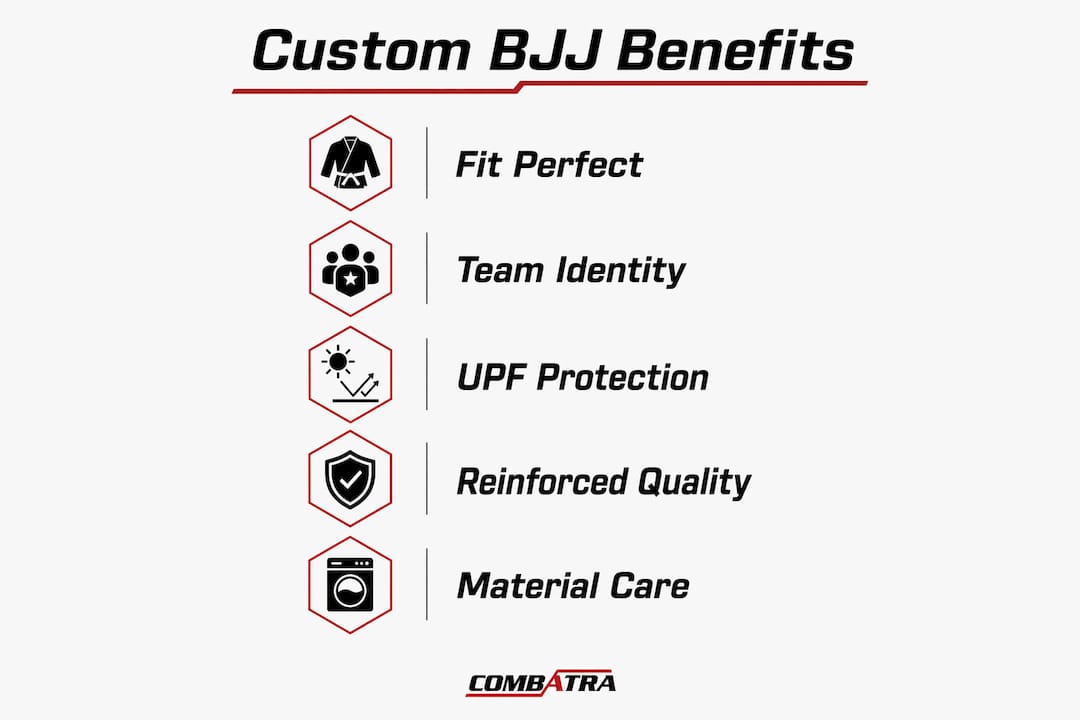
The top reasons to choose custom BJJ uniforms at a glance:
- Superior fit and performance: cut for grappling movement, not generic sizing
- Team identity: academy colours, logos, and names on every piece
- UPF 50+ sun protection: lab-tested fabric for outdoor and summer training
- Durability: reinforced seams, gussets, and combat-tested construction
- Academy ordering controls: size matrices, artwork uploads, and managed lead times
The sections below cover materials, construction, team ordering logistics, care, and design rules so you can order with confidence.
Table of Contents
- What rashguards and custom BJJ uniforms actually do for your training
- 1. Custom kit gives you a fit built for grappling, not the gym floor
- 2. Academy branding builds team identity and motivation
- 3. UPF 50+ fabric specification protects athletes training outdoors
- 4. Reinforced construction extends the life of your kit
- 5. What to look for in materials and construction
- 6. How academies manage team orders without surprises
- 7. How to care for custom kit so it lasts and keeps its UPF rating
- 8. Training, outdoor sessions, and competition: choosing the right kit
- 9. Design tips that keep your kit looking premium
- Key takeaways
- Why custom kit is worth the investment
- Your next step: design your own personalised BJJ gi
- Useful standards and resources
What rashguards and custom BJJ uniforms actually do for your training
A rashguard is not just a base layer. In BJJ, MMA, and grappling, it delivers compression support that stabilises muscles during explosive movements, manages sweat to keep you dry and reduce skin-to-skin friction, and protects against mat burns and abrasion. A well-constructed gi adds structure, grip points for technique, and durability under constant pulling stress.
Australia’s UV index regularly reaches extreme levels, making sun protection a genuine performance concern for outdoor training sessions. ARPANSA recommends UPF 50+ garments for all-day protection, noting that UPF applies only to the skin the garment actually covers. Premium rashguards can be lab-tested under AS/NZS 4399:2020 and labelled UPF 50+ when the fabric meets the standard.
Pro Tip: When buying for outdoor sessions, check that the garment label states UPF 50+, not just “UV protective.” The label is the manufacturer’s declaration that the fabric passed testing under AS/NZS 4399.
Combatra builds rashguards and custom BJJ gis with both performance and sun protection in mind, positioning the brand as a training partner rather than a uniform supplier.
1. Custom kit gives you a fit built for grappling, not the gym floor
Off-the-shelf uniforms are sized for average body shapes. Grappling demands a different cut: enough room through the shoulders and hips for guard work, a tapered torso to reduce grip points for opponents, and sleeve lengths that stay legal under competition rules. Custom design in BJJ directly affects how well a garment performs under live rolling conditions.
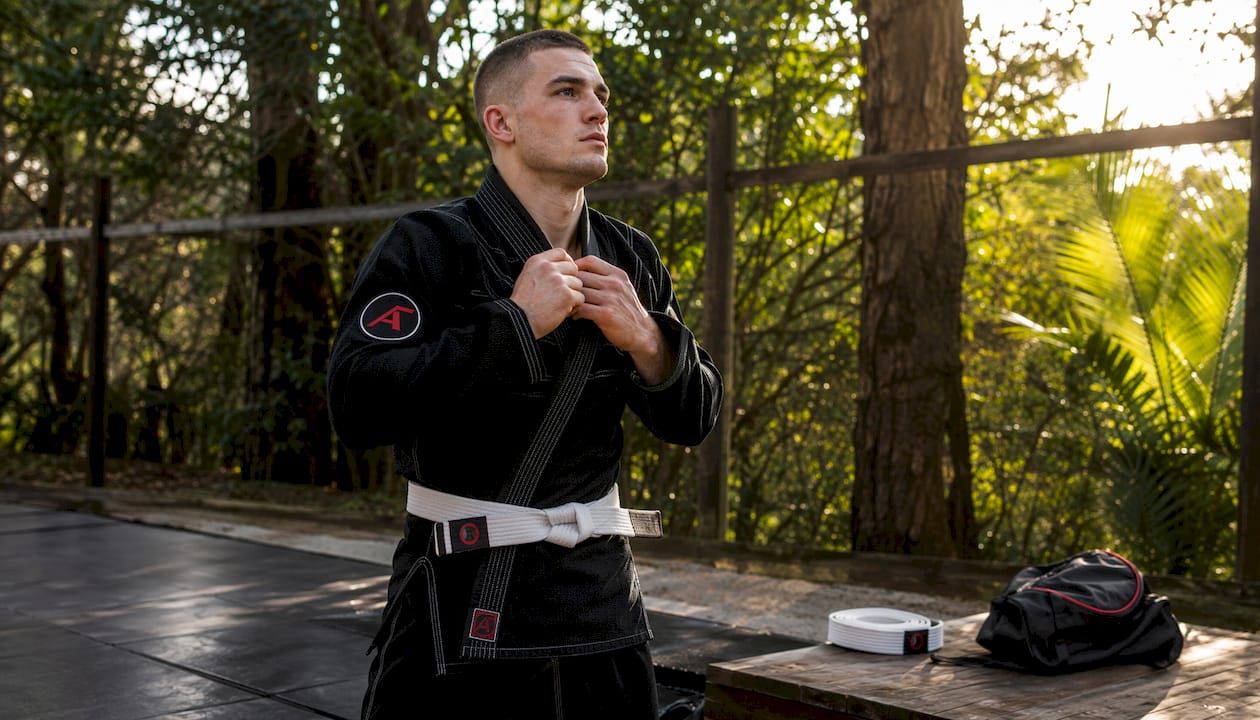
Custom sizing also reduces returns. When athletes submit their measurements, the finished garment fits the first time.
2. Academy branding builds team identity and motivation
A uniform with your academy’s colours, logo, and athlete names does something a plain white gi cannot: it signals belonging. Athletes who train in matched kit tend to present more professionally at competitions and feel a stronger connection to their team. The AIS/Melanoma position statement also recommends that sporting organisations adopt sun-protection policies, which include providing branded UPF-rated kit as part of that policy.
3. UPF 50+ fabric specification protects athletes training outdoors
Standard cotton gis and generic polyester rashguards offer little measurable UV protection. A garment rated UPF 50+ blocks at least 98% of UV radiation reaching the covered skin. ARPANSA’s NATA-accredited lab issues fabric UPF test reports; garment coverage assessment remains the manufacturer’s responsibility under AS/NZS 4399. When you specify UPF 50+ fabric in a custom order, you get documented protection, not a marketing claim.
4. Reinforced construction extends the life of your kit
Custom orders let you specify construction details that mass-produced uniforms skip. Flatlock seams reduce pressure points during ground work. Reinforced stitching at stress points (collar, sleeve cuffs, knee panels) prevents early failure. Gussets in the crotch and underarm panels allow full range of motion without tearing. These features add cost per unit but reduce replacement frequency, which matters for academies outfitting 20 or more athletes.
5. What to look for in materials and construction
Choosing the right fabric and build quality starts with matching the material to your primary use case.
Fabric checklist:
- UPF 50+ rated polyester/elastane blend (typically 80/20 or 88/12 for rashguards)
- High yarn density for UV blocking and abrasion resistance
- Moisture-wicking finish to manage sweat during long sessions
- Chlorine and salt resistance for athletes who train near water or in humid environments
Construction checklist:
- Flatlock seams for comfort against the skin
- Reinforced stitch patterns at high-stress points
- Taped internal seams on gis for durability
- Gussets at crotch and underarm for movement range
- Structured collar and waistband construction on gis
AWTA Product Testing notes that the 2020 revision of AS 4399 tightened labelling and coverage rules. Academies ordering custom kit should request fabric UPF test reports and check garment coverage statements from their supplier.
| Feature | Training rashguard | Competition gi | Outdoor training top |
|---|---|---|---|
| UPF rating | UPF 50+ preferred | UPF 50+ preferred | UPF 50+ required |
| Seam type | Flatlock | Flatlock + taped | Flatlock |
| Gussets | Yes | Yes | Yes |
| Reinforced panels | Knee, shoulder | Collar, sleeve | Shoulder, back |
Pro Tip: Ask your supplier for the fabric UPF test report, not just the label claim. A test report shows the actual UPF value measured in the lab, which matters when you are specifying kit for outdoor academy sessions.
6. How academies manage team orders without surprises
Proper planning shortens lead times and reduces rework. A typical team order workflow runs 4–8 weeks from design approval to delivery, depending on fabric choice and print method.
Artwork and design requirements:
- Vector files (AI, EPS, or high-resolution PDF) for logos
- Minimum 300 dpi for raster elements
- Colour values in CMYK or Pantone for accurate reproduction
- Placement map showing logo position, name location, and rank markings
Order logistics:
- Submit a size spreadsheet with each athlete’s measurements
- Confirm artwork and placement with a digital proof
- Approve the proof before production begins
- Allow 4–8 weeks for production; rush options are available at additional cost
- Confirm delivery address and split-shipping requirements for large academies
Cost drivers: fabric grade, print method (sublimation vs embroidery), order quantity, and rush fees. Larger orders reduce per-unit cost. Embroidery adds texture and durability but costs more per piece than sublimation printing.
Academies completing full team kits can also consider BJJ belts as part of the same order to maintain a consistent look across the mat.
7. How to care for custom kit so it lasts and keeps its UPF rating
Follow the manufacturer’s wash care instructions to preserve fit, colour, and UPF performance. Fabric softeners coat fibres and can degrade both moisture-wicking finishes and UV-blocking properties over time.
Care dos and don’ts:
- Do wash in cold water (30°C or below)
- Do use a mild, pH-neutral detergent
- Do air dry away from direct sunlight
- Do repair small tears immediately before they spread
- Don’t use fabric softener or bleach
- Don’t tumble dry on high heat
- Don’t leave damp kit rolled up in a bag
Pro Tip: Rotating two or three sets of kit per athlete extends the service life of each garment significantly. For academies, this also reduces the frequency of warranty claims and replacement orders. Combatra’s personalising guide covers care in detail.
8. Training, outdoor sessions, and competition: choosing the right kit
Select your kit based on primary use, then layer in secondary requirements.
- Daily training: prioritise reinforced construction and durability; UPF 50+ is a bonus indoors but standard for outdoor academies
- Outdoor summer sessions: UPF 50+ is non-negotiable; full-sleeve rashguards with torso coverage align with AIS sun-safe recommendations for upper-body garments
- Competition: lightweight competition cuts with minimal grip points; check permitted logo size and placement before ordering custom designs
Choosing gym clothing for training generally follows the same principle: match the garment’s construction to the physical demands of the session.
9. Design tips that keep your kit looking premium
Good design balances visibility with restraint. A cluttered print reads as amateur; a clean, consistent layout reads as professional.
Design checklist:
- Keep logos within safe zones (avoid seams and panel edges where distortion occurs)
- Limit the palette to two or three colours for a clean result
- Use high-contrast colour combinations for name and rank legibility
- Place the academy name on the back yoke and athlete name on the chest or sleeve
- Choose embroidery for collar and cuff branding; sublimation for full-panel graphics
| Design element | Recommended approach | Common mistake |
|---|---|---|
| Logo scale | 8–12 cm wide on chest | Too small to read, or oversized and distorted |
| Colour palette | 2–3 colours maximum | Too many colours, inconsistent across pieces |
| Name placement | Chest or sleeve | Placed over seams, causing distortion |
| Typography | Single consistent font | Multiple fonts reducing professional appearance |
| Background print | Subtle texture or solid | Busy patterns that compete with logo |
For a minimal, premium look, Combatra’s plain black custom gi set shows how a restrained colourway with clean logo placement reads as high-end on the mat.
Practical design rules to give your designer:
- Supply vector logos at full resolution
- Specify Pantone or CMYK values for brand colours
- Mark placement zones on a garment flat template
- Confirm print method before finalising artwork
Key takeaways
Custom BJJ uniforms deliver measurable advantages in fit, UV protection, and durability when specified correctly and ordered through a supplier who can provide fabric UPF test reports under AS/NZS 4399:2020.
| Point | Details |
|---|---|
| Fit for grappling | Custom sizing reduces returns and improves performance under live rolling conditions. |
| UPF 50+ specification | Request fabric test reports, not just label claims, when ordering for outdoor training. |
| Construction matters | Flatlock seams, gussets, and reinforced panels extend garment life and reduce replacement costs. |
| Team order planning | Allow 4–8 weeks and submit vector artwork with a size spreadsheet to avoid rework. |
| Combatra custom gi | Combatra’s Design Your Own BJJ Gi page supports custom artwork uploads, team sizing, and UPF 50+ fabric options. |
Why custom kit is worth the investment
The conventional wisdom says custom uniforms are a luxury for established academies. That view misses the practical case. When athletes train in kit that fits correctly, they move better, get injured less from poorly placed seams, and replace garments less often. For an academy running 30 or more athletes, the per-unit cost difference between custom and off-the-shelf narrows quickly once you account for replacement cycles.
The UPF argument is even clearer in Australia. Training outdoors in summer without rated sun protection is a genuine health risk, not a style preference. A garment labelled UPF 50+ under AS/NZS 4399:2020 is a documented intervention. A plain white cotton gi is not.
Where custom kit genuinely falls short is turnaround time. If you need uniforms in two weeks, a 4–8 week production run is not the answer. Off-the-shelf kit from a premium gi collection covers that gap. Plan ahead and custom is the better long-term choice for any academy serious about identity and performance.
Your next step: design your own personalised BJJ gi
Combatra’s Design Your Own Personalised BJJ Gi page is built for exactly this process. Upload your academy artwork, select sizes from the size guide, and confirm your order with a digital proof before production begins.
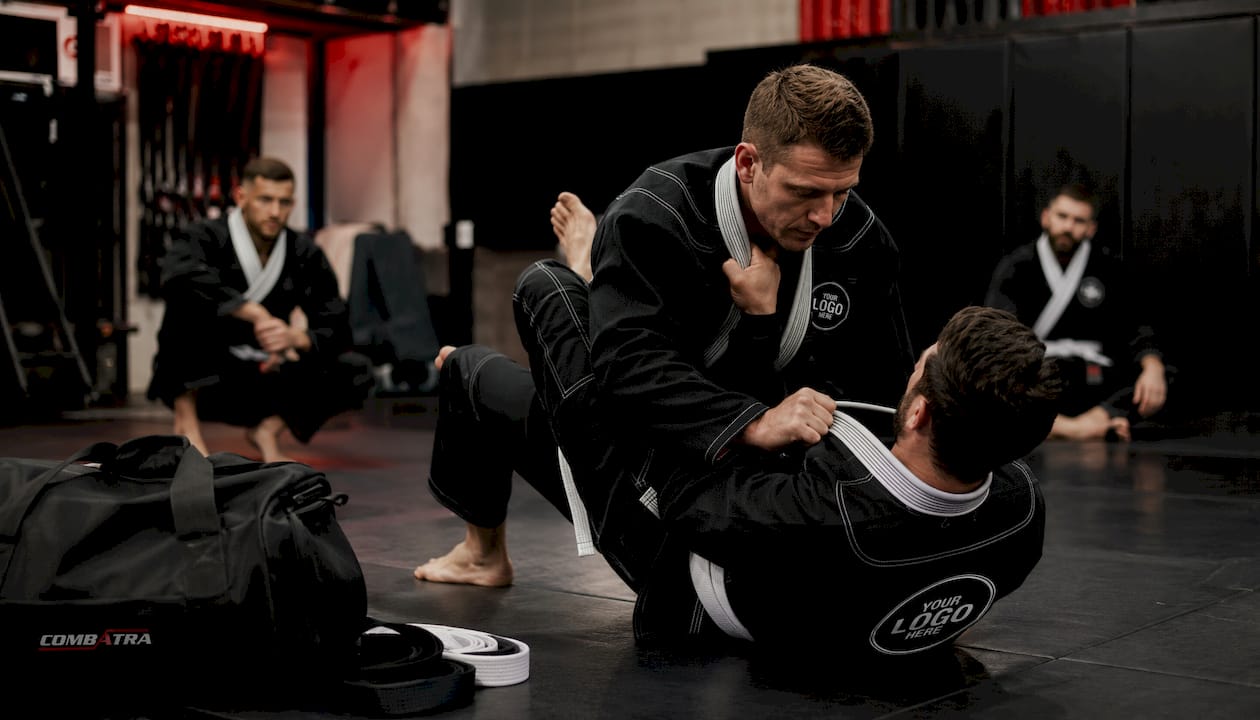
For academies wanting to extend the custom kit across the full training wardrobe, the custom sportswear collection covers rashguards, compression wear, and performance apparel with the same UPF 50+ fabric options and artwork upload process. Start your order, confirm your artwork, and your team can be training in matched, sun-protective kit within the standard production window.
Useful standards and resources
- AS/NZS 4399:2020: the Australian and New Zealand standard for testing and labelling sun protective clothing, including UPF classification and garment coverage rules
- ARPANSA — sun protective clothing guidance: explains UPF ratings, label requirements, and the limits of fabric-only test reports versus garment coverage assessment
- AIS/Melanoma Institute Australia — Sun Safe Sports position statement: recommends UPF 50+ clothing with full torso coverage for athletes and outlines policy approaches for sporting organisations
- AWTA Product Testing — AS 4399 revision note: summarises the 2020 changes to labelling, coverage rules, and swimwear exemptions
A note on reading test reports: a fabric UPF test report confirms the material’s UV-blocking performance in the lab. It does not assess how much of the body the finished garment covers. Under AS/NZS 4399:2020, both the fabric result and the garment’s coverage design determine whether a product can carry a UPF label. Always ask your supplier for both.