


Rashguards belong in your karate kit bag. Whether you train gi or no-gi, indoors or outdoors, these compression garments deliver real, practical advantages: they protect your skin from abrasion and mat burns, manage sweat, reduce your exposure to bacteria and fungi, and provide meaningful UV protection during outdoor sessions. For Australian athletes training under some of the harshest UV conditions on the planet, that last point alone makes them worth considering. Premium rashguards tested to AS 4399:2020 and rated UPF 50+ block at least 98% of UVA and UVB rays, giving your skin genuine protection during summer training or outdoor dojo sessions. Here is a detailed look at every reason to add one to your training routine.
Table of Contents
- Why wear rashguards in karate: the core benefits at a glance
- 1. Abrasion protection and mat burn prevention
- 2. Hygiene and infection prevention
- 3. Compression and muscle support
- 4. UPF 50+ sun protection for Australian conditions
- 5. Wearing rashguards under your karate uniform
- 6. Cross-training and no-gi sessions
- 7. Winter training warmth and muscle protection
- 8. Materials and fabric technology
- 9. Choosing the right size and fit
- 10. How rashguards compare to other protective options in karate
- Key takeaways
- Combatra rashguards: built for karate and combat sports in Australia
Why wear rashguards in karate: the core benefits at a glance
- Skin protection: Rashguards reduce friction between your skin and the mat, preventing mat burns and abrasions that can develop into serious infections like MRSA.
- Hygiene: They create a breathable barrier that limits direct contact with sweat, bacteria, and fungi from training partners and mat surfaces.
- Compression support: The snug fit improves proprioceptive feedback and muscle stability, supporting consistent training quality and recovery.
- UV protection: UPF 50+ rated rashguards shield covered skin from harmful solar radiation, which matters greatly for any outdoor karate training in Australia.
- Uniform longevity: Wearing a rashguard under your gi can extend its lifespan by up to 50% by reducing sweat saturation and bacterial damage to the fabric.
- Mobility: Advanced fabric blends with ultra-stretch properties move with your body, so your technique stays clean and unrestricted.
1. Abrasion protection and mat burn prevention
Mat burns are one of the most common training nuisances in karate and grappling arts. The friction between skin and mat is high, and repeated exposure leads to raw, open abrasions that can become infected with bacteria like MRSA. A rashguard sits directly against your skin, and its specialised fabric reduces mat friction significantly compared to bare skin or a loose gi alone.
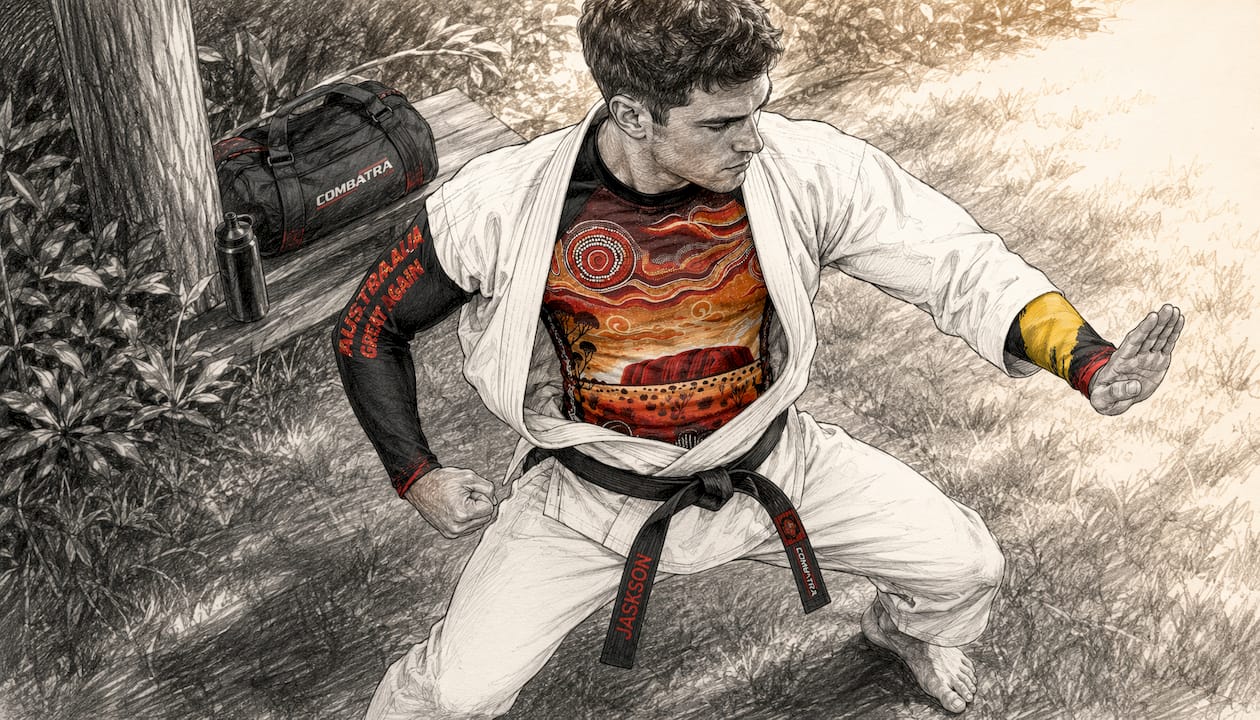
This protective layer is particularly useful during groundwork drills, partner exercises, and any cross-training that involves mat contact. Treating a mat burn early is straightforward; letting one become infected is not.
2. Hygiene and infection prevention
Skin infections including ringworm, staph, and impetigo thrive in the warm, close-contact environment of a martial arts dojo. The primary transmission pathway is direct skin-to-skin contact, followed by contact with contaminated mat surfaces. A rashguard acts as a physical barrier that limits pathogen transfer between training partners without replacing good hygiene practices like showering immediately after class and washing your gear after every session.
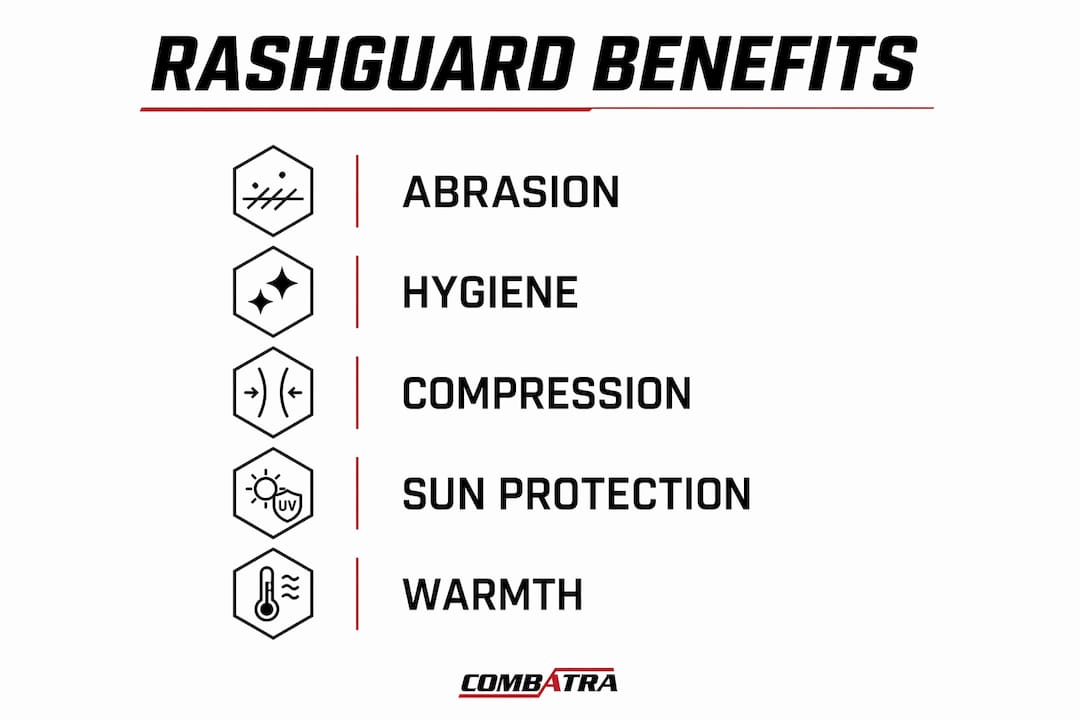
Washing your rashguard after every training session prevents bacterial growth, reduces odours, and keeps the fabric performing as it should. Think of it as the first line of defence, not the only one.
3. Compression and muscle support
Compression wear migrated from hospital wards into elite sport decades ago, and for good reason. In karate, the snug fit of a rashguard improves proprioception, which is your body’s awareness of its own position and movement. Better proprioception means cleaner technique, faster reaction, and reduced injury risk during dynamic drills and sparring.
Combat sports research is clear that compression gear is not a shortcut to better performance. What it does do is support long-term training quality by aiding recovery between sessions and reducing perceived muscle soreness. For karate practitioners training multiple sessions per week, that recovery edge adds up.
4. UPF 50+ sun protection for Australian conditions
Australia has one of the highest rates of skin cancer in the world, and ARPANSA recommends clothing with a UPF rating of 50 or higher for anyone working or training outdoors. A UPF 50+ rashguard blocks at least 98% of UV radiation on the skin it covers, providing all-day protection even for athletes with fair skin.
One important detail: the UPF rating applies only to covered skin, and protection can diminish if the fabric is wet, stretched, or worn. Maintaining your rashguard properly, and replacing it when the fabric thins, keeps that protection intact.
Pro Tip: Check your rashguard against a light source periodically. If you can see through the fabric clearly, the UV protection has likely degraded and it is time for a replacement.
5. Wearing rashguards under your karate uniform
Putting a rashguard under your gi is one of the simplest ways to extend the life of your uniform. Every training session saturates your gi with sweat from the inside, and that moisture accelerates fabric deterioration and bacterial growth. The rashguard absorbs that sweat before it reaches the gi, and wearing one can extend your uniform’s lifespan by up to 50%.
Beyond longevity, the rashguard also stops the gi fabric from chafing directly against your skin during extended sessions. If you train in a karate uniform for two or more hours, that comfort difference is noticeable.
6. Cross-training and no-gi sessions
Karate practitioners who cross-train in BJJ, MMA, or wrestling will find rashguards are standard gear in those environments. A well-fitted rashguard worn alone or with compression spats is the accepted uniform for no-gi grappling, and it performs just as well during striking-focused cross-training sessions where you want moisture management without the bulk of a gi.
The performance and hygiene benefits of rashguards transfer directly across disciplines, making them one of the most versatile pieces of kit you can own.
7. Winter training warmth and muscle protection
In cooler months, a rashguard worn under your gi or as a base layer during warm-up adds a layer of warmth that helps muscles stay loose before they are properly warmed up. Cold muscles are more prone to strains, and starting a session with a thermal base layer reduces that risk during the first 10–15 minutes of training.
Long-sleeve rashguards are particularly useful here. They cover the arms and torso fully, providing both warmth and the abrasion protection described earlier, without restricting movement during kicks, punches, or groundwork.
8. Materials and fabric technology
Quality rashguards use polyester and elastane blends that balance stretch, durability, and moisture management. Polyester wicks sweat away from the skin quickly, while elastane provides the four-way stretch needed for full karate movement. Premium options incorporate ultra-stretch fabric and high-tensile flatlock stitching that resists the pulling and friction of grappling far better than standard gym wear.
Flatlock stitching lies flat against the skin rather than sitting proud of the fabric, which eliminates the seam irritation that standard stitching causes during extended mat sessions.
9. Choosing the right size and fit
A rashguard should feel snug against your skin without restricting breathing or movement. Too loose and it bunches under your gi, creating friction points. Too tight and it limits your range of motion during high kicks and deep stances. Most brands size rashguards close to your regular training top size, but checking the specific size guide for each product is worth the extra minute.
For karate, a short-sleeve or long-sleeve option both work well. Long-sleeve provides more coverage and sun protection; short-sleeve offers slightly more freedom around the shoulders for overhead techniques.
10. How rashguards compare to other protective options in karate
| Option | Abrasion protection | UV protection | Hygiene barrier | Mobility |
|---|---|---|---|---|
| Rashguard | High | UPF 50+ (rated) | Strong | Excellent |
| Standard gi alone | Moderate | Minimal | Low | Good |
| Cotton compression top | Low | Minimal | Moderate | Good |
| Rash vest (surf style) | Moderate | Varies | Moderate | Good |
A purpose-built rashguard outperforms improvised alternatives across every category that matters for karate training. Cotton compression tops absorb sweat rather than wicking it, which means they become heavy and cold during long sessions. Surf-style rash vests lack the flatlock stitching and anatomical panel construction needed to stay in place during dynamic movement and groundwork.
Key takeaways
Rashguards are the most practical single addition to a karate practitioner’s training kit, delivering skin protection, hygiene, compression support, and UV defence in one garment.
| Point | Details |
|---|---|
| Skin and mat protection | Rashguards reduce friction and prevent mat burns that can develop into MRSA infections. |
| Hygiene barrier | They limit direct contact with bacteria and fungi from partners and mat surfaces. |
| Uniform longevity | Wearing a rashguard under your gi can extend its lifespan by up to 50%. |
| UPF 50+ sun protection | Lab-tested rashguards block at least 98% of UV radiation, critical for outdoor training in Australia. |
| Combatra rashguards | Combatra’s UPF 50+ rashguards are designed for karate and combat sports training under Australian conditions. |
Combatra rashguards: built for karate and combat sports in Australia
Combatra designs rashguards specifically for the demands of combat sports training in Australia, where UV exposure and training intensity both run high. Every rashguard in the range is tested to AS 4399:2020 and rated UPF 50+, so you get genuine, lab-verified sun protection rather than a marketing claim. The fabric blends deliver four-way stretch and moisture management that holds up through full training sessions, whether you are drilling kata, sparring, or rolling on the mat.
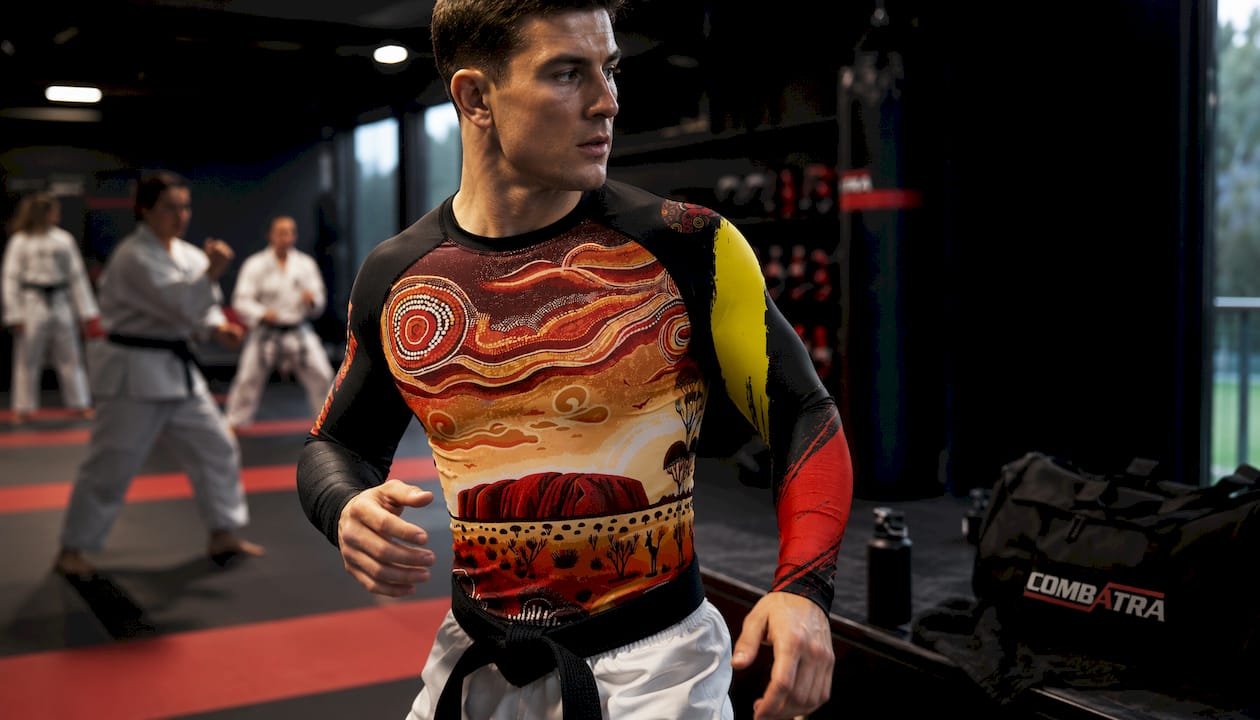
For academies and teams, Combatra’s custom rashguard builder lets you personalise gear with your club’s colours, logos, and athlete names. Individual athletes can browse the full rashguards collection or explore dedicated UPF 50+ gear suited to outdoor training. Shop Combatra’s BJJ rashguards today and train with the protection your skin and your performance deserve.