


Choosing the right Brazilian Jiu-Jitsu attire can be a real challenge, especially when you want to match performance needs with personal style and national pride. Across gyms from New York to Tokyo, BJJ practitioners know their gi or no-gi gear is more than just workout clothing—it is a symbol of discipline, identity, and respect. This guide cuts through the confusion about BJJ attire, highlighting the blend of function, customization, and cultural expression that sets modern training wear apart.
Table of Contents
- Core Definition And Misconceptions About Bjj Attire
- Gi And No-Gi Uniforms Compared
- Key Features: Materials, Fit, And Personalization
- Competition Rules And Safety Standards
- Customizable Gear And Patriotic Styles
- Common Mistakes And What To Avoid
Key Takeaways
| Point | Details |
|---|---|
| BJJ Attire Significance | Brazilian Jiu-Jitsu attire is essential for performance, offering both functional support and cultural identity for practitioners. |
| Selection and Fit | Choosing the right uniform involves assessing material performance and ensuring proper fit for optimal movement and comfort. |
| Competition Compliance | Adhering to strict competition rules regarding attire is crucial to ensure fair play and avoid disqualification. |
| Common Mistakes | Practitioners should avoid errors such as incorrect sizing and neglecting maintenance to enhance performance and longevity of their gear. |
Core Definition and Misconceptions About BJJ Attire
Brazilian Jiu-Jitsu (BJJ) attire represents far more than a simple uniform - it’s a complex system of performance wear designed to enhance training and competition experiences. BJJ gi and no-gi clothing serve critical functional and cultural purposes that extend beyond basic athletic apparel.
Understanding BJJ attire requires dispelling several common misconceptions. Clearing persistent BJJ stereotypes reveals that this martial art accommodates practitioners of all skill levels and body types. Contrary to popular belief, BJJ clothing isn’t exclusively for elite athletes but is engineered to support diverse training needs.
Key characteristics of BJJ attire include:
- Durability to withstand intense grappling
- Flexibility for unrestricted movement
- Strategic fabric composition for performance
- Weight-specific design variations
- Options for personalized styling
The traditional gi represents a comprehensive martial arts uniform with deep cultural significance. Its design prioritizes functionality through:
- Reinforced fabric in high-stress areas
- Specific cut to enable technical gripping
- Color variations signaling rank and experience
No-gi clothing, by contrast, offers a more minimalist approach focused on athletic performance and unrestricted mobility. These tight-fitting rashguards and shorts eliminate traditional fabric grab opportunities, creating a different technical environment for practitioners.
Pro tip: Select BJJ attire that matches your specific training goals and provides both comfort and technical advantage.
Gi and No-Gi Uniforms Compared
Brazilian Jiu-Jitsu practitioners have two primary uniform options that dramatically influence training and competition dynamics: the traditional gi and the modern no-gi attire. Each style offers unique technical advantages and challenges for martial artists at every skill level.
BJJ uniform selections reveal distinct characteristics that help practitioners choose the most appropriate training wear. The traditional gi represents a comprehensive martial arts uniform featuring a thick cotton jacket, reinforced pants, and a colored belt indicating rank and experience.
Key differences between Gi and No-Gi uniforms include:
- Fabric weight and composition
- Grip opportunities during sparring
- Technical movement restrictions
- Training and competition rule variations
- Cultural and historical significance
Gi uniforms provide multiple strategic advantages:
- Enhanced grip techniques
- More controlled grappling scenarios
- Traditional martial arts aesthetic
- Opportunities for collar and sleeve manipulations
No-gi attire, by contrast, consists of tight-fitting rashguards and flexible shorts designed for maximum mobility. These uniforms eliminate traditional fabric grips, forcing practitioners to rely on body positioning and alternative control techniques.
Here’s a concise comparison of traditional gi and no-gi uniforms for Brazilian Jiu-Jitsu:
| Uniform Type | Key Training Focus | Typical Materials | Technical Adjustment Required |
|---|---|---|---|
| Gi | Grip and control skills | Heavier cotton blends | Precise gripping and complex holds |
| No-Gi | Speed and agility | Polyester, spandex | Body positioning and fast transitions |
No-gi uniforms represent a more dynamic, fast-paced approach to Brazilian Jiu-Jitsu training and competition.
While gi training emphasizes technical precision and traditional methodology, no-gi sessions focus on speed, fluid movements, and adaptability. Many practitioners cross-train in both styles to develop comprehensive skills and maintain technical versatility.
Pro tip: Invest in high-quality uniforms for both gi and no-gi training to maximize your Brazilian Jiu-Jitsu skill development.
Key Features: Materials, Fit, and Personalization
Choosing the right Brazilian Jiu-Jitsu (BJJ) attire involves understanding complex interactions between material performance, anatomical fit, and personal style preferences. The perfect uniform transcends simple clothing, becoming an extension of the practitioner’s technical approach and individual identity.
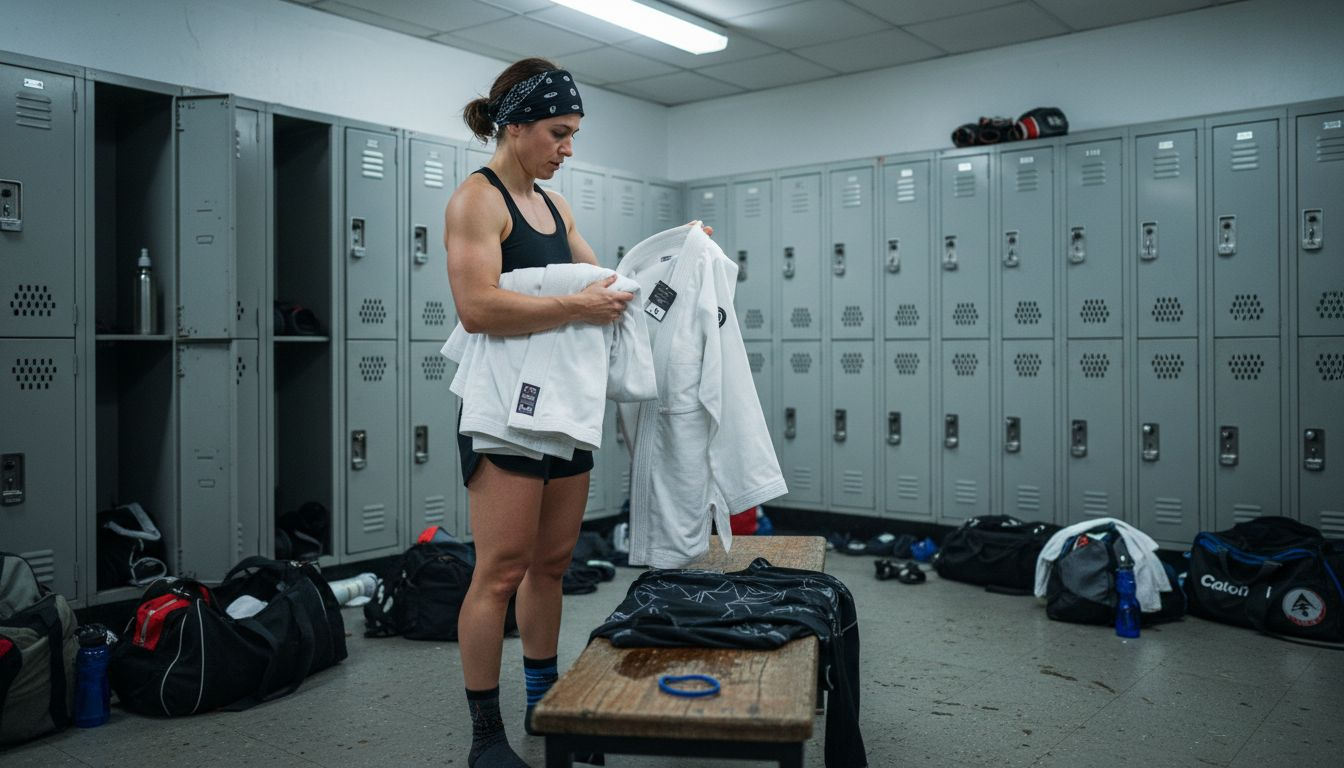
How to Personalise BJJ Gi highlights the critical importance of selecting uniforms that balance functionality with individual expression. Modern BJJ attire must meet rigorous performance standards while allowing practitioners to showcase their unique personality.
Key material considerations for BJJ uniforms include:
- Fabric durability and tear resistance
- Moisture-wicking capabilities
- Breathability and temperature regulation
- Weight and flexibility
- Shrinkage prevention
Fabric selection plays a crucial role in performance:
- Cotton blends for traditional gi training
- Lightweight polyester for no-gi sessions
- Ripstop materials for enhanced durability
- Compression fabrics for muscle support
High-performance BJJ attire transforms technical potential by providing optimal movement and comfort.
Fit is equally important, with uniform design directly impacting grappling effectiveness. Proper sizing prevents grip advantages for opponents while maintaining enough room for complex movements. Compression layers should feel like a second skin, supporting muscles without restricting range of motion.
Personalization options allow practitioners to express individual style while maintaining professional standards. Custom embroidery, unique color combinations, and personalized patches transform standard uniforms into statements of personal identity and team affiliation.
Pro tip: Invest in multiple uniform variations to optimize your training across different BJJ styles and competition scenarios.
Competition Rules and Safety Standards
Brazilian Jiu-Jitsu competitions demand rigorous adherence to uniform standards and safety protocols that protect practitioners and maintain the integrity of the sport. These regulations encompass everything from attire specifications to personal equipment requirements, ensuring fair and safe competitive environments.
BJJ Competition Attire Rules outline comprehensive guidelines that practitioners must follow to participate in official tournaments. The rules are meticulously designed to create standardized conditions that minimize potential advantages and safety risks.
Key competition uniform requirements include:
- Mandatory gi color restrictions (typically white, blue, or black)
- Specific fabric thickness and weave density standards
- Precise measurements for jacket and pants length
- Patch and embroidery placement regulations
- Strict cleanliness and hygiene expectations
Safety standards are equally comprehensive:
- Mandatory removal of all jewelry
- Prohibition of exposed metal or hard objects
- Required medical clearance for certain conditions
- Specific undergarment guidelines
- Protective gear restrictions
Competition rules exist to protect athletes and maintain the technical integrity of Brazilian Jiu-Jitsu.
No-gi competitions feature different but equally strict regulations. Practitioners must wear tight-fitting rashguards, compression shorts, and athletic gear that prevents accidental gripping or potential injury scenarios. These standards ensure that technical skill, not equipment, determines competition outcomes.
Uniform inspections are conducted rigorously before matches, with officials carefully checking every aspect of a competitor’s attire. Violations can result in immediate disqualification, underscoring the importance of understanding and respecting these detailed regulations.
Pro tip: Always review the specific competition ruleset thoroughly and practice in gear that matches official standards.
Customizable Gear and Patriotic Styles
Brazilian Jiu-Jitsu attire has evolved beyond functional performance, emerging as a powerful medium for personal expression and cultural pride. Customization and patriotic styling now represent critical dimensions of martial arts identity, allowing practitioners to showcase their individual spirit and national allegiance.
Personalizing BJJ Gear reveals how practitioners transform standard uniforms into unique statements of identity. The art of customization balances creative expression with strict competition guidelines, ensuring practitioners can personalize their look while maintaining regulatory compliance.
Customization options for BJJ gear include:
- Embroidered name patches
- National flag representations
- Team logo integrations
- Custom color combinations
- Specialized fabric treatments
Patriotic styling strategies encompass multiple approaches:
- Direct national flag incorporation
- Color scheme matching national palette
- Symbolic design elements
- Commemorative historical references
- Regional cultural motifs
Custom gear transforms standard uniforms into personal narratives of cultural pride and individual achievement.
Modern BJJ attire designers understand that uniforms are more than technical equipment. They are canvases for self-expression, allowing athletes to communicate their heritage, team affiliation, and personal journey through carefully crafted visual elements.
Technical considerations remain paramount during customization. Practitioners must balance aesthetic desires with performance requirements, ensuring that personalized elements do not compromise uniform integrity or violate competition regulations.
Pro tip: Select customization options that reflect your personal story while respecting competitive uniform guidelines.
Common Mistakes and What to Avoid
Brazilian Jiu-Jitsu attire selection involves navigating complex technical and stylistic considerations that can dramatically impact training effectiveness and competition performance. Training mistakes in gear selection can lead to unnecessary limitations, discomfort, and potential competitive disadvantages.
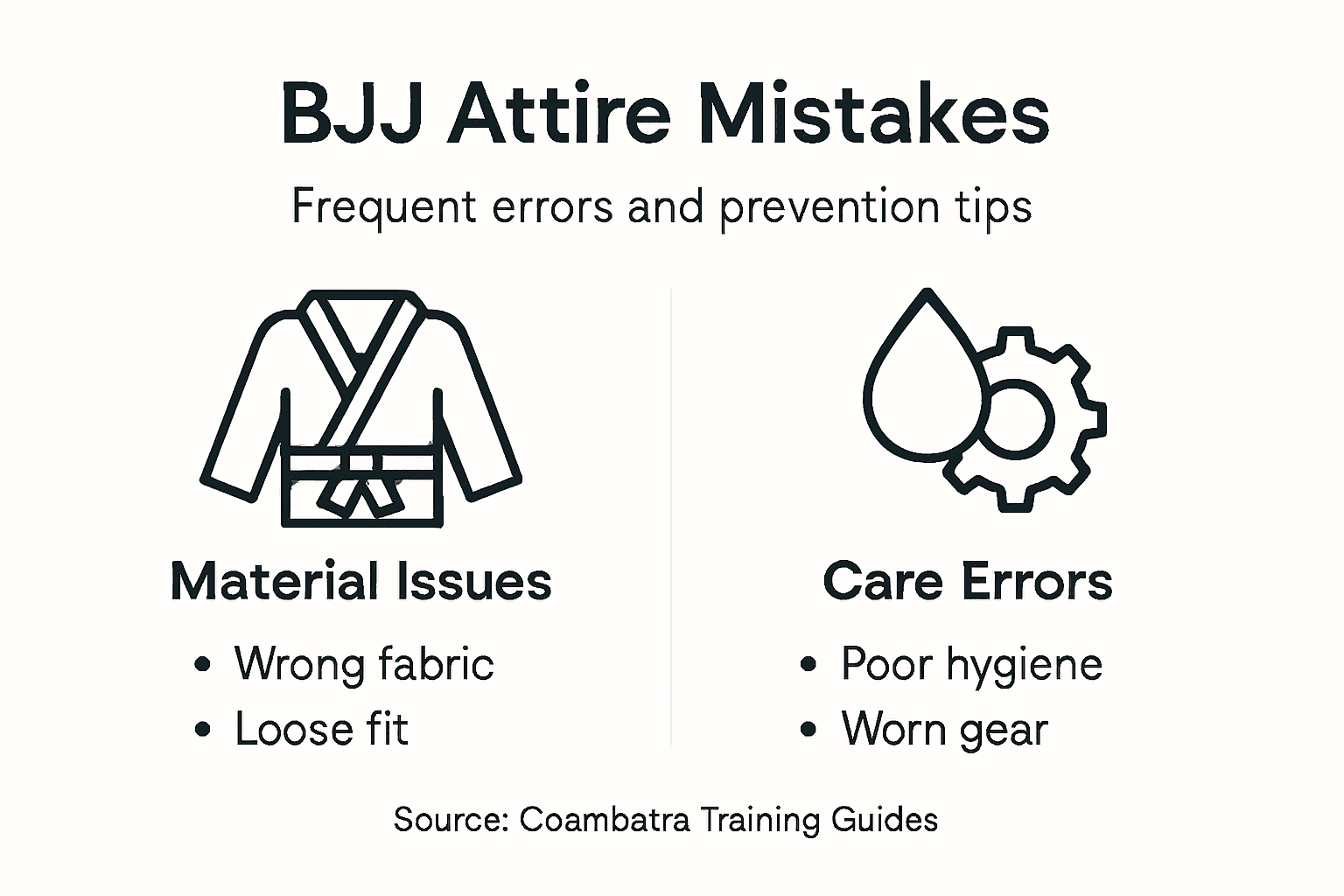
BJJ Attire Misconceptions illuminates critical errors practitioners frequently make when choosing and maintaining their uniforms. Understanding these common pitfalls helps martial artists make more informed decisions about their training gear.
Common BJJ attire mistakes include:
- Purchasing incorrectly sized uniforms
- Neglecting proper uniform maintenance
- Wearing non-compliant gear in competitions
- Ignoring fabric quality and durability
- Overlooking personal comfort and movement requirements
Specific errors to avoid during uniform selection:
- Choosing extremely tight or extremely loose gis
- Selecting inappropriate materials for training style
- Disregarding competition-specific regulations
- Failing to consider individual body type
- Prioritizing aesthetics over functional performance
Technical performance always trumps superficial appearance in Brazilian Jiu-Jitsu gear selection.
Hygiene represents another critical area where practitioners frequently make mistakes. Unclean or poorly maintained uniforms not only violate competition standards but can also create health risks and accelerate fabric degradation.
Material selection requires careful consideration beyond simple visual appeal. Practitioners must evaluate fabric composition, shrinkage potential, durability, and performance characteristics that align with their specific training goals and competition requirements.
Review this summary of critical uniform selection errors to avoid in BJJ:
| Mistake | Impact on Training | How to Prevent |
|---|---|---|
| Wrong sizing | Limits movement, easy grips | Use accurate body measurements |
| Ignoring regulations | Disqualification risk | Study official rulebooks |
| Poor maintenance | Shortens gear lifespan | Wash and inspect regularly |
| Skipping comfort | Reduces performance | Test fit before purchase |
Pro tip: Invest time in understanding your specific training needs and always prioritize functional performance over aesthetic trends.
Elevate Your BJJ Performance with Personalized Attire from Combatra
Selecting the right Brazilian Jiu-Jitsu attire is more than just picking a uniform. It is about enhancing your grip, mobility, and overall confidence on the mat. The challenges of finding durable, well-fitting gear that meets competition rules and expresses your personal style can be overwhelming. Combatra understands these pain points and offers custom-designed gis and no-gi apparel that balance performance, comfort, and individual expression. Whether you need a reinforced gi for intense grappling or a patriotic-themed rashguard to showcase your pride, our premium sportswear supports your journey to mastery.
Discover how you can customize your BJJ gear to fit your unique needs and training goals today. Visit Combatra now to explore our selection of personalized custom-designed gis, rashguards, and compression gear. Step onto the mat fully equipped with premium attire that helps you perform your best and stand out. Don’t wait to upgrade your BJJ wardrobe with gear crafted for excellence and your own story.
Frequently Asked Questions
What are the key differences between Gi and No-Gi attire in BJJ?
Gi attire features a thicker cotton jacket and reinforced pants designed for gripping and control during sparring, while No-Gi clothing consists of tight-fitting rashguards and shorts that focus on speed and mobility without traditional fabric grips.
How should I choose the right size for my BJJ uniform?
Selecting the right size involves taking accurate body measurements to ensure a snug yet comfortable fit. The uniform should allow for a full range of movement without being overly tight or loose, preventing opponents from gaining easy grips.
What materials are commonly used in BJJ attire and their benefits?
BJJ uniforms are typically made from durable cotton blends for gi training and lightweight polyester or spandex for no-gi sessions. Cotton provides comfort and breathability, while synthetic materials enhance flexibility and moisture-wicking properties.
How can I personalize my BJJ gear without violating competition standards?
Customization options like embroidered name patches, national flags, and team logos can be added as long as they adhere to competition guidelines. Make sure to keep your uniform compliant with patch placement and color regulations while expressing your personal style.
Recommended
- How to Choose BJJ Gi for Performance and Personal Style
- How to Personalise BJJ Gi for Unique Competition Style
- 7 Expert Tips for a Rashguard Selection Guide for BJJ
- Why Use Rashguards for BJJ: Fit, Comfort and Care
- Knee Compression Sleeve Support for Running, Jogging, Sports, Joint Pa – Armageddon Sports