


Compression arm sleeves are specialist garments that apply graduated pressure to the arm muscles, supporting circulation, reducing fatigue, and shielding skin from Australia’s intense UV radiation. Whether you’re warming up for BJJ, working a long outdoor shift, or pushing through a gym session, the right sleeve does two jobs at once: muscle support and certified sun protection. UPF 50+ rated sleeves tested to AS 4399:2020 block at least 98% of UV radiation, making them a practical choice for anyone spending time under the Australian sun.
The dual benefit is what sets compression sleeves apart from basic sun shirts or generic arm warmers. You get the physiological support of graduated compression alongside certified UV coverage, all in a lightweight layer that fits under a rashguard or over bare skin. The sections below break down the performance science, sun protection standards, fit guidance, and practical use cases so you can get the most from your sleeves.
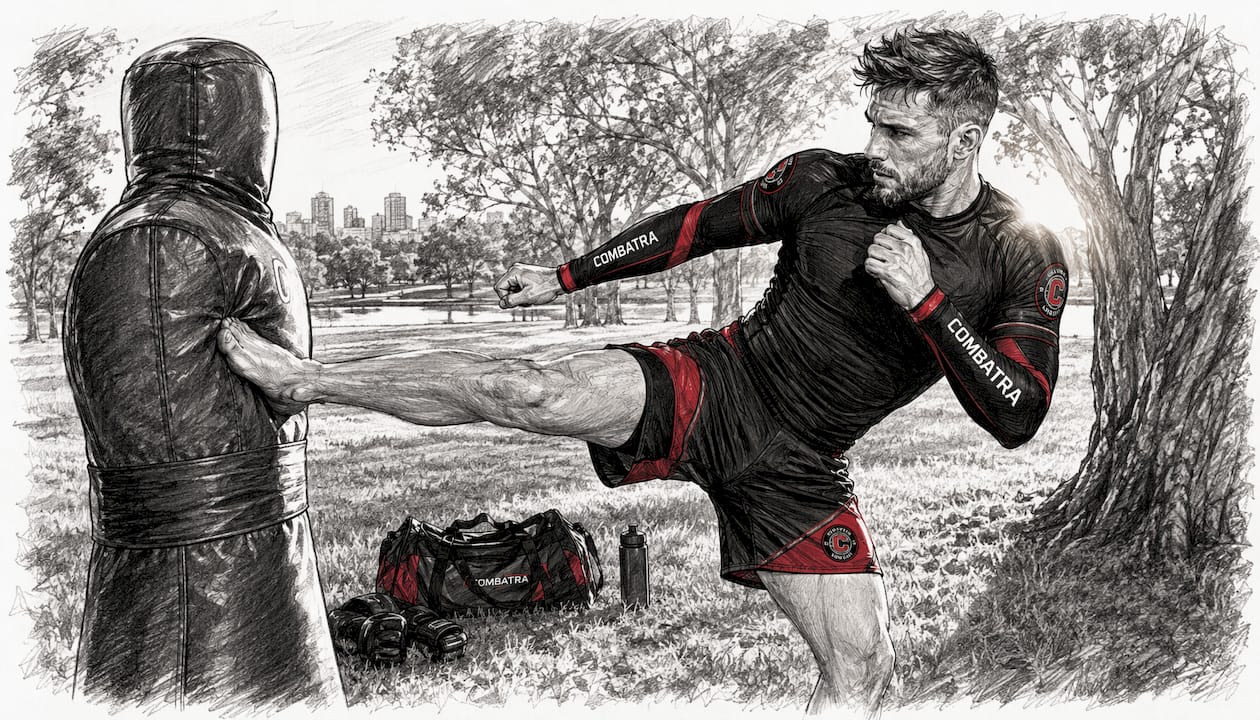
What compression arm sleeves do for work and training
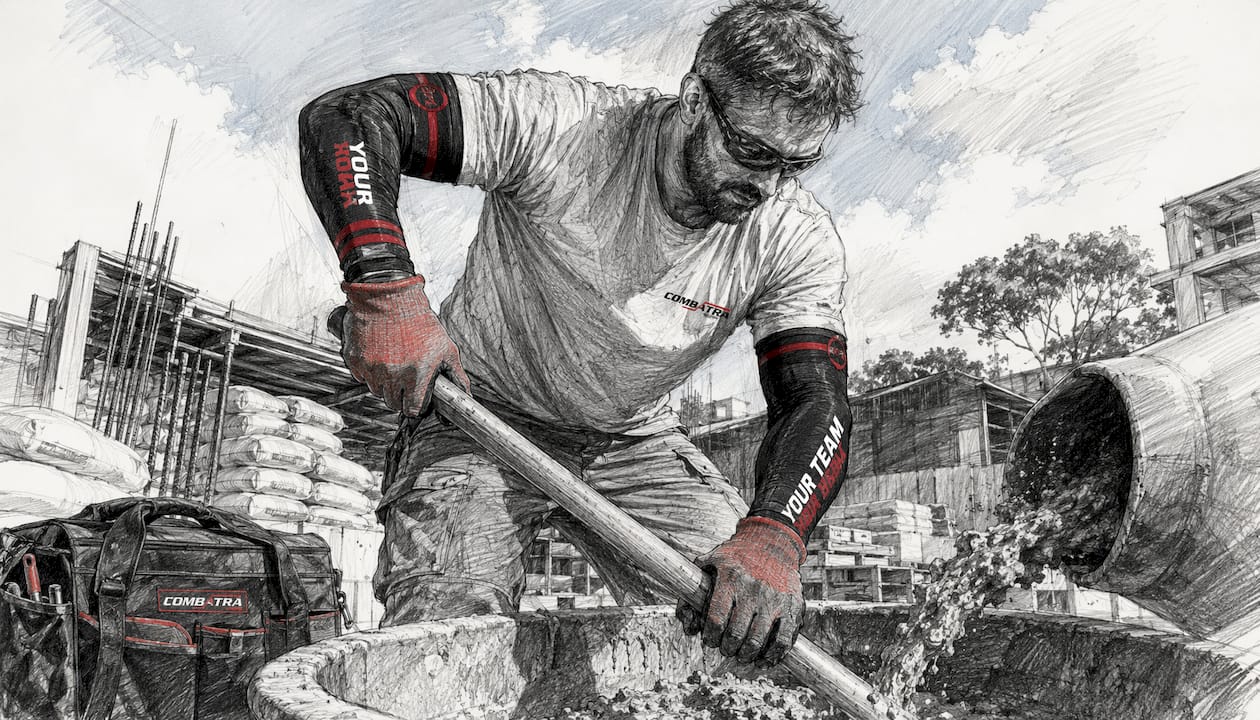
Compression arm sleeves are close-fitting garments that wrap the forearm and upper arm, applying consistent mechanical pressure to the underlying muscle tissue. They are used across outdoor work, gym training, combat sports warm-ups, and recovery periods. The pressure they apply is measured in millimetres of mercury (mmHg), and most general-use sleeves sit in the 15–30 mmHg range.
Their value comes from two distinct functions:
-
Muscle support: Graduated compression limits muscle oscillation during movement, which reduces micro-fatigue and helps maintain proprioceptive feedback, your body’s sense of where the arm is in space.
-
Sun protection: Sleeves rated UPF 50+ under AS/NZS 4399:2020 provide certified UV coverage for every centimetre of skin they cover.
-
Temperature regulation: Compression fabric traps a thin layer of warmth during cool mornings and wicks sweat during intense activity, helping muscles stay at a consistent working temperature.
-
Fatigue management during prolonged tasks: Workers and athletes who stand, repeat movements, or grip for extended periods benefit from reduced fluid pooling and muscle vibration.
-
Recovery support: Wearing sleeves for a few hours post-exercise supports tissue repair by maintaining circulation in the arm muscles.
Most people can safely wear compression sleeves for 8–12 hours a day with proper fit; sleeves should never be worn overnight, and you should remove them if you notice numbness, tingling, or skin irritation.
How compression sleeves improve your performance and recovery
The performance case for compression sleeves is grounded in peer-reviewed research, though the picture is nuanced. A systematic scoping review covering 183 studies found that compression garments likely reduce muscle oscillatory properties and have a positive effect on sensorimotor systems, which explains reported improvements in joint proprioception. The same review confirmed that compression garments increase localised skin temperature and can reduce perceptions of muscle soreness and pain following exercise.
A separate meta-analysis of 27 studies found that compression garments had significant restorative effects on muscle strength and power after exercise-induced fatigue, with benefits most pronounced in trained individuals during the 1–24 hour recovery window. That matters practically: if you train BJJ or lift weights on consecutive days, wearing sleeves during and after your session can help you feel less sore and perform better the next day.
Key finding: Research consistently shows compression garments reduce perceived muscle soreness and support recovery, though they are unlikely to increase maximal strength during exercise itself.
What compression sleeves do well:
- Reduce perceived muscle soreness in the 24–96 hours after exercise
- Improve joint proprioception and repositioning sense
- Support arterial blood flow and tissue oxygenation during activity
- Maintain localised skin temperature, which aids warm-up and recovery
- Reduce feelings of overall fatigue during prolonged standing or repetitive work
- Mitigate the decline in muscle strength and power during 1–24 hour rest intervals
What they do not do: compression sleeves do not meaningfully increase maximal strength output during exercise, and they will not replace proper warm-up or recovery protocols. Think of them as a support tool, not a performance shortcut.
Pro Tip: If you train multiple times per week, wear your compression sleeves for 1–2 hours post-session rather than leaving them on all day. That targeted recovery window is where the evidence for soreness reduction is strongest.
Why UPF 50+ sun protection matters for Australian athletes and workers
Australia has one of the highest rates of skin cancer in the world, and ARPANSA recommends UPF 50+ rated clothing for anyone working or training outdoors. The UV Index regularly exceeds 3 across most of Australia for the majority of the year, meaning sun protection is needed on most days, not just summer afternoons.
UPF 50+ blocks a minimum of 98% of UV radiation, allowing only 1/50th or less of the sun’s rays to pass through the fabric.
UPF 50+ is the highest classification available under AS/NZS 4399:2020, the Australian and New Zealand standard for sun protective clothing. A sleeve carrying this rating has been independently tested and verified to provide all-day sun protection, even for people with fair skin. For outdoor workers and athletes who spend hours in direct sunlight, that certification is not a marketing claim. It is a measurable, auditable standard.
Best practices for sun-safe compression sleeve use:
- Choose sleeves rated UPF 50+ and verified to AS/NZS 4399:2020, not just “UV protective.”
- Select the correct size. Ill-fitting sleeves that slip or bunch reduce UV coverage and compromise the rating.
- Avoid overstretching the fabric. A stretched sleeve transmits more UV radiation than one worn at its intended tension.
- Allow wet sleeves to dry before relying on them for sun protection. Wet fabric has a lower effective UPF than dry fabric.
- Pair sleeves with a broad-brim hat, sunscreen on exposed skin, and sunglasses for complete coverage.
- Reapply sunscreen to any skin not covered by the sleeve, particularly the back of the hand and neck.
The sleeve only protects the skin it covers. Gaps at the wrist or shoulder leave skin exposed, so check coverage when you move through your full range of motion.
How to choose, fit, layer, and care for your compression sleeves
Getting the fit right is the single most important factor in both compression performance and UV protection. A sleeve that is too loose will slip during training, reduce compression effectiveness, and create gaps in sun coverage. One that is too tight risks restricting circulation.
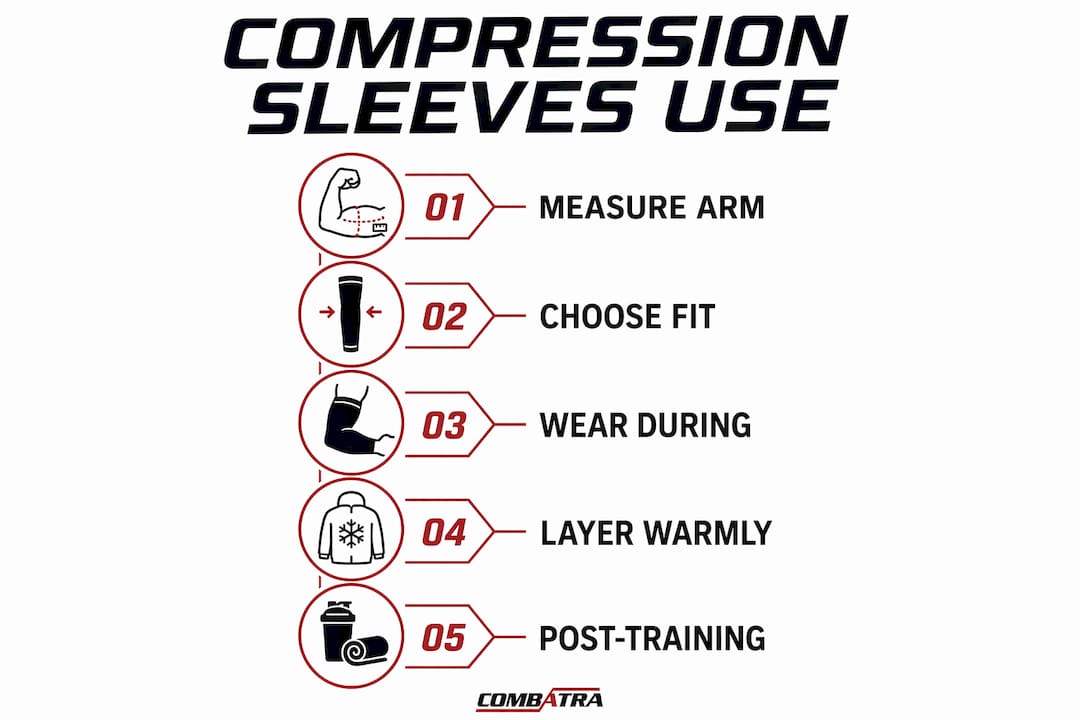
Sizing: Measure your bicep circumference at its widest point and your forearm circumference at mid-forearm. Use both measurements against the brand’s size chart rather than defaulting to a generic S/M/L. If you fall between sizes, the slightly smaller option usually delivers better compression and stays in place during movement.
Fit criteria: The sleeve should feel snug across the entire arm without pinching, digging into the elbow crease, or leaving red marks after removal. You should be able to extend and flex your arm fully without the sleeve bunching or rolling.
Layering: In cooler conditions, a compression sleeve under a long-sleeve training top adds warmth without bulk. For outdoor work or summer training, a sleeve worn over bare skin under a rashguard provides both compression and UV coverage in a single lightweight layer. Avoid layering two compression garments on the same limb, as stacked pressure can restrict circulation.
Fabric and breathability: Polyamide and spandex blends (typically 75–80% polyamide, 20–25% spandex) offer the best combination of compression, moisture-wicking, and durability for training and outdoor work. Tighter fabric structures provide better UV protection than loosely knitted alternatives.
Pro Tip: For all-day outdoor work, choose sleeves in the 15–20 mmHg range. They provide circulation support and sun protection without the fatigue that higher compression levels can cause over an 8-hour shift. Save 20–30 mmHg for post-training recovery.
Care and maintenance best practices:
- Wash in cold water on a gentle cycle after each use to remove sweat and sunscreen residue.
- Air dry flat or hang to dry. Tumble drying degrades elastic fibres and reduces compression over time.
- Avoid wringing or twisting the fabric, which distorts the knit structure and can reduce UPF effectiveness.
- Do not use fabric softener. It coats the fibres and reduces moisture-wicking performance.
- Replace sleeves when they no longer return to their original shape after washing, as stretched fabric provides less compression and lower UV protection.
Where compression sleeves fit into your daily work and training routine
The practical value of compression sleeves comes from knowing when and how to use them, not just owning a pair. Different activities call for different approaches.
Outdoor workers (construction, landscaping, agriculture, road crews) benefit most from wearing sleeves throughout the working day for continuous UV coverage and fatigue reduction from repetitive arm movements. The compression reduces fluid pooling and muscle vibration common in standing or active tasks, which translates to less arm fatigue by the end of a shift.
BJJ and MMA athletes typically use sleeves during warm-ups to raise muscle temperature and maintain joint awareness, then remove them before rolling or sparring if the rules of their academy or competition require it. Post-training, wearing sleeves for 1–2 hours supports the recovery process.
Gym athletes and lifters find sleeves useful during warm-up sets and accessory work, particularly for elbow joint support during pulling movements. They are not a substitute for proper warm-up, but they do help maintain arm temperature between sets in air-conditioned gyms.
Runners and cyclists training outdoors in Australian conditions use UPF 50+ sleeves as a lighter alternative to long-sleeve shirts, particularly in summer when heat management is a priority.
Practical application scenarios:
- Wear during outdoor work shifts for UV protection and fatigue reduction across the full working day.
- Use during BJJ or MMA warm-ups to prepare muscles and joints before contact training.
- Apply post-lifting for 1–2 hours to support strength recovery during the critical 1–24 hour window.
- Layer under a rashguard for outdoor summer training sessions combining compression and sun safety.
- Use during long drives or travel days to maintain arm circulation during extended periods of limited movement.
- Remove sleeves and check skin every few hours in hot conditions, particularly if you notice any discomfort or redness.
- Avoid wearing sleeves overnight. Compression garments are designed for active periods and recovery windows, not sleep.
Combatra’s compression arm sleeves: built for Australian conditions
Combatra is an Australian performance sportswear brand built specifically for combat sports athletes and outdoor training. The brand’s compression arm sleeves are designed around the real demands of BJJ, MMA, outdoor work, and gym training in Australian conditions, where UV exposure and physical intensity both run high.
Key features of Combatra’s compression arm sleeves:
- UPF 50+ certified sun protection tested to AS 4399:2020, blocking at least 98% of UV radiation.
- Graduated compression in the range suited to both active training and all-day outdoor wear.
- Breathable, moisture-wicking fabric that manages sweat during high-intensity sessions and long work shifts.
- Custom design options including personalised colours, logos, and team branding, making them suitable for academies and work crews alike.
- Durable construction built to maintain compression and UPF rating through repeated washing and extended use.
- Full arm coverage designed to stay in place during dynamic movement, preventing the gaps in UV protection that occur with ill-fitting sleeves.
Combatra’s range extends beyond sleeves. You can pair arm sleeves with compression shorts for full lower-body support during training, or build a complete sun-safe training kit with rashguards and UPF 50+ gear from the same collection. For athletes who want gear that reflects their team or personal identity, the custom option means you are not choosing between performance and presentation.
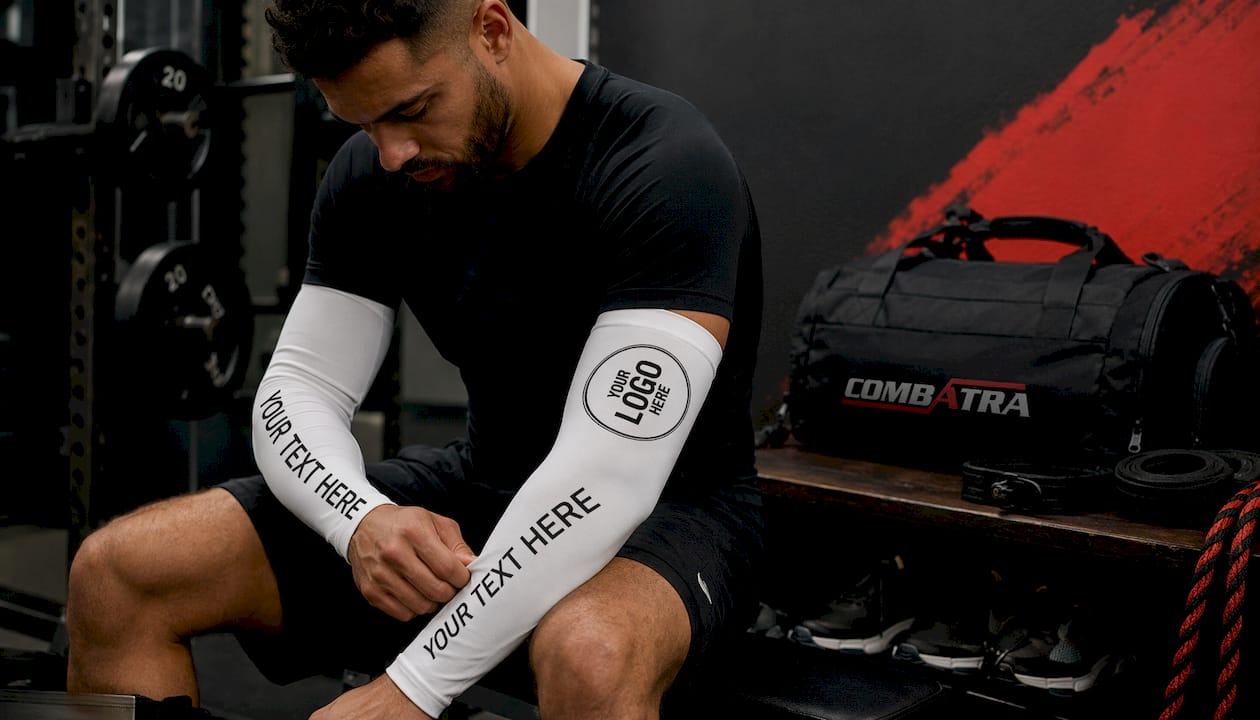
Ready to train and work with certified sun protection and real compression support? Design your own sleeves with Combatra’s UPF 50+ arm sleeve range, built for Australian conditions and customisable to your exact specifications.
Key takeaways
Compression arm sleeves deliver the most value when they combine certified UPF 50+ sun protection with properly fitted graduated compression, used consistently during outdoor work and training in Australia.
| Point | Details |
|---|---|
| UPF 50+ blocks 98% of UV | AS/NZS 4399:2020 certified sleeves block at least 98% of UV radiation, essential for Australian outdoor conditions. |
| Compression aids recovery, not strength | Research shows compression garments reduce perceived muscle soreness and support recovery, particularly in the 1–24 hour post-exercise window. |
| Fit determines both benefits | Ill-fitting or overstretched sleeves reduce both compression effectiveness and UV protection simultaneously. |
| Safe daily wear is 8–12 hours | Most people can wear compression sleeves safely for 8–12 hours with proper fit; remove them overnight and take breaks in hot conditions. |
| Wet or stretched fabric loses UPF | Overstretched or wet sleeves transmit more UV radiation; allow sleeves to dry and replace them when they no longer hold their shape. |