


This guide explains how to compare suppliers using exact specifications, samples, written quotes, proofs and current commercial terms.
Table of Contents
- Prerequisites: What You Need Before Selecting A Supplier
- Evaluating Material Quality And Textile Technology
- Customization Options And Design Flexibility
- Assessing Durability And Supplier Reliability
- Common Mistakes And How To Avoid Them
- Care And Maintenance Tips For Longevity
- Expected Results And Success Metrics
- Explore High-Quality Custom BJJ Rashguards At Combatra
Key takeaways
| Point | Details |
|---|---|
| Material quality drives comfort | Compare exact fabric composition, stretch, feel and care instructions on a sample. |
| Customization preserves design | Confirm print method and request product-specific wash or colourfastness evidence. |
| Supplier reliability matters | Strong communication and consistent turnaround times reduce order risks and delivery failures. |
| Price alone misleads | Choosing solely on cost often results in poor materials, weak stitching, and disappointed teams. |
| Proper care extends lifespan | Follow the exact garment’s care label and supplier instructions. |
Prerequisites: what you need before selecting a supplier
Before contacting any supplier, clarify your academy’s specific requirements to streamline the entire process. Having clear prerequisites saves time, prevents miscommunication, and positions you to evaluate suppliers accurately.
Start by defining your branding elements precisely. Document your academy’s logos, color codes, fonts, and any design motifs that represent your team identity. Suppliers need exact specifications to reproduce your branding faithfully across custom rashguards.
Collect measurements and use the current size chart. A sample size run can reduce uncertainty before bulk production.
Set a budget using complete, like-for-like quotes. Compare the exact garment, artwork service, quantities, shipping and after-sales terms, then assess samples. Price alone does not establish quality, durability or support.
Prepare design files in formats suppliers can use immediately. Most require vector files like AI, EPS, or high-resolution PNG formats. Having these ready accelerates the customization timeline and reduces back-and-forth revisions.
Key preparation steps include:
- Document exact branding specifications including Pantone or hex color codes
- Gather accurate sizing data from all team members
- Research market pricing to set informed budget ranges
- Convert logos and graphics to vector or high-resolution formats
- List any special requirements like reinforced stitching or specific fabric weights
Knowing these prerequisites transforms supplier interactions from guesswork into productive conversations. You’ll ask better questions, evaluate responses more critically, and identify which suppliers truly understand your needs versus those offering generic solutions.
Evaluating material quality and textile technology
Ask for exact fabric, weight, stretch, seams, print method and care. Use a physical sample to assess material claims.
Polyester-spandex is one common blend, but no universal ratio proves suitability. Compare exact composition, feel and stretch.
If moisture management matters, ask for the exact specification or test evidence and assess the sample in normal use.
Low-profile seams may feel different. Inspect placement and construction rather than assuming durability.
GSM describes fabric mass, not quality by itself. Assess it with construction, stretch, intended use and preference.
| Fabric Feature | Performance Benefit | Quality Indicator |
|---|---|---|
| Polyester-spandex blend | Flexibility and moisture control | Record exact composition; no universal ratio proves quality |
| Flatlock stitching | Reduced chafing, increased longevity | Flat seams with no raised edges |
| High GSM rating | Inspect construction and request evidence | Compare stated GSM with sample and intended use |
| Moisture-wicking finish | Keeps skin dry during training | Quick-dry claims backed by fabric specs |
If wash durability matters, request the test method and results for the exact fabric and print.
Key material quality factors:
- Verify exact fabric composition and assess the sample for intended use
- Confirm flatlock or similar low-profile stitching throughout
- Check GSM ratings match your durability requirements
- Request wash test results demonstrating long-term performance
- Feel fabric samples for stretch, recovery, and texture quality
Pro Tip: Request fabric swatches before ordering to assess texture, weight, and stretch firsthand. Physical samples reveal quality differences that photos cannot capture.
Customization options and design flexibility
Customization capabilities directly impact how well your rashguards represent your academy’s identity and inspire team unity. Understanding printing methods and design options helps you choose suppliers who deliver lasting, professional results.
Sublimation is one decoration method. Request product-specific wash evidence rather than assuming permanent results.

Flexibility in logo placement, color matching, and adding individual names or numbers creates powerful team identity. Suppliers offering unlimited color options and custom positioning let you express your academy’s unique culture. Personalized names build ownership and pride among team members.
Choosing designs that reflect your academy’s values and training philosophy strengthens team cohesion. Whether you prefer minimalist aesthetics or bold graphics, your rashguards should communicate what your team stands for. This visual unity builds motivation during tough training sessions.
Consider suppliers offering detailed mock-ups before production begins. Quality suppliers provide digital renderings showing exactly how your design will look, including placement, colors, and proportions. This preview stage catches errors before they become expensive mistakes.
Customization features to evaluate:
- Sublimation printing for fade-resistant, permanent graphics
- Unlimited color matching to exact brand specifications
- Individual name and number personalization options
- Flexible logo placement across chest, back, and sleeves
- Mock-up services showing realistic final product renderings
- Ability to incorporate sponsor logos and partner branding
Reviewing the step-by-step customization process helps set realistic expectations for timelines and revision rounds. Understanding each stage prevents surprises and keeps your project on schedule.
Explore options like the customizable black rashguard to see how different suppliers handle base colors and design flexibility. Comparing actual products reveals which suppliers deliver on customization promises.
Pro Tip: Order a single sample rashguard with your full design before placing bulk orders. This confirms color accuracy, sizing fit, and print quality, eliminating costly mistakes on large team orders.
Assessing durability and supplier reliability
Supplier reliability determines whether your investment delivers expected results on time. Evaluating reputation, communication quality, and production standards protects you from disappointing experiences and wasted budgets.
Examine stitching quality and fabric integrity on any samples suppliers provide. Look for consistent stitch length, secure seam endings, and no loose threads. Quality construction shows attention to detail that carries through entire production runs.
Review supplier responsiveness through communication history and customer reviews. Suppliers who answer questions promptly, provide clear timelines, and follow up proactively demonstrate reliability. Poor communicators often deliver late or misunderstand requirements, causing frustration.
Timing varies by supplier, order, artwork approval and shipping. Obtain a written estimate for the exact order.
A low quote can omit materials, setup, revisions, shipping or defect support. Compare the complete written scope.
| Supplier Trait | High Quality Indicator | Red Flag Warning |
|---|---|---|
| Durability | Samples show excellent stitching and fabric | Samples have loose threads or thin fabric |
| Communication | Responds within the agreed timeframe with clear answers | Takes days to reply or gives vague responses |
| Pricing | Competitive rates matching market standards | Quote omits scope or commercial terms |
| Turnaround Time | Written timeline tied to artwork approval and shipping | No written production or delivery basis |
Warning signs indicating unreliable suppliers:
- Reluctance to provide samples or references
- Vague answers about materials, stitching, or printing methods
- No clear production timeline or milestone updates
- Prices drastically lower than established competitors
- Poor online reviews mentioning missed deadlines or quality issues
- Limited contact information or unresponsive customer service
- No documented quality control or testing processes
Reviewing rashguard selection guidelines helps identify which supplier traits matter most for your specific needs. Different academies prioritize different factors based on their situations.
Learn how academies use custom rashguards to build brand recognition and team unity. Understanding successful strategies helps you set clear expectations with suppliers about design impact and quality standards.
Common mistakes and how to avoid them
Martial artists and academy owners frequently make preventable errors when selecting rashguard suppliers. Learning from these mistakes saves money, time, and frustration while ensuring successful outcomes.
Choosing only by price can hide differences in fabric, construction, artwork service and after-sales terms. Compare samples and complete quotes.
Ignoring supplier communication patterns during initial contact predicts future problems. Suppliers who respond slowly, provide incomplete information, or seem disorganized before the sale will likely deliver worse service afterward. Communication quality matters enormously for order success.
Neglecting to confirm sizing and design proofs results in misfitting rashguards or unwanted graphics. Always request detailed size charts and approve digital mock-ups before production begins. These verification steps catch errors when they’re still easy and inexpensive to fix.
Rushing orders without adequate planning creates unnecessary stress and often compromises quality. Suppliers need reasonable timelines to source materials, execute printing, and conduct quality checks. Unrealistic deadlines force corners to be cut, reducing final product quality.
Common errors to prevent:
- Selecting suppliers purely on price without evaluating quality
- Ignoring early communication red flags or slow response times
- Skipping sample requests or proof approvals before bulk orders
- Providing unclear design specifications or low-resolution files
- Setting unrealistic deadlines that compromise production quality
- Failing to verify return policies or quality guarantees
- Not reading customer reviews or requesting supplier references
Pro Tip: Always request physical samples or prototypes before committing to full orders. Seeing and feeling actual rashguards reveals quality differences that photos and descriptions cannot convey, preventing bulk order regrets.
Monitor production deadlines closely and maintain frequent contact with suppliers throughout the process. Regular check-ins ensure projects stay on track and allow quick resolution of any issues that arise. Proactive communication prevents last-minute surprises.
Care and maintenance tips for longevity
Care can affect appearance and fit. Follow the exact garment’s care label and documented instructions.
Always follow manufacturer washing instructions precisely. Different fabrics and printing methods have specific care requirements. Ignoring these guidelines risks damaging materials, fading prints, or losing elasticity prematurely.
Use detergent and wash settings permitted by the care label. Avoid universal fibre claims.
Dry the garment as directed on its care label; fabrics and print methods have different restrictions.
Turn rashguards inside out before washing to protect prints and outer fabric surfaces. This simple step reduces friction against other garments and washing machine drums, extending both print and fabric life significantly.
Essential care practices:
- Wash in cold water on gentle cycles immediately after training
- Use sport-specific detergents without fabric softeners or bleach
- Air dry completely before storing to prevent mildew
- Turn inside out before washing to protect prints and surfaces
- Avoid wringing or twisting wet rashguards to maintain shape
- Store in dry, ventilated spaces away from direct sunlight
- Inspect regularly for wear and address minor damage promptly
Rinse rashguards in fresh water immediately after training, especially following saltwater or chlorine exposure. These substances accelerate fabric degradation if left on fibers. Quick rinsing removes contaminants before they cause damage.
Pro Tip: For faster drying without heat exposure, lay rashguards flat on clean towels and roll them up to absorb excess moisture. Then hang in a well-ventilated area, reducing drying time while protecting fabric integrity.
Expected results and success metrics
Understanding what successful custom rashguard purchases deliver helps you evaluate supplier performance and product quality objectively. Clear metrics guide your assessment and inform future ordering decisions.
Inspect fit, elasticity, print and seams after normal use and care. Record discrepancies against the approved sample or warranty.
Track response times, accuracy and whether the supplier provides the requested written specification, sample, quote and delivery estimate. Use those records when comparing suppliers.
Useful durability checks include fit retention, pilling, seams and tears during intended use. Compare observations with the agreed sample, specification and warranty rather than using a universal benchmark.

On-time delivery builds confidence in supplier relationships and ensures team readiness for events. Late deliveries disrupt training schedules, delay team launches, and create unnecessary stress. Reliable suppliers consistently meet agreed timelines with quality products.
Positive team feedback on comfort, design, and durability signals successful purchasing decisions. When team members wear rashguards proudly and report good performance, your supplier selection achieved its goals. Collect this feedback systematically to guide future orders.
Success indicators to monitor:
- Colour and print remain acceptable under agreed test or warranty terms
- Fit and stretch remain acceptable for intended use
- Stitching stays intact through regular grappling sessions
- Deliveries arrive on schedule matching agreed timelines
- Team members report high satisfaction with fit and comfort
- Academy identity strengthens through unified team appearance
- Rashguards require minimal repairs or replacements within first year
Document your experiences with suppliers including delivery accuracy, communication quality, and product performance. This record guides future purchasing decisions and helps you refine supplier selection criteria based on real outcomes.
Explore high-quality custom BJJ rashguards at Combatra
Combatra lists custom rashguards. Review the exact page for fabric, construction, sizing, customisation and current terms.
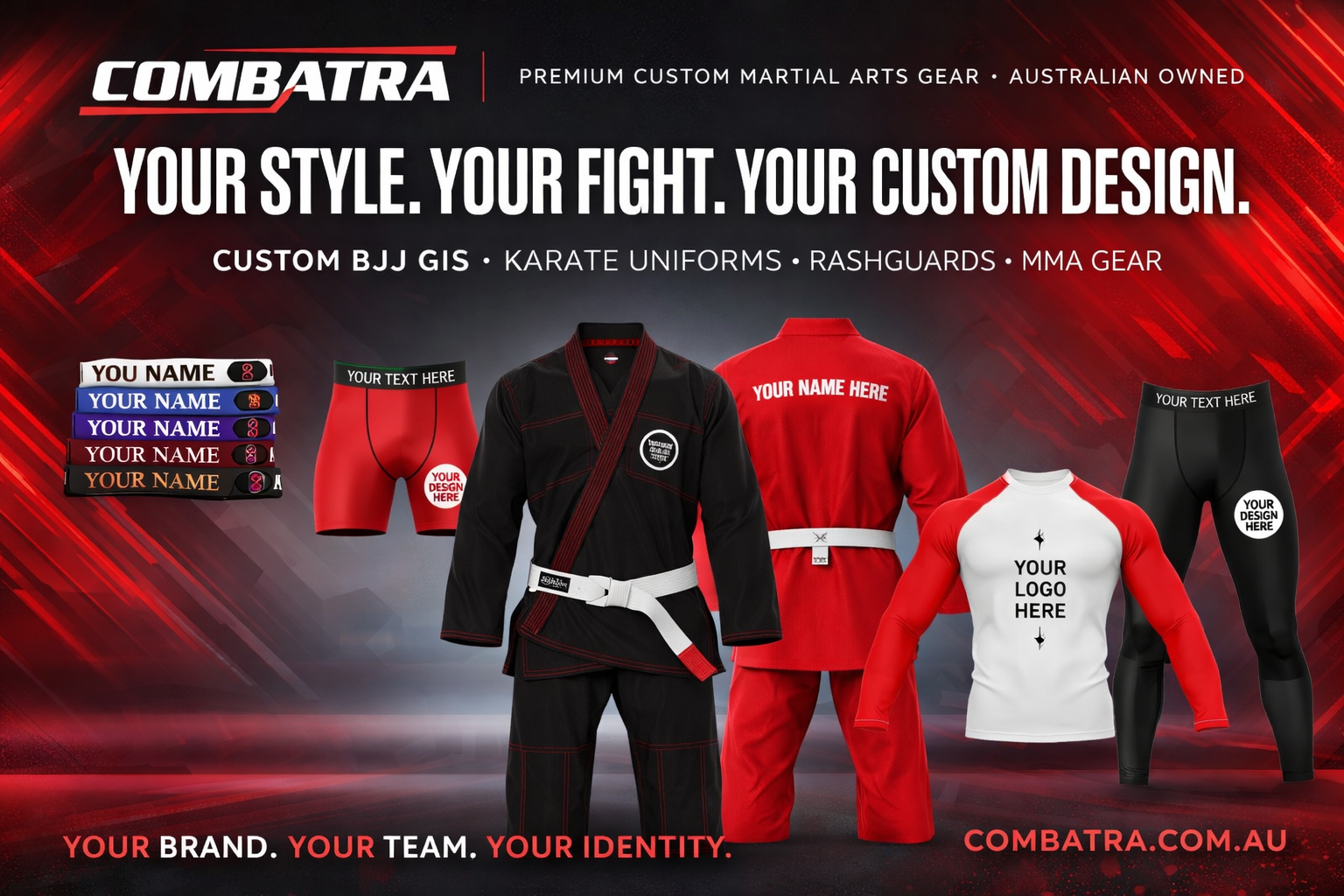
Review Combatra’s current sublimation and customisation options, and ask for product-specific print and care evidence where colour durability matters.
Ask Combatra for a written production and delivery estimate for the exact order.
Visit Combatra to review custom rashguard options for your team. Design your custom rashguard today, or explore personalization options to add individual names and numbers that build team unity.
FAQ
What is the best material for custom BJJ rashguards?
No single best blend applies to every wearer. Compare exact composition, construction, stretch, feel and care.
How long should a quality custom rashguard last with proper care?
Lifespan varies with fabric, construction, use and care. Ask for product-specific test or warranty evidence.
Why is supplier communication important when ordering custom rashguards?
Clear communication documents artwork, sizing, timing and issue resolution. Agree on contact points and approvals in writing.
Can I request samples before placing a bulk order?
Requesting samples or prototypes before bulk orders is highly recommended and most reputable suppliers accommodate this request. Physical samples let you verify fabric quality, print accuracy, sizing fit, and overall construction, dramatically reducing the risk of dissatisfaction on large team orders.