


TL;DR:
- Custom compression wear applies graduated pressure through precise fit, enhancing circulation, reducing soreness, and improving proprioception for combat athletes. Wearing it promptly after training supports recovery, but optimal benefits depend on proper timing, fit, and fabric quality. Custom garments provide superior anatomical support, sustain pressure during activity, and are especially effective during multi-day tournaments and high-volume training.
Custom compression wear is defined as form-fitted athletic garments engineered to apply graduated pressure across specific muscle groups, improving circulation, reducing soreness, and sharpening body awareness during training and recovery. In combat sports like Brazilian Jiu-Jitsu (BJJ), MMA, and grappling, rashguards serve as the primary compression garment. They manage sweat, protect skin from mat abrasion, and support muscles through explosive, high-contact movement. For Australian athletes training outdoors or through summer, UV exposure adds another layer of risk. Premium rashguards tested to AS 4399:2020 and rated UPF 50+ address that directly. Understanding how custom compression wear improves performance starts with the physiology behind graduated pressure and why fit precision matters more than most athletes realise.
How does custom compression wear improve blood flow and reduce muscle soreness?
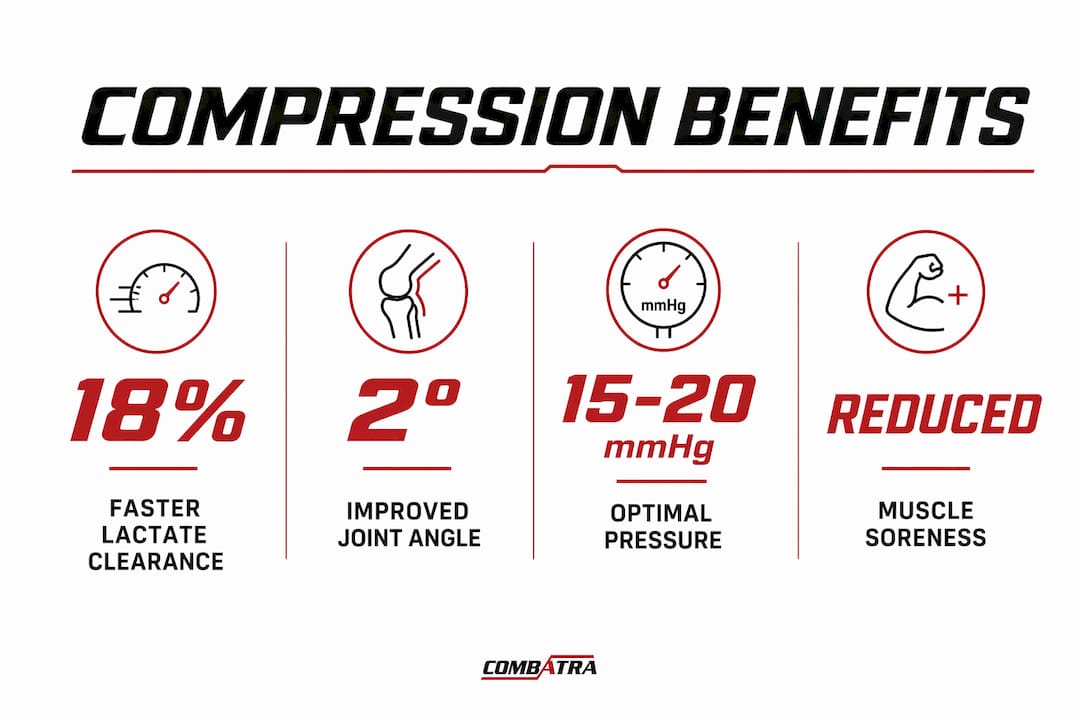
Custom compression wear improves performance primarily by accelerating venous return and clearing metabolic waste from working muscles. Graduated compression at 15–20 mmHg increases venous return velocity by 20–35%. That means blood moves back to the heart faster, reducing the pooling that causes swelling and delayed soreness after hard training sessions.
Lactate clearance is the other key mechanism. Active recovery combined with compression clears metabolic lactate 18% faster than passive rest, returning athletes to baseline thresholds roughly 4 minutes sooner within a 20-minute post-exercise window. For BJJ athletes training twice daily or competing across multi-day tournaments, that margin matters.
The soreness data is equally compelling. A meta-analysis found compression garments reduce perceived muscle soreness with a standardised mean difference of −0.67 (95% CI −0.97 to −0.37). That is a clinically meaningful effect, not a marginal one.
Pro Tip: Wear your compression garment within 30 minutes of finishing training to get the full circulatory benefit. Putting it on an hour later significantly reduces the soreness-suppression effect.
The difference between off-the-shelf and custom compression is where many athletes leave results on the table. Generic garments apply uniform pressure that ignores individual body geometry. Custom fit athletic gear accounts for limb circumference, muscle belly shape, and pressure gradients across joints. Poor anatomical fit around the biceps, calves, or deltoids negates lymphatic drainage benefits entirely. Custom garments remove that variable.
Does compression clothing improve proprioception and joint stability?
Compression clothing measurably improves proprioception, which is the body’s ability to sense joint position and movement in space. This matters enormously in grappling sports where split-second positional awareness determines whether you complete a takedown or get swept.
Research confirms that compression pressure between 10–30 mmHg improves knee joint angle replication error by 2 degrees and enhances ankle motion sense. Two degrees sounds small. In a BJJ guard pass or a karate pivot, that precision directly influences movement accuracy and injury risk.
The mechanism is mechanical stimulation of skin mechanoreceptors. Compression applies consistent tactile feedback across the joint surface, reinforcing the nervous system’s spatial map of that limb. Compared to loose training shorts or a standard gi, compression garments give your nervous system more data to work with in real time.
Key proprioceptive benefits for combat sports athletes include:
- Knee stability: Improved joint angle replication reduces ligament stress during explosive direction changes.
- Ankle control: Enhanced motion sense supports balance during clinch work and ground transitions.
- Hip awareness: Compression tights improve positional feedback during guard play and wrestling shots.
- Shoulder tracking: Compression rashguards reinforce shoulder joint position during submission attempts and breakfalls.
“Compression pressure in the 10–30 mmHg range consistently improves joint angle replication accuracy, with measurable effects on both knee and ankle proprioception.” — Springer Nature Systematic Review
The advantages of custom compression wear over generic options are most pronounced here. A garment that fits poorly around the knee or ankle delivers inconsistent pressure. Inconsistent pressure means inconsistent proprioceptive feedback. Custom anatomical patterning maintains the correct pressure range across the full range of motion, not just in a neutral standing position.
What fabric and design factors define high-performance compression gear?
The fabric composition of a compression garment determines whether it maintains therapeutic pressure over a full training session or loses effectiveness within the first 20 minutes. Elastane content is the critical variable.
Garments with 31% elastane content achieve near-complete stress recovery of 99.96–100% within one minute, with stress relaxation of only around 4%. Lower elastane blends lose pressure faster, particularly during dynamic movement. That pressure loss is the difference between a garment that supports recovery and one that is simply tight clothing.
The table below compares the key design factors between off-the-shelf and custom compression garments:
| Design Factor | Off-the-Shelf | Custom Compression |
|---|---|---|
| Pressure profile | Uniform, non-graduated | Graduated, anatomically mapped |
| Elastane content | Varies, often under 20% | Optimised at approximately 31% |
| Fabric construction | Standard knit | Warp-knit or interlock spacer |
| Fit precision | Sized by height and weight | Patterned to individual measurements |
| Pressure consistency | Reduced at body concavities | Adjusted for torso and limb geometry |
Warp-knit and interlock spacer fabrics improve stretchability and maintain pressure consistency across body contours. Uniform pressure distribution is particularly challenging around body concavities like the upper central torso, where contact is reduced. Custom pattern adjustments compensate for this directly.
Pro Tip: When ordering custom compression gear, provide measurements at rest and at peak muscle contraction. This ensures the garment maintains therapeutic pressure during the full range of movement, not just when you are standing still.
Timing is also a design consideration in how you use the garment. Wearing compression within 30 minutes post-exercise and through the first recovery sleep suppresses interstitial oedema and improves repair outcomes. The garment needs to be comfortable enough for sleep wear, which is another reason custom fit matters.
How should athletes integrate compression wear into their training routine?
Compression wear delivers the most consistent benefits when used strategically across training and recovery, not worn indiscriminately throughout every session. The most consistent benefits are reported by athletes in multi-day events or high-volume training blocks, where cumulative soreness and fatigue are the primary performance limiters.
Follow this practical integration framework:
- Post-training cool-down: Put on your compression garment within 30 minutes of finishing. Wear it for at least 2 hours to suppress acute inflammation and support lymphatic drainage.
- Recovery sleep: Wear compression through your first post-training sleep. This is when the body performs most of its tissue repair, and compression supports that process by maintaining circulation.
- Multi-day training blocks: During BJJ camps, MMA fight weeks, or tournament weekends, wear compression between sessions. The cumulative soreness reduction improves training adherence and output on day two and three.
- Avoid in hot conditions during exercise: High-intensity compression in warm conditions can impair heat dissipation and offset the mechanical benefits of reduced muscle vibration. For Australian summer training, prioritise breathable fabrics and consider compression in hot weather carefully.
- Combine with recovery fundamentals: Compression therapy improves lymphatic drainage and vascular efficiency, but it complements physiotherapy, nutrition, and sleep. It does not replace them.
For combat sports specifically, target garment selection to the muscle groups under the most load. Rashguards address the upper body, core, and shoulder girdle. Compression tights or shorts target the hip flexors, quadriceps, and hamstrings. Athletes doing heavy guard work benefit most from lower body compression. Wrestlers and clinch fighters benefit from full-body coverage.
You can explore compression sleeves versus rashguards to match garment type to your specific training demands.
Key takeaways
Custom compression wear delivers measurable performance and recovery benefits through graduated pressure, improved circulation, and enhanced proprioception, provided the garment fits precisely and is worn at the right time.
| Point | Details |
|---|---|
| Graduated pressure boosts circulation | Compression at 15–20 mmHg increases venous return by 20–35%, reducing post-training swelling. |
| Custom fit is non-negotiable | Poor anatomical fit around calves, biceps, or deltoids negates lymphatic drainage benefits entirely. |
| Proprioception improves measurably | 10–30 mmHg pressure improves knee joint angle replication by 2 degrees, supporting injury prevention. |
| Timing determines effectiveness | Wearing compression within 30 minutes post-exercise and through recovery sleep produces the best outcomes. |
| Fabric composition drives pressure retention | 31% elastane garments maintain near-complete pressure recovery, outperforming lower elastane blends. |
What i have learned from watching athletes use compression gear
After years of observing athletes across BJJ, MMA, and grappling train and compete, the pattern I see most often is this: athletes buy compression gear for the performance benefits, but they keep wearing it because of how it makes them feel the next morning.
The soreness reduction is real and it is consistent. The research supports it. But the practical impact is that athletes show up to day two of a tournament or a second training session feeling capable, not wrecked. That adherence effect is underrated in the literature and overdelivered in practice.
What I push back on is the idea that compression is a shortcut. I have seen athletes invest in premium gear while neglecting sleep, hydration, and nutrition. Compression complements physiotherapy and recovery fundamentals. It does not substitute for them. When athletes treat it as a complement, the results are genuine. When they treat it as a fix, they are disappointed.
The custom fit argument is the one I make most strongly. Generic compression is better than nothing. But for combat sports athletes with specific movement demands, a garment that loses pressure at the knee during a guard pass or gaps at the shoulder during a clinch is not doing its job. The investment in custom fit athletic gear pays off most clearly in proprioceptive feedback during live training, where body awareness translates directly to performance.
My honest recommendation: start with post-training and sleep wear. Master the timing before worrying about wearing compression during sessions. The recovery benefits are where the science is strongest, and that is where you will feel the difference first.
— McGinnis
Combatra’s custom rashguards: built for performance and protection
Combatra designs compression rashguards specifically for combat sports athletes who need more than a tight shirt. Every garment is built for BJJ, MMA, karate, and grappling, with UPF 50+ sun protection rated to AS 4399:2020 for Australian outdoor training conditions.
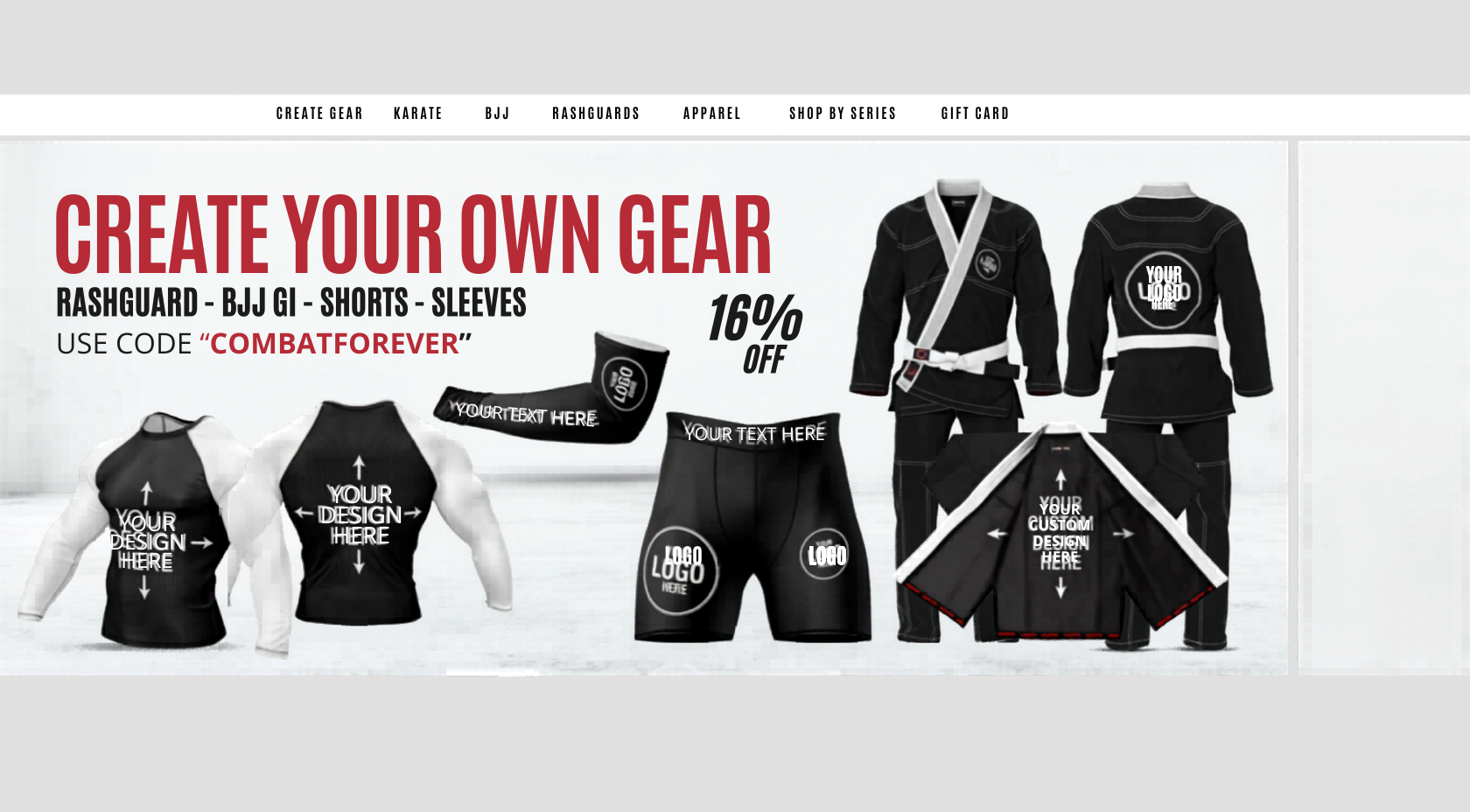
You can personalise your rashguard with your name, academy logo, and colours, making Combatra the right choice for both individual athletes and team orders. The fabrics are selected for breathability, abrasion resistance, and pressure retention through full training sessions. Whether you are competing at a weekend tournament or training through a summer block, Combatra’s custom BJJ rashguard delivers the compression and protection your training demands. Explore the full range, including the black and purple rashguard, and find the fit that works for your body and your sport.
FAQ
What pressure level does compression wear need to be effective?
Compression garments are most effective in the 10–30 mmHg pressure range. Research confirms this range improves venous return, reduces muscle soreness, and enhances proprioception in the knee and ankle joints.
How long should you wear compression gear after training?
Wear compression within 30 minutes of finishing exercise and keep it on for at least 2 hours. Wearing it through your first recovery sleep produces the best outcomes for oedema suppression and muscle repair.
Does compression clothing improve performance during exercise or only in recovery?
The strongest evidence supports compression for post-exercise recovery. During exercise, benefits include reduced muscle vibration and improved proprioception, but high-intensity compression in warm conditions can impair heat dissipation, so context matters.
Why does custom fit matter more than off-the-shelf compression?
Custom fit ensures graduated pressure is maintained across individual body geometry. Generic garments lose pressure at body concavities and irregular limb shapes, which reduces lymphatic drainage and proprioceptive benefits in those areas.
Is compression wear useful for multi-day BJJ tournaments?
Yes. Athletes in multi-day events report the most consistent benefits from compression wear, including reduced perceived soreness and better training adherence across consecutive competition days.