


TL;DR:
- Choosing between a custom and stock gi depends on your training needs, with custom gis offering superior fit and durability. Stock gis are affordable, available immediately, and suitable for beginners, while custom gis require longer lead times and higher costs but provide better compliance and personal fit. Both types can meet competition standards if properly verified, but planning ahead is essential for timely competition readiness.
A gi is the foundational uniform of Brazilian Jiu-Jitsu, and the choice between a custom gi and a stock gi directly affects your comfort, compliance, and performance on the mat. The custom gi vs stock gi debate is not simply about aesthetics. It comes down to fit precision, durability, competition legality, and how often you train. Both options have genuine merit, and the right choice depends on your goals. Lightweight gis in the 350–450 GSM range offer greater mobility and faster drying, which matters in Australia’s warm training environments. Understanding the differences between custom and stock gis gives you the clarity to invest wisely and train without distraction.
What is a custom gi and what are the benefits?
A custom gi is a BJJ uniform tailored to your exact measurements, fabric preferences, and design specifications. Unlike off-the-shelf options, a custom gi is built around your body rather than a standard size chart. That difference shows up immediately in how the gi moves with you during rolls, guard work, and takedowns.
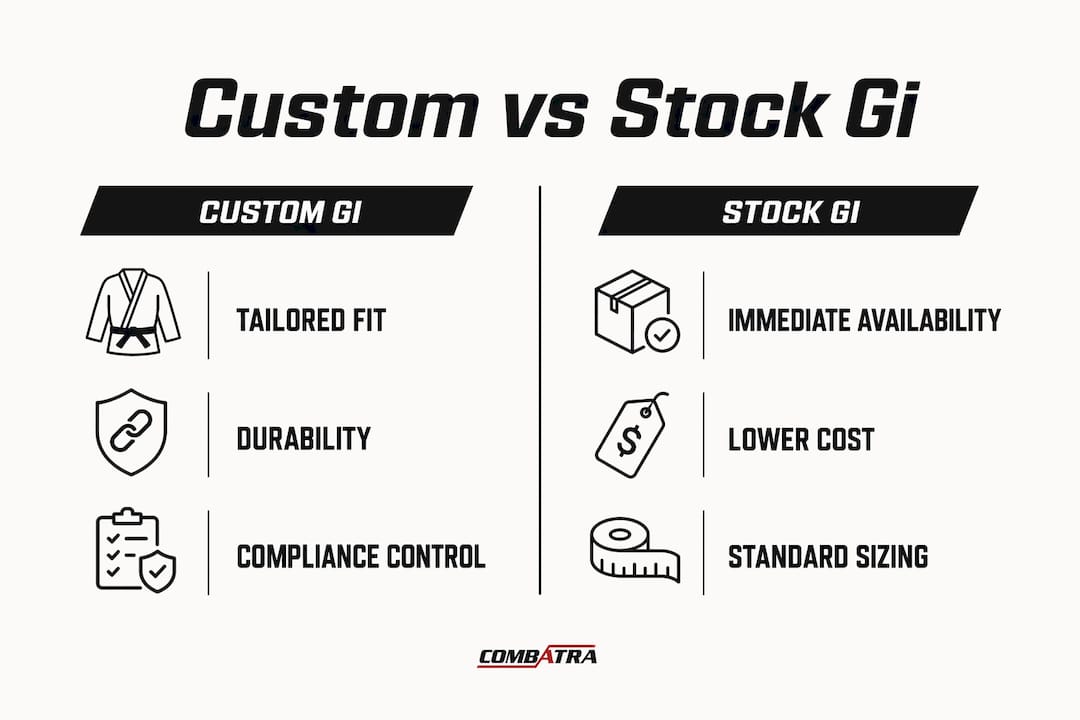
Custom gis offer athletes control over several key variables:
- Fabric type and weave: Choose pearl weave, single weave, or ripstop based on your training climate and durability needs.
- Fabric weight: Select a GSM rating suited to competition travel or daily heavy training.
- Reinforcement points: Collar, sleeve cuffs, and knee panels can be reinforced at stress points to extend the gi’s lifespan.
- Branding and patches: Add academy logos, personal names, or sponsor patches within IBJJF-approved patch zones.
- Colour and trim: Choose from approved competition colours or training-only designs with greater freedom.
The durability advantage is real. Custom gis reinforce stress points such as the collar, sleeves, and knees, which reduces premature wear during intensive daily training. A stock gi without these reinforcements may need replacing sooner, making the higher upfront cost of a custom gi a sound long-term investment for serious practitioners.
The main trade-off is lead time. First-order custom gi manufacturing typically takes 10–16 weeks due to sampling, fabric sourcing, and custom embroidery. Repeat orders run faster at roughly 6–10 weeks. Plan your order well before any competition season.
Pro Tip: Consider a two-gi strategy if you compete regularly. Order one custom gi built for strict IBJJF compliance and keep a second training-only gi with more expressive branding and design freedom.
What is a stock gi and what advantages does it offer?
A stock gi is a mass-produced BJJ uniform available in standard sizes, typically ranging from A0 through A5. Stock gis are the most accessible option for beginners and intermediate practitioners who need a reliable uniform without a long wait or a premium price. You can order one today and have it on the mat within days.
Stock gis carry several practical advantages:
- Immediate availability: No lead time. Purchase online or in-store and begin training straight away.
- Competitive pricing: Stock gis are generally more affordable, making them ideal for beginners or athletes on a budget.
- Competition compliance: Reputable manufacturers produce stock gis in IBJJF-approved colours with factory patches placed in legal zones.
- Proven sizing: Standard sizing charts from established brands give reliable fit guidance for most body types.
- Variety of weights: Many stock gis come in lightweight options suited to warm Australian training rooms and competition travel.
The limitation of a stock gi is fit precision. Standard sizing does not account for individual body proportions. A practitioner with long arms and a narrow torso, for example, may find that a stock gi creates excess fabric that opponents can grip. That extra material is not just uncomfortable. It is a tactical disadvantage on the mat.
Stock gis from reputable manufacturers typically meet competition standards out of the box. Cheaper, mass-produced options may vary in patch legality, so always verify before your first competition. For guidance on selecting the right BJJ gi for your training goals, the fit and fabric weight checks are the same regardless of whether you go custom or stock.
How do custom and stock gis compare on competition compliance?
IBJJF competition rules are specific and non-negotiable. Competition gis must be solid white, royal blue, or black with matching jacket and pants. Grey, navy with restrictions, camouflage, painted designs, and mixed-colour combinations are all forbidden. This rule applies to both custom and stock gis equally.
For competitors, compliance involves more than colour. Follow these steps before any IBJJF event:
- Verify patch placement. Patches outside authorised zones on sleeves or pant legs cause gi check failures. Inspectors check this at weigh-in.
- Pre-wash your gi. Multiple wash cycles before competition are mandatory. Shrinkage can push sleeve or pant length outside legal limits even on a brand-new gi.
- Check sleeve and pant measurements. IBJJF specifies exact length requirements. Measure after washing, not before.
- Bring a backup gi. Inspectors recommend this to avoid disqualification if your primary gi fails the check.
Custom gis have a compliance advantage when designed correctly. You can specify legal colours, place patches in approved zones during manufacturing, and choose pre-shrunk fabric to reduce post-wash surprises. Stock gis from reputable brands are built to comply, but you carry the responsibility of verifying patch placement yourself if you add anything after purchase.
Pro Tip: If you train at an academy with a team gi, confirm the design was built with IBJJF rules in mind before ordering. A beautiful custom gi with patches in the wrong location is a liability at competition.
Cost, durability, and lead time: which gi suits your needs?
The financial comparison between custom and stock gis is straightforward on the surface but more nuanced in practice. Custom gis cost more upfront due to tailored fit, premium fabric, and detailed craftsmanship. Stock gis are more affordable but may compromise on fit and durability. The real question is total cost over time.
| Factor | Custom gi | Stock gi |
|---|---|---|
| Upfront cost | Higher | Lower |
| Fit precision | Tailored to body | Standard sizing (A0–A5) |
| Durability | Reinforced stress points | Varies by brand and price |
| Lead time | 10–16 weeks (first order) | Immediate |
| Competition compliance | Designed to spec | Verify patches and colour |
| Style options | Full customisation | Limited to manufacturer range |
For athletes training daily, durability matters most. A well-reinforced custom gi holds up under constant collar grips, guard passing, and takedown drilling far longer than a standard stock gi at the same weight. The fabric weight trade-off is also worth considering. Heavier gis retain more heat and cause faster fatigue. Lighter gis in the 350–450 GSM range dry faster and move better, but need reinforced construction to avoid premature wear at high-stress points.
Key considerations when budgeting for a gi:
- Training frequency: Daily training demands more durable construction. A stock gi may wear out faster under that load.
- Competition calendar: If you compete regularly, factor in the 10–16 week lead time for custom orders. Missing a tournament because your gi is still in production is a costly mistake.
- Climate: Australian training rooms run hot. A lightweight gi with good breathability is worth the investment regardless of whether it is custom or stock.
For a deeper look at how gi fabric weight affects performance in Australian conditions, the choice of GSM rating is one of the most underrated decisions a practitioner makes.
Which gi is better for training vs competition?
The answer depends on your priorities, and most serious practitioners end up owning both types. High-level competitors commonly maintain two gis: one competition-legal gi with strict compliance and one more fully customised training gi with greater freedom for branding and personal expression. This approach reduces disqualification risk while allowing identity and style on the mat during daily sessions.
Here is how to match your gi choice to your goals:
- Beginners: A stock gi is the right starting point. It is affordable, immediately available, and gives you time to understand what fit and weight you prefer before committing to a custom order.
- Intermediate practitioners: Consider a stock gi for competition and a custom gi for training, or vice versa depending on your budget and timeline.
- Competitors: A custom gi designed for IBJJF compliance gives you confidence at weigh-in. Pair it with a durable training gi to protect your competition gi from daily wear.
- Academy teams: Custom gis with consistent branding build team identity and look professional at tournaments. Stock gis work for individual members who are not yet competing.
- Climate considerations: In Australian summer conditions, a lightweight custom or stock gi in the 350–450 GSM range is preferable to a heavy competition gi for daily training.
The best gi for training is the one you wear consistently without discomfort or distraction. The best gi for competition is the one that passes the gi check and lets you focus entirely on your performance.
Key takeaways
Custom gis deliver superior fit, durability, and compliance control, but stock gis remain the faster, more affordable choice for beginners and budget-conscious practitioners.
| Point | Details |
|---|---|
| Custom gi fit advantage | Tailored measurements reduce excess fabric that opponents can grip during rolls. |
| Stock gi accessibility | Standard sizing and immediate availability make stock gis the practical choice for beginners. |
| Competition compliance | Both gi types must meet IBJJF colour and patch rules; always pre-wash and verify before events. |
| Lead time planning | Custom gi first orders take 10–16 weeks; order well before your competition season begins. |
| Two-gi strategy | Owning one competition-legal gi and one training gi balances compliance with personal expression. |
What I have learned from years on the mat
The custom vs stock gi debate gets oversimplified in most discussions. People focus on price and aesthetics, but the factor that matters most is how the gi fits your body under pressure. A stock gi that bunches at the collar or rides up the forearms gives your training partner free grips. That is not a style issue. It is a technical disadvantage you are paying for every session.
I have seen competitors show up to gi checks with beautiful custom gis that failed because patches were placed on the sleeve below the permitted zone. The gi looked professional. It did not pass. That experience reinforced something I tell every practitioner I work with: compliance is not an afterthought. It is part of the design brief from day one.
My honest recommendation is to start with a quality stock gi, train in it for three to six months, and pay attention to where it restricts you or where opponents consistently find grip. That information tells you exactly what to specify when you order your first custom gi. You will make a far better investment with that data than by guessing from a size chart alone.
The confidence that comes from wearing a well-fitted, well-made gi is real. It is not vanity. When your uniform moves with you instead of against you, you train with less friction and more focus. That compounds over hundreds of sessions.
— McGinnis
Combatra’s BJJ gis: stock and custom options built for the mat
Combatra builds BJJ gis for practitioners who take their training seriously. Whether you need a competition-ready stock gi or a fully personalised custom uniform, Combatra’s range covers both.
The Combatra black BJJ gi jacket and blue BJJ gi jacket are built to IBJJF competition standards and available for immediate dispatch. For practitioners ready to go custom, Combatra offers personalised gi sets including the custom plain black BJJ gi and shirt set with tailored fit and branding options. Round out your kit with a premium BJJ belt designed to hold up through years of training. Every product is designed for Australian athletes and built to perform under real mat conditions.
FAQ
What is the main difference between a custom gi and a stock gi?
A custom gi is tailored to your exact measurements and specifications, while a stock gi uses standard sizing from A0 to A5. Custom gis offer better fit and reinforced durability; stock gis are more affordable and immediately available.
Are custom gis IBJJF legal for competition?
Yes, provided they are made in approved colours (white, royal blue, or black) with patches placed in authorised zones. A custom gi designed with IBJJF rules in mind can be fully competition legal.
How long does it take to receive a custom gi?
First-order custom gis typically take 10–16 weeks to manufacture and deliver. Repeat orders are faster at approximately 6–10 weeks depending on fabric availability and shipping.
Can a stock gi pass IBJJF gi checks?
Yes. Stock gis from reputable manufacturers are produced in legal colours with factory patches in approved zones. Always pre-wash the gi and verify measurements before competition to avoid disqualification from shrinkage.
Which gi is better for a BJJ beginner?
A stock gi is the better starting point for beginners. It is more affordable, available immediately, and gives you time to understand your fit preferences before investing in a custom order.