


TL;DR:
- Choose a custom rashguard using the exact product specification, size guidance, sleeve coverage, artwork and order terms. Check current organiser rules if competing.
Choosing a custom BJJ rashguard for your academy involves comparing product specifications, sizing, sleeve coverage, artwork and order terms. This guide gives you checks to make before approving a design or team order. Confirm current event rules separately if your athletes plan to compete.
What fabric blends make the best custom BJJ rashguards?
There is no single fabric blend that is best for every athlete. Request the exact composition, weight and care guidance for the garment you are considering. The linked rashguard buying guide provides related background.
Use the supplier’s specification to compare materials, construction and care rather than assuming all products with the same fibre name perform alike:
- Composition: ask for the exact fibre blend on the selected garment.
- Fabric and printing: confirm which artwork method is available for that item.
- Stretch and fit: use the size guide and assess movement on a sample where available.
- Fabric weight: compare the actual specification and your training conditions.
- Care: follow the garment’s supplied washing and drying guidance.
Ask for the current minimum order, unit price, any artwork charges and production timing for your actual size mix. Confirm these before approving an academy order.
Pro Tip: Ask whether a sample or swatch is available so you can assess fabric feel, fit and artwork before committing to a larger order.
How to ensure your custom rashguards meet IBJJF competition standards
Before ordering for competition, check the organiser’s current apparel rulebook. The linked rashguard colour guide provides background; confirm colour, coverage and branding requirements against current official rules.
Confirm these details for the event your athletes plan to enter:
- Colours: check the current organiser’s colour and rank requirements.
- Sleeves and coverage: confirm which styles the event permits.
- Construction: review the exact garment specification and current event rules.
- Fit: check the product’s size guide and any organiser fit requirements.
- Branding: confirm current logo and placement requirements before approving artwork.
For ranked team designs, ask which colours and layouts the supplier currently offers. The linked supplier overview is background only; confirm current options, minimum quantities and event requirements for your order.
What fit and design features improve rashguard performance?
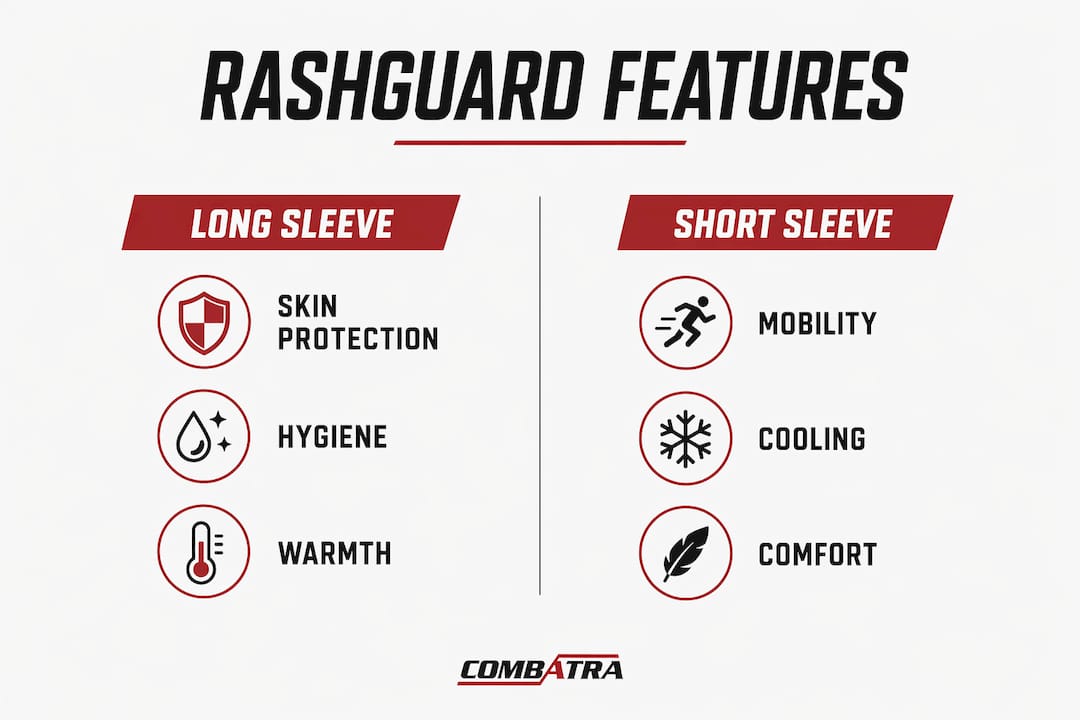
Choose a fit that feels comfortable and allows movement. Check whether the top rides up, pinches or bunches when reaching, bending and turning. The linked rashguard overview provides related background.
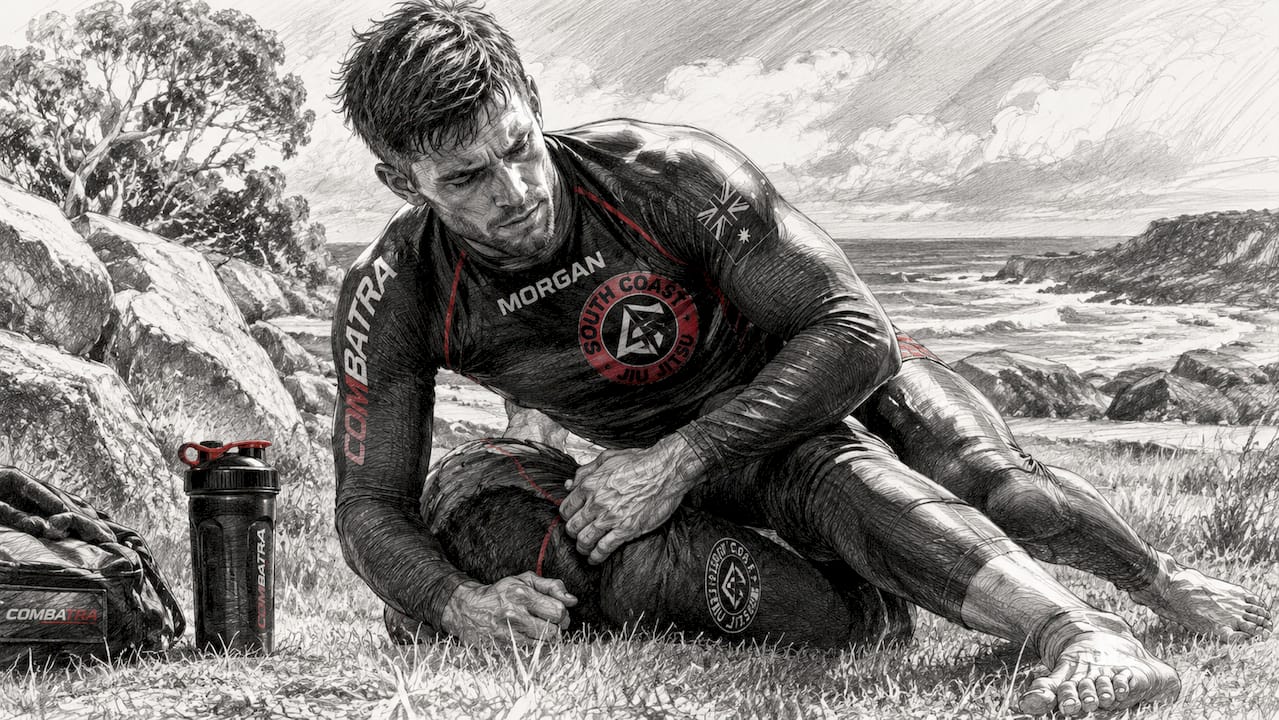
When comparing designs, check the actual garment construction, sleeve coverage and fit.
Anti-slip silicone waistbands
If a product lists a silicone waistband, check its construction on the exact item and assess fit on a sample where available. Do not assume every rashguard includes this feature.
Set-in sleeve construction
Check the sleeve cut and seam placement on the exact garment. Try reaching overhead and turning your shoulders to see whether the fit suits you.
Sleeve length comparison
| Feature | Long sleeve | Short sleeve |
|---|---|---|
| Arm coverage | Covers forearms and elbows | Leaves forearms uncovered |
| Fit check | Check shoulder reach and sleeve comfort | Check torso fit and sleeve opening |
| Training conditions | Choose coverage that suits you | Choose coverage that suits you |
| Competition use | Check current organiser rules | Check current organiser rules |
| Academy preference | Confirm accepted sleeve styles | Confirm accepted sleeve styles |
Long sleeves cover more of the arm; short sleeves leave the forearms uncovered. Choose coverage based on personal preference, training conditions and academy or event requirements.
Pro Tip: Ask which printing methods are available on the selected garment and review an artwork proof. Follow the supplied care guidance after purchase.
How to choose the right supplier for your academy’s custom rashguards
Compare suppliers using the exact specifications, sample availability, artwork process, quote and order terms you receive.
- Specifications: request the exact material and construction details.
- Seams: ask for close-up construction details or a sample where available.
- Samples: confirm availability, cost and what you can assess before a bulk order.
- Timing: request the current production and delivery estimate for your order.
- Artwork: agree the proof process and ask about print and care details.
- Quantities and pricing: request the actual minimum order, size-mix rules and current quote.
The custom rashguard supplier guide offers related supplier-selection guidance. The linked resource on creating unique sports apparel provides design background; confirm all specifications and commercial terms directly with the supplier you choose.
How can custom rashguards enhance your academy’s branding?
Academy colours and logos can help create a coordinated visual identity. The academy branding guide gives design ideas; choose a layout that suits your academy and any event rules.
Practical branding checks before approval include:
- Colour: agree the reference colours and proof process with the supplier.
- Logo placement: review size and position on the design proof; check current event rules if competing.
- Design coherence: use shared visual elements where they suit your academy. See the existing academy branding guide for ideas.
- Ranked sets: confirm available colours and the current rules for your event.
- Care: check the supplier’s garment and printing care guidance.
Key takeaways
Choose academy rashguards by comparing the exact product specification, sizing, artwork proof, care guidance and current order terms. Check event requirements separately.
| Point | Details |
|---|---|
| Fabric specification | Review the exact composition, weight and care guidance. |
| Seam construction | Check the listed construction or assess a sample. |
| Competition requirements | Use the current organiser rulebook for your event. |
| Waistband and fit | Check the exact garment features and your preferred fit. |
| Samples and order terms | Confirm availability, artwork proof, quote and timing before approval. |
Academy rashguard checks before ordering
Check fit and fabric alongside artwork when comparing options. A sample, where available, lets your academy assess the garment before a larger order.
Review the waistband and overall fit on the selected item. Check whether the top stays comfortable when reaching, bending and turning.
Ask athletes which sleeve coverage they prefer and confirm what your academy accepts. Choose the size and sleeve mix that suits the team rather than assuming everyone needs both styles.
The custom rashguard ordering process guide can help you plan artwork and sizing checks. Agree any sample, proof or revision process with your supplier before production.
A shared design can express your academy’s identity. Review colours, logo placement and the final proof with your team before approving the order.
Combatra’s custom BJJ rashguards for your academy
Explore Combatra’s custom BJJ rashguard to review sleeve styles, sizes and front/back artwork uploads. The product listing states UPF 50+ fabric protection, compression fit, 4-way stretch, breathable comfort and flatlock seams. Check the live page for current options and contact Combatra about academy order requirements.
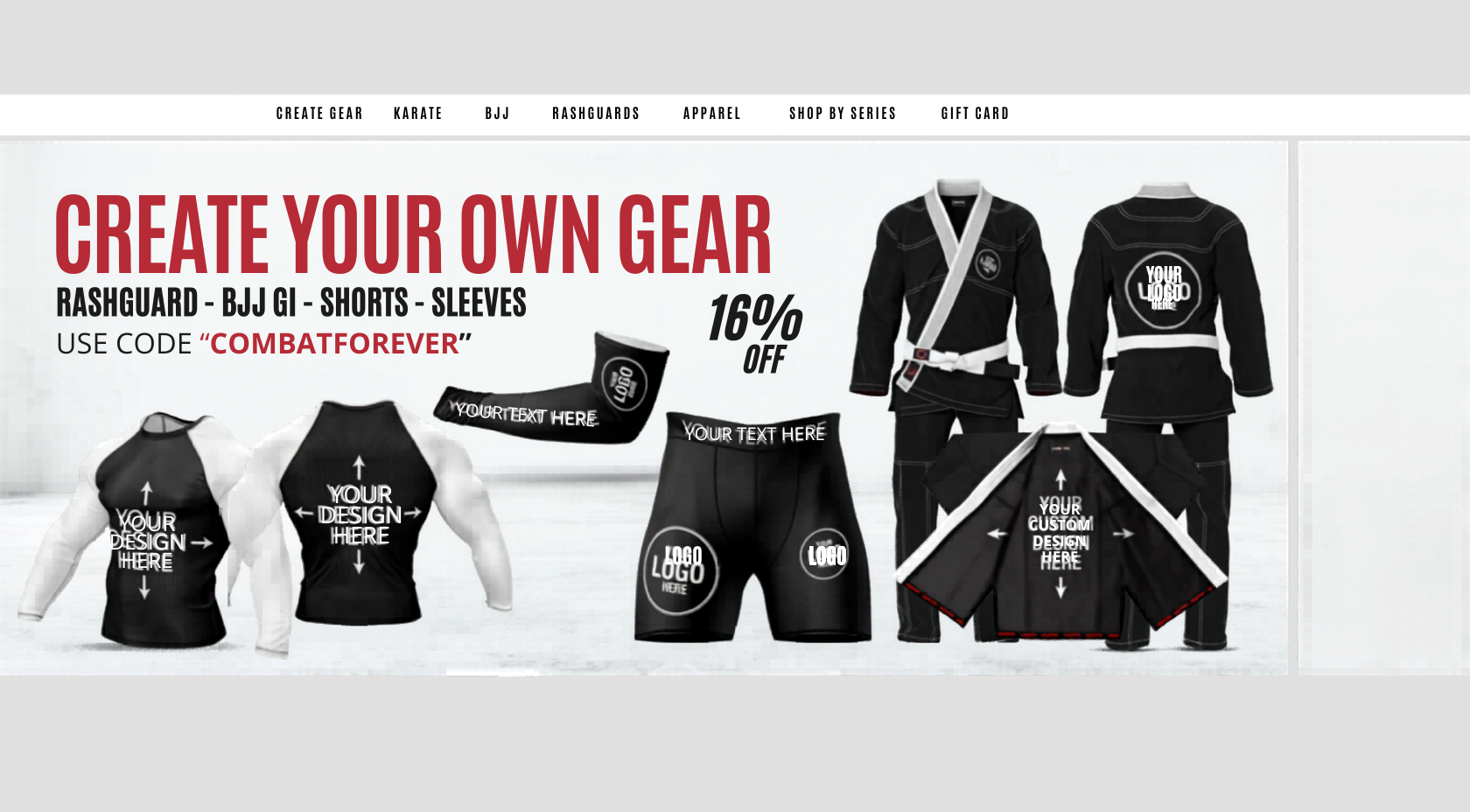
For other academy kit, compare the Combatra BJJ gi jacket and premium BJJ belt on their current product pages. Browse combatra.com.au for other designs, and check sizing and event requirements for each item.
FAQ
What is the best fabric for a custom BJJ rashguard?
There is no universal best fabric ratio. Compare the selected product’s composition, fit, care guidance and sample options.
Do custom BJJ rashguards need to comply with IBJJF rules?
If competing, check the current organiser rulebook for colour, coverage, branding and other apparel requirements before ordering.
What stitching standard should a quality rashguard use?
Check the seam construction on the selected garment. Ask about a sample or close-up details if needed; do not assume an industry stitch standard is a certification for that product.
How long does it take to produce custom rashguards for an academy?
Ask for current timing, sample availability, minimum quantities and pricing for the actual order. Confirm the quote before committing to an event date.
Are long or short sleeve rashguards better for BJJ training?
Long sleeves provide more arm coverage; short sleeves leave the forearms uncovered. Choose based on fit, preference and academy or event requirements.