


TL;DR:
- Layered UV protection, including UPF 50+ clothing and broad-spectrum SPF 50+ sunscreen, is essential for outdoor workers and athletes. Consistent use of protective clothing, proper application of sunscreen, and use of hats and sunglasses significantly reduce harmful UV exposure year-round. Building a daily routine around these measures effectively minimizes the risk of skin damage and long-term health issues.
Layered UV protection is the single most effective strategy for outdoor workers and athletes who face prolonged sun exposure. Australia records some of the highest UV index levels in the world, making sun safety a year-round priority rather than a summer afterthought. Rashguards built for BJJ, MMA, and outdoor training serve a dual purpose here. They deliver compression support, sweat management, and abrasion resistance while premium versions are lab tested to AS 4399:2020 and rated UPF 50+. Knowing how to stay protected from UV while working outdoors means combining certified clothing with sunscreen, hats, sunglasses, and smart scheduling into one consistent daily routine.
What are the best protective clothing items for UV defence outdoors?
UPF, or Ultraviolet Protection Factor, measures how much UV radiation a fabric blocks. A UPF 50+ rating means the fabric blocks more than 98% of UV rays. That is the standard you need for any clothing worn during prolonged outdoor work or training.
Fabric choice matters as much as the rating label. Tightly woven synthetics like polyester and nylon outperform loose cotton weaves. Darker colours and heavier fabrics generally absorb more UV, though many modern performance fabrics achieve UPF 50+ in lighter weights through fibre density alone. UPF 50+ clothing combined with SPF 50+ sunscreen significantly lowers UV exposure risk for outdoor workers, according to Cancer Council Australia guidelines.
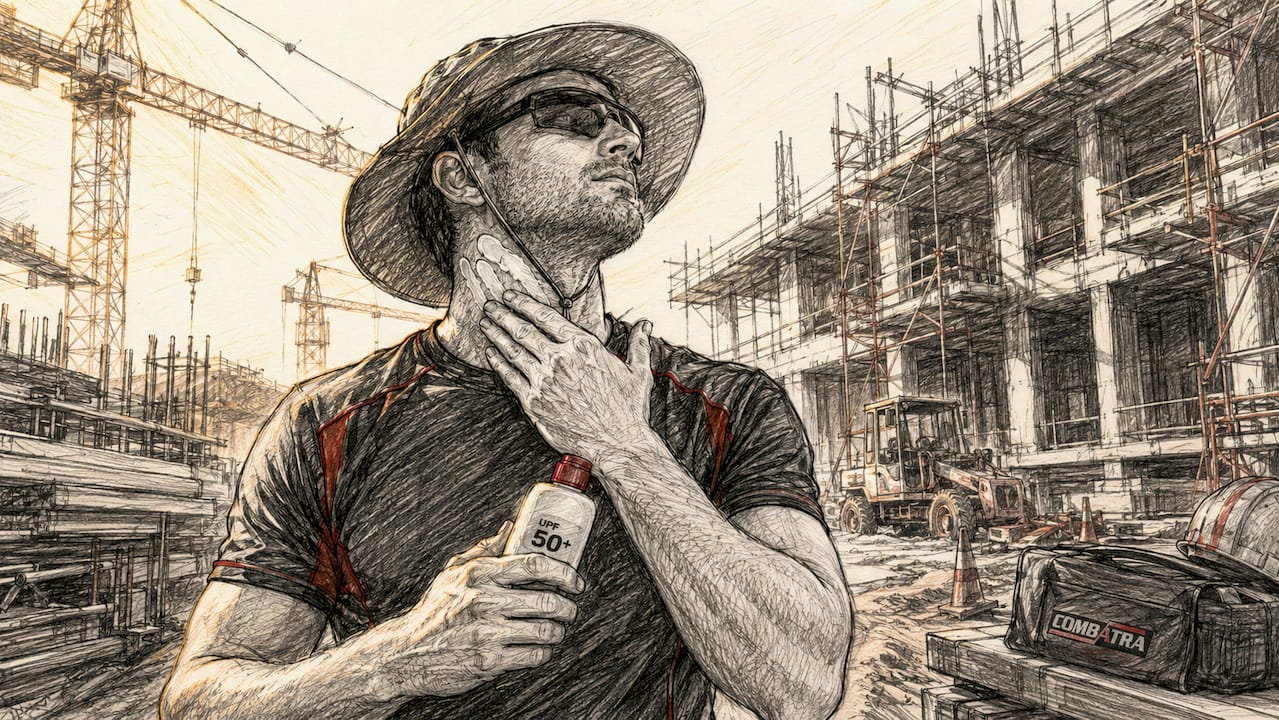
Coverage area is the other critical variable. Long sleeves, high collars, and full-length pants reduce the total skin surface exposed to UV. A standard cotton t-shirt typically offers UPF 5–15, leaving most UV to pass through. A certified UPF 50+ rashguard or long-sleeve performance top eliminates that gap entirely.
Key clothing comparisons for UV protection:
| Clothing type | Typical UPF rating | Coverage level |
|---|---|---|
| Standard cotton t-shirt | UPF 5–15 | Arms and torso partially |
| Synthetic long-sleeve rashguard (UPF 50+) | UPF 50+ | Arms and torso fully |
| Broad-brim hat (7.5 cm+) | N/A | Face, neck, and ears |
| UV-blocking sunglasses | N/A | Eyes and surrounding skin |
- Choose long-sleeve rashguards or shirts rated UPF 50+ for torso and arm coverage.
- Select pants or shorts that cover the thighs if working in direct sun for extended periods.
- Wash UV protective garments according to care labels. Repeated washing with harsh detergents can degrade fabric structure and reduce protection over time.
- Replace worn or stretched garments. Fabric that has thinned or pilled offers less UV blockage.
Pro Tip: Layer a UPF 50+ rashguard under a lightweight long-sleeve shirt when UV index exceeds 8. The double layer adds protection on the most exposed body parts without significantly increasing heat load.
How to properly select and use sunscreen for sustained outdoor work
Sunscreen is the primary line of defence for any skin left uncovered by clothing. The minimum recommended rating for outdoor workers is SPF 50+, broad-spectrum, and water-resistant. Broad-spectrum means the product blocks both UVA and UVB radiation. Water-resistant formulations maintain efficacy during sweating, which is critical for physically demanding outdoor roles.
Correct application timing and quantity are where most people fall short. Apply sunscreen 20 minutes before going outdoors to allow it to bind to the skin. Use a generous amount across all exposed areas, including ears, the back of the neck, the scalp if uncovered, lips, and the backs of hands and feet.
Reapplication is non-negotiable. Reapply every two hours at minimum, and more frequently when sweating heavily or working near water. Sunscreen effectiveness depends on application quantity and environmental factors like wind, humidity, and perspiration. A single morning application does not last a full shift.
Follow these steps for reliable sunscreen protection during outdoor work:
- Choose SPF 50+, broad-spectrum, water-resistant sunscreen.
- Apply 20 minutes before outdoor exposure begins.
- Cover all exposed skin generously, including easy-to-miss areas like ears, lips, and the back of the neck.
- Set a timer or use a work break schedule to reapply every two hours.
- Reapply immediately after swimming, heavy sweating, or towelling off.
- Check the expiry date. Expired sunscreen loses efficacy and should be replaced.
Common mistakes include applying too little, skipping reapplication after lunch, and assuming cloud cover eliminates the need for sunscreen. UV radiation penetrates cloud cover and reflects off concrete, sand, and water, so exposure continues even on overcast days.
Pro Tip: Keep a dedicated sunscreen in your work bag or tool kit so reapplication does not depend on memory. Treat it the same way you treat drinking water during a shift.
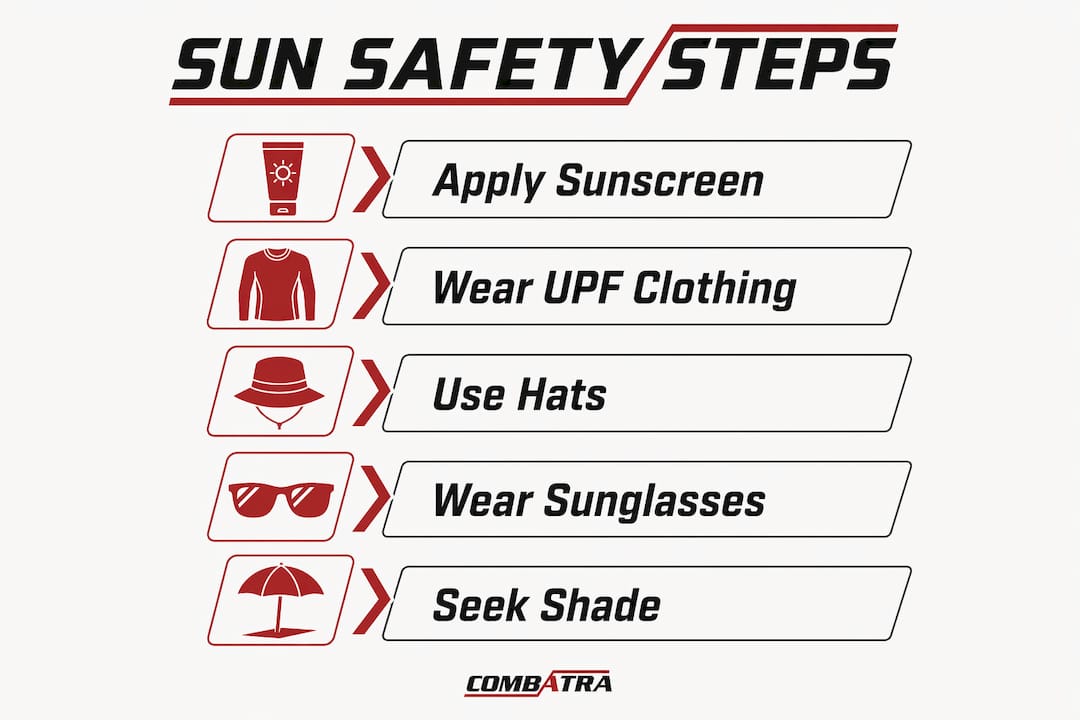
What role do hats, sunglasses, and shade play in UV protection?
Hats protect the face, ears, and neck, which are among the most UV-exposed areas for outdoor workers. Broad-brim hats with a brim of at least 7.5 cm provide the most coverage. Legionnaire-style hats with neck flaps and bucket hats with full circumference brims are the next best options. Peaked caps and baseball caps leave the ears, neck, and sides of the face fully exposed and are not adequate for outdoor work.
UV-blocking sunglasses protect the eyes and the delicate skin around them. Look for sunglasses that meet the Australian standard AS/NZS 1067 and carry a UV 400 or category 3–4 rating. Wraparound styles reduce UV entering from the sides. Eye exposure to UV contributes to cataracts and other long-term conditions, so sunglasses are not optional for outdoor workers.
Shade reduces direct UV exposure but does not eliminate it. UV reflects off surfaces such as sand, concrete, and water, meaning scattered and reflected UV still reaches skin even under a shelter or tree. WorkSafe Victoria advises treating reflective surfaces as additional exposure zones and maintaining full protective measures even in shaded areas.
Protective accessories at a glance:
| Accessory | Recommended specification | Body area protected |
|---|---|---|
| Broad-brim hat | Brim 7.5 cm or wider | Face, ears, neck |
| Legionnaire hat | Neck flap included | Face, neck, back of head |
| UV-blocking sunglasses | AS/NZS 1067, UV 400 | Eyes, periorbital skin |
| Shade structure | Solid roof, not mesh | Reduces direct UV only |
- Avoid relying on shade alone. Always wear clothing, sunscreen, and a hat even when working under cover.
- Schedule rest breaks in shaded areas to reduce cumulative exposure during the highest UV periods.
- Combine shade with full PPE for the best reduction in UV risk.
How to build a practical sun safety routine for outdoor workers
A consistent daily routine is the most reliable way to reduce cumulative UV damage over a working career. Sun protection is recommended whenever the UV index reaches 3 or above, which in most parts of Australia occurs year-round. Waiting for summer or for skin to redden is already too late. Even mild reddening is evidence of skin damage, and no quick cure exists once it occurs.
Build your routine around these steps:
- Check the UV index each morning using the Bureau of Meteorology app or the SunSmart app from Cancer Council Australia.
- Schedule physically demanding or exposed tasks before 10 am or after 4 pm when UV levels are lower.
- Apply SPF 50+ sunscreen 20 minutes before starting work.
- Put on your UPF 50+ clothing, broad-brim hat, and UV-blocking sunglasses before stepping outside.
- Set a two-hour reapplication reminder on your phone or align it with scheduled work breaks.
- Move high-exposure tasks indoors or under solid shade during the 10 am to 4 pm peak UV window where possible.
- Conduct a monthly skin self-check. Look for new spots, changes in existing moles, or areas that itch, bleed, or do not heal. Regular skin checks are critical for early detection of UV-related damage.
A comprehensive sun protection programme combining scheduling controls, engineered shade, and PPE provides the best UV risk reduction. No single measure is sufficient on its own. The British Safety Council confirms that sunscreen is frontline protection only when applied correctly and paired with other controls.
Pro Tip: For high-sweat activities like construction, landscaping, or outdoor training, switch to a mineral-based SPF 50+ sunscreen. Mineral formulations sit on the skin surface and are less likely to run into the eyes during heavy perspiration.
Shifting from reactive to proactive sun protection habits is the mindset change that makes the biggest difference. Applying sunscreen only after you notice redness means the damage is already done. Build the routine before the season starts and maintain it regardless of cloud cover or workload.
Key takeaways
Effective UV protection for outdoor workers requires layering UPF 50+ clothing, SPF 50+ sunscreen, protective hats, UV-blocking sunglasses, and smart scheduling into one consistent daily routine.
| Point | Details |
|---|---|
| UPF 50+ clothing is the foundation | Choose certified long-sleeve rashguards and pants to block over 98% of UV radiation. |
| Sunscreen requires correct application | Apply SPF 50+ broad-spectrum sunscreen 20 minutes before exposure and reapply every two hours. |
| Hats must cover face, ears, and neck | Use broad-brim, legionnaire, or bucket hats with at least a 7.5 cm brim. |
| Shade alone is not enough | UV reflects off concrete, sand, and water, so wear full PPE even under shelter. |
| Routine and scheduling reduce cumulative risk | Schedule exposed tasks outside peak UV hours (10 am to 4 pm) and check the UV index daily. |
What I have learned from years of outdoor training in the Australian sun
Most people treat sun protection as a warm-weather ritual. They reach for sunscreen in december and forget about it by april. That approach ignores the reality of Australian UV levels, which remain hazardous year-round across most of the country.
The biggest gap I see in outdoor workers and athletes is not knowledge. Most people know they should wear sunscreen. The gap is consistency under physical stress. When you are sweating through a long shift or a hard training session, reapplication feels inconvenient. That is exactly when it matters most. Sweat degrades sunscreen faster than almost any other factor, and that is when UV exposure is highest.
Premium UPF 50+ clothing solves a large part of this problem. Once it is on, it works continuously without reapplication. A well-fitted rashguard rated to AS 4399:2020 covers the torso and arms for the entire session. You only need to manage sunscreen on the remaining exposed skin, which is a much smaller surface area and a much simpler reapplication task.
The mindset shift worth making is this: treat UV protection the same way you treat hydration. You would not skip water during a long outdoor shift. UV damage is just as cumulative and just as preventable. Build the habit before you need it, and it becomes automatic.
— McGinnis
Combatra’s UPF 50+ gear for outdoor workers and athletes
Outdoor workers and athletes need clothing that holds up under real conditions, not just in the lab. Combatra designs performance apparel tested to AS 4399:2020 with a UPF 50+ rating, built for long-duration sun exposure, heavy movement, and sustained sweat management.
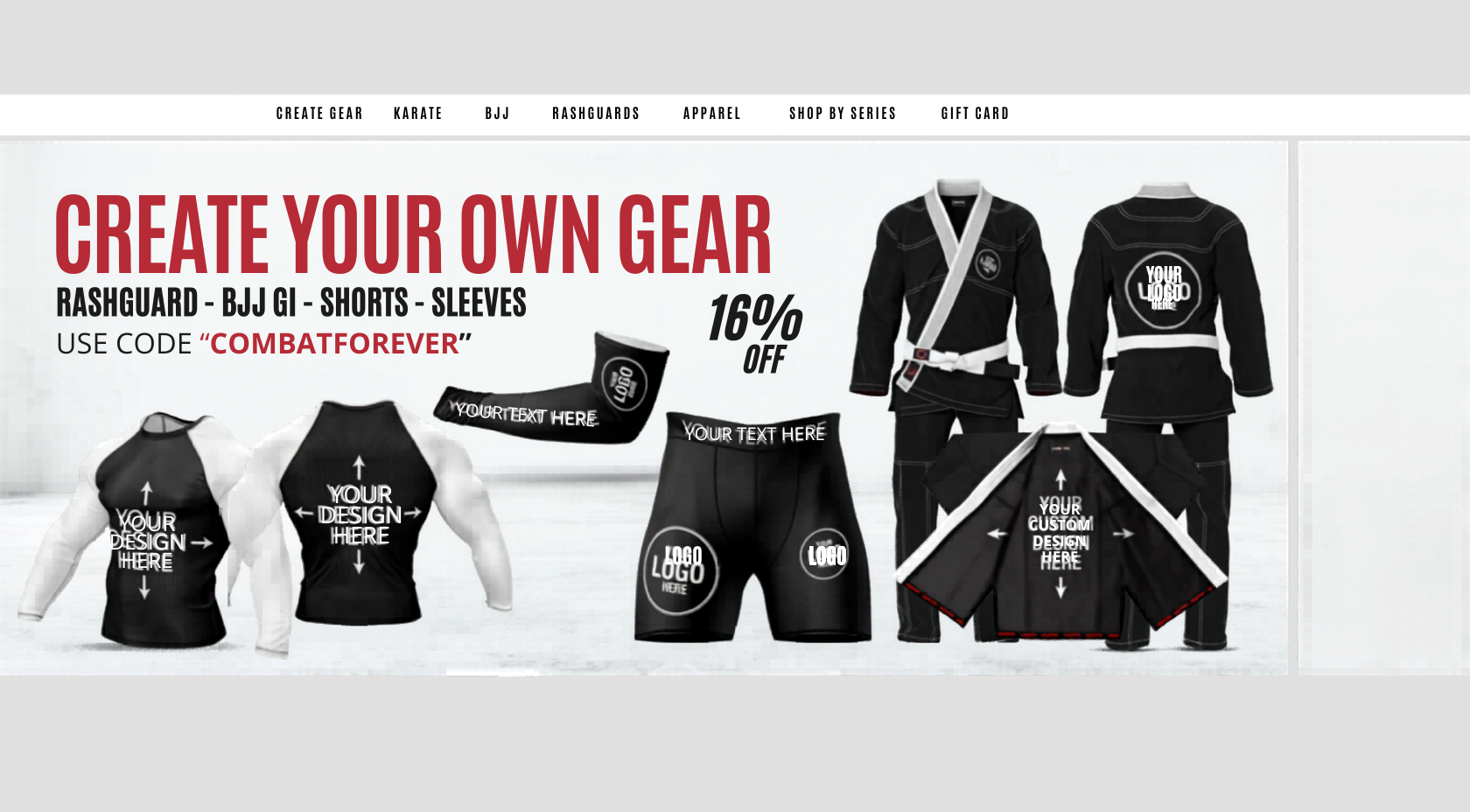
Combatra’s rashguards and training uniforms are constructed for BJJ, MMA, karate, and outdoor training, with fabrics that maintain their protective rating through repeated washing and hard use. Each piece is designed to cover maximum skin surface without restricting movement. You can also personalise gear with names, logos, and colours, making Combatra practical for both individual athletes and team environments. If you are upgrading your sun protection kit, start with certified UPF clothing as your base layer and build from there.
FAQ
What is the minimum SPF rating for outdoor workers?
SPF 50+ broad-spectrum, water-resistant sunscreen is the recommended minimum for outdoor workers. Apply it 20 minutes before exposure and reapply every two hours or after heavy sweating.
Does UPF 50+ clothing replace sunscreen?
UPF 50+ clothing protects covered skin fully, but sunscreen is still required on all exposed areas including the face, neck, and hands. Both work together as part of a layered approach.
Is shade enough to protect against UV radiation?
Shade reduces direct UV exposure but does not eliminate it. UV reflects off sand, concrete, and water, so full protective measures including clothing, sunscreen, and a hat remain necessary even under shelter.
What hat style offers the best UV protection for outdoor workers?
Broad-brim hats with a brim of at least 7.5 cm, legionnaire hats with neck flaps, and bucket hats provide the best coverage. Peaked caps and baseball caps leave the ears, neck, and sides of the face exposed.
How often should outdoor workers check their skin for UV damage?
A monthly skin self-check is recommended to detect new spots, changes in moles, or areas that do not heal. Early detection significantly reduces the risk of serious outcomes like melanoma.