


TL;DR:
- UPF 50+ clothing blocks over 98% of UVA and UVB rays, making it the most reliable sun protection for outdoor athletes. Combining certified UPF garments with regular sunscreen on exposed areas provides comprehensive UV defense during training.
UPF 50+ clothing physically blocks over 98% of both UVA and UVB rays, making it the most reliable sun protection method available to outdoor athletes. For Australian combat sports athletes training in BJJ, MMA, and grappling, rashguards serve a dual purpose: they provide compression support, manage sweat, and protect skin from abrasion during ground work, while also delivering consistent UV protection during outdoor or summer sessions. Premium rashguards tested to AS 4399:2020 carry a certified UPF 50+ rating, meaning their protection is verified in a lab, not estimated. Sunscreen has its place, but the comparison between UPF 50 clothing vs sunscreen which is better reveals a clear performance gap. Understanding both methods helps you build a sun safety strategy that actually holds up under real training conditions.
How do UPF and SPF ratings actually differ?
UPF and SPF measure UV protection in fundamentally different ways, and confusing them leads to real gaps in coverage.
UPF (Ultraviolet Protection Factor) applies to fabric and measures how much UVA and UVB radiation passes through the material to reach your skin. A UPF 50 rating means only 1/50th of UV radiation penetrates the fabric. Certified garments are tested using a spectrophotometer in a laboratory, which gives a precise, repeatable result. UPF ratings cover both UVA and UVB protection, making the coverage genuinely broad-spectrum.
SPF (Sun Protection Factor) applies to sunscreen applied to skin and measures protection against UVB rays specifically. UVA protection in sunscreen is tested separately and is often lower and less consistent. The SPF number reflects how much longer you can stay in the sun before burning compared to unprotected skin.
Key differences between UPF and SPF:
- Testing method: UPF is measured instrumentally on fabric samples. SPF is measured through controlled application on human skin at 2 mg/cm².
- UV coverage: UPF covers UVA and UVB. SPF primarily covers UVB, with UVA coverage varying by formulation.
- Consistency: UPF results are highly reproducible. SPF results depend heavily on how much product is applied.
- Reapplication: UPF clothing requires no reapplication. Sunscreen must be reapplied every two hours, or more often when sweating or swimming.
- Broad-spectrum labelling: Sunscreens labelled “broad-spectrum” include UVA coverage, but the level varies significantly between products.
Understanding these differences is the first step toward choosing the right UV protection method for your activity.
What does research reveal about real-world effectiveness?
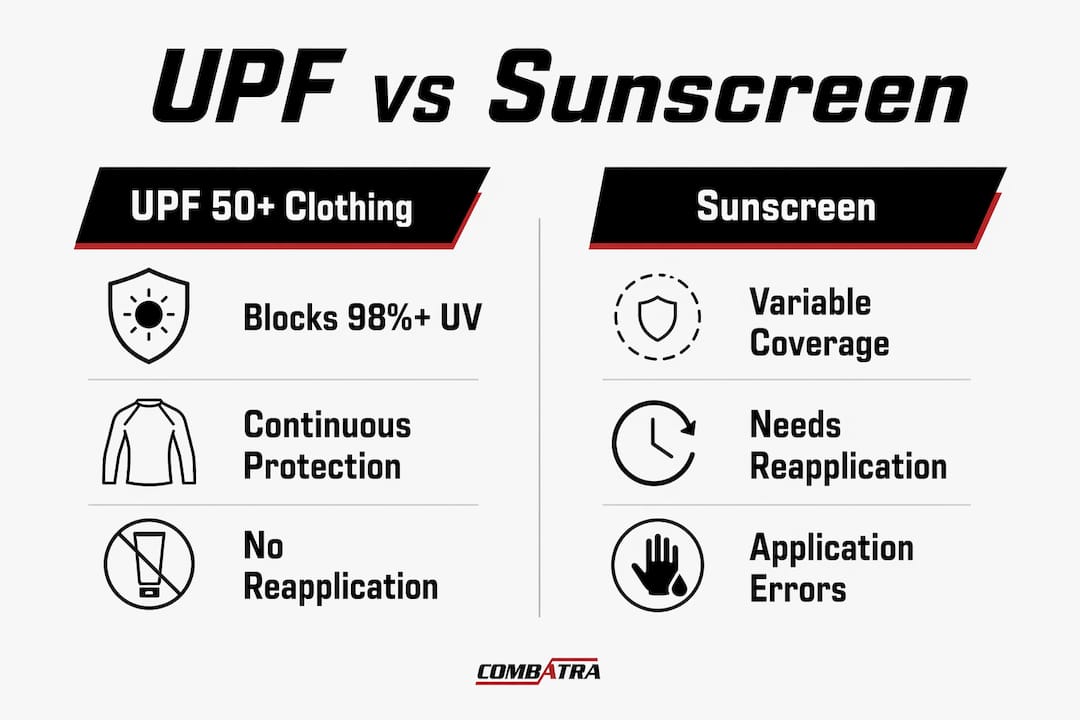
The gap between labelled protection and actual protection is where sunscreen falls short most dramatically.
UPF 50+ fabrics block over 98% of UV radiation continuously, without any action required from the wearer. That protection does not diminish because you forgot to reapply or because you sweated through your gear. Some fabrics test at UPF 200 or higher, meaning the protection ceiling is well above the minimum standard.
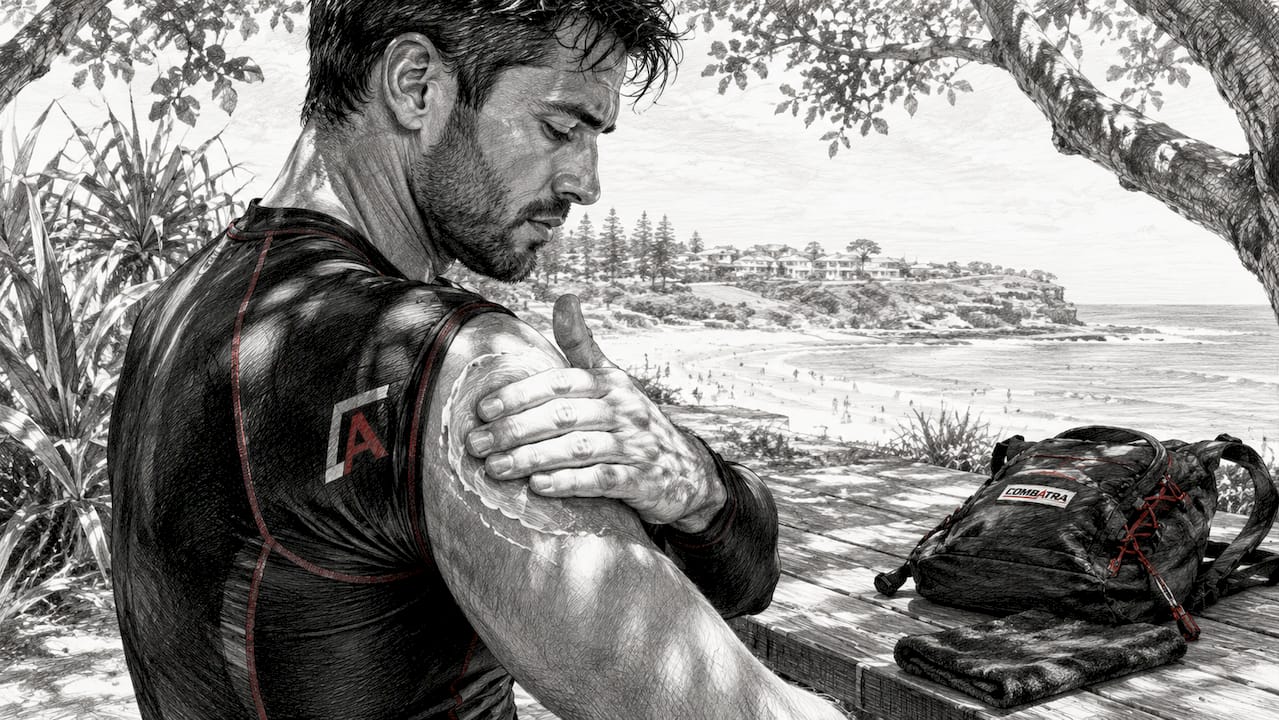
Sunscreen performance tells a different story. Most people apply only 25–50% of the recommended 2 mg/cm² quantity, which significantly reduces the actual SPF delivered to the skin. That SPF 50+ sunscreen in your bag may be performing closer to SPF 15 or 20 in practice. The protection gap is not theoretical. It is measurable and consistent across studies.
| Protection method | UV coverage | Real-world reliability | Reapplication needed |
|---|---|---|---|
| UPF 50+ clothing | UVA and UVB (98%+) | High. Lab-tested, consistent | No |
| SPF 50+ sunscreen (full application) | UVB (~94%), UVA (~82%) | Moderate. Depends on correct use | Yes, every 2 hours |
| SPF 50+ sunscreen (typical application) | Significantly reduced | Low. Application errors common | Yes, more frequently |
| Regular cotton T-shirt | Minimal (UPF 5–10) | Very low. Drops further when wet | Not applicable |
Independent testing found that 66% of sunscreens failed to meet their labelled SPF in practical conditions, with some products rated SPF 50+ delivering as low as SPF 24. That is a significant shortfall for athletes spending hours outdoors. SPF 30 sunscreen drops to approximately 54% UVA coverage in real-world use, well below what UPF fabrics deliver.
Pro Tip: If you are using sunscreen during outdoor training, set a phone reminder to reapply every 90 minutes rather than every two hours. Sweating and wiping your face accelerates product loss faster than most athletes expect.
What practical factors affect your sun protection choice?
Choosing between UPF clothing and sunscreen is not purely a performance question. Usability, coverage area, and maintenance all shape how well each method works in practice.
Where UPF clothing excels:
- Covers large body areas (torso, arms, legs) with zero ongoing effort
- Protection is consistent regardless of sweat, water, or physical activity
- No product feel, no white cast, no skin reactions from chemical filters
- Certified UPF 50+ garments are tested to standards like AS 4399:2020, so you know exactly what you are getting
Where UPF clothing has limits:
- Cannot cover the face, neck, ears, or hands without additional gear
- A lightweight cotton T-shirt provides only UPF 5–10, far below the protection most athletes assume they are getting from regular clothing
- UPF clothing protection can diminish if the fabric stretches, wears thin, or is washed incorrectly. Following care instructions is not optional if you want to maintain rated protection.
Where sunscreen remains necessary:
- Face, neck, ears, and hands require sunscreen because clothing cannot cover them reliably
- Comfortable sunscreen formulas encourage more consistent use, which matters more than the SPF number on the label. A sunscreen you actually apply regularly outperforms a high-SPF product you skip.
- Water-resistant formulas are worth the extra cost for athletes who sweat heavily or train near water
The practical reality for outdoor athletes is that neither method alone covers everything. UPF clothing handles the bulk of your body surface area with zero user error. Sunscreen fills the gaps that clothing physically cannot reach. Using both together is not overcaution. It is the correct approach.
How should athletes combine UPF 50 clothing and sunscreen?
Dermatologists recommend UPF 50+ clothing as the primary protective layer, with broad-spectrum sunscreen applied to all exposed skin areas. This layered approach addresses the weaknesses of each method individually.
A practical routine for outdoor training sessions:
- Start with UPF 50+ clothing. Choose a certified rashguard, long-sleeve top, or compression garment rated UPF 50+. This covers your torso and arms with reliable, lab-tested protection.
- Apply broad-spectrum sunscreen to exposed areas. Face, neck, ears, and hands need SPF 30 or higher, applied at the full recommended quantity before you head outside.
- Choose water-resistant sunscreen for training. Standard formulas break down quickly with sweat. Water-resistant options maintain better coverage during physical activity.
- Reapply sunscreen every 90 minutes during extended sessions. Longer outdoor sessions require more frequent reapplication than the standard two-hour guideline, especially in Australian summer conditions.
- Add a broad-brimmed hat and UV-blocking sunglasses. These protect the face and eyes without relying on sunscreen reapplication.
- Manage training time around UV peaks. UV index in Australia peaks between 10 am and 2 pm. Scheduling outdoor sessions outside this window reduces cumulative UV exposure significantly.
- Care for your UPF garments correctly. Wash in cold water, avoid fabric softeners, and replace garments that show visible wear or stretching. UPF clothing benefits only hold when the fabric maintains its structural integrity.
Pro Tip: Before a long outdoor session, apply sunscreen under your rashguard at the collar and sleeve edges. These transition zones are where UV exposure sneaks through as garments shift during movement.
Clothing is the single most effective form of sun protection per dermatologists. Sunscreen remains vital for the areas clothing cannot reach, and regular sunscreen use prevents UV-driven molecular skin damage even when UPF clothing is worn. Both tools earn their place in your kit.
Key takeaways
UPF 50+ clothing delivers more reliable sun protection than sunscreen for covered body areas, but combining both methods is the only way to achieve comprehensive UV defence for outdoor athletes.
| Point | Details |
|---|---|
| UPF 50+ blocks 98%+ UV | Certified UPF 50+ fabric blocks over 98% of UVA and UVB without reapplication. |
| Sunscreen underperforms in practice | Most athletes apply only 25–50% of the recommended quantity, sharply reducing real-world SPF. |
| Regular clothing is not enough | A standard cotton T-shirt provides only UPF 5–10, far below the protection of certified UPF garments. |
| Layer both methods | Use UPF 50+ clothing for body coverage and broad-spectrum sunscreen on face, neck, and hands. |
| Garment care matters | Stretched or worn UPF fabric loses its rated protection. Follow care instructions to maintain performance. |
Why UPF clothing wins as your foundation layer
After years of watching athletes train outdoors in Australian summer conditions, the pattern is consistent. Athletes who rely solely on sunscreen miss spots, skip reapplication, and underestimate how quickly sweat degrades their coverage. I have seen training partners finish a two-hour outdoor session with sunburn on their forearms because they applied sunscreen once at the start and never again.
UPF 50+ clothing removes the human error factor for the areas it covers. You put it on, and it works. There is no technique to get right, no timer to set, no product to carry. For a rashguard specifically, you are also getting compression support, moisture management, and abrasion protection in the same garment. That is a lot of performance from one piece of kit.
The mistake I see most often is athletes treating sunscreen as their primary defence and clothing as secondary. Flip that thinking. Make certified UPF 50+ clothing your foundation and use sunscreen to fill the gaps. Choose garments tested to AS 4399:2020 so you know the rating is real, not a marketing claim. The UPF vs sunscreen comparison is not really a competition. It is a question of which tool does which job best.
Prioritise your sun protection the same way you prioritise your training gear. Your skin accumulates UV damage every session. The right habits now prevent serious consequences later.
— McGinnis
Combatra’s UPF 50+ rashguards for Australian athletes
Combatra builds rashguards specifically for the demands of BJJ, MMA, and outdoor training in Australian conditions. Every rashguard in the range is rated UPF 50+ and designed for long-duration sun exposure, not just a quick outdoor warm-up.
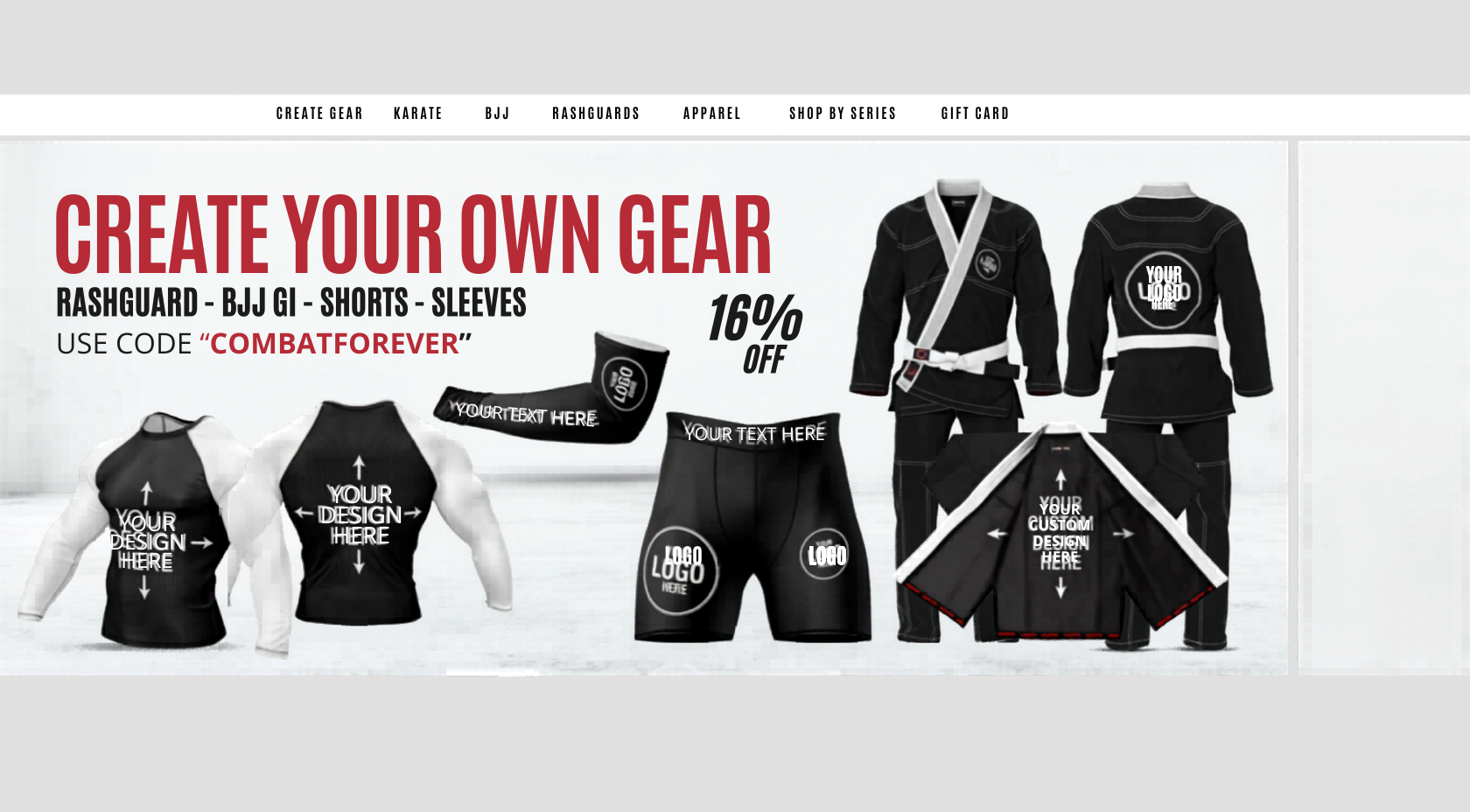
The fabric handles moisture efficiently, dries fast, and maintains its protective rating through repeated training sessions and washes. You can personalise your rashguard with your name, academy logo, or colour scheme, making it practical for both individual athletes and team orders. The custom white and orange BJJ rashguard and the custom black BJJ rashguard are built to the same UPF 50+ standard, giving you reliable UV protection without compromising on performance or fit. Browse the full rashguard range at Combatra to find the right option for your training environment.
FAQ
Does UPF 50 clothing really block UV rays?
Yes. UPF 50+ certified fabric blocks over 98% of UVA and UVB radiation, verified through laboratory spectrophotometer testing. The protection is consistent and does not require reapplication.
Is sunscreen or UPF clothing better for outdoor sport?
UPF 50+ clothing is more reliable for body coverage because it does not depend on correct application or reapplication. Sunscreen remains necessary for exposed areas like the face, neck, and hands that clothing cannot cover.
Can I wear UPF clothing instead of sunscreen?
UPF clothing replaces sunscreen on the areas it covers, but you still need sunscreen on uncovered skin. Dermatologists recommend using both together for comprehensive protection.
Does a regular T-shirt protect against UV rays?
A standard cotton T-shirt typically provides only UPF 5–10, which is far below the protection of certified UPF 50+ garments. That protection drops further when the fabric is wet or stretched.
How often should I reapply sunscreen during outdoor training?
Reapply broad-spectrum sunscreen every 90 minutes during active outdoor sessions. Sweating and physical contact degrade sunscreen faster than the standard two-hour guideline assumes.