


TL;DR:
- Academies switch to custom gear for better fit, improved performance, and stronger brand identity. Custom-fit apparel reduces complaints and injury risks, while a structured sourcing process ensures quality and timely delivery. Technical features like reinforced seams, stretch fabric, and UPF ratings are essential for durable martial arts apparel.
Custom gear is defined as sport-specific apparel built to an academy’s exact specifications, covering fit, fabric, colour, and branding. Rashguards sit at the centre of this shift. In Brazilian Jiu-Jitsu, MMA, and grappling, a rashguard delivers compression support, sweat management, and abrasion protection that generic training shirts simply cannot match. For Australian academies running outdoor sessions or summer programmes, UV exposure adds another layer of risk. Premium rashguards tested to AS 4399:2020 and rated UPF 50+ protect athletes during prolonged sun exposure, a standard that off-the-shelf options rarely meet. The reasons why more academies are switching to custom gear go beyond aesthetics. They connect directly to athlete performance, reduced injury risk, and the long-term professional identity of your academy.
Why more academies are switching to custom gear
The core reason academies make this switch is fit. Generic apparel is cut for average body proportions, not for the explosive, multi-directional movement patterns of martial arts. A rashguard that rides up during a guard pass or restricts shoulder rotation during a clinch is not just uncomfortable. It actively limits performance. Custom-fit sports gear improves performance by distributing pressure evenly, supporting body alignment, and reducing injury risk. That is a measurable outcome, not a marketing claim.
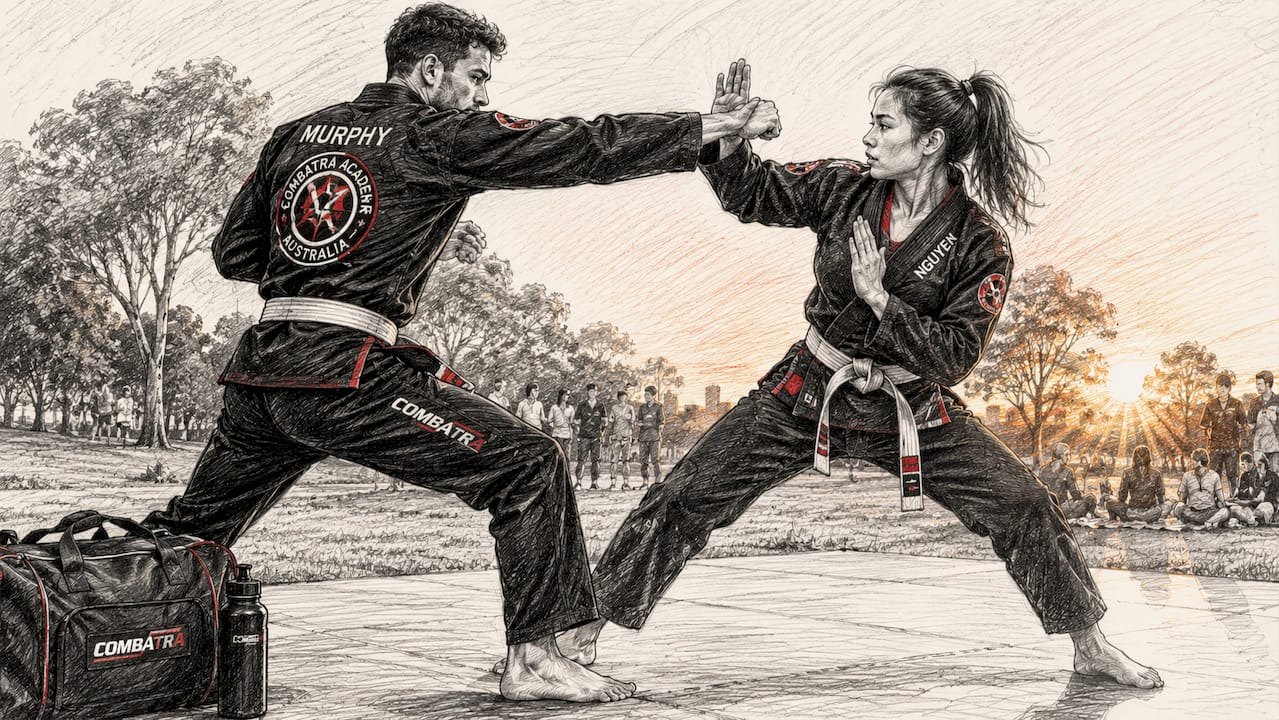
Academies also face a practical problem with generic uniforms. Athletes come in a wide range of body shapes, and standard sizing leaves many members poorly fitted. When gear fits poorly, complaints follow. Switching to a specialised manufacturing partner reduces fit-related complaints by 30–50% within the first year. That reduction translates directly into fewer returns, fewer disruptions, and more satisfied members.
The third driver is brand identity. Academies that invest in custom sports apparel signal professionalism to prospective students, visiting competitors, and potential sponsors. A cohesive uniform programme communicates that your academy takes its athletes seriously.
How does custom gear improve fit and reduce athlete complaints?
Fit is a technical problem, and it requires a technical solution. Martial arts movement patterns place specific demands on garment construction. A BJJ rashguard needs unrestricted shoulder rotation, a gusset at the crotch for high guard positions, and flatlock seams that do not abrade skin during ground work. Generic compression wear is not built with these requirements in mind.
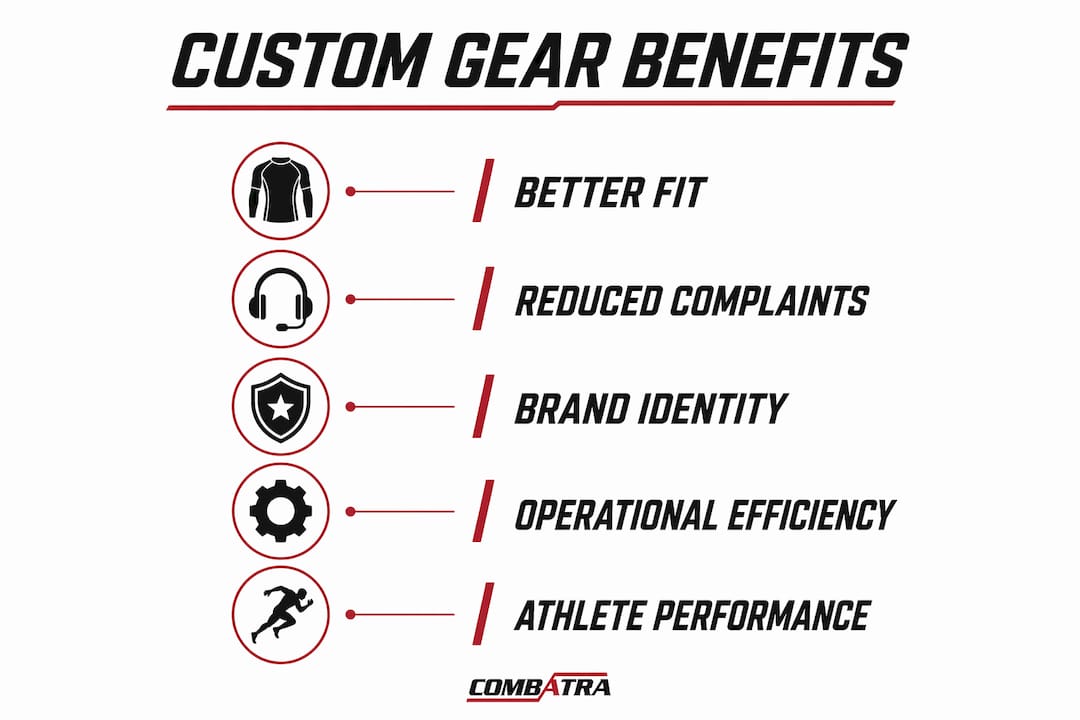
The most reliable way to achieve consistent fit across a diverse group of athletes is through physical fit samples. Fit samples during procurement are critical for reducing costly size mismatches and ensuring consistency across diverse athlete body shapes. Skipping this step is the single most common mistake academies make when ordering custom gear for the first time.
Key fit considerations for martial arts custom gear include:
- Shoulder and sleeve construction: must allow full overhead reach without the hem lifting.
- Torso length: longer cuts prevent exposure during high kicks and guard work.
- Seam placement: flatlock or bonded seams reduce abrasion on the neck, underarms, and inner thighs.
- Compression grade: graduated compression supports muscle recovery without restricting movement.
- Size range: custom sizing grids accommodate athletes outside standard retail size brackets.
Pro Tip: Request at least two rounds of fit samples before approving a production run. The first round identifies major construction issues. The second confirms corrections and gives you a reference garment for future reorders.
Why does brand consistency drive academies toward custom uniforms?
A uniform programme is a branding programme. Every time your athletes step onto the mat, compete at a tournament, or post training footage online, their gear represents your academy. Inconsistent colours, mismatched logos, or faded generic shirts undermine the professional image you have built.
Centralised uniform programmes improve brand scaling without losing consistency across multiple locations. This matters especially for academies with more than one training venue or those planning to expand. When every location wears the same cut, colour, and logo placement, the brand reads as unified and credible.
“Custom gear is a strategic asset that drives brand equity and professional pride. It attracts better students and sponsors, rather than simply being a cost line on a budget.” — Off the Shelf vs Bespoke Uniforms: The Ultimate Pros and Cons Guide for 2026
The specific tools of brand consistency in custom apparel include:
- Logo placement: chest, sleeve, and back positions standardised across all garments.
- Colour matching: Pantone or fabric swatch references prevent colour drift between production runs.
- Embroidery vs sublimation: embroidery suits gi jackets and karate uniforms; sublimation suits rashguards and compression wear.
- Pattern ownership: owning your garment pattern means you are not dependent on a supplier’s stock line being continued.
Pattern ownership and consistent supplier relationships prevent the disruption that comes when an off-the-shelf line is discontinued. Academies that own their patterns maintain a stable uniform identity over time, regardless of what happens in the broader market.
Custom uniforms also attract students. A prospective member walking into an academy where everyone wears matching, well-fitted gear reads that environment as serious and professional. That first impression has real commercial value.
What are the sourcing timelines for custom academy gear?
Planning is the part most academies underestimate. Off-the-shelf gear can be sourced within 5–7 working days, but it offers no custom benefits. Bespoke custom orders require significantly longer lead times and structured project management.
A practical sourcing timeline for a first custom order looks like this:
- Brief and specification: Define fabrics, colours, logo files, size range, and quantities. Allow 1–2 weeks.
- Supplier selection and quote: Evaluate manufacturing partners on sport expertise, not just price. Allow 2–3 weeks.
- First fit sample: Production and shipping of physical samples for review. Allow 3–5 weeks.
- Sample review and corrections: Fit testing across athlete body types, feedback to supplier. Allow 1–2 weeks.
- Second fit sample (if required): Confirm corrections before approving production. Allow 2–3 weeks.
- Production run: Full order manufactured to approved specification. Allow 6–10 weeks.
- Shipping and delivery: International freight from manufacturing hubs. Allow 2–4 weeks.
Pro Tip: Start your first custom order at least five months before the date you need gear on the mat. Rushing the sample approval stage is where quality problems begin.
For academies that need gear faster, a hybrid model offers a practical middle ground. Hybrid uniform models combine stock-supported garments with custom branding to balance lead times and brand identity. You source a quality stock base garment and apply your logo, colours, and name through sublimation or embroidery. The result is faster than full bespoke and still delivers a professional, branded look.
| Approach | Lead time | Custom benefit | Best for |
|---|---|---|---|
| Off-the-shelf | 5–7 days | None | Urgent replacement orders |
| Hybrid (stock + branding) | 3–6 weeks | Moderate | Academies starting out |
| Full bespoke custom | 16–26 weeks | Maximum | Established academies scaling |
What technical features matter most in martial arts apparel?
Technical construction separates quality custom gear from branded generic wear. Reinforced seams and sport-specific pattern design drastically improve durability and comfort in high-movement sports. For martial arts, this means garments built to survive repeated washing, ground friction, and the mechanical stress of grappling.
The features that matter most in martial arts custom apparel are:
- Reinforced stress points: double-stitched or bonded seams at the shoulders, crotch, and underarms resist tearing during takedowns and guard passes.
- Four-way stretch fabric: allows full range of motion in all directions without the garment pulling or twisting.
- Moisture-wicking construction: moves sweat away from the skin to reduce chafing and maintain comfort during long training sessions.
- UPF 50+ rated fabric: blocks more than 98% of UV radiation, which is critical for outdoor training in Australia where UV levels regularly reach extreme ratings.
- Sublimation printing: dye is bonded into the fabric rather than sitting on top, so logos and colours do not crack, peel, or fade after washing.
Choosing a manufacturing partner with genuine sport expertise matters as much as the fabric specification itself. A supplier who understands BJJ movement patterns will build a different garment to one who simply applies your logo to a generic compression shirt. Ask potential partners for sport-specific references and request samples from their existing martial arts clients before committing.
The benefits of custom-fit sports gear extend beyond comfort. Even pressure distribution reduces localised fatigue, and proper body alignment support lowers the cumulative injury risk that comes from training in poorly fitted apparel over months and years.
Key takeaways
Custom gear delivers measurable performance, branding, and operational benefits that generic apparel cannot replicate, making it a long-term asset for any serious martial arts academy.
| Point | Details |
|---|---|
| Fit reduces complaints | Switching to specialised manufacturing cuts fit-related complaints by 30–50% in the first year. |
| Samples prevent costly errors | Physical fit samples are non-negotiable for consistent sizing across diverse athlete body types. |
| Brand consistency scales | Centralised uniform programmes maintain logo, colour, and cut standards across multiple locations. |
| Plan for long lead times | Full bespoke custom orders require 16–26 weeks from brief to delivery; start planning early. |
| Technical construction matters | Reinforced seams, four-way stretch, and UPF 50+ fabric define quality martial arts custom gear. |
The case for treating custom gear as a project, not a purchase
I have seen academies approach custom gear the same way they order training equipment: pick a product, pay, wait for delivery. That approach works for resistance bands. It does not work for custom apparel, and the academies that learn this the hard way usually do so with a warehouse full of rashguards that do not fit half their members.
The mindset shift that makes custom gear work is treating it as a procurement project. That means a written brief, a supplier evaluation process, fit sample rounds, and a delivery timeline built backwards from your target date. It sounds like more work than it is. Once you have done it once and own your pattern, reorders are straightforward.
The other mistake I see regularly is choosing a supplier on price alone. A manufacturer who does not understand grappling movement patterns will produce a garment that looks right in photos and fails on the mat within three months. Ask for sport-specific references. If a supplier cannot show you existing martial arts clients, keep looking.
The long-term payoff is real. Custom sports gear procurement is best viewed as a branding investment, not an overhead cost. Academies that commit to a consistent uniform programme attract more serious students, present better at competitions, and build a visual identity that generic gear can never deliver. The upfront planning is the price of that outcome. It is worth paying.
— McGinnis
Combatra’s custom gear for martial arts academies
Combatra builds performance apparel specifically for BJJ, Karate, and MMA training, with full customisation options for academy branding.
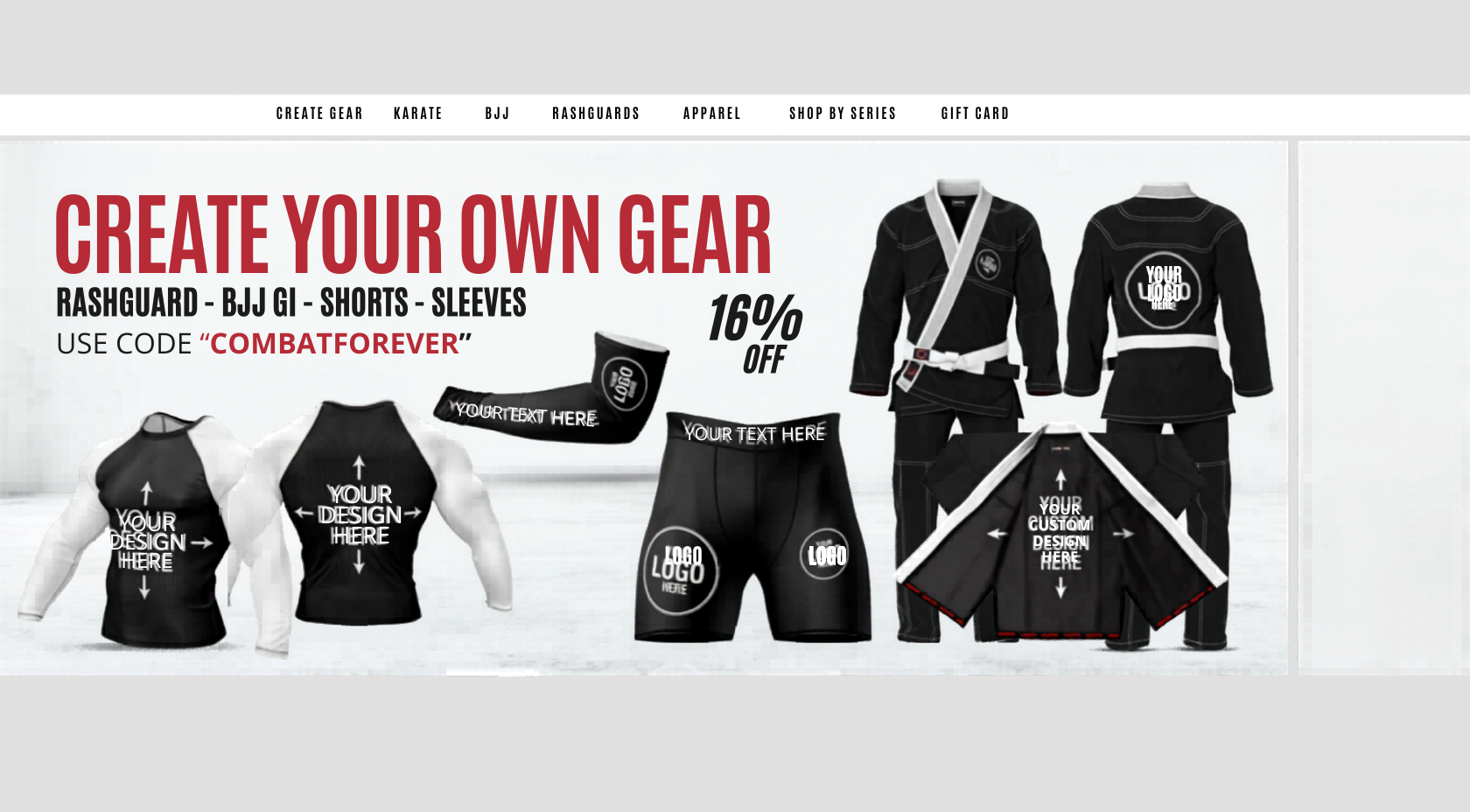
The range includes custom BJJ rashguards rated UPF 50+, built with four-way stretch fabric and sublimation printing that holds colour through heavy training use. For academies running karate programmes, Combatra’s custom karate uniforms are available in multiple weights and colours with logo personalisation. The personalised BJJ gi sets combine a custom gi jacket with a matching shirt, giving academies a complete branded kit. Every product is designed for the specific movement demands of combat sports, not adapted from generic athletic wear. Visit the Combatra product pages for full specifications and ordering details.
FAQ
Why are academies switching to custom gear?
Academies switch to custom gear because it reduces fit-related complaints, strengthens brand identity, and delivers sport-specific technical construction that generic apparel cannot provide. Custom-fit gear also improves athlete performance by supporting body alignment and reducing injury risk.
How long does a custom gear order take?
Off-the-shelf gear ships within 5–7 working days, but full bespoke custom orders typically require 16–26 weeks from brief to delivery. Plan at least five months ahead for your first custom order to allow time for fit samples and corrections.
What is a hybrid uniform model?
A hybrid model combines a quality stock base garment with custom branding applied through sublimation or embroidery. It delivers a professional branded look in 3–6 weeks, making it a practical option for academies starting out with custom gear.
Why are fit samples important for academy gear?
Fit samples identify construction issues before a full production run is committed. Skipping this step leads to costly size mismatches and inventory that does not fit the diversity of athlete body shapes across your membership.
What technical features should custom martial arts gear include?
Quality custom martial arts gear requires reinforced stress-point seams, four-way stretch fabric, moisture-wicking construction, and UPF 50+ rated material for outdoor training. Sublimation printing keeps logos and colours intact through repeated washing and ground friction.