


Understanding BJJ apparel vocabulary can make gear selection easier for beginners. This guide explains common terms across gi and no-gi styles, protective equipment and maintenance.
Table of Contents
- Introduction To BJJ Apparel Terminology
- Understanding The BJJ Gi: The Cornerstone Of BJJ Apparel
- Essential BJJ Apparel Terms And Their Functions
- Comparing Gi Vs. No-Gi Apparel: Terms And Implications
- Choosing And Fitting Your First BJJ Gi
- Safety And Protective Gear Terms Every Beginner Should Know
- Maintaining And Caring For BJJ Apparel
- Common Misconceptions About BJJ Apparel
- Get The Right BJJ Gear At Combatra
- Common Questions About BJJ Apparel For Beginners
Key Takeaways
| Point | Details |
|---|---|
| Core apparel terms | Gi, rashguard, belt, and spats form the foundation of BJJ vocabulary for both training styles. |
| Safety impact | Mouthguards are protective equipment; choose a suitable fit and follow advice from a qualified dental professional. |
| Fit matters | Use the exact size chart, check movement and review current event requirements if competing. |
| Care matters | Follow the exact garment’s washing and drying instructions, and inspect its condition over time. |
Introduction to BJJ Apparel Terminology
You walk into your first BJJ class and hear someone mention their pearl weave gi needs airing out after rolling in their spats. What?
The specialized language around BJJ clothing creates an invisible barrier for newcomers. Terms like weave types, GSM ratings, and IBJJF compliance sound like secret codes. This vocabulary gap affects more than conversation. It impacts your ability to choose safe, appropriate gear for training and competition.
BJJ has two main training styles that require different apparel. Gi training involves the traditional uniform that allows gripping techniques. No-gi focuses on body control using tight-fitting athletic wear. Each style demands specific terminology knowledge.
Key apparel categories include:
- Training uniforms (gi jacket, pants, belt for traditional training)
- Performance wear (rashguards, grappling shorts, spats for no-gi)
- Protective equipment (mouthguards, ear guards, finger tape)
- Hygiene essentials (clean training clothing and care instructions)
Knowing these terms can make it easier to compare listings and explain your needs to an instructor. Check the exact product specifications and your academy’s requirements before buying.
Understanding the BJJ Gi: The Cornerstone of BJJ Apparel
The gi serves as BJJ’s foundational uniform. This traditional outfit consists of a jacket, pants, and belt made from thick cotton canvas with reinforced stitching designed to survive constant pulling, twisting, and friction.
Three main components form every gi. The jacket (kimono) features a thick collar that opponents grip during techniques. The pants use a drawstring waist and reinforced knees. The belt wraps around your waist twice and indicates your rank through color.
GSM means grams per square metre and describes fabric weight. Compare the GSM of the jacket or pants alongside weave, fit and care guidance; fabric weight alone is not a quality or lifespan rating.
Weave types determine how the fabric feels and performs:
- Single weave creates lightweight, breathable gis perfect for beginners and warm climates
- Pearl weave balances weight and durability with its signature bumpy texture
- Gold weave is another fabric construction; compare the exact product’s weight, finish and care requirements.
- Ripstop weave resists tears through a grid pattern reinforcement
Pro Tip: Choose your first gi using the manufacturer’s chart and stated shrinkage guidance. Everyday clothing sizes do not directly translate to gi sizes.
Check stitching at areas that receive frequent pulling, such as collars, armpits and knee panels. Reinforcement and construction vary; inspect the exact garment instead of assuming a fixed number of training sessions.
The fit of a BJJ gi matters for movement and comfort. Competition requirements are separate: check the current organiser’s measurements and inspection process.
Many practitioners eventually explore custom gi options that reflect personal style while maintaining performance standards. Customization ranges from embroidered patches to completely unique color schemes.
Essential BJJ Apparel Terms and Their Functions
Beyond the gi, several specialized items complete your training wardrobe. Each piece serves specific protective or performance functions.
Rashguards are close-fitting tops worn for no-gi training or, where academy rules allow, under a gi. Compare each garment’s fit, coverage and care instructions.
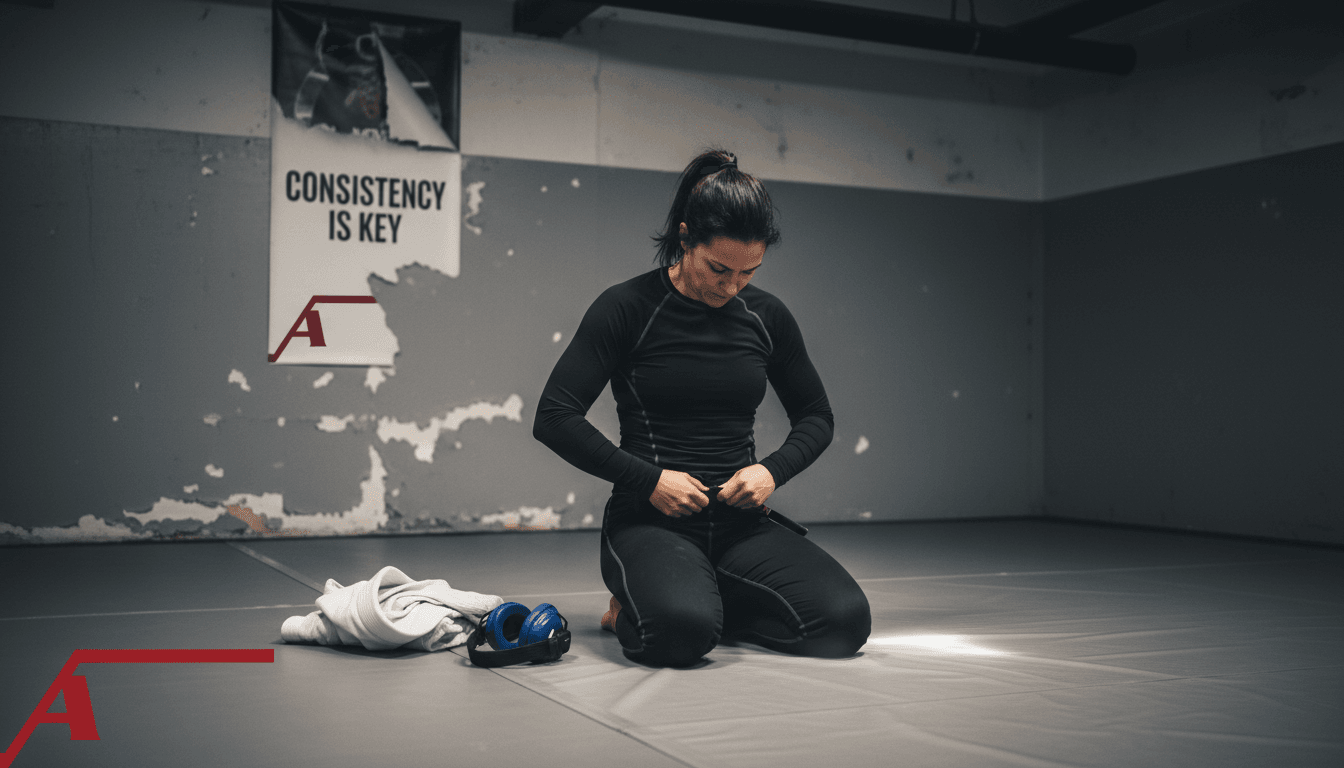
A close fit can keep the garment in place during movement. Check the exact fabric, coverage and care instructions. A tight weave or advertised treatment should not be treated as a barrier against infection.
Selecting a rashguard involves sleeve coverage, fit and the exact fabric specification. Read why athletes wear rashguards and the rashguard buying considerations, then check the product listing and your training requirements.
Belts represent more than decoration. The colored fabric indicates your skill level and time invested. White belts start the journey while black belts demonstrate mastery earned through years of dedication. Your belt must be tied correctly and worn at all times during gi training.
Grappling shorts are designed for training movement. Check the waistband, seams and any pockets or hard fasteners, and follow your academy’s clothing requirements.
Protective gear includes several essential items:
- Mouthguards are protective equipment; choose an appropriate fit and follow advice from a qualified dental professional.
- Ear guards are protective headgear; ask about suitable fit, use and any event restrictions.
- Finger tape supports joints stressed by constant gripping
- Knee pads cushion impact during takedowns and guard work
Pro Tip: Check your academy’s policy on rashguards under a gi. Choose a comfortable fit and keep all training clothing clean.
Comparing Gi vs. No-Gi Apparel: Terms and Implications
Understanding the fundamental differences between gi and no-gi apparel helps you prepare for both training styles.
A gi is a jacket-and-pants uniform used in grip-based training. Check the material, jacket and pants weights, and reinforcement details on the exact listing rather than assuming all gis share one specification.
No-gi clothing prioritizes mobility through lightweight synthetics. Spandex and nylon blends create second-skin fits that eliminate grip points. The stretchy material moves with your body during dynamic transitions and scrambles. You control opponents through body positioning rather than fabric manipulation.
For no-gi clothing, inspect pockets, exposed drawstrings and hard fasteners. Follow your academy’s requirements and, for an IBJJF event, consult the current official uniform requirements for your division.
| Feature | Gi Apparel | No-Gi Apparel |
|---|---|---|
| Material | Check the jacket and pants specifications | Check the exact rashguard, shorts or spats specification |
| Fit Style | Loose with reinforced stress points | Compression fit, second-skin tight |
| Grip Strategy | Uniform gripping allowed and expected | Body control only, no fabric gripping |
| Competition requirements | Check current rules and garment measurements | Check current rules for the garment and division |
Wash and fully dry both gi and no-gi clothing after use, following the garment label and your gym’s hygiene guidance. Neither fabric type removes the need for proper care.
Replacement needs depend on use, fit, construction and care. Inspect gi and no-gi clothing for damage and fit changes rather than assuming either type always lasts longer.
For comfort, consider clothing weight, coverage, fit and the training environment. Follow academy and event requirements when choosing between gi and no-gi gear.
Choosing and Fitting Your First BJJ Gi
Your first gi purchase sets the foundation for training comfort and performance. Several factors determine the right choice.
Use your height, weight and the exact size chart to shortlist a gi. Check movement, jacket overlap and sleeve and pant length when trying it on; competition inspection is a separate check.
Before an IBJJF event, use the current official uniform requirements and rule book for your division. Measure the actual garment rather than relying on a generic sizing rule, and confirm uncertainty with the organiser.
Weave selection impacts your training experience:
- Single weave suits beginners in warm climates who prioritize comfort
- Pearl weave offers the best all-around balance for regular training
- For frequent training, compare the exact weave, weight, construction and care requirements.
- For ripstop options, compare the fabric specification and fit rather than inferring quality from the weave name or price.
Set a budget after comparing current prices, fit, construction, delivery and extra customisation charges. A higher price does not guarantee suitability, and a low price alone does not establish how long a gi will last.
Choosing your first gi requires understanding why the gi matters for your BJJ development. Quality construction supports technique refinement while poor gear creates distractions.
Pro Tip: Always verify size charts or try on gis before purchasing since sizing varies dramatically between brands and countries, preventing expensive returns and frustrating delays.
Safety and Protective Gear Terms Every Beginner Should Know
Protective gear has different intended uses and fit requirements. Ask your instructor or an appropriate health professional which equipment is suitable for you.
Mouthguards are protective equipment. The American Dental Association recommends a properly fitted mouthguard to help reduce sports-related dental injuries. Ask a qualified dental professional about a suitable fit; mouthguards do not replace safe training practices.
Ear guards are protective headgear. Ask your instructor or an appropriate health professional about fit and use, and check whether the organiser permits them for competition.
Finger tape is used by some grapplers. Ask an appropriate health professional about taping for your individual needs; do not assume that a particular tape or wrapping method is suitable for every injury.
Knee pads provide padding, while sleeves and supports differ in design and fit. Check the intended use and ask for individual advice if you have pain or an injury.
Clean mouthguards, ear guards and other protective equipment according to the manufacturer’s instructions. Let equipment dry as directed and inspect it for damage before reuse.
Safety note: Mouthguards are protective equipment. Select an appropriate fit and follow advice from a qualified dental professional.
Maintaining and Caring for BJJ Apparel
Proper maintenance extends gear life while protecting your health. Learning care terminology prevents expensive mistakes.
Follow the gi’s care label for washing and drying temperatures. Different fabrics and finishes need different care; avoid assuming one routine is suitable for every garment.
Wash and fully dry training gear after use, following the garment label and your facility’s hygiene guidance. Do not leave damp clothing in a closed gym bag.
Build a care routine around the exact garment label:
- Wash after use using the temperature and detergent allowed by the garment label.
- Turn the gi inside out to protect exterior patches and embroidery
- Use a gentle cycle to reduce fabric stress and preserve stitching
- Check the label before adding stain, odour or other laundry treatments.
- Use the drying method stated on the garment label and let the item dry fully.
- Store completely dry gear in breathable bags, never sealed containers
Wash training clothing after use and let it dry fully before storage, following its care label. Check the label before using any stain, odour or laundry treatment.
Storage location affects gear longevity. Well-ventilated areas allow residual moisture to evaporate. Dark, humid spaces breed mildew that permanently stains fabric and creates musty odors. Hanging gis on wide hangers maintains shape better than folding.
Pro Tip: Follow the garment label’s restrictions on bleach, fabric softeners and other laundry products. Do not assume a fixed percentage of fabric damage applies to every garment.
Common Misconceptions About BJJ Apparel
Several persistent myths mislead beginners about gear choices and priorities.
When comparing value, look at fit, construction, care requirements and current price. Keep enough suitable gear for your training schedule, but do not infer a fixed lifespan from a price category.
Whether to wear a rashguard under a gi is a personal and academy-policy choice. Keep gear clean, follow gym hygiene guidance and seek medical advice for symptoms or open wounds.
New practitioners should ask their instructor about suitable protective equipment and safe training practices. Equipment choices do not replace appropriate coaching or medical advice.
Expensive gear does not guarantee a better fit or faster technical progress. Compare the actual garment’s construction and suitability for your training rather than using price or brand prestige as a performance rating.
Choose a colour that meets your academy’s policy and, if competing, the event’s current rules. Check those requirements before ordering non-standard colours or custom artwork.
Get the Right BJJ Gear at Combatra
Now that you understand essential BJJ apparel terms, finding quality gear becomes straightforward.
Compare Combatra gi listings for the exact size, fabric, construction and care details. A product listing or custom design does not automatically establish acceptance by every competition organiser.
Customization options let you express personal style without sacrificing functionality. Add custom embroidery, select unique color combinations, or design completely personalized uniforms. Your gear should reflect your personality while maintaining the technical specifications required for performance.
Explore the custom plain black BJJ gi and check its current specifications and size chart. For replacement pants, browse the black BJJ gi pants. Confirm competition requirements separately before ordering.
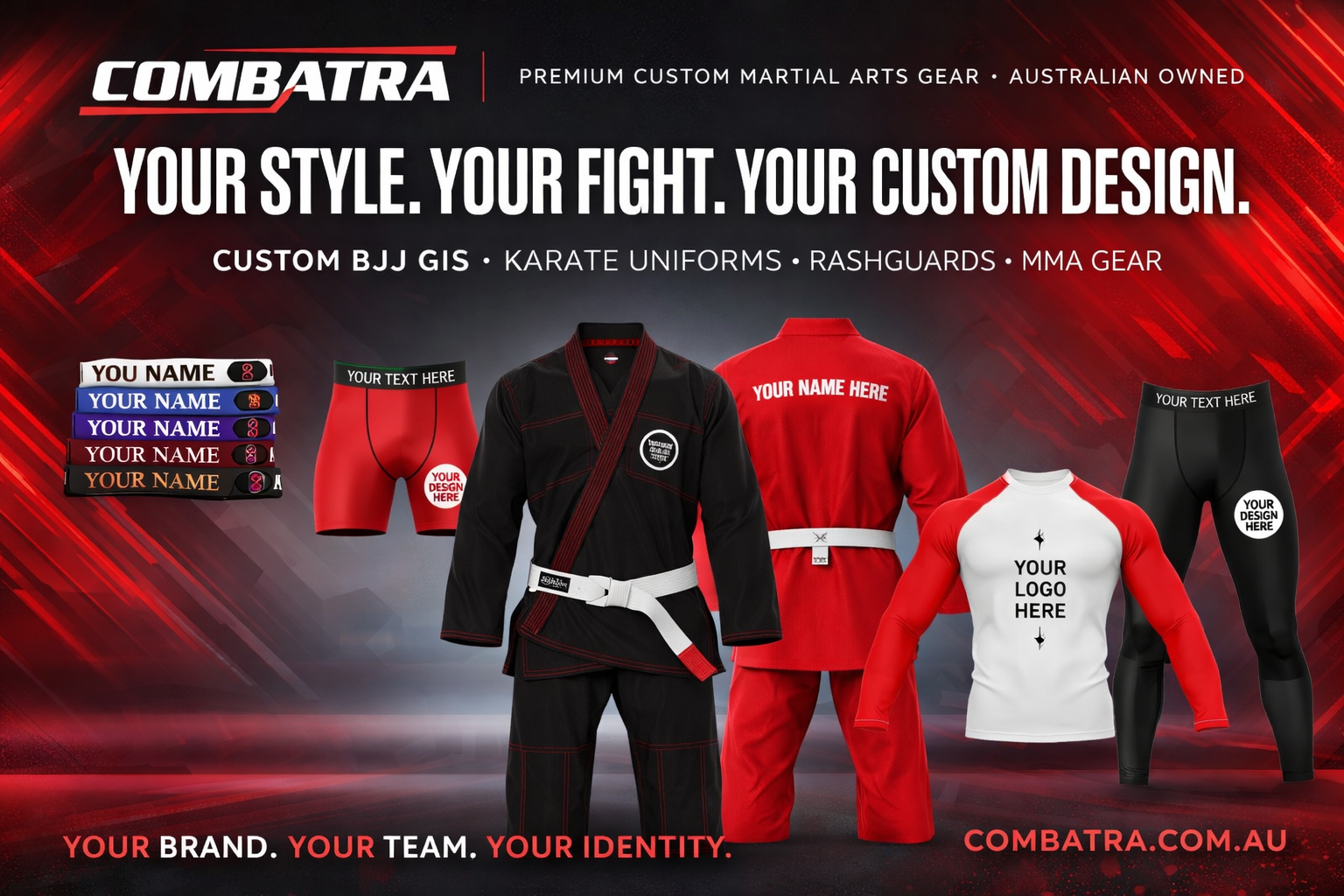
Check each Combatra rashguard or compression garment’s current listing for its fabric, fit, coverage and care details. Choose the exact item for your intended training use.
Common Questions About BJJ Apparel for Beginners
What size gi should a beginner choose for first purchase?
Measure your height and weight, then use the exact product’s size chart and shrinkage guidance. If you are between sizes, ask for help before ordering rather than automatically choosing one size larger.
Are rashguards necessary under the gi for training?
Rashguards are an additional clothing layer. Follow facility hygiene guidance, wash gear according to care instructions, and seek medical advice for symptoms or open wounds.
Is a mouthguard really important for beginners in BJJ?
Mouthguards are commonly used protective equipment. Choose an appropriate fit and follow advice from a qualified dental professional.
How often should I wash my gi to keep it clean?
Wash your gi after each training session and dry it completely, following the garment’s care instructions. Seek medical advice if you have symptoms of a skin infection.
Can I use regular shorts for no-gi training instead of grappling shorts?
Check whether the shorts have suitable fit and freedom of movement, and inspect pockets, exposed drawstrings and hard fasteners. Follow your academy’s rules and current event requirements.