


TL;DR:
- A custom BJJ Gi is tailored to an athlete’s measurements and branding needs, offering a better fit and full personalization. Stock Gis are more affordable and available immediately but often have sizing limitations and limited design options. For frequent practitioners and teams, investing in a custom Gi provides enhanced comfort, durability, and team cohesion, while beginners and casual players benefit from the practicality of stock Gis.
A custom BJJ Gi is an individually tailored uniform designed to match your exact measurements, branding preferences, and academy identity. A stock Gi, by contrast, is mass-produced to standard size charts and sold off the shelf. Understanding the custom BJJ Gi vs stock Gi difference is the first step toward making a confident purchase decision, whether you train recreationally or compete under IBJJF rules. For Australian practitioners and coaches weighing up fit, cost, lead time, and team branding, the choice between these two options carries real consequences on the mat and on the podium.
What are the key differences in fit and sizing between custom and stock BJJ Gis?
Fit is the single most important factor in Gi performance, and this is where custom and stock options diverge most sharply. Custom Gi sizing eliminates the limitations of generic size charts by matching sleeve length, pant inseam, and jacket cut to your actual body measurements. That precision reduces the grip-catching excess fabric that opponents exploit during competition.
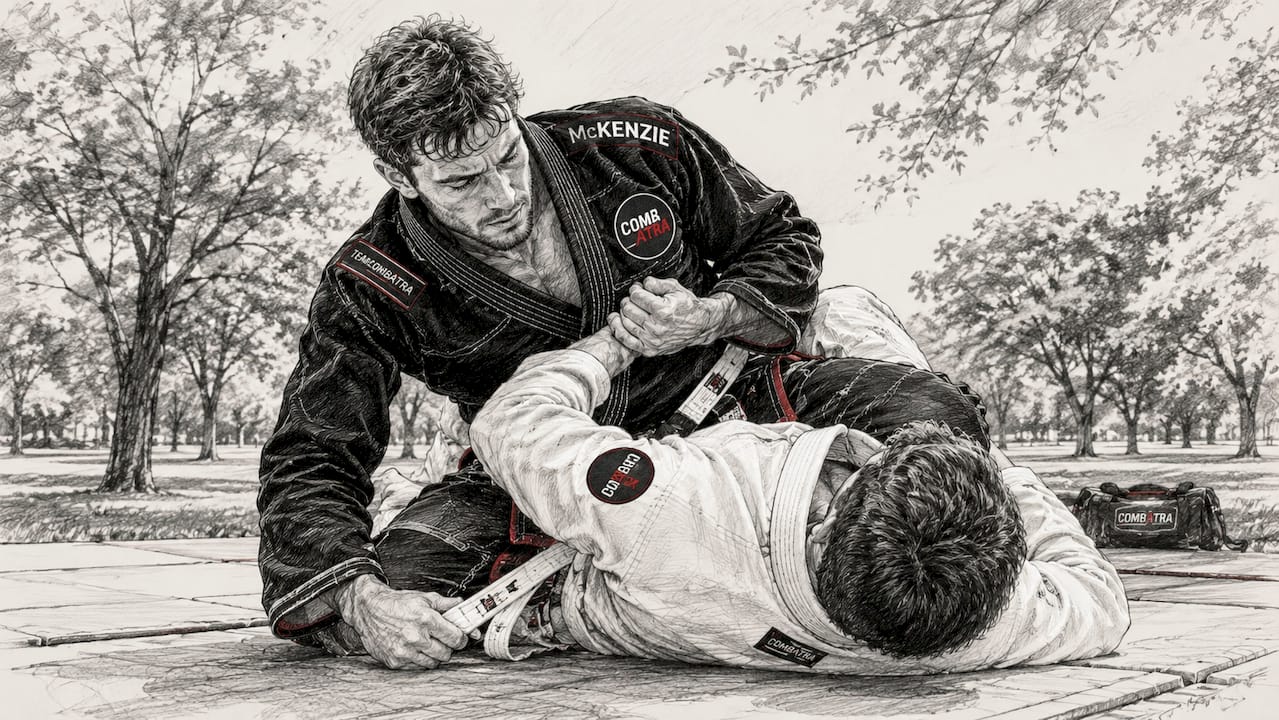
Stock Gis follow standard sizing categories, typically A0 through A5, with some brands adding half sizes. For practitioners with proportions that fall between sizes, this creates a genuine problem. A jacket that fits your shoulders may be too long in the sleeves, or trousers that suit your waist may be too short in the leg. These fit issues affect mobility, comfort, and how the Gi holds up under repeated stress.
The performance gap between a well-fitted Gi and a poorly fitted one is not cosmetic. Excess fabric bunches during guard passing and creates unnecessary friction. A Gi that is too tight restricts hip movement and tears faster at stress points. Fit and comfort in BJJ Gis directly affect how long you can train and how well you move.
Key sizing considerations when comparing your options:
- Custom Gis are made to your measurements, so sleeve and pant length match your proportions exactly.
- Stock Gis require you to select the closest standard size, which may not suit taller, shorter, or broader builds.
- Shrinkage affects both types after washing, but custom orders can account for this during production.
- Australian athletes with non-standard proportions often find imported stock Gis particularly problematic due to sizing calibrated for different body types.
- Lead time for custom orders averages 4–12 weeks in Australia, so planning ahead is non-negotiable.
Pro Tip: Before ordering a stock Gi, measure your height, weight, arm length, and inseam, then cross-reference against the brand’s specific size chart rather than relying on your usual clothing size. Brands vary significantly.
How do custom and stock BJJ Gis differ in branding and personalisation?
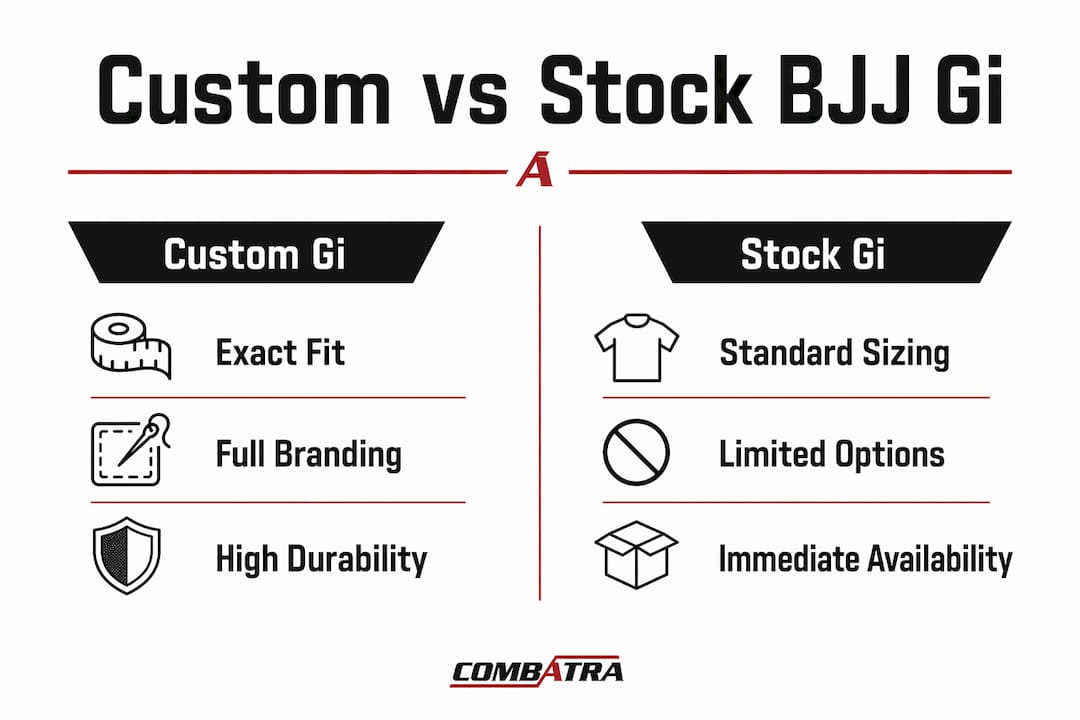
Custom Gis enable full personal branding, including embroidered names, academy logos, patch placement, and colour schemes that reflect your gym’s identity. Stock Gis offer limited design variation, typically a choice of white, blue, or black with the manufacturer’s own branding already applied.
For academy coaches ordering team uniforms, this distinction matters enormously. A cohesive team appearance on the competition floor signals professionalism and builds athlete confidence. Brand prestige and exclusive design contribute meaningfully to how athletes carry themselves in competitive environments, a principle that applies equally to martial arts uniforms as it does to any performance context.
Personalisation options available through custom Gi orders include:
- Embroidered or printed academy logos on the back, chest, or lapel.
- Athlete names stitched onto the jacket or trousers.
- Custom colour blocking across panels, collar, and cuffs.
- Patch placement designed to comply with IBJJF patch rules.
- Belt loop and trouser stripe customisation to match academy colours.
Stock Gis offer none of these options at the point of purchase. Some practitioners add patches after buying, but embroidery and colour customisation require a custom order from the outset.
What are the cost and value trade-offs for Australian BJJ practitioners?
Cost is where stock Gis hold their clearest advantage. Stock Gis are typically sold under AU$150 and are immediately available, making them the practical choice for beginners or practitioners who need a replacement quickly. Custom Gis carry higher upfront costs due to production complexity and smaller batch sizes.
Quality Gis in the Australian market range from AU$120 to AU$250, with premium and custom options sitting at the upper end of that range or beyond. Shipping and production location also affect final price for imported custom orders, and sizing errors on imported Gis can mean costly returns or alterations.
Durability is the factor that shifts the long-term value calculation. Premium BJJ Gis use fabrics rated 450–550+ GSM with triple stitching at stress points. That construction standard extends the Gi’s usable life significantly compared to budget stock options. A practitioner training four or five times per week will replace a budget Gi far sooner than a well-constructed custom or premium option.
| Feature | Custom Gi | Stock Gi |
|---|---|---|
| Upfront cost | Higher (AU$200+) | Lower (under AU$150) |
| Availability | 4–12 weeks lead time | Immediate |
| Fit accuracy | Made-to-measure | Standard size chart |
| Branding options | Full customisation | Manufacturer branding only |
| Fabric quality | Typically 450–550+ GSM | Varies widely |
| Long-term value | Higher for frequent trainers | Better for beginners or casual use |
Much of the premium pricing on high-end Gis reflects brand prestige and design exclusivity rather than construction alone. That does not mean premium Gis are overpriced, but it does mean you should evaluate what you are actually paying for before committing.
When does a stock Gi still make sense?
Stock Gis remain the right choice in several common situations, and experienced coaches know this. Not every practitioner needs a custom uniform, and pushing a beginner toward a high-cost custom order before they commit to the sport is poor advice.
Scenarios where a stock Gi is the better decision:
- Beginners who are still deciding whether BJJ suits them benefit from a lower-cost entry point.
- Practitioners who train casually once or twice per week do not put enough wear on a Gi to justify the custom premium.
- Academies with tight budgets can outfit a full team with stock Gis at a fraction of the custom cost.
- Athletes who need an immediate replacement cannot wait 4–12 weeks for a custom order.
- Practitioners who train in multiple disciplines and need several Gis may prioritise quantity over customisation.
Stock Gis also suit situations where return and exchange policies matter. If sizing is uncertain, buying from a retailer with a clear returns policy reduces financial risk. Custom Gis are typically non-returnable once production begins, so confidence in your measurements is essential before placing an order.
What should Australian practitioners know about ordering a custom Gi?
Ordering a custom Gi requires more planning than buying off the shelf, and the process rewards practitioners who prepare carefully. The ordering timeline, fitting process, and aftercare all affect whether your investment delivers its full value.
Follow these steps to manage a custom Gi order effectively:
- Measure accurately. Take measurements for chest, height, arm length, and inseam. If possible, have a training partner assist for accuracy.
- Confirm IBJJF compliance. IBJJF regulations require Gi colours to be white, royal blue, or black, with sleeve openings of at least 7 cm and lapel thickness no greater than 1.3 cm. Confirm your custom design meets these standards before production begins.
- Allow for lead time. Custom orders in Australia average 4–12 weeks. Order well before your competition calendar or the start of a new training season.
- Clarify alteration and exchange policies. Ask your supplier what happens if measurements are slightly off. Some suppliers offer one free alteration; others do not.
- Follow care instructions from day one. Proper washing and drying preserve both the fabric and any embroidery or printed branding. Cold wash, no bleach, and air drying extend the life of a custom Gi considerably.
Pro Tip: Order your custom Gi at least eight weeks before your first competition of the season. Production delays happen, and having buffer time means you can train in your new Gi before you compete in it.
Key takeaways
A custom BJJ Gi delivers superior fit, full branding control, and long-term durability, making it the right choice for serious practitioners and academy teams, while stock Gis remain practical for beginners, casual training, and budget-conscious buyers.
| Point | Details |
|---|---|
| Fit determines performance | Custom Gis match your exact measurements; stock Gis rely on standard charts that may not suit your proportions. |
| Branding requires custom | Full logo, name, and colour customisation is only available through a custom Gi order. |
| Cost favours stock short-term | Stock Gis cost under AU$150 and are immediately available; custom Gis cost more and take 4–12 weeks. |
| Durability favours custom long-term | Premium fabrics at 450–550+ GSM and triple stitching make custom Gis last longer for frequent trainers. |
| IBJJF compliance applies to both | Any Gi used in competition must meet IBJJF colour and construction standards regardless of whether it is custom or stock. |
My honest take on the custom vs stock decision
I have seen coaches make both mistakes: pushing beginners into expensive custom orders before they are ready, and keeping experienced competitors in ill-fitting stock Gis long after they should have upgraded. The right answer depends on where you are in your BJJ journey and what you actually need from your uniform.
For individual practitioners training three or more times per week, a custom Gi pays for itself within a year. The fit improvement alone changes how you move and how your training partners grip you. That is not a small thing when you are drilling the same technique two hundred times a week.
For academy coaches, the branding argument is even stronger. A team that looks unified trains with a different energy. I have watched academies transform their competition culture simply by investing in consistent, well-designed team uniforms. The psychological effect is real, and it costs less than most coaches assume when you order in volume.
The one area where I push back on conventional wisdom is durability claims. Not every expensive Gi outperforms a mid-range stock option. Much of the premium pricing reflects brand prestige and design complexity rather than construction quality alone. Focus on GSM rating and stitching standards rather than brand name when evaluating any Gi, custom or stock.
For a deeper look at how to select the right BJJ Gi for your training goals in 2026, the full guide covers fabric, weave, and competition requirements in detail.
— McGinnis
Combatra’s custom BJJ Gi option for Australian athletes
Combatra builds custom BJJ Gis for individual practitioners and academy teams across Australia, combining quality fabrics with full personalisation from logo placement to colour selection.
The Design Your Own BJJ Gi platform lets you configure your uniform with your academy’s branding, choose your sizing, and confirm IBJJF-compliant specifications before production begins. Combatra’s Gis are built for the demands of regular training, with construction standards that hold up through hundreds of washes and hard rolling sessions. Whether you are outfitting a full team or ordering a single competition Gi, the process is straightforward and the result is a uniform that fits and represents you properly on the mat.
FAQ
What is the main difference between a custom and stock BJJ Gi?
A custom BJJ Gi is made to your exact measurements and branding specifications, while a stock Gi is mass-produced in standard sizes. Custom Gis offer better fit and full personalisation; stock Gis offer lower cost and immediate availability.
Are custom BJJ Gis IBJJF legal for competition in Australia?
Yes, provided the design meets IBJJF standards. Allowed colours are white, royal blue, and black, with sleeve openings of at least 7 cm and lapel thickness no greater than 1.3 cm. Confirm compliance with your supplier before placing a custom order.
How long does a custom BJJ Gi order take in Australia?
Custom Gi orders in Australia typically take 4–12 weeks from order to delivery, depending on the supplier and production batch size. Order well ahead of your competition season to allow time for any adjustments.
Is a custom Gi worth the extra cost for a beginner?
For beginners, a stock Gi is the more practical starting point. The lower cost and immediate availability suit practitioners who are still building their training commitment. A custom Gi becomes worthwhile once you train consistently and understand your sizing and style preferences.
How do I care for a custom BJJ Gi to preserve the branding?
Wash your Gi in cold water without bleach and air dry rather than tumble drying. Following the manufacturer’s care instructions preserves both the fabric integrity and any embroidery or printed logos, extending the life of your investment.