


You step onto the mat for no-gi Brazilian Jiu-Jitsu training, and the question hits you: should I wear a rashguard or go without? Many practitioners wonder if training without this protective layer compromises their safety, hygiene, or comfort during intense rolling sessions. The answer involves understanding skin protection, infection risks, and practical training considerations. This article examines the real risks of training no-gi without rashguards, explores when it might be acceptable, and provides actionable strategies to keep you safe and comfortable on the mats regardless of your gear choices.
Table of Contents
- Key takeaways
- Understanding rashguards and their role in no-gi BJJ
- Risks and considerations when training no-gi without a rashguard
- Situations and tips for safely training no-gi without a rashguard
- Choosing the right gear to complement no-gi training safely
- Explore Combatra gear for safer no-gi training
- Frequently asked questions
Key Takeaways
| Point | Details |
|---|---|
| Fabric coverage | A rashguard may reduce direct friction for some wearers. |
| Fabric coverage | A rashguard reduces some direct skin contact but does not replace normal hygiene and wound-care practices. |
| Performance benefits | Quality rashguards wick moisture, support muscles, improve proprioception, and help regulate temperature for better on mat performance. |
| Training without a rashguard | More skin is uncovered; gym hygiene, clean gear, covered wounds and medical advice remain important with either clothing choice. |
Understanding rashguards and their role in no-gi BJJ
Rashguards are form-fitting training garments commonly made from synthetic blends. Fabric, stretch, seams and construction vary by product, so compare the exact garment and care instructions.
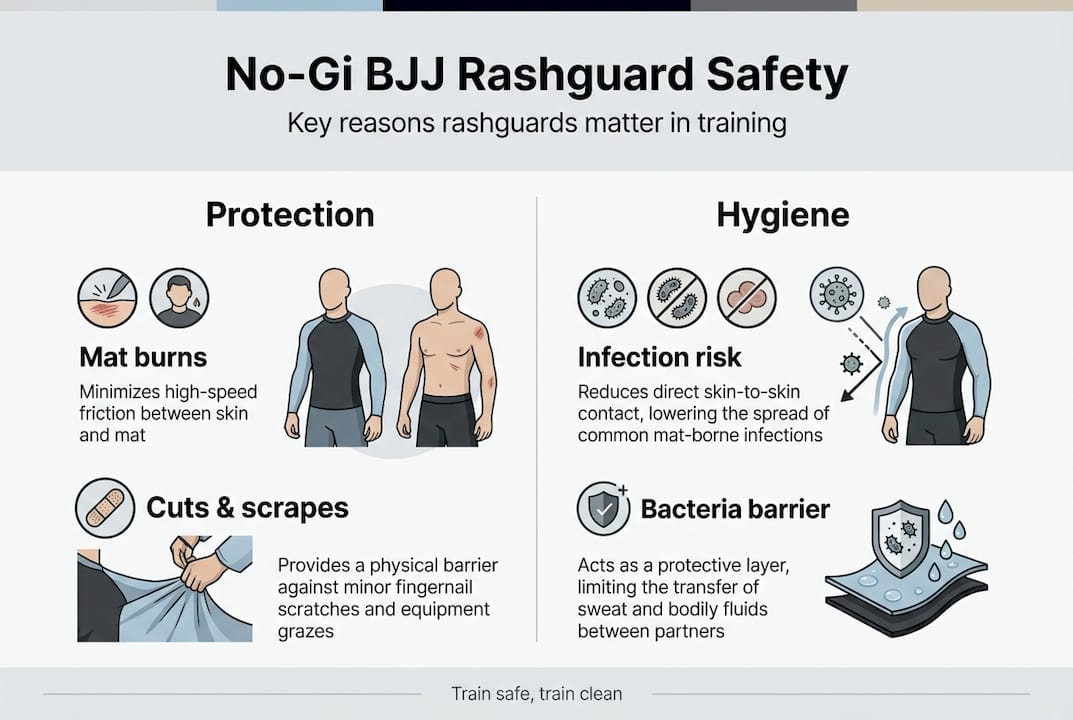
A rashguard provides fabric coverage and may reduce direct friction for some wearers. Fit, movement, mat surface and training activity all affect comfort.
Close-contact training can involve shared surfaces and skin contact. Read more about why BJJ athletes wear rashguards, while following gym cleaning rules, keeping gear clean, covering wounds and seeking medical advice for suspected infection.
Performance benefits extend beyond simple protection. Quality rashguards feature moisture-wicking technology that pulls sweat away from your body, keeping you drier during intense rolling sessions. The compression effect supports muscle groups and improves proprioception, helping you feel body positioning more accurately. Temperature regulation fabrics keep you cool in summer training and warm during winter sessions, maintaining optimal body temperature for peak performance.
Training tops vary in fabric, seams, fit and care requirements. Compare the exact product rather than assuming antimicrobial treatment or universal grip effects. See the role of rashguards in BJJ for more practical considerations.
Pro Tip: Choose rashguards that fit snugly without restricting breathing or movement. The fabric should lie flat against your skin with minimal bunching, and sleeves should extend to your wrists without riding up during arm movements. A proper fit maximizes both protective benefits and comfort throughout your training session.
Risks and considerations when training no-gi without a rashguard
Training no-gi without a rashguard exposes you to several concrete safety and hygiene risks that compound over time. The most immediate concern involves skin injuries that occur from mat friction. Mat burns develop when bare skin repeatedly drags across training surfaces during scrambles, creating painful abrasions that sting under the shower and require days to heal. These wounds often appear on shoulders, elbows, knees, and backs where body weight concentrates during ground work.
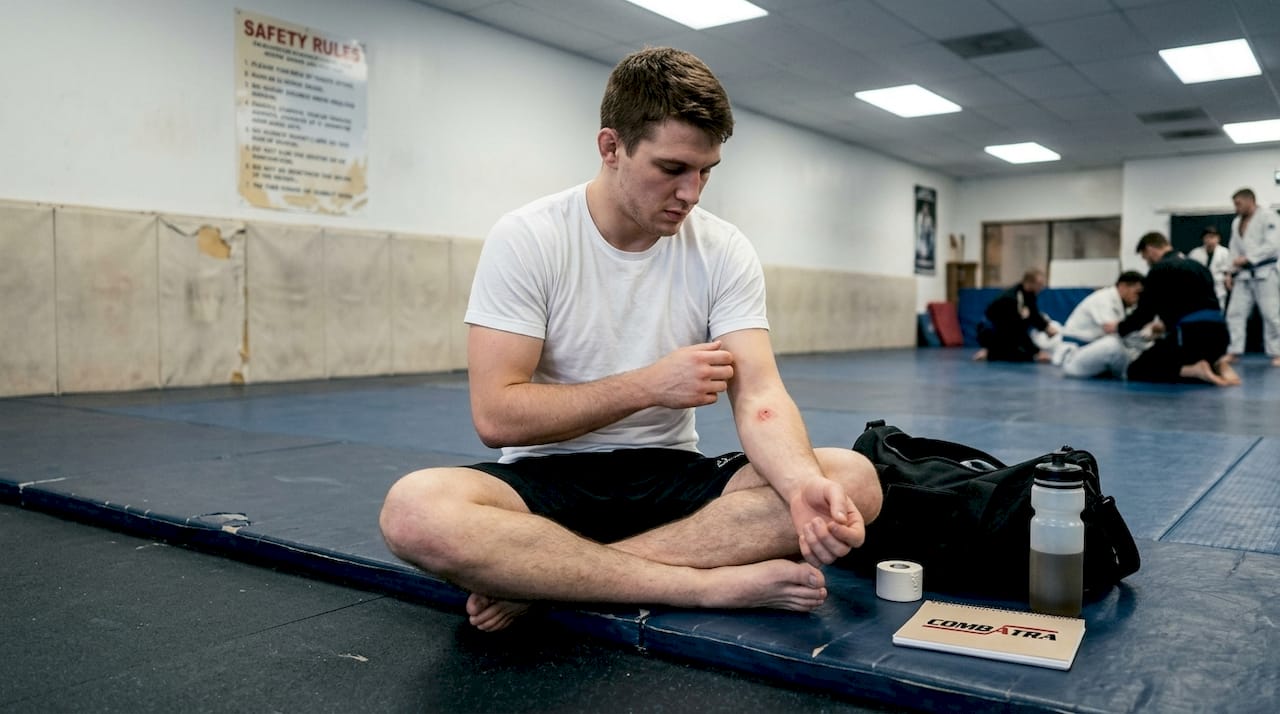
Close-contact training can cause cuts and scrapes. Keep nails trimmed, cover wounds, follow gym hygiene rules and seek medical advice for marks or symptoms that may indicate infection.
Bacterial and fungal infections represent the most concerning risk category. Staph infections, including dangerous MRSA strains, thrive in warm, moist environments like training mats. Ringworm spreads rapidly through direct skin contact, creating circular, itchy lesions that require antifungal medication. Impetigo causes crusty sores that ooze fluid and spread quickly to other body areas and training partners. Without a protective barrier, your skin directly contacts these microorganisms with every technique.
Discomfort factors accumulate during training sessions without compression fabric. Sweat pools on bare skin, creating a slippery surface that makes maintaining grips difficult. Skin friction against your training partner generates uncomfortable heat and irritation. Your chest, back, and arms stick to the mat during transitions, requiring extra effort to move smoothly. These discomfort elements distract from technique refinement and reduce training quality.
A rashguard provides fabric coverage. Keep gear and shared surfaces clean, cover wounds and seek medical advice for suspected infection.
Skin problems can interrupt training and need appropriate care. This rashguard overview should be read alongside current public-health guidance and advice from a qualified clinician when symptoms appear.
Situations and tips for safely training no-gi without a rashguard
Despite the risks, certain scenarios exist where practitioners train no-gi without rashguards. Understanding these contexts and implementing strict hygiene protocols minimizes potential complications. Some athletes prefer the unrestricted feeling during specific drilling sessions. Others train in extremely hot climates where even technical fabrics feel oppressive. Competition rules in certain organizations permit bare-chested training for male athletes. Financial constraints sometimes limit gear purchases for beginners exploring the sport.
When training without rashguards, follow this essential hygiene and safety checklist:
- Shower immediately before training to remove bacteria and oils from your skin
- Inspect your skin for cuts, scrapes, or infections and cover any wounds with waterproof bandages
- Ensure training mats receive proper sanitation before and after each session
- Limit rolling intensity to reduce friction and impact against mats
- Shower after training and follow current public-health and gym hygiene guidance
- Follow appropriate skin-care or medical advice for dry, cracked or irritated skin
- Wash training gear after use according to its care label and dry it fully before reuse
- Monitor your skin daily for signs of infection like redness, swelling, or unusual marks
| Factor | With Rashguard | Without Rashguard |
|---|---|---|
| Skin protection | High barrier against mat burns and abrasions | Direct exposure to friction injuries |
| Infection control | Neither clothing choice replaces clean gear and surfaces, covered wounds or medical advice | |
| Comfort level | Moisture wicking keeps skin dry and cool | Sweat accumulation causes stickiness |
| Performance | Compression supports muscles and movement | Unrestricted but less protective |
| Hygiene maintenance | Fabric acts as washable barrier | Requires meticulous pre and post-training care |
Implementing a comprehensive skin care routine becomes non-negotiable when training without protective gear. Start by establishing a pre-training protocol that includes thorough showering with antibacterial soap, paying special attention to areas that will contact the mat. Trim fingernails and toenails short to minimize scratching yourself or training partners. Check your entire body for any existing cuts or suspicious marks that could indicate developing infections.
Post-training care proves equally critical. The 30-minute window after training represents your best opportunity to wash away pathogens before they penetrate skin barriers. Use warm water and quality antibacterial soap, scrubbing gently but thoroughly. Pay special attention to areas that experienced the most mat contact. Pat skin dry rather than rubbing to avoid irritating already-stressed skin. Apply a light, non-comedogenic moisturizer to maintain skin barrier integrity.
Pro Tip: Keep a dedicated post-training hygiene kit in your gym bag containing travel-size antibacterial body wash, a clean towel, and moisturizer. This ensures you never skip the crucial post-training shower even when training at unfamiliar locations. Proper hygiene and mat sanitation mitigate risks significantly when combined with vigilant skin monitoring.
Choosing the right gear to complement no-gi training safely
Even if you prefer training without rashguards, selecting appropriate complementary gear enhances safety and comfort significantly. Your gear choices should prioritize skin protection, moisture management, and unrestricted movement while maintaining hygiene standards. The right combination of apparel reduces risks without compromising the training experience you prefer.
For no-gi training, compare the fit, inseam, seams, closure, fabric and care instructions on the exact customizable MMA fight shorts product page.
Compression shorts provide an additional fabric layer and may help some wearers manage friction. Check the exact garment’s fit, fabric, seams, care and any listed treatment.
Female practitioners require specialized considerations for no-gi training. Sports bras designed for high-impact activities provide necessary support and coverage during grappling. Look for styles with wide, flat straps that distribute pressure evenly and won’t dig into shoulders during partner pressure. Moisture-wicking fabrics keep you dry and comfortable. Some athletes layer a compression tank over their sports bra for additional coverage and protection while maintaining breathability.
Fabric composition and seams affect feel, stretch and care requirements. For drying, odour or fabric-treatment claims, request the exact test method and result.
Gear pairing strategies optimize both protection and comfort:
- Combine compression shorts with loose fight shorts for layered protection and mobility
- For outdoor training, check the exact garment’s documented UPF rating and follow broader sun-safety guidance
- Select darker colors that hide sweat stains and maintain professional appearance
- Invest in multiple sets to ensure clean gear for every training session
- Replace worn gear promptly when fabric thins or seams weaken
The durability of your training gear directly impacts long-term safety and cost-effectiveness. High-quality training shorts and compression gear withstand hundreds of training sessions when properly maintained. Cheap alternatives deteriorate quickly, developing thin spots that provide inadequate protection and requiring frequent replacement. Calculate cost per training session rather than initial purchase price when evaluating gear investments.
Explore Combatra gear for safer no-gi training
Your training gear choices directly impact your safety, comfort, and performance on the mats. Combatra specializes in premium BJJ and MMA apparel engineered specifically for the demands of grappling sports. Our product line addresses the exact concerns discussed throughout this article, offering solutions whether you prefer full rashguard protection or minimal gear approaches.

Review the current custom rashguard compression top, sports bra and other product pages for exact fabric, seam, care and customisation details. Available options and specifications vary by product.
Frequently asked questions
Can I get infections more easily without a rashguard?
Training gear is one part of safer practice. Keep gear and shared surfaces clean, cover wounds and seek medical advice for suspected infection.
What are the best alternatives to rashguards in no-gi training?
Compression shirts, athletic tops and compression shorts provide different amounts of coverage. Compare fit, fabric, seams and care instructions, and continue normal hygiene practices with any option.
How should I clean my skin and gear after no-gi sessions?
Shower after training, wash gear after use according to its care label, and dry it fully before reuse. Follow current public-health guidance and seek medical advice for suspected infection.
Is training no-gi without rashguards common among beginners?
Beginners typically start with full protective gear as they learn proper technique and hygiene practices. Gi vs no-gi BJJ for beginners discussions emphasize building good habits early. Most academies require or strongly recommend rashguards for all students regardless of experience level. Training without rashguards becomes more common among experienced practitioners who understand the risks and maintain strict hygiene protocols.
How do rashguards improve comfort during intense rolling?
Fabric, fit and surface texture affect how a rashguard feels during training. Compare the exact garment’s composition, seams, care instructions and size chart.