


Finding a rashguard for Brazilian Jiu-Jitsu involves comparing fit, fabric, seams, care requirements and design. This guide explains those practical choices without treating the garment as a substitute for gym hygiene, wound care or medical advice.
Table of Contents
Key Takeaways
| Point | Details |
|---|---|
| Coverage | A rashguard provides a close-fitting fabric layer; sleeve length changes the covered area. |
| Material and fit | Compare the exact fabric, seams, fit and care instructions. |
| Competition rules | Requirements vary by organiser and division; check the current event rules. |
| Personalisation | Where offered, artwork and team colours can create a consistent look. |
Rashguards in BJJ: Core Purpose and Myths
Rashguards are training apparel. Their fabric, fit, seams and coverage can be compared for comfort and intended use, without treating them as a general safety or performance intervention.
Rashguards provide fabric coverage and can help manage sweat and comfort during BJJ training and competition. Practical considerations include:
- Choose the sleeve length and fit that feel comfortable during training.
- Check whether seams or loose fabric catch or rub during normal movement.
- Compare the exact fabric and care instructions instead of assuming a compression or drying benefit.
Rashguards are training apparel whose features vary by product. Compare the exact fabric, seams, fit and care instructions instead of assuming universal performance or safety effects.
Choose a rashguard that allows comfortable breathing and movement. If a garment causes pain, numbness or restricted breathing, try a different size or cut.
Pro tip: Invest in rashguards made from high-performance, moisture-wicking materials that offer both compression and breathability for optimal BJJ training experience.
Types of BJJ Rashguards and Key Features
BJJ practitioners have multiple rashguard options that cater to different training needs and preferences. Selecting the right rashguard requires understanding the various types and their unique characteristics.
Rashguards are typically categorized into three primary styles:
- Short sleeve: Less arm coverage; assess comfort and current event requirements.
- Long sleeve: More arm coverage; assess fit and training conditions.
- Close-fitting styles: Compare the product's size chart and stretch rather than assuming a muscle-support effect.
Fabric blend, seam construction and panels vary by product. Compare the listed composition, construction, care instructions and a sample for the intended use.
When evaluating rashguards, compare fabric weight, fit, seam construction and care requirements. Compression feel and comfort are product- and wearer-specific; choose a fit that permits comfortable breathing and movement.
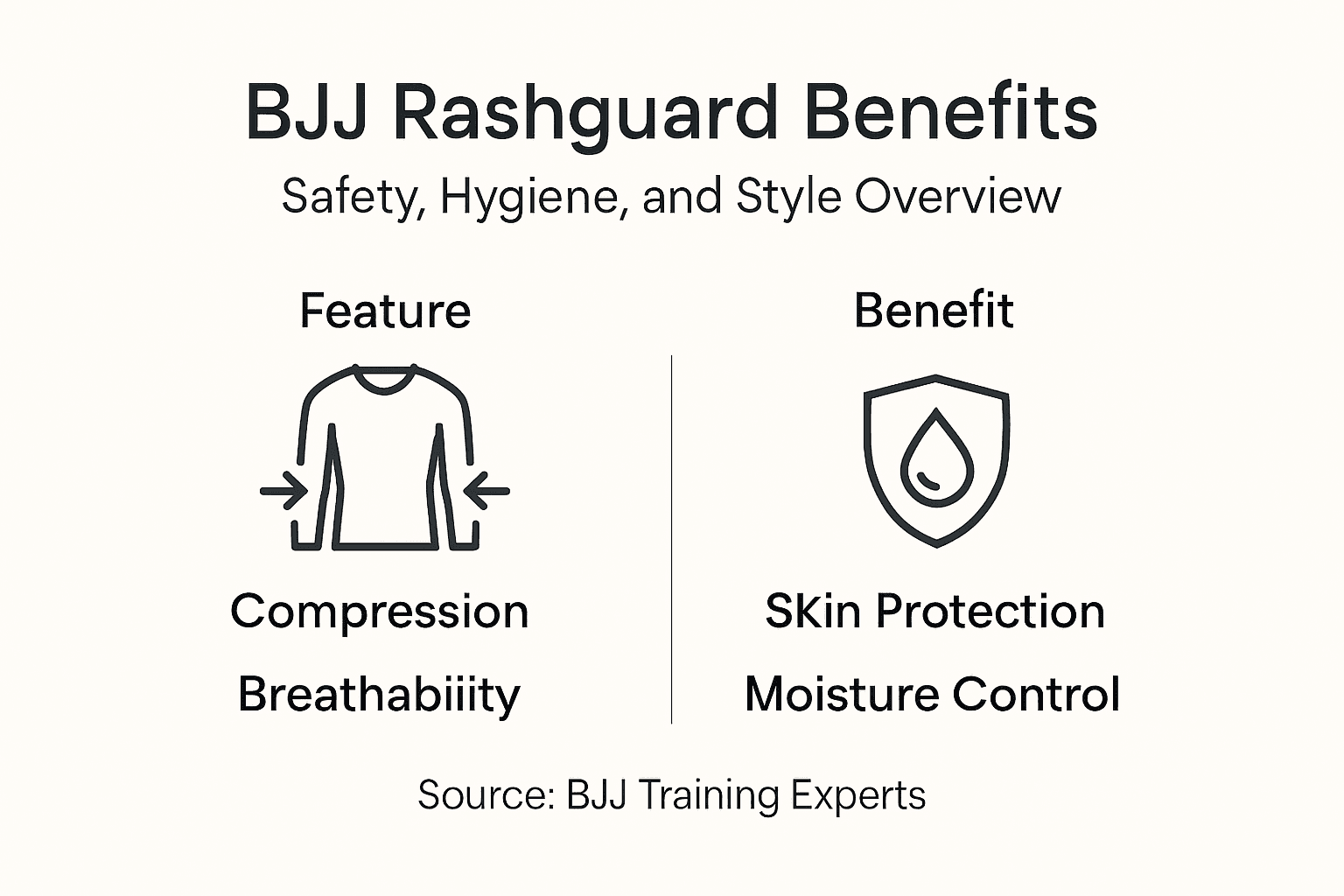
Here’s a quick guide to understanding common BJJ rashguard types:
| Style | What changes | What to check |
|---|---|---|
| Short sleeve | Arm coverage | Fit, seams and event requirements |
| Long sleeve | Arm coverage | Sleeve length and wearer comfort |
| Compression-labelled | Fit and stretch may differ | Exact size chart and comfortable movement |
Pro tip: Prioritize rashguards with moisture-wicking properties and strategic compression zones to maximize your training efficiency and comfort.
For deeper insight, here’s how top rashguard features affect BJJ performance:
| Feature | Athletic Impact | Long-Term Benefit |
| Seam construction | Affects garment feel | Check comfort on the wearer |
| Compression level | Changes how the garment feels | Choose a fit that permits comfortable movement |
| Panels and seams | Construction varies by product | Inspect stitching and sample fit |
| Fabric treatment | Varies by exact product | Request the treatment name, test method and result |
Coverage, Hygiene and Care
Brazilian Jiu-Jitsu involves close contact and shared surfaces. Read this rashguard overview alongside your gym’s hygiene rules and current public-health guidance.
Rashguards provide fabric coverage. Continue clean-gear, wound-care and gym-hygiene practices regardless of clothing choice:
- Wash and fully dry training clothing after each use, following the care label.
- Keep personal gear clean and avoid sharing clothing or towels.
- A fabric layer does not replace clean mats, wound care or advice for suspected infection.
A rashguard provides fabric coverage and may reduce direct friction in some movements. Check the exact product for any listed fabric treatment, and continue clean-gear, wound-care and gym-hygiene practices.
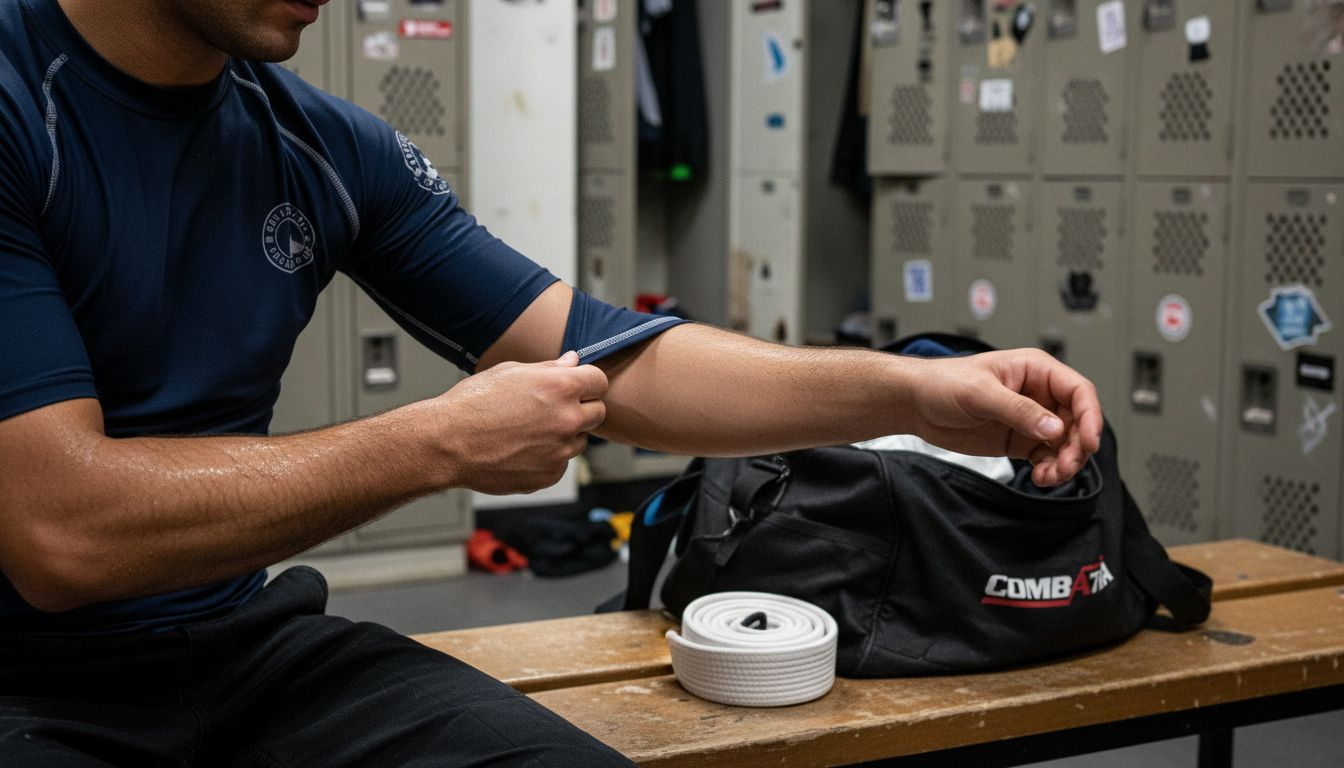
Compression zones change garment fit and feel. Choose a product that permits comfortable breathing and movement, and change size or cut if it causes pain, numbness or restriction.
Pro tip: Always inspect your rashguard for wear and tear, and replace it immediately if you notice any signs of material degradation to maintain optimal protection.
Competition Rules and Use Cases Worldwide
Uniform requirements vary by event and can change. Check the current rules for the organiser and division before competition.
Rashguard requirements differ by organiser, ruleset and division. Check the current event rules for the following points:
- Check the organiser, ruleset and division before selecting competition gear.
- Review permitted colours, coverage, fit and attachments in the current rules.
- For IBJJF events, consult the official uniform guidance and linked current rule documents.
Rashguard and colour requirements depend on the event, ruleset and division. Check the organiser’s current uniform rules before competing.
Competition uniform requirements differ by organiser, ruleset and division. Check the current event rules before selecting or ordering a rashguard for competition.
Pro tip: Always review the specific uniform requirements for each competition at least two weeks before the event to ensure your rashguard meets all necessary guidelines.
Customization, Quality, and Buying Choices
BJJ rashguard selection involves understanding complex factors that impact performance, comfort, and personal expression. Selecting the right rashguard goes beyond simple aesthetic choices, requiring strategic consideration of technical specifications and individual training needs.
Key factors to evaluate when purchasing a rashguard include:
- Exact fabric composition and care instructions
- Size chart, sleeve length and seam placement
- Comfort during normal movement
- Available artwork and colour options
- Current event requirements where relevant
Fabric composition affects stretch, feel and care requirements. For a treated fabric, request the treatment name, test method and result, and continue normal hygiene practices.
Customization has become increasingly important for BJJ practitioners seeking to express their individual identity. Modern rashguard manufacturers offer extensive personalization options, allowing athletes to select unique color schemes, add team logos, or incorporate personal design elements. These customization choices not only enhance personal style but also provide psychological benefits by creating a sense of individual identity and team representation.
Pro tip: Prioritize rashguards that balance technical performance with personal style, ensuring both functional excellence and individual expression.
Elevate Your BJJ Training with Premium Rashguards from Combatra
Combatra lists personalised rashguards for BJJ training. Check the exact product page for fabric, fit, seams, care and customisation details, then choose the option that feels comfortable for your intended use.
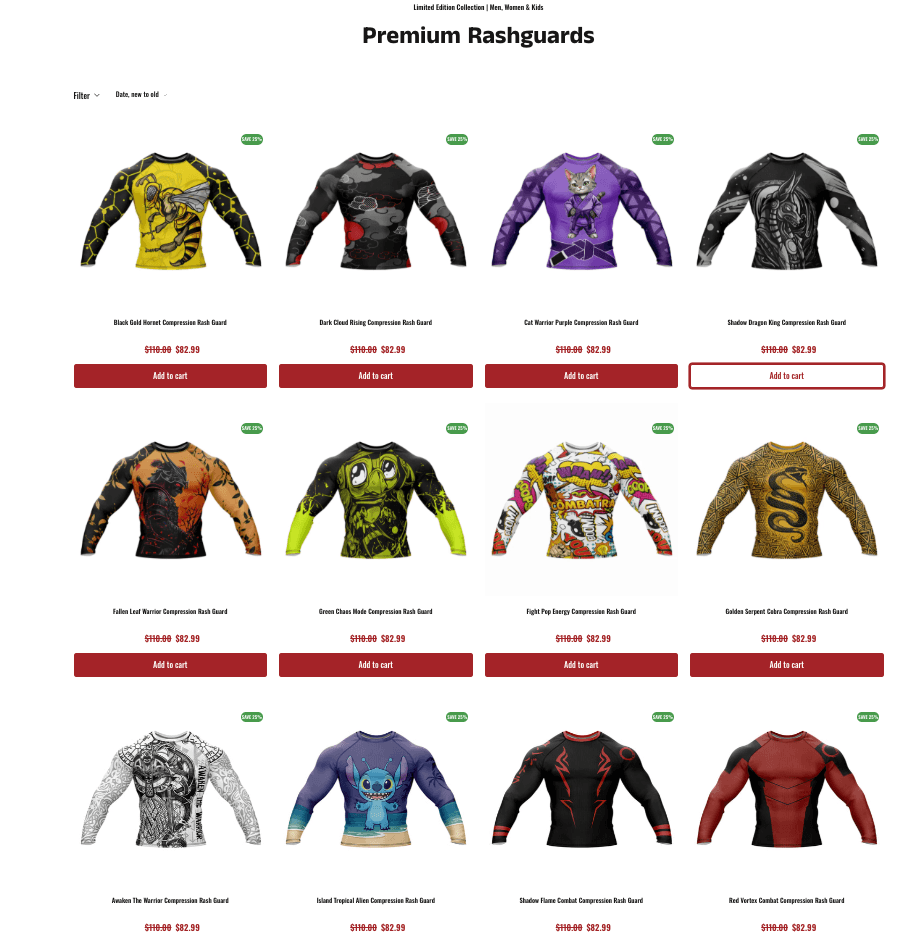
Browse Combatra rashguards and check the exact product's fabric, fit, seams and care. For names, logos or academy colours, review the custom rashguard builder. Confirm current event requirements separately if you plan to compete.
Frequently Asked Questions
What are the primary functions of rashguards in BJJ?
Rashguards provide fabric coverage and may help manage friction, sweat and comfort during training, depending on the product and wearer.
How do rashguards enhance safety and hygiene in Brazilian Jiu-Jitsu?
Rashguards provide fabric coverage, but they do not replace clean mats and gear, covered wounds, staying off the mat when contagious, or medical advice for suspected infection.
What should I look for when choosing a BJJ rashguard?
When selecting a rashguard, consider factors such as fabric composition (preferably polyester-spandex blends), moisture-wicking capabilities, compression levels, durability, and strategic design elements to maximize comfort and performance.
Are different types of rashguards better for specific training scenarios?
Sleeve length, fabric and fit change coverage and feel. Choose the style that is comfortable for your intended training and check current competition requirements separately.