


Many MMA fighters assume rashguards are just fashion statements worn by serious competitors. In reality, these specialized compression garments deliver measurable performance advantages, from muscle support to infection prevention. Understanding why use rashguards transforms them from optional accessories to essential training gear that directly impacts your effectiveness on the mat.
Table of Contents
- Introduction To Rashguards In MMA
- Materials, Construction, And Performance Benefits
- Skin Protection And Hygiene Benefits
- Common Misconceptions About Rashguards In MMA
- Comparing Rashguards To Other MMA Training Apparel
- Customization And Branding Advantages For Competitors
- Buying Guide: Choosing And Maintaining Your Rashguard
- Enhance Your MMA Training With Premium Rashguards From Combatra
- Frequently Asked Questions About Rashguards In MMA
Key Takeaways
| Point | Details |
|---|---|
| Performance Enhancement | Rashguards provide compression that stabilizes muscles, reduces soreness, and improves circulation during intense MMA training. |
| Skin Protection | Athletes wearing rashguards experience 25% fewer abrasions and 18% fewer infections compared to those training without them. |
| Temperature Regulation | Advanced moisture-wicking fabrics reduce skin temperature by 2-3°C through evaporative cooling during sparring sessions. |
| Material Quality Matters | Premium polyester-spandex blends with flatlock stitching outlast budget options and maintain compression effectiveness longer. |
| Customization Benefits | Personalized designs boost motivation and allow fighters to express identity while maintaining professional appearance in competition. |
Introduction to Rashguards in MMA
Rashguards are tight-fitting performance shirts constructed from compression fabrics specifically engineered for high-intensity combat sports. Originally adapted from surfwear designed to prevent board rash, these garments evolved into essential MMA equipment as fighters recognized their practical advantages beyond simple comfort.
The evolution happened gradually through the 1990s and early 2000s. Brazilian jiu-jitsu practitioners first popularized compression tops for grappling, and MMA athletes quickly adopted them once the correlation between fabric technology and performance became clear. Today’s rashguards incorporate advanced textile engineering far beyond their surfing origins.
Modern rashguards deliver multiple measurable benefits:
- Muscle Support: Compression improves blood circulation, stabilizes muscles, and reduces delayed onset muscle soreness by limiting excessive muscle oscillation during explosive movements.
- Injury Prevention: The snug fit prevents fingers and toes from catching in loose fabric during grappling exchanges, reducing joint hyperextension risks.
- Moisture Management: Synthetic fibers wick sweat away from skin 3-4 times faster than cotton, maintaining optimal body temperature and grip.
- Skin Protection: The barrier layer shields against mat burns, staph infections, and ringworm transmission common in close-contact training environments.
These benefits align with the essential BJJ performance benefits documented across grappling disciplines. Athletes who train without rashguards expose themselves to preventable injuries and slower recovery times that compound over training cycles.
Pro Tip: Choose rashguards with at least 10-15% spandex content for optimal compression without restricting breathing or movement range during ground transitions.
Materials, Construction, and Performance Benefits
The fabric composition determines whether a rashguard enhances or hinders your training. Most quality options blend 80-90% polyester with 10-20% spandex, creating stretch properties that accommodate dynamic movements while maintaining muscle compression.
Polyester forms the foundation because it resists moisture absorption, dries quickly, and withstands repeated washing without losing shape. Spandex provides the elastic recovery that allows the garment to conform to your body contours and return to original dimensions after stretching. This combination outperforms natural fibers in every measurable category relevant to MMA training.
Compression effects deliver concrete physiological advantages. The graduated pressure supports muscle groups during explosive strikes and takedowns, reducing oscillation by up to 20% compared to unsupported training. This stabilization decreases microtrauma accumulation and accelerates recovery between rounds.
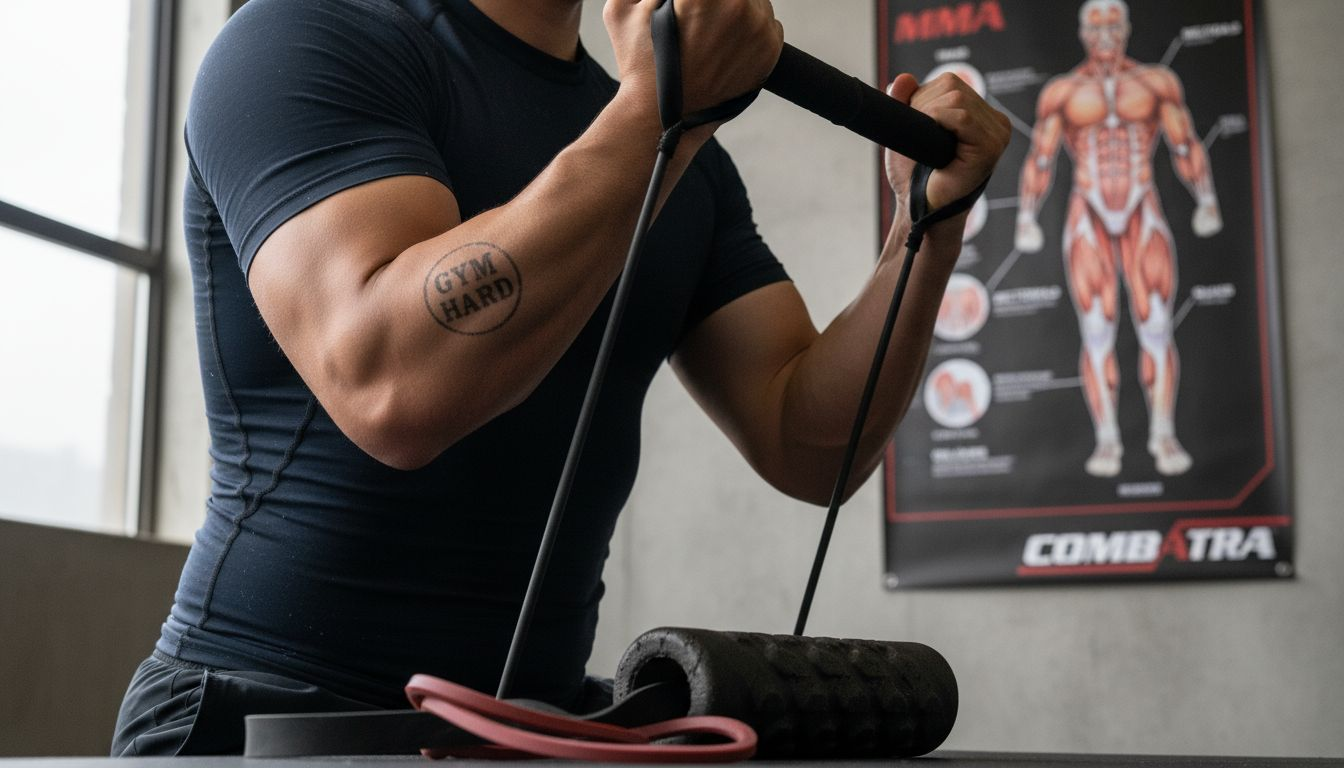
Thermal regulation happens through moisture transport mechanisms. Evaporative cooling through synthetic fabrics reduces skin temperature by 2-3°C during intense activity, preventing overheating that degrades technique precision and decision-making speed. The fabric pulls sweat to the outer surface where air circulation facilitates rapid evaporation.
Durability stems from construction quality:
- Flatlock Stitching: Creates flat seams that resist chafing and prevent separation under tension from grappling exchanges.
- Reinforced Panels: Strategic placement at high-stress zones like shoulders and armpits extends garment lifespan by 40-60%.
- Four-Way Stretch: Allows movement in all directions without creating weak points that tear during scrambles.
The best GSM for rashguards typically ranges between 220-280 GSM, balancing durability with breathability for year-round training comfort.
Pro Tip: Test compression quality by stretching the fabric horizontally and releasing it. Premium rashguards snap back to original shape within 1-2 seconds without visible distortion.
Skin Protection and Hygiene Benefits
MMA training environments create ideal conditions for skin infections through constant contact with equipment, training partners, and mat surfaces. Rashguards function as protective barriers that significantly reduce transmission risks when properly maintained.
The physical barrier prevents direct skin-to-surface contact during ground work. This layer shields against abrasive friction that creates entry points for bacterial and fungal pathogens. Research demonstrates MMA athletes wearing rashguards reported 25% fewer skin abrasions and 18% fewer infections during competitive seasons compared to athletes training in regular athletic wear.
Key Protection Statistics:
- 25% reduction in mat burns and friction abrasions
- 18% decrease in bacterial skin infections
- 30% lower incidence of fungal conditions like ringworm
Antimicrobial fabric treatments enhance baseline protection by inhibiting bacterial growth on the garment itself. Silver ion technology and zinc-based compounds integrated during manufacturing prevent rashguards from becoming contamination vectors between training sessions. These treatments maintain effectiveness for 50-100 wash cycles before requiring replacement.
The rashguards role in hygiene extends beyond infection prevention. Compression fabrics reduce sweat pooling on skin surfaces, limiting the moist environments where pathogens thrive. Faster moisture evaporation means less time your skin spends in conditions conducive to bacterial colonization.
Proper care maximizes protective benefits:
- Wash immediately after training in cold water with mild detergent
- Avoid fabric softeners that coat fibers and reduce moisture-wicking capacity
- Air dry away from direct sunlight to preserve antimicrobial treatments
- Replace rashguards when compression loosens or fabric shows visible wear
These hygiene advantages prove particularly valuable during tournament preparation when training intensity peaks and infection risks escalate. One skin infection can derail weeks of preparation, making prevention through proper gear selection a strategic priority.
Common Misconceptions About Rashguards in MMA
Several persistent myths surround rashguard use in combat sports, leading fighters to make suboptimal equipment choices based on incomplete information.
Myth 1: Rashguards Are Just Stylish Training Shirts Many newcomers view rashguards as aesthetic choices rather than functional equipment. The reality centers on measurable performance advantages. Compression support, moisture management, and skin protection deliver tangible benefits that directly impact training quality and injury prevention. The visual appeal serves as a secondary benefit, not the primary purpose.
Myth 2: Rashguards Replace Essential Protective Equipment Some fighters mistakenly believe a quality rashguard reduces the need for mouthguards, cups, or shin guards. Rashguards complement protective gear by addressing skin-related issues but provide zero impact protection. You still need all standard safety equipment regardless of rashguard quality. They serve different protective functions that don’t overlap.
Myth 3: All Rashguards Offer Equivalent Quality and Protection Budget rashguards often use inferior fabric blends with inadequate spandex content, resulting in poor compression and rapid deterioration. Premium options incorporate antimicrobial treatments, reinforced stitching, and higher-grade materials that justify their cost through extended lifespan and superior performance. The cheapest option rarely provides acceptable value over time.
Myth 4: Loose-Fitting Rashguards Work as Well as Compression Fits Compression requires proper sizing to deliver physiological benefits. Oversized rashguards eliminate the graduated pressure necessary for muscle support and fail to wick moisture efficiently. The fabric bunches during movement, creating friction points and reducing the protective barrier effectiveness.
Pro Tip: Invest in two high-quality rashguards rather than four budget options. Premium construction pays for itself through durability, maintaining compression and antimicrobial properties through hundreds of training sessions.
Understanding these distinctions helps you evaluate marketing claims against functional requirements. Base your purchasing decisions on fabric specifications, construction quality, and fit rather than graphics or brand hype.
Comparing Rashguards to Other MMA Training Apparel
Direct comparison reveals why rashguards dominate modern MMA training environments over traditional alternatives.
| Feature | Premium Rashguard | Cotton T-Shirt | Budget Rashguard |
|---|---|---|---|
| Friction Reduction | 40-50% less vs cotton | Baseline standard | 20-25% less vs cotton |
| Compression Support | Graduated, maintains shape | None | Minimal, fades quickly |
| Moisture-Wicking | Excellent (dries in 30-45 min) | Poor (stays wet 2-3 hours) | Moderate (dries in 60-90 min) |
| Durability | 200+ training sessions | 30-50 sessions | 50-80 sessions |
| Seam Construction | Flatlock, chafe-resistant | Standard, irritates skin | Basic flatlock |
| Temperature Regulation | Reduces skin temp 2-3°C | Retains heat, heavy when wet | Reduces temp 1-2°C |
| Antimicrobial Treatment | Integrated, long-lasting | None | Surface-level, washes out |
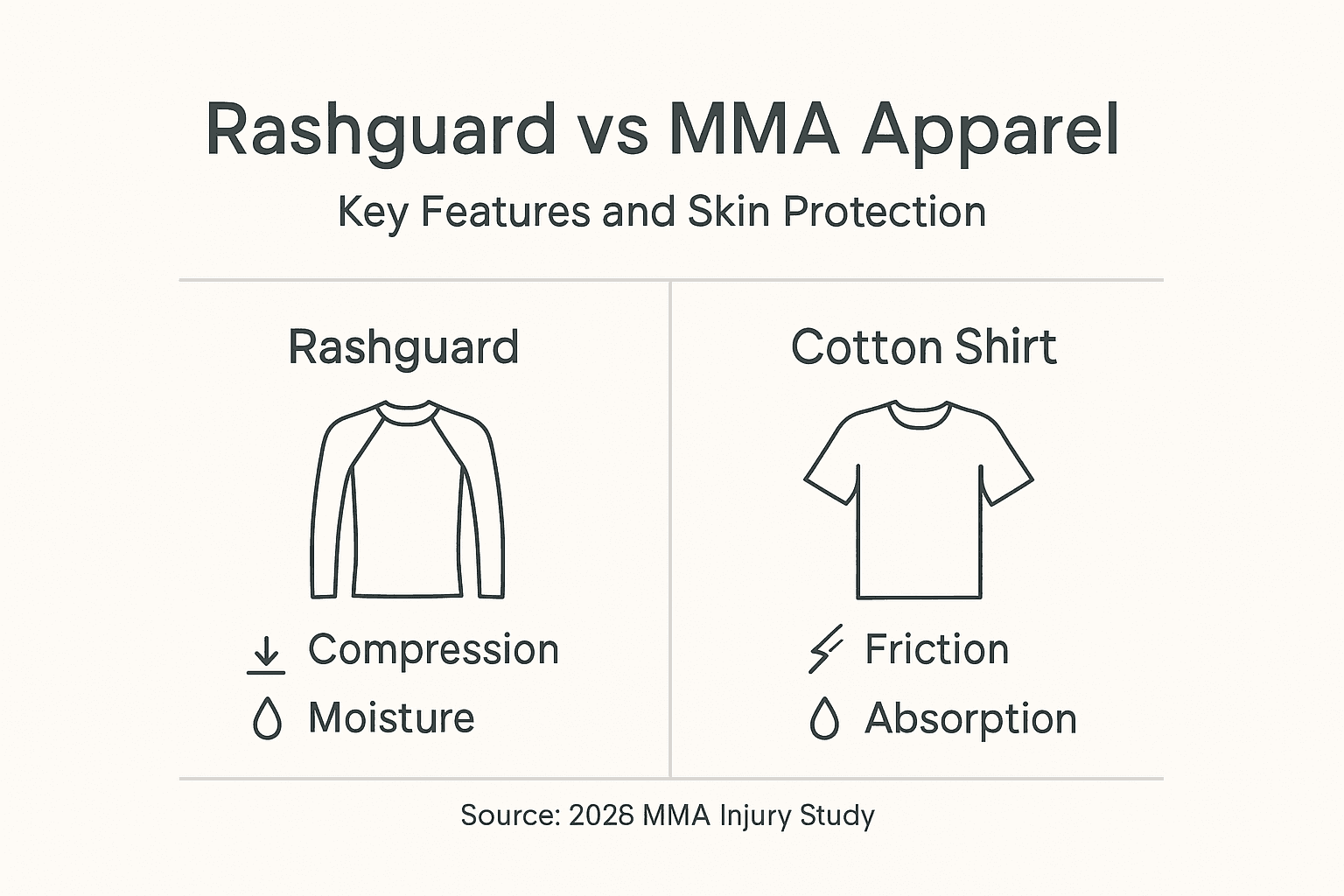
The friction reduction advantage proves particularly significant during ground work. Cotton creates substantial resistance against mat surfaces and training partner skin, increasing energy expenditure by 15-20% during rolling sessions. This efficiency loss compounds over hour-long training blocks.
Compression support distinguishes quality rashguards from all alternatives. Cotton T-shirts provide zero muscle stabilization, while budget rashguards lose compression effectiveness within weeks. Premium options maintain consistent support for months, justifying their higher initial cost through extended functional lifespan.
Moisture management impacts comfort and performance throughout training. Cotton absorbs sweat and holds it against your skin, creating weight gain and temperature regulation problems. Quality rashguards transport moisture to exterior surfaces where evaporation occurs rapidly. The best rashguards for training maintain this wicking capacity through hundreds of wash cycles.
Durability differences become apparent within the first month. Cotton T-shirts develop holes at stress points, stretch out permanently, and fade quickly. Budget rashguards show compression loss and seam separation by 50-80 training sessions. Premium rashguards with reinforced construction regularly exceed 200 sessions while maintaining functional properties.
The comparison clarifies why serious MMA athletes universally choose quality rashguards despite higher upfront costs. The performance advantages and longevity create superior value over replacing cheaper alternatives every few months.
Customization and Branding Advantages for Competitors
Personalized rashguards extend beyond aesthetics into psychological and practical advantages for competitive MMA athletes.
Customization options allow fighters to express individual identity through gear that reflects personal style and values. Adding your name, nickname, or signature logo creates distinctive visual recognition during competitions and training footage. This branding builds your fighter identity and makes you memorable to promoters, sponsors, and fans.
Team representation strengthens through coordinated designs that display gym affiliations or training partnerships. Matching rashguards create cohesive team appearance at tournaments while maintaining individual customization elements. This balance supports both personal and collective identity.
Motivational benefits emerge from training in gear that reflects your goals and achievements. Custom designs celebrating milestones, belt promotions, or competition victories serve as tangible reminders of your progress. This psychological reinforcement contributes to training consistency and competitive confidence.
Available customization elements include:
- Color Schemes: Unlimited combinations matching personal preferences or gym colors
- Graphics and Logos: Custom artwork, sponsor logos, or signature designs
- Text Elements: Names, nicknames, motivational phrases, or competition achievements
- Patriotic Themes: Flag designs or national color combinations for international competitors
- Unique Patterns: Camouflage, geometric designs, or abstract artwork
The rashguard customization guide walks through design considerations that balance visual impact with practical functionality.
Sponsorship integration becomes seamless with custom rashguards. Athletes can prominently display sponsor logos while maintaining professional appearance standards required by competition organizations. This visibility benefits both fighter and sponsor relationships.
Customization also addresses practical needs like size variations outside standard offerings. Custom orders accommodate athletes with unique body proportions, ensuring proper compression and comfort that off-the-rack options cannot match.
The investment in personalized gear demonstrates commitment to your martial arts journey. It signals seriousness about training and competition while providing functional advantages identical to standard premium rashguards.
Buying Guide: Choosing and Maintaining Your Rashguard
Selecting the right rashguard requires systematic evaluation of materials, construction, and fit to ensure optimal performance and longevity.
Step-by-Step Selection Process:
- Determine Primary Use Case: Competition rashguards prioritize durability and regulation compliance, while training-focused options can emphasize comfort and quick-drying properties.
- Evaluate Fabric Composition: Seek 80-90% polyester with 10-20% spandex blends that provide four-way stretch and maintain compression through repeated use.
- Inspect Seam Construction: Flatlock stitching creates smooth, chafe-resistant seams essential for comfort during extended training sessions.
- Verify Antimicrobial Treatment: Quality manufacturers incorporate silver ion or zinc-based treatments that inhibit bacterial growth for 50+ wash cycles.
- Check Sizing Charts Carefully: Rashguards should fit snugly without restricting breathing or movement, typically sizing down from regular shirt size for proper compression.
- Assess Reinforcement Zones: Look for double-layer fabric at shoulders, armpits, and side panels where stress concentration occurs during grappling.
- Consider Sleeve Length Options: Long sleeves provide maximum skin protection, while short sleeves offer better heat dissipation in warm training environments.
The expert rashguard selection tips provide detailed guidance on evaluating construction quality indicators that separate premium from mediocre options.
Proper maintenance extends rashguard lifespan and preserves performance characteristics:
- Rinse immediately after training in cold water to remove sweat and bacteria before they set
- Wash in cold water with mild, fragrance-free detergent within 2-3 hours of training
- Avoid bleach, fabric softeners, and harsh chemicals that degrade spandex and antimicrobial treatments
- Air dry away from direct sunlight and heat sources that break down elastic fibers
- Store flat or loosely folded rather than hanging to prevent shoulder stretching
- Rotate between multiple rashguards to allow 48-hour recovery periods between uses
Pro Tip: Inspect your rashguards monthly for signs of compression loss, seam separation, or fabric thinning. Replace them when compression fades noticeably, typically after 150-250 training sessions depending on quality and care.
Investing in quality rashguards and maintaining them properly creates better long-term value than repeatedly replacing cheaper alternatives. The performance advantages and injury prevention benefits justify premium pricing for serious athletes committed to consistent training.
Enhance Your MMA Training with Premium Rashguards from Combatra
You now understand how rashguards deliver measurable advantages in performance, protection, and recovery. Applying this knowledge means selecting gear engineered specifically for MMA demands.

Combatra specializes in premium compression rashguards constructed with 85% polyester and 15% spandex blends that maintain compression through 200+ training sessions. Our Combat Armor Compression Rash Guard incorporates antimicrobial treatments and flatlock seaming that eliminates chafing during intense rolling sessions. Customization options allow you to add personal logos, names, and color schemes that reflect your fighter identity while maintaining professional competition standards. Explore complementary gear including customized BJJ gi options and customizable MMA fight shorts to complete your training setup with equipment built for Australian athletes.
Frequently Asked Questions About Rashguards in MMA
What material is best for MMA rashguards?
The optimal blend combines 80-90% polyester with 10-20% spandex for durability, stretch, and moisture management. Polyester resists moisture absorption and maintains shape through repeated washing, while spandex provides compression and elastic recovery. This combination outperforms cotton and lower-quality synthetic blends in all performance categories relevant to combat sports.
How tight should a rashguard fit for optimal performance?
Your rashguard should fit snugly against your skin without restricting breathing, movement, or circulation. You typically size down from your regular shirt size to achieve proper compression. The fabric should feel like a second skin with no loose areas that bunch or wrinkle during movement. If you can pinch more than a small fold of fabric away from your body, the fit is too loose for effective compression benefits.
Can rashguards prevent skin infections completely?
Rashguards significantly reduce infection risks but cannot eliminate them entirely. Studies show 18% fewer infections among rashguard users, but complete prevention requires combining proper gear with facility hygiene, immediate post-training showers, and avoiding training with open wounds. Rashguards function as one component of a comprehensive infection prevention strategy, not a standalone solution.
Are custom rashguards allowed in official MMA competitions?
Most MMA organizations permit custom rashguards provided they meet specific guidelines regarding logos, sponsor placement, and color restrictions. Competition rules typically prohibit offensive graphics, oversized sponsor logos, or colors that blend with referee uniforms. Check your specific organization’s equipment regulations before ordering custom designs for competition use, as requirements vary between amateur and professional events.