


Not sure what to wear to your first no-gi class? Start with a rashguard and shorts, then check your academy's clothing requirements. This guide covers the basic kit, fit checks and care. For help choosing a top, see our rashguard selection guide.
Table of Contents
- Key takeaways
- Understanding no-gi apparel essentials
- Materials and fit: choosing the right no-gi apparel
- Comparing no-gi apparel options: rashguards and shorts
- Maintaining and caring for your no-gi apparel
- Enhance your no-gi training with quality apparel from Combatra
- FAQ
Key Takeaways
| Point | Details |
|---|---|
| No gi essentials | Rashguards and shorts form a practical no-gi kit; add layers only if they suit you. |
| Rashguard purpose | Choose sleeve coverage and fit on the selected product page. |
| Fabric and fit | Material details vary by product; review the selected listing. |
| Competition rules | Check the current organiser rulebook before entering. |
Understanding no-gi apparel essentials
A practical no-gi kit usually starts with a rashguard and MMA shorts. Spats are an optional layer for more leg coverage. Ask your academy what it accepts for class.
MMA shorts are a common no-gi lower-body option. Features and closures vary, so review the selected product page and its current controls before ordering.
Compression spats are an optional no-gi layer. Some practitioners choose them for coverage or personal preference; check the selected product page for the current style and options.
Competition apparel rules can vary by organiser and event. Check the current rulebook before choosing gear for competition.
For regular training, keep a clean rotation of gear and follow the care instructions supplied with each item.
Key components of no-gi apparel include:
- Rashguards in the sleeve coverage offered on the selected product page
- MMA shorts for a no-gi lower-body option
- Compression spats or leggings as an optional layer
- Supportive underwear or compression tops, according to personal preference
- Product-page and care guidance for the item you select
Materials and fit: choosing the right no-gi apparel
Check the fabric composition and care information for the exact item you are considering. Do not assume every rashguard, pair of shorts or set of spats uses the same material blend.
A material blend alone does not tell you which size to choose. Start with the product's measurements and fit guidance, then consider how you prefer your training kit to sit.
For background on upper-body kit, read our guide to why BJJ athletes wear rashguards. Check the selected product listing for its actual material details.
Aim for a close, comfortable rashguard fit without restricted breathing or movement. When trying it on, raise your arms and turn your torso to check whether it rides up, pinches or bunches.
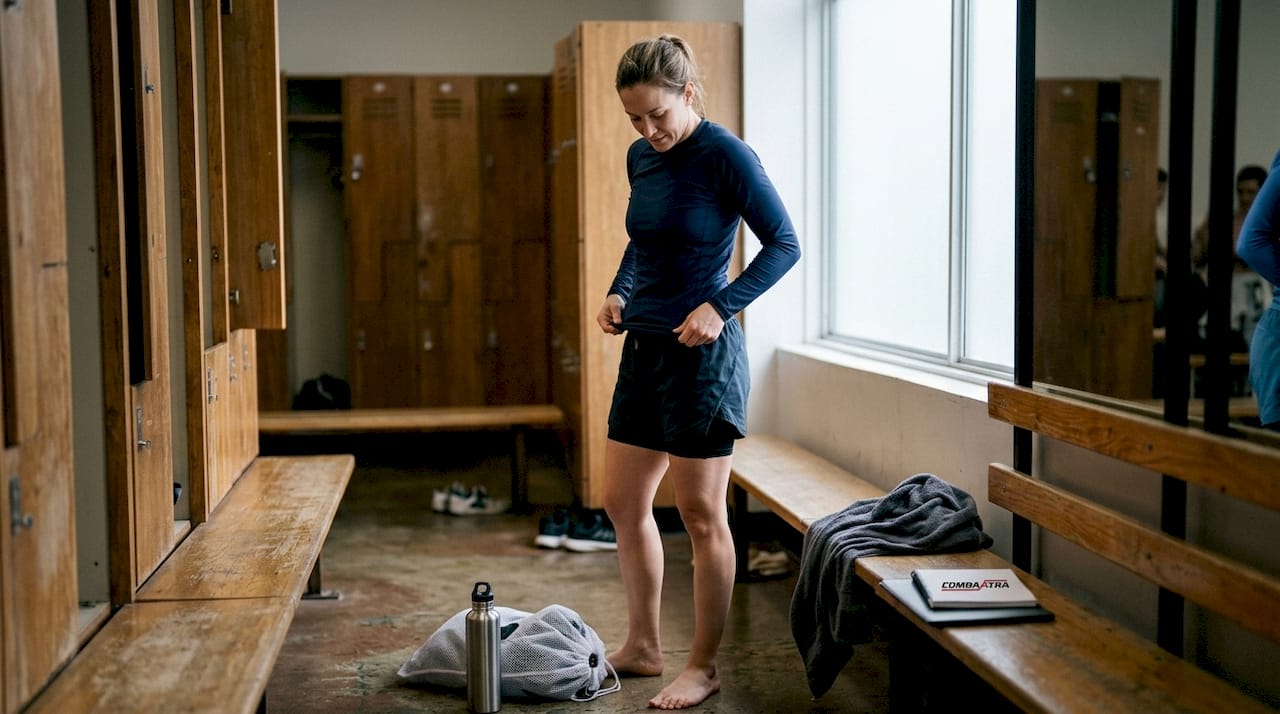
For shorts, check that the waistband stays comfortable when you bend or squat. Review the length and leg openings, and choose a size that does not pinch or need constant adjustment.
When comparing products, look at the listed construction, coverage and care requirements rather than relying on labels such as premium. Choose the features that suit your own sessions.
Pro Tip: Compare your measurements with the size guide before ordering. If you are between sizes or need different jacket and pants sizes for Gi training, check the controls on the exact product or contact Combatra.
Consider these material and fit factors:
- Check the material details on the selected product page
- Use the size guide and current product controls when selecting a rashguard
- Review the selected shorts listing for available sizing and options
- Follow the care guidance supplied for the item you choose
- Choose a rotation that suits your own training schedule
Comparing no-gi apparel options: rashguards and shorts
Sleeve choice mainly changes arm coverage. Long sleeves cover more of the arm, short sleeves leave the forearms uncovered, and sleeveless tops leave the arms uncovered. Choose the coverage you prefer and confirm what your academy or event permits.
| Rashguard Type | Arm Coverage | Fit Check | Class Use | Before Competition |
|---|---|---|---|---|
| Long Sleeve | More arm coverage | Check reach and shoulder movement | Check your academy's preferences | Check sleeve and colour rules |
| Short Sleeve | Forearms uncovered | Check torso fit and sleeve opening | Check your academy's preferences | Check sleeve and colour rules |
| Sleeveless | Arms uncovered | Check armhole and torso fit | Confirm sleeveless tops are accepted | Check whether permitted |
Compare rashguard and shorts styles by their cut, coverage and fastenings. For shorts, check pockets, exposed hardware and the waistband against your academy or event requirements.
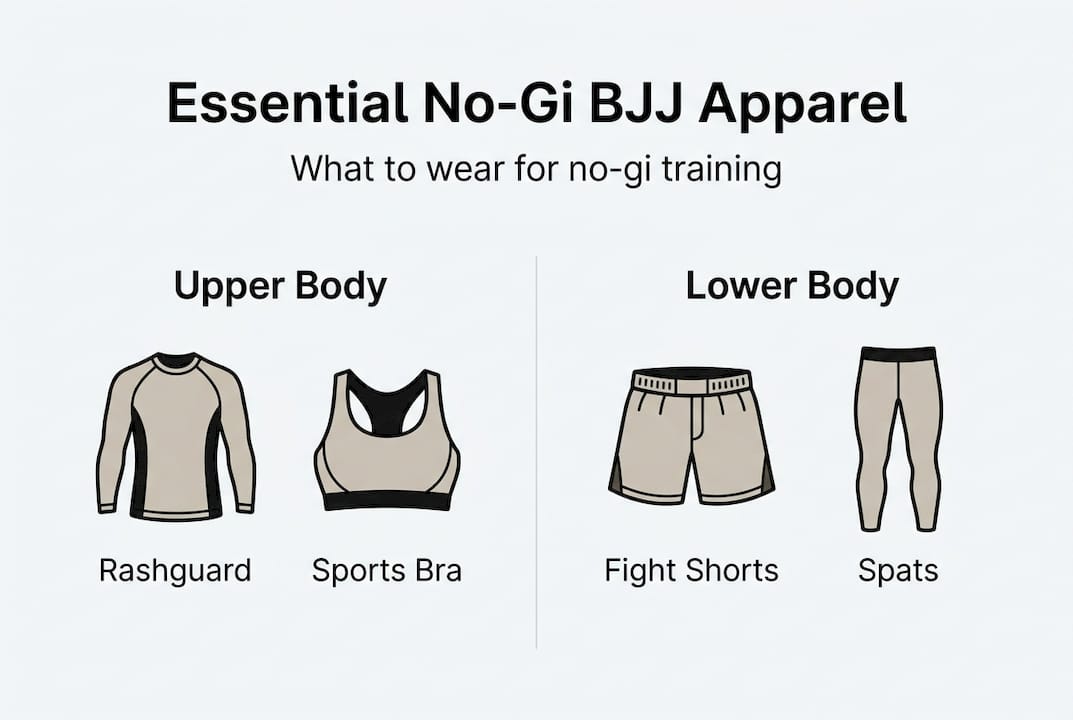
Some practitioners prefer a closer-fitting short style, while others choose a looser option. Select the coverage you prefer and check the product page for current details.
| Short Type | Cut | What to Check | Layering | Before Training |
|---|---|---|---|---|
| Fight Shorts | Outer-short style | Waist fastening, length and movement | Optional layers underneath | Check academy or event requirements |
| Board Shorts | Cut varies by item | Pockets, hardware and movement | Check fit with your chosen layers | Confirm they are accepted |
| Vale Tudo | Close-fitting style | Size, coverage and waist fit | Check whether outer shorts are required | Check academy or event requirements |
Choose coverage and styles that suit your training, then check the current organiser rulebook if you plan to compete.
Pro Tip: Plan your kit around how often you train and how quickly you can wash and dry it. Have a clean set ready for each session; there is no fixed number of rashguards everyone needs.
Consider these factors when selecting apparel:
- Choose sleeve coverage based on personal preference and organiser rules where relevant
- Check each rashguard listing for current sleeve and size options
- Review MMA shorts listings for their available options
- Choose the coverage you are comfortable training in
- Check the current organiser rulebook before competition
Maintaining and caring for your no-gi apparel
Follow the care label for the item you own. Our rashguard guide provides related background; the garment's own washing and drying instructions take priority. Use these checks when caring for your kit:
-
Read the care label or supplier guidance for the item you own.
-
Wash and dry gear according to that guidance.
-
Use cleaning products only where they are suitable for the garment.
-
Allow gear to dry before storing it.
-
Inspect gear for visible wear, loose stitching or damage.
-
Store clean, dry gear in a suitable place.
-
Rotate gear if that suits your own training schedule.
For persistent odour or staining, follow the garment’s care guidance or seek advice from the item’s supplier.
For coloured gear, check the label before choosing a wash cycle or cleaning product. Follow any instructions about washing inside out, separating colours or avoiding bleach; do not assume one method suits every garment.
Follow the care guidance supplied with the rashguard or spats you own, including any drying instructions.
Check the care guidance for your item before washing, drying or storing it, and replace it when visible wear affects your own use.
Enhance your no-gi training with quality apparel from Combatra
For personalised kit, explore Combatra's custom rashguard and Custom MMA Shorts. Check the available sizes and design controls on each page before ordering. For other styles, browse the rashguard and shorts collections linked above.
A sports bra or other comfortable upper-body base layer may suit your preferences under a rashguard. Choose the combination that feels comfortable and meets your academy's clothing requirements.
FAQ
What should I wear under my rashguard during no-gi training?
A sports bra or comfortable upper-body base layer can be worn under a rashguard if preferred. Compression shorts and spats are lower-body layers, not items worn under a top. Check your academy's clothing expectations if you are unsure.
Can I use gi pants with no-gi apparel during training?
Ask your coach before wearing Gi pants to a no-gi class; clothing expectations vary. Shorts and optional spats are the usual no-gi choices. A Gi belt is not a standard no-gi kit item; see BJJ belts for Gi training.
How tight should no-gi shorts and rashguards fit?
Choose a comfortable fit that lets you breathe and move freely. Check for pinching, bunching, a waistband that slips or a top that rides up. Compare your measurements with the size guide and the exact product's fit notes.
Are there specific apparel rules for no-gi competitions?
Apparel rules vary by organiser and event. Check the current rulebook before competing rather than relying on general colour, branding or garment assumptions.
How often should I replace my no-gi training gear?
Inspect gear for visible wear and follow the care guidance supplied with the item. Replace it when its condition no longer suits your own training needs.